_1781464136662-DVw5IPjt.png)
Rebuilding with
purpose and speed.
Recovering from wildfires is overwhelming. The last thing homeowners and contractors need is to be stalled by the municipal permitting system. Ocean Permits offers dedicated fire rebuild expediting — leveraging the Emergency Executive Order 30-day review, One-Stop Permit Centers, fee waivers, and self-certification to get you cleared to build as quickly as legally possible.
We manage permits in both the Pacific Palisades (City of LA — LADBS) and Altadena (LA County — LACBS) — two completely different agencies with different portals, forms, and plan-check processes. Getting this distinction right from day one is the most critical factor in your rebuild timeline.
Ocean Permits is a women-owned business enterprise (WBE) founded in Los Angeles in 2021. We offer a free initial consultation to assess your property's rebuild pathway, confirm fee waiver eligibility, and give you a realistic timeline estimate. Call +1 (213) 277-8777 or contact us online.
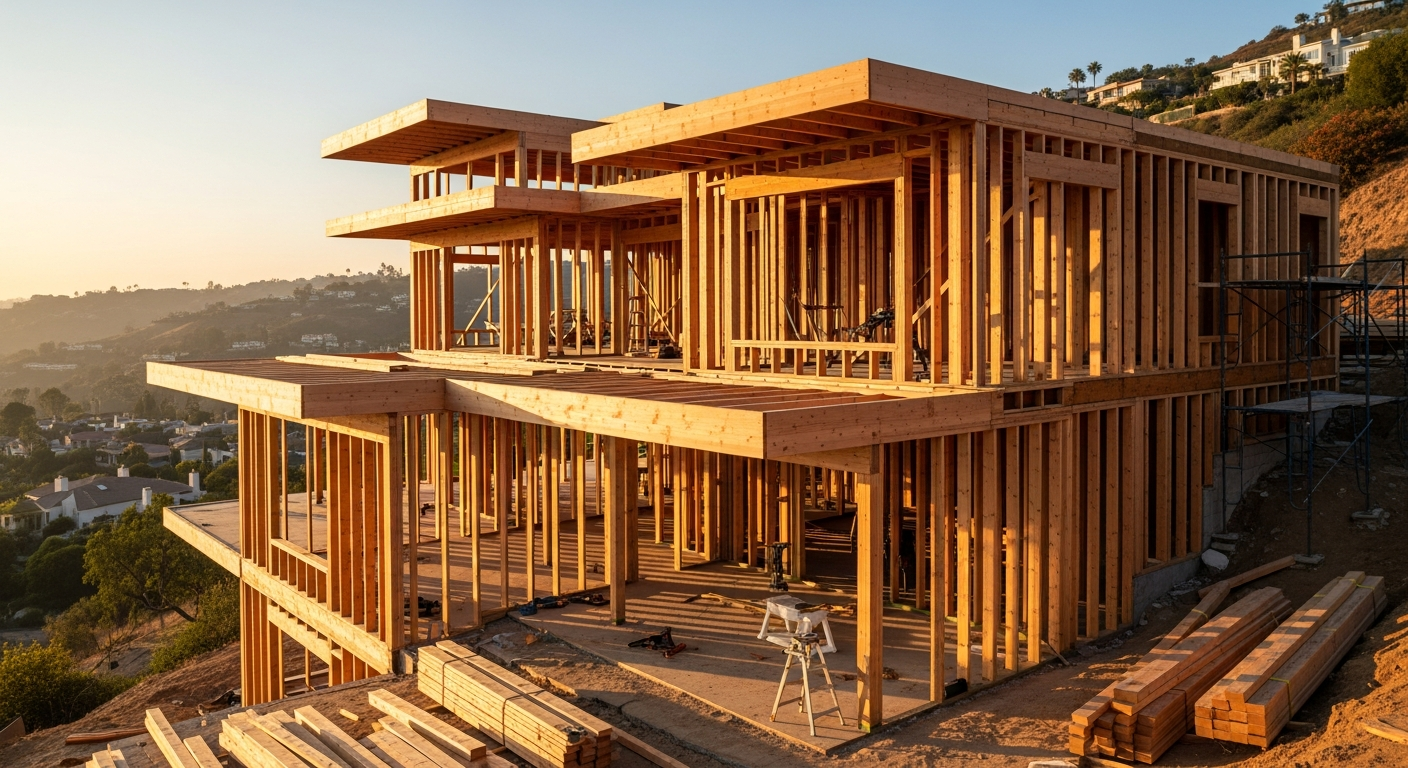
The Emergency Executive Order:
30-Day Expedited Review
Governor Newsom's Executive Order N-4-25 and subsequent City of Los Angeles and LA County emergency orders created an expedited permit process specifically for fire-damaged properties following the January 2025 wildfires. For qualifying like-for-like rebuilds, LADBS and LACBS target plan check completion within 30 calendar days of a complete, accepted submittal — compared to 8–14 weeks under standard review.
The 30-day clock is a target, not an automatic guarantee. It applies only when the application passes intake screening on the first attempt — a complete, correctly formatted package that arrives without missing documents, incorrect forms, or Chapter 7A compliance gaps. An incomplete package is returned, the clock never starts, and the expedited track is not preserved during the correction period.
Structuring every submittal to pass intake screening on the first attempt — starting the 30-day clock on day one — is the core of what Ocean Permits delivers on every fire rebuild project.
30 days
Expedited plan check target for like-for-like rebuilds (complete submittals)
100%
Government permit fees waived for qualifying fire rebuild projects under emergency orders
2 tracks
We manage LADBS (City) and LACBS (County) simultaneously — the only firm you'll need
How Many Building Permits Have Been Issued
in Pacific Palisades?
Since the January 2025 Palisades Fire destroyed thousands of structures, the number of rebuild building permits issued in Pacific Palisades has become one of the most closely watched recovery indicators — tracked publicly by the City of Los Angeles, LA County, and local news outlets as a running count that updates on a rolling basis as new applications clear plan check.
That count moves week to week, so rather than publish a specific number here that would be stale by the time you read it, we point clients directly to LADBS's public rebuild dashboard and the City's official recovery reporting for the current, up-to-date tally of permits issued versus applications submitted — the gap between those two figures is usually the more useful number, since it shows how many rebuilds are still moving through plan check versus how many have actually broken ground.
What we can speak to directly is why that gap exists and how to close it faster: incomplete submittals, missing Chapter 7A fire-resistant construction documentation, and unclear Coastal Zone status are the most common reasons a Pacific Palisades rebuild application stalls in plan check rather than converting into an issued permit. Ocean Permits reviews each client's package against those exact failure points before submittal, which is the fastest lever a homeowner has to move from "applied" to "permit issued."
Pacific Palisades vs. Altadena:
Different Agencies, Different Rules
The single most important thing to understand about fire rebuild permits in this area: Pacific Palisades and Altadena are governed by completely different agencies. Submitting to the wrong one — or assuming that because you can see the mountains from Pacific Palisades it's the same jurisdiction as Altadena — loses weeks or months. See our detailed guides for each:
Pacific Palisades
Altadena
Coastal Zone Considerations
for Pacific Palisades
A significant portion of Pacific Palisades falls within the California Coastal Zone, which adds a Coastal Development Permit (CDP) requirement on top of the LADBS building permit. This is one of the most commonly overlooked rebuild complications — and one of the most expensive if discovered after the building permit application is already in review.
How to confirm Coastal Zone status
The California Coastal Commission's Coastal Zone boundary runs through Pacific Palisades. Parcels on the ocean side of Pacific Coast Highway and many parcels in the canyons and bluffs above PCH are within the zone. Coastal Zone status is confirmed by parcel address lookup through the Commission's mapping portal or City Planning's ZIMAS tool. We verify status on every Pacific Palisades project at project outset.
City vs. Coastal Commission CDP
Most Pacific Palisades parcels are within the City of Los Angeles's certified Local Coastal Program (LCP). For these parcels, the CDP is issued locally by City Planning's Coastal Division — not by the Coastal Commission in Sacramento — under a streamlined local process. Some parcels, particularly those near environmentally sensitive habitats or in areas outside the LCP, still require direct Coastal Commission review, which adds 3–6 months.
Running CDP concurrently with LADBS
The worst approach is to wait until LADBS approves the building permit before starting the CDP application. The CDP must run concurrently. We file the CDP application to City Planning's Coastal Division on the same day we submit to LADBS — so the two approvals arrive at roughly the same time and construction can start without a sequential delay.
Like-for-like rebuilds in the Coastal Zone
Like-for-like rebuilds within the Coastal Zone are generally eligible for CDP approval under the LCP's provisions for legally established structures. The key is documenting the original structure's footprint, height, and design accurately. Any expansion — even a minor one — can trigger a more detailed Coastal review that is not eligible for the expedited rebuild track.
Wetlands, ESHA, and public access
Parcels near Topanga Lagoon, Malibu Creek, or other environmentally sensitive habitat areas (ESHA) within Pacific Palisades may face additional Coastal review requirements. We identify ESHA adjacency at project outset and coordinate the appropriate environmental review before submittal.
Chapter 7A in the Coastal Zone
Coastal Zone properties in Pacific Palisades must meet both California Coastal Act requirements (which may limit certain exterior materials for visual compatibility) and Chapter 7A fire-resistant construction standards. Navigating these overlapping requirements — where fire-resistant materials must also meet coastal aesthetics standards — requires specific expertise.
How Ocean Permits Gets
Your Rebuild Permitted Faster
An 8-step approach designed specifically for the Pacific Palisades, Altadena, and Malibu rebuild context — using every available emergency program, fast-track option, and fee waiver.
Confirm Debris Clearance and Parcel Status
No rebuild permit can be accepted until hazardous debris clearance is confirmed. We check your parcel's clearance status through LADBS PIMS (City) or LACBS (County) and confirm the clearance letter has been recorded in the agency's system. We also pull a full parcel compliance report — confirming the original structure's legal permit history, existing setbacks, and zoning — so we have the baseline documentation before any drawings are prepared.
Determine the Fastest Rebuild Path for Your Parcel
Not every rebuild is the same. We assess whether your project qualifies for like-for-like expedited review, whether the LA Standard Plan Program is a fit (saving $5,000–$15,000 in design costs and weeks in plan check), whether self-certification by your architect is available, and whether your parcel is in the Coastal Zone requiring a concurrent CDP. This assessment happens before you pay an architect — so your design team knows exactly what to design and which pathway it will follow.
Apply for All Available Fee Waivers
Government permit fees — plan check, issuance, and inspections — are waived for qualifying rebuild projects under the City's and County's emergency executive orders. Some waivers are automatic; others require a fee waiver application with documentation of the property's fire-damage status. We identify and apply for every available waiver as part of the initial submittal package — so you don't pay fees you're not required to pay.
Prepare a Complete, Code-Compliant Submittal Package
The 30-day expedited review clock only starts when LADBS or LACBS accepts the application as complete. An incomplete package is returned, the clock never starts, and you're back at day zero. We prepare and review every required document before submittal: architectural plans, Chapter 7A compliance documentation, Title 24 energy report, soils report (if required), debris clearance confirmation, and all agency-specific forms. For Coastal Zone properties, we simultaneously prepare the CDP application.
Use the One-Stop Permit Center Effectively
The City and County One-Stop Permit Centers co-locate representatives from Building & Safety, Planning, Public Works, Fire, and utilities. Knowing which staff to engage for which issues — and how to escalate stalled reviews within the center — compresses the multi-agency coordination that normally takes weeks. We work within the One-Stop Centers directly for clients who benefit from in-person coordination.
Manage Concurrent Agency Clearances
The building permit is not the only clearance required. City Planning must clear for Coastal Zone parcels and any projects requiring discretionary review. LAFD must clear fire-life-safety requirements. Bureau of Public Works coordinates utility reconnections. We run all clearances simultaneously with the LADBS or LACBS building permit review — not sequentially — so you're not waiting weeks after building plan check is done for another agency to catch up.
Coordinate Chapter 7A Compliance and Correction Response
Chapter 7A fire-resistant construction compliance is one of the most common plan check correction causes on rebuild projects. Requirements for roofing, exterior walls, vents, eaves, and glazing must be explicitly documented on the architectural plans and in a separate compliance checklist. If plan check comments are issued, we respond quickly and accurately — coordinating the required revisions with your design team and resubmitting within the minimum possible window.
Permit Issuance and Inspection Coordination
Once the permit issues, we deliver the approved plans and a clear inspection roadmap to your contractor — specifying what inspections are required, in what sequence, and which elements must remain uncovered for each staged inspection. For rebuild projects, required inspections include foundation, framing, Chapter 7A-specific inspections (roofing, vents, eaves), rough MEP, insulation, and final. We remain available throughout construction to resolve field inspection issues and coordinate Certificate of Occupancy.
Like-for-Like vs. Custom Rebuild:
Which Path is Right for You?
The most important strategic decision in your rebuild is whether to pursue the like-for-like expedited track or a custom design. Each has distinct tradeoffs for timeline, cost, and long-term value.
Many property owners find a hybrid approach works best: rebuild like-for-like to return home quickly, then apply for an ADU or addition permit later once they're settled. We assess your specific parcel, goals, and timeline and advise the right path during the free initial consultation.
Required Documentation
Rebuild permit applications that arrive incomplete go to the correction queue — adding weeks before review even begins. We compile and review every required document before submittal so the package passes intake screening on the first attempt.
Proof of property ownership
Current deed, title report, or grant deed showing ownership. Required before any permit application can be accepted by either LADBS or LACBS.
Debris clearance confirmation
Written confirmation from LA County or City DPW that hazardous debris — including ash, charred materials, and contaminated soil — has been removed. Must be recorded in the agency's permit system before rebuild permit intake.
Architectural plans and site plan
Full construction documents stamped by a licensed California architect or engineer. For like-for-like rebuilds using Standard Plans, simplified documents may qualify. Plans must show the rebuild's compliance with current CBC and Chapter 7A.
Chapter 7A compliance documentation
Fire Hazard Severity Zone compliance checklist showing the rebuilt structure meets fire-resistant construction standards: Class A roofing, ignition-resistant exterior walls, ember-resistant vents, enclosed eaves, tempered or fire-rated glazing, and ignition-resistant decks.
Title 24 energy compliance report
California energy code calculations from a certified energy analyst. Must reflect the rebuilt structure's actual orientation, insulation, glazing, and HVAC systems — not a generic template.
Soils / geotechnical report (if required)
Required for hillside properties, parcels with significant grading, or where the fire may have destabilized soil. The reviewing agency determines whether a soils report is required during intake screening.
Coastal Development Permit application (Coastal Zone parcels only)
Required concurrently with the building permit for Pacific Palisades parcels within the Coastal Zone. Most CDP applications in Pacific Palisades are processed locally through City Planning's Coastal Division under the City's certified Local Coastal Program.
Fee waiver application and documentation
Application for permit fee waivers available under the City's and County's emergency executive orders. Requires documentation of the property's fire-damage status (fire damage confirmation letter, insurance documentation, or aerial imagery confirming total loss).
Owner authorization letter
Required when a permit expediter or agent submits on the property owner's behalf. Must be signed by the current owner of record and specifically authorize the agent to act on their behalf for this project.
Rebuild Permit Timeline at a Glance
Timelines below reflect well-prepared, complete submittals under current expedited rebuild programs. Incomplete applications, missing documents, or projects that don't qualify for fast-track pathways will take longer. These are realistic ranges based on current program parameters — not guarantees.
Timelines are estimates under current expedited programs. Coastal Zone properties, custom designs, and projects requiring discretionary approvals have additional review time. Contact us for a parcel-specific assessment.
Fire Rebuild Technical Guides
Rebuild permits in Pacific Palisades and Altadena touch far more than the building permit itself. These guides cover the specific site-work, utility, and code-compliance permits that come up on nearly every fire rebuild project.
Common Rebuild Questions
Questions we hear most from Pacific Palisades, Altadena, and Malibu property owners starting the rebuild process.
What is the first step to start a fire rebuild permit in Pacific Palisades or Altadena?
The first step is confirming debris clearance. LADBS (for City of LA properties including Pacific Palisades) and LA County Building & Safety (for Altadena) require written confirmation that hazardous fire debris — including contaminated ash and soil — has been removed before a rebuild permit application can be accepted. The LA County Department of Public Works and LACID manage debris clearance operations. We confirm your parcel's clearance status and coordinate permit submittal timing accordingly — so you're ready to submit the moment clearance is confirmed.
What is the Emergency Executive Order expedited 30-day review for fire rebuilds?
Following the January 2025 wildfires, Governor Newsom's Executive Order N-4-25 and subsequent City of Los Angeles and LA County emergency orders established an expedited permit review process for fire-damaged properties. For like-for-like rebuilds — same footprint, same square footage, same design — LADBS targets a 30-day plan check completion for complete, code-compliant submittals. LA County Building & Safety has implemented similar expedited timelines. The expedited review is available only when the submittal is complete and formatted correctly; incomplete packages are returned and re-enter the expedited queue only after correction. An experienced expediter structures every submittal to pass intake screening on the first attempt, preserving the 30-day target from day one.
What is the difference between Pacific Palisades and Altadena for rebuilding permits?
Pacific Palisades is part of the City of Los Angeles — building permits go through LADBS, with City Planning managing discretionary approvals and Coastal Commission requirements applying to Coastal Zone parcels. Altadena is unincorporated Los Angeles County — permits go through LA County Building & Safety (LACBS), with the LA County Department of Regional Planning handling land use. The agencies, portals, plan-check processes, forms, and inspection procedures are completely different. Submitting to the wrong agency — a common mistake for property owners unfamiliar with Altadena's unincorporated status — loses weeks or months. We manage both agency tracks simultaneously for clients with properties in both jurisdictions.
What is the One-Stop Permit Center and how does it help?
The City of Los Angeles and LA County established One-Stop Permit Centers specifically for fire rebuild applicants in the wake of the January 2025 wildfires. These centers co-locate representatives from multiple agencies — Building & Safety, Planning, Public Works, Fire Department, and utilities — at a single location, allowing property owners and expediters to address multiple agency requirements in a single visit rather than making separate trips to separate offices. The One-Stop centers also have dedicated staff trained specifically on the rebuild permit process and familiar with the current emergency programs. Knowing how to work effectively within these centers — which staff to contact for which issues, how to escalate stalled reviews — is a core part of what we bring to every rebuild project.
What is the like-for-like rebuild path and who qualifies?
The like-for-like rebuild path allows property owners to rebuild their destroyed home at the same location, footprint, square footage, and design as the original — using the most expedited review tracks and the broadest fee waiver programs available. To qualify for like-for-like treatment, the rebuild must not exceed the original structure's footprint, height, or square footage; must comply with current Chapter 7A fire-resistant construction standards (not the original home's construction standard — current code applies); and must be on the same parcel as the destroyed structure. Projects that expand the footprint, add square footage, or change the design significantly are reviewed under standard (not expedited) pathways and may require Planning review, zoning compliance confirmation, or discretionary approvals.
What fee waivers are available for fire rebuild permits?
The City of Los Angeles has waived building permit fees, plan-check fees, and inspection fees for fire-damaged properties under the emergency executive orders following the January 2025 wildfires. LA County has implemented similar fee deferral and waiver programs for Altadena rebuild permits under the Eaton Fire emergency declaration. Eligibility is tied to the property being within the declared disaster area and the project qualifying as wildfire rebuild work. Some fee waivers apply automatically; others require documentation of the property's fire-damage status and a fee waiver application submitted with the permit package. We ensure every application is structured to qualify for all available waivers and document the fee waiver basis in the submittal package — so you don't pay fees you're not required to pay.
Do I need a Coastal Development Permit to rebuild in Pacific Palisades?
It depends on your parcel's location relative to the Coastal Zone boundary. Properties within the California Coastal Zone require a Coastal Development Permit (CDP) in addition to the LADBS building permit. The City of Los Angeles has a certified Local Coastal Program (LCP) for most of Pacific Palisades, so CDPs for most rebuild projects are issued locally by City Planning — not requiring direct Coastal Commission review in Sacramento. However, certain parcels near the shoreline, in environmentally sensitive areas, or outside the LCP area may still trigger direct Coastal Commission involvement. We verify Coastal Zone status at project outset and manage both the LADBS building permit and the CDP applications simultaneously — to avoid the timeline cost of discovering the CDP requirement after the building permit application is already in review.
What is Chapter 7A fire-resistant construction and does it apply to my rebuild?
Chapter 7A of the California Building Code sets fire-resistant construction standards for buildings in High and Very High Fire Hazard Severity Zones (FHSZ) — which covers most of Pacific Palisades and Altadena. Requirements apply to: roofing (Class A minimum, no wood shake), exterior walls (ignition-resistant materials), exterior openings (vents must be ember-resistant), eaves (enclosed or protected), decks and accessory structures (ignition-resistant materials), and exterior glazing (tempered or fire-rated windows). Critically, all fire rebuild projects must comply with current Chapter 7A standards — the original home's construction standard is not grandfathered. If the original home was built with wood shake roofing or unprotected wood-frame vents, the rebuild must upgrade these elements to current code. We review Chapter 7A compliance documentation before submittal to prevent corrections at plan check.
How long will it take to get a rebuild permit?
For like-for-like rebuilds on parcels without Coastal Zone complications, LADBS's expedited review target under the emergency executive order is 30 days from a complete submittal. LA County targets a similar expedited timeline for Altadena. Custom designs that don't qualify for like-for-like treatment take longer — 8–14 weeks is a realistic range for City projects, 8–16 weeks for County. Self-certification by a licensed architect or engineer can compress the plan-check timeline significantly for eligible custom-design projects. We give each client a realistic, parcel-specific timeline estimate after reviewing their property status, debris clearance status, and project scope.
Can I rebuild a larger home than what burned?
Yes, but larger rebuilds face a more complex review process. Like-for-like rebuilds — same footprint, same square footage — qualify for the most expedited review tracks and the broadest fee waivers. Rebuilds that are larger, taller, or differently positioned on the lot add regulatory complexity: they require standard plan check (not expedited), may require Planning review, and typically are not eligible for the same fee waivers. In the Coastal Zone, a larger rebuild may also require a more detailed Coastal Development Permit review. We assess your specific parcel and rebuild goals and advise which path is fastest — sometimes a like-for-like rebuild with a well-designed addition is the optimal strategy for both timeline and cost.
What documents are required for a fire rebuild permit application?
A complete fire rebuild permit application requires: proof of property ownership (current deed); debris clearance confirmation from LA County or City DPW; architectural plans and site plan (full construction documents stamped by a licensed architect or engineer, or Standard Plan documents for pre-approved designs); Chapter 7A fire-resistant construction compliance documentation; Title 24 energy compliance report; soils/geotechnical report (for hillside properties or where required by the reviewing agency); Coastal Development Permit application (for Coastal Zone parcels in Pacific Palisades); and insurance documentation (if required by a lender). We compile and review every required document before submittal so the package passes intake screening on the first attempt.
What is self-certification and how does it speed up rebuild permits?
LA County's Self-Certification Pilot Program allows licensed architects or engineers to certify their own plans as code-compliant for fire rebuild projects — essentially bypassing the traditional plan review queue. The licensed professional takes on the responsibility of confirming code compliance. For eligible projects, self-certification can reduce the plan-check timeline from 8–14 weeks to 2–4 weeks. To use self-certification, the design professional must be licensed in California and must sign the self-certification affidavit confirming CBC and Chapter 7A compliance. Not all project types are eligible — complex structural designs, Coastal Zone projects, and projects requiring LAFD review may not qualify. We coordinate with your design team to use self-certification where eligible and document the certification correctly.
Our Rebuild Services
Everything you need to move from debris to permit — managed by a dedicated expediting team that understands the urgency. Women-owned. Los Angeles-based. Free initial consultation.
- Expedited demolition and debris removal permitting
- Like-for-like rebuild permit management (City and County)
- Coastal Development Permit (CDP) applications — Pacific Palisades
- Chapter 7A fire-resistant construction compliance review
- Fee waiver application and documentation
- One-Stop Permit Center navigation and advocacy
- Self-certification coordination with licensed design professionals
- LA Standard Plan Program selection and submittal
- Concurrent LADBS (City) and LACBS (County) processing
- WUI (Wildland-Urban Interface) code compliance coordination
- Temporary shoring and structural stabilization clearances
- Certificate of Occupancy and final inspection coordination
Areas We Serve
- Pacific Palisades
- Altadena
- Malibu
- Eaton Fire Area (LA County)
- Los Angeles City
- Surrounding fire-impacted communities
Ready to Start Your Rebuild?
Free initial consultation — we review your property, confirm debris clearance status, identify the fastest permit pathway, and give you a realistic timeline estimate.
333 S Grand Ave, Ste 3310, Los Angeles, CA 90071 · office@oceanpermits.com
Request Free Rebuild ConsultationRelated Resources
Your home can be rebuilt.
Let's start the permit process today.
Ocean Permits is a women-owned Los Angeles permit expediting firm founded in 2021. We are one of the few firms with dedicated experience managing both LADBS (City) and LACBS (County) fire rebuild permits simultaneously.
Free initial consultation · No obligation · 333 S Grand Ave, Ste 3310, Los Angeles
Coordinate the rebuild worksite before scheduling crews
A rebuilding permit does not settle every operating condition. Read our after-hours construction and noise-variance guide before extending a shift, and our construction street-use and sidewalk-closure guide before placing containers, fencing or staging in public space.
For an off-site manufactured replacement home, the modular and prefab rebuild approval guide separates the factory package from local foundation and site permits. Owners considering conversion of an existing commercial building instead of replacement construction can review the different eligibility and approval tracks in our Los Angeles adaptive-reuse guide.
A debris-cleared lot may still need wet-season protection while the home is being designed. Our post-fire erosion control and debris-flow permit guide separates City and County grading approvals, temporary sediment controls and permanent stormwater requirements so the site plan does not wait until the next storm.