_1781464136662-DVw5IPjt.png)
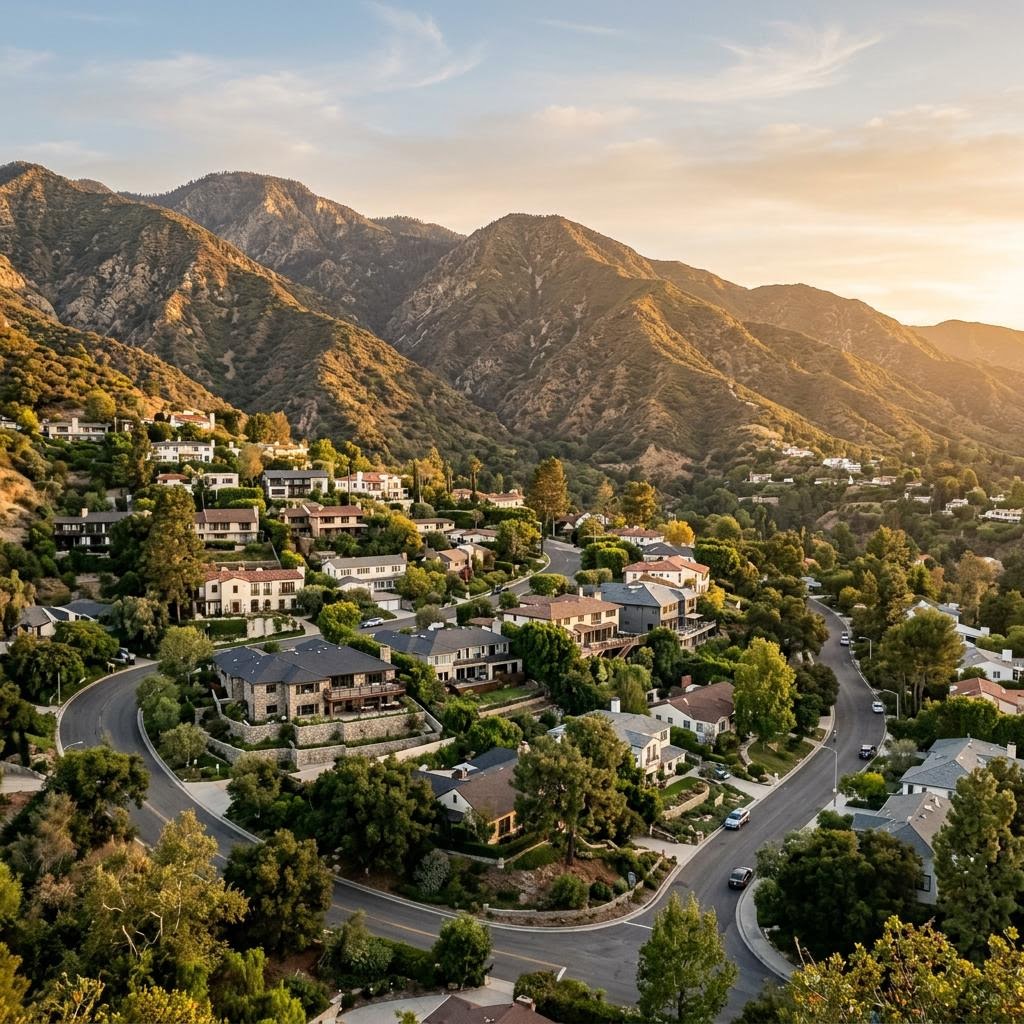
La Cañada Flintridge
Permit Expediting
La Cañada Flintridge has its own Community Development Department — not LADBS or LA County. We navigate the City's fire-hazard, hillside, and ADU requirements as one coordinated process.
Women-owned, LA-based permit expediting firm. The same fire-rebuild expertise we apply for clients in Altadena and Pacific Palisades applies directly to La Cañada Flintridge's Very High Fire Hazard Severity Zone requirements and foothill terrain. Free consultation — call 213-277-8777.
La Cañada Flintridge is an independent incorporated city nestled against the San Gabriel Mountains, bordering Altadena and the Eaton Fire's burn and evacuation footprint — but its permits never touch LADBS or LA County Building & Safety. They go through the City's own Community Development Department, and that distinction shapes every part of how a project should be planned.
It's an easy distinction to overlook. La Cañada Flintridge sits close enough to Pasadena, Altadena, and the broader Foothill communities that project teams sometimes assume one of those jurisdictions' processes applies here. It doesn't. The City of La Cañada Flintridge operates its own building official and plan-check function under its own municipal code, with its own portal, forms, and — notably for a smaller city — a leaner staff and different scheduling rhythm than LADBS or LA County. Layered on top of that baseline difference are the fire-hazard and terrain realities of a city built directly against the foothills: much of La Cañada Flintridge falls within a Very High Fire Hazard Severity Zone, a large share of its residential parcels sit on sloped or hillside terrain, and the city's fire protection comes from LA County Fire rather than LAFD.
Ocean Permits & Development treats each of these as a coordinated process from day one — the same discipline we bring to fire-hazard and hillside projects in neighboring Altadena and Pacific Palisades, applied to La Cañada Flintridge's own City department and code.
La Cañada Flintridge Has Its Own Building Department
La Cañada Flintridge is an independent city, not a neighborhood of Los Angeles and not part of unincorporated LA County. Its building permits are processed entirely through the City's own Community Development Department, which combines planning and building & safety functions under a single roof — a different structure than the larger, more siloed departments found in bigger cities. In practice, that means a distinct submittal process, a plan-check team with its own current workload, and procedures specific to a smaller independent city. A permit expediter whose experience is built entirely around LADBS's scale and systems, or LA County's process for unincorporated Altadena, does not automatically know how to move a project through La Cañada Flintridge efficiently — the institutional knowledge doesn't transfer directly between such differently sized departments.
City of La Cañada Flintridge Community Development Department (Not LADBS)
La Cañada Flintridge is an independent incorporated city and has never been part of the City of Los Angeles. Building permits are issued by the City's own Community Development Department, which handles both planning and building & safety functions under the La Cañada Flintridge Municipal Code — a separate department, submittal process, and plan-check staff from LADBS. It's also a distinct process from the LA County Building & Safety route that applies to neighboring unincorporated Altadena.
Very High Fire Hazard Severity Zone (VHFHSZ) & Chapter 7A
Much of La Cañada Flintridge sits against the San Gabriel Mountains foothills, and CAL FIRE maps significant portions of the city as a Very High Fire Hazard Severity Zone. New construction and substantial remodels within these zones must comply with Chapter 7A of the California Building Code — ignition-resistant construction standards for roofing, exterior walls, vents, eaves, decks, and windows — reviewed by the City as part of standard plan check.
Defensible Space — California Public Resources Code §4291
State law requires defensible space clearance around structures in fire hazard zones. Given the city's foothill setting, many La Cañada Flintridge parcels carry an ongoing defensible space obligation, and compliance documentation is often tied to permits for new construction or substantial remodels on affected parcels.
Los Angeles County Fire Department
La Cañada Flintridge is served by LA County Fire, not LAFD — a different fire-review relationship than a City of Los Angeles project has. LA County Fire reviews access requirements, water supply for fire suppression, and defensible space compliance as part of the overall project review, informed by the Los Angeles County Fire Code.
Hillside & Foothill Grading Standards
Substantial portions of La Cañada Flintridge's residential land rise toward the San Gabriel Mountains foothills, and projects on sloped parcels typically require a geotechnical report and engineered grading plans addressing slope stability, drainage, and retaining wall design, in addition to standard building code review.
State ADU Law Applies Regardless of Local Code
California's statewide ADU statute (Government Code §65852.2) requires every California city, including La Cañada Flintridge, to ministerially approve qualifying ADU applications within a state-mandated timeframe — overriding a city's own discretionary preferences for that project type, though fire-hazard and grading requirements specific to the parcel still apply.
La Cañada Flintridge Permit Types & Typical Timelines
| Permit Type | When It Applies | Reviewing Department | Typical Timeline |
|---|---|---|---|
| Standard remodel permit (non-structural, no VHFHSZ trigger) | Interior remodels or work not affecting exterior fire-hazard elements | City of La Cañada Flintridge Community Development Department | 4–8 weeks |
| ADU permit | Accessory dwelling unit — detached, attached, or garage conversion | City of La Cañada Flintridge (ministerial, Gov. Code §65852.2) + Chapter 7A if in VHFHSZ | 6–14 weeks |
| Hillside addition with grading | Structural additions or new construction on sloped foothill parcels requiring retaining walls or significant earthwork | City of La Cañada Flintridge Community Development (building + grading review) | 10–20 weeks, depending on geotechnical findings and corrections |
| Full rebuild after fire or smoke damage | Reconstruction or substantial remediation following wildfire exposure, smoke, or ash damage | City of La Cañada Flintridge Community Development + LA County Fire coordination | 10–20+ weeks, depending on scope and whether like-for-like rebuild pathways apply |
Timelines are estimates based on typical residential plan-check patterns described in our Los Angeles permit timeline guide, adapted for the City of La Cañada Flintridge's smaller department and current workload. Actual timelines depend on plan completeness, correction cycles, and whether hillside grading or fire-hazard compliance review is involved.
Our Process for a Typical La Cañada Flintridge Project
- 01
Jurisdiction & Zone Confirmation
We confirm the project is filed with the City of La Cañada Flintridge's own Community Development Department — not LADBS or LA County — and identify the parcel's Very High Fire Hazard Severity Zone status and hillside designation before drawings are finalized.
- 02
Fire-Hazard & Defensible Space Planning
For VHFHSZ parcels, we confirm which Chapter 7A ignition-resistant material and design requirements apply, and check the property's existing defensible space compliance status with LA County Fire.
- 03
Hillside & Grading Review (If Applicable)
For sloped foothill parcels, we initiate the geotechnical and grading review track in parallel with the building permit application, coordinating retaining wall design with the project's structural engineer.
- 04
City Plan Check Submittal
We submit the complete building permit package to the City's Community Development Department, structured to the City's own forms and submittal requirements rather than an LADBS or LA County template.
- 05
Correction Response
We manage the correction cycle directly with City plan-check staff, responding promptly given that a smaller department's review queue and scheduling norms differ from a large city or county agency.
- 06
Permit Issuance & Inspection Coordination
Once the City issues the permit, we coordinate the inspection sequence with your contractor, including any fire-hazard-specific or grading-related inspections tied to the project scope.
Foothill Terrain, Fire Hazard, and the Eaton Fire's Neighboring Impact
La Cañada Flintridge sits directly against the San Gabriel Mountains, and that setting is central to how the city is regulated for construction. CAL FIRE maps significant portions of the city as a Very High Fire Hazard Severity Zone, a designation that determines the construction standards a project has to meet rather than a formality. New construction and substantial remodels within a VHFHSZ must comply with Chapter 7A of the California Building Code — ignition-resistant standards for roofing materials, exterior wall assemblies, vent screening, eaves, decking, and exterior window and door glazing. The City's Community Development Department reviews Chapter 7A compliance as part of standard plan check for qualifying projects.
California Public Resources Code §4291 also establishes defensible space clearance requirements around structures in fire hazard zones, and many La Cañada Flintridge properties carry this as an ongoing maintenance obligation independent of any specific construction project — though it's often confirmed or documented as part of the permit process for new construction or a substantial remodel.
La Cañada Flintridge borders Altadena directly, and the city sits close to the Eaton Fire's burn and evacuation footprint from January 2025. While the fire's direct structural damage was concentrated in Altadena, some La Cañada Flintridge residents — particularly along the city's eastern and northern foothill edges — dealt with smoke and ash impacts and have understandably asked about remediation, defensible space compliance, and voluntary hardening upgrades. Any such project in La Cañada Flintridge is permitted through the City's own Community Development Department, coordinated with LA County Fire on the fire-safety elements, rather than through the LA County process that applies just across the city line in Altadena.
Hillside Grading & ADU Permits
Much of La Cañada Flintridge's residential land rises toward the San Gabriel Mountains foothills, and projects on these sloped parcels typically require a geotechnical (soils) report and engineered grading plans addressing slope stability, drainage, and retaining wall design — a review track that runs alongside, but is distinct from, the standard building permit review for the structure itself. Flatter parcels closer to the city's commercial core along Foothill Boulevard generally don't carry this additional layer.
For homeowners considering an accessory dwelling unit, California's statewide ADU law (Government Code §65852.2) requires every California city — La Cañada Flintridge included — to ministerially approve qualifying ADU applications within a state-mandated review window, regardless of the city's own local zoning preferences for accessory structures. That mandate doesn't erase site-specific requirements, though: an ADU on a hillside or VHFHSZ parcel still has to meet applicable Chapter 7A construction standards, and any grading needed to fit the ADU on a sloped lot goes through the City's separate grading review.
Why La Cañada Flintridge Property Owners Work With Ocean Permits
Ocean Permits & Development is a women-owned permit expediting firm based in Los Angeles, with direct experience navigating the Very High Fire Hazard Severity Zone requirements and post-fire rebuild landscape that define construction in Altadena and Pacific Palisades — the same Chapter 7A ignition-resistant construction standards and Public Resources Code §4291 defensible space obligations that apply across much of La Cañada Flintridge's foothill terrain. We also bring comparable experience navigating smaller, independent-city building departments from our work in Calabasas. For ADU projects, see our ADU permits page, and for a broader look at fire rebuild pathways in the area, see our fire rebuild permit guide. We offer a free consultation — call 213-277-8777 or reach out through our contact page.
Frequently Asked Questions
Does La Cañada Flintridge use LADBS, or does it have its own building department?
La Cañada Flintridge is an independent incorporated city — it has never been part of the City of Los Angeles, and it does not use LADBS. Building permits are issued through the City's own Community Development Department, which handles both planning and building & safety functions under the La Cañada Flintridge Municipal Code. That means a separate submittal process, separate plan-check staff, and separate fee schedule from LADBS or from neighboring unincorporated Altadena's county process. Treating La Cañada Flintridge like an LADBS-served neighborhood is a common and avoidable mistake for teams unfamiliar with the city.
Why is fire-hazard construction (Chapter 7A) required for my project in La Cañada Flintridge?
Much of La Cañada Flintridge sits directly against the San Gabriel Mountains foothills, and CAL FIRE maps significant portions of the city as a Very High Fire Hazard Severity Zone (VHFHSZ) as a result. New construction and substantial remodels within a VHFHSZ must comply with Chapter 7A of the California Building Code — ignition-resistant standards covering roofing, exterior walls, vents, eaves, decks, and exterior windows. The City's Community Development Department reviews Chapter 7A compliance as part of standard plan check for qualifying projects, not as an optional add-on.
Is La Cañada Flintridge affected by the Eaton Fire, and does that change permitting there?
La Cañada Flintridge borders Altadena and sits near the Eaton Fire's burn and evacuation footprint. While the city's own housing stock was not affected at the same scale as Altadena, some La Cañada Flintridge residents dealt with smoke and ash impacts, and homeowners near the city's eastern and northern foothill edges have understandably asked about defensible space, hillside rebuild standards, and fire-hazard construction requirements. The permitting process for a smoke-damage remediation project or a voluntary hardening retrofit runs through the City's own Community Development Department rather than LA County or LADBS, even though the underlying fire-hazard concerns are the same regional issue affecting Altadena just across the city line.
What is defensible space, and does my property need to comply?
Defensible space is a managed buffer of cleared and thinned vegetation around a structure, required under California Public Resources Code §4291 for properties in fire hazard severity zones, intended to slow a wildfire's approach and give firefighters a safer area to defend a home. Given La Cañada Flintridge's foothill setting against the San Gabriel Mountains, a substantial share of the city's residential parcels fall within zones where defensible space compliance is required, both as an ongoing property-maintenance obligation and, in many cases, as a condition tied to a building permit for new construction or a substantial remodel. We confirm a parcel's specific defensible space obligations early in project planning.
Who provides fire protection in La Cañada Flintridge, and how does that affect my permit?
La Cañada Flintridge is served by the Los Angeles County Fire Department rather than the Los Angeles Fire Department (LAFD), which only serves the City of Los Angeles. LA County Fire reviews life-safety elements of a project — including access requirements, water supply for fire suppression, and defensible space compliance — and its standards, informed by the Los Angeles County Fire Code, apply alongside the City's own building permit review. This is a different fire-review relationship than a project in the City of LA would have with LAFD, and coordinating with the correct fire agency from the outset avoids delays at plan check.
Can I add an ADU on my La Cañada Flintridge property?
Yes. California's statewide ADU law (Government Code §65852.2) requires every California city — including La Cañada Flintridge — to ministerially approve qualifying accessory dwelling unit applications within a state-mandated review window, regardless of the city's own local zoning preferences. That said, an ADU on a hillside or foothill parcel in La Cañada Flintridge still has to meet applicable Chapter 7A fire-hazard construction standards if the property sits in a Very High Fire Hazard Severity Zone, and any grading needed to accommodate the ADU on a sloped lot is reviewed separately from the ADU's ministerial zoning approval.
Does hillside terrain in La Cañada Flintridge require special grading review?
Much of La Cañada Flintridge's residential land sits on sloped terrain rising toward the San Gabriel Mountains foothills, and projects on these parcels typically require geotechnical (soils) review and engineered grading plans addressing slope stability, drainage, and retaining wall design — beyond what a flat-lot project in the city's more level areas needs. Retaining walls supporting a hillside addition or a driveway cut into a slope are reviewed as part of this grading track, coordinated alongside, but distinct from, the standard building permit review for the structure itself.
How long does a standard remodel or addition permit take in La Cañada Flintridge?
A straightforward interior remodel or addition that doesn't trigger hillside grading or Chapter 7A review generally moves through the City's Community Development Department in a timeframe broadly comparable to standard residential plan check elsewhere in the region, though La Cañada Flintridge is a smaller city with its own queue, staffing level, and current workload — which can mean a different pace than a similarly sized project in a larger department. Projects involving hillside grading, retaining walls, or fire-hazard compliance documentation for a Very High Fire Hazard Severity Zone parcel take meaningfully longer, since those add their own review steps running alongside the base building permit.
What does 'independent city' actually mean for how my permit gets reviewed?
La Cañada Flintridge incorporated as its own city and has always maintained its own municipal government, separate from both the City of Los Angeles and unincorporated Los Angeles County. In practical terms, that means the City adopts and enforces its own version of the California Building Code (with local amendments), operates its own building official and plan-check function, and issues its own permits — rather than defaulting to LADBS's process or LA County's LACBS process, the two paths that apply to neighboring Pasadena-area, LA city, or unincorporated communities respectively. A smaller independent city like La Cañada Flintridge often has fewer plan-check staff than LADBS or LA County, which affects submittal scheduling, appointment availability, and the pace of the correction-and-resubmittal cycle — norms that differ from what a team used to a large city or county department might expect.
What happens if I build without a permit in La Cañada Flintridge and later try to sell or insure the property?
Unpermitted work carries real exposure beyond the risk of a City stop-work order and forced retroactive permitting. In a city with substantial Very High Fire Hazard Severity Zone coverage like La Cañada Flintridge, insurers can scrutinize or deny wildfire-related claims tied to unpermitted construction that never went through Chapter 7A ignition-resistant construction review, and unpermitted square footage routinely surfaces during a sale's disclosure and appraisal process. Given the city's foothill fire-hazard profile, permit compliance is more directly tied to insurability than it would be in a flatland, non-fire-zone jurisdiction.
How does Ocean Permits' fire-rebuild experience in Altadena and Pacific Palisades apply to La Cañada Flintridge?
The Chapter 7A ignition-resistant construction standards, Public Resources Code §4291 defensible space requirements, and hillside grading considerations we manage daily for fire-rebuild clients in Altadena and Pacific Palisades are the same fire-hazard framework that applies to La Cañada Flintridge's foothill parcels — the city borders Altadena directly and shares the same San Gabriel Mountains wildland-urban interface exposure. We apply that same fire-hazard compliance discipline to La Cañada Flintridge projects, whether it's a full rebuild, a smoke-damage remediation project, or a standard remodel on a VHFHSZ parcel.
How much does permit expediting cost for a La Cañada Flintridge project?
Cost depends on project type and complexity: a standard interior remodel permit is priced differently than an ADU, a hillside addition requiring grading review, or a full rebuild involving fire-hazard compliance documentation. We provide a firm, project-specific quote after a free consultation reviewing your parcel, its fire hazard zone status, hillside conditions, and scope of work.
Building in La Cañada Flintridge?
We coordinate City Community Development review, fire-hazard compliance, hillside grading, and ADU approvals as one process.
Schedule a Free ConsultationOr call 213-277-8777