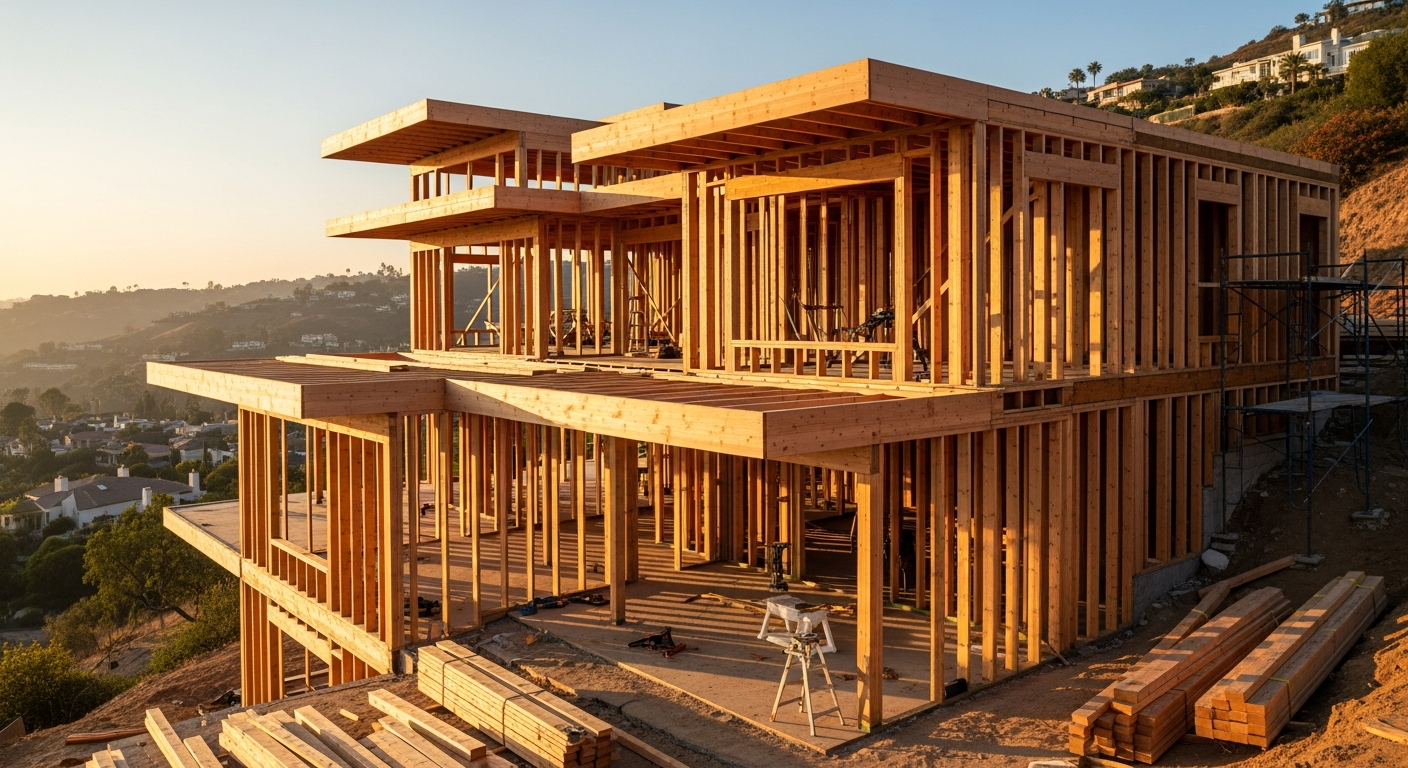
Expert permit guidance helping families, businesses, and schools rebuild with clarity, care, and confidence after the 2025 Los Angeles and Eaton fires.
The 2025 fires that impacted Pacific Palisades and Altadena left many homeowners, property owners, and communities facing an overwhelming rebuild process. Beyond the emotional toll, rebuilding requires navigating emergency regulations, changing municipal requirements, and time-sensitive permit approvals.
At Ocean Permits, we help guide rebuild projects through this complex process — providing clarity, coordination, and advocacy so families and communities can move forward with confidence.
Understanding Emergency Rebuild Permits in Los Angeles
After major wildfire events, the City and County of Los Angeles implement emergency rebuild programs designed to accelerate recovery while maintaining safety and compliance.
These programs may include:
- Expedited plan review timelines
- Fee waivers or reductions
- Pre-approved or standard plan options
- Streamlined interdepartmental coordination
While these measures are intended to help, they also introduce new requirements and documentation standards that must be followed precisely to avoid delays.
Why Rebuild Permitting Can Still Be Challenging
Even with emergency programs in place, rebuilding in Pacific Palisades and Altadena remains complex due to:
- Jurisdiction-specific rebuild checklists
- Coordination between Building & Safety, Planning, Fire, and Public Works
- Site-specific conditions such as grading, coastal or hillside regulations
- Revised codes and post-fire safety requirements
- High permit volumes creating review backlogs
Without experienced guidance, small oversights can lead to resubmittals that add weeks — or months — to a rebuild timeline.
How Ocean Permits Supports Fire Rebuild Projects
Ocean Permits works closely with homeowners, contractors, architects, and developers to manage the full rebuild permitting process from start to approval.
Our rebuild services include:
- Navigating emergency rebuild ordinances and eligibility requirements
- Managing permit applications and resubmittals
- Coordinating with city and county departments
- Leveraging pre-approved or standard plans when applicable
- Monitoring plan review comments and responding efficiently
- Advocating for timely reviews in high-demand environments
By streamlining approvals and reducing resubmittals, we help rebuild projects move forward with fewer surprises and less stress.
Supporting Homes, Businesses, and Community Spaces
Rebuilding after a fire is not just about structures — it is about restoring communities.
Ocean Permits supports:
- Residential rebuilds for single-family homes and multi-unit properties
- Commercial and mixed-use projects affected by fire damage
- Schools, childcare centers, and community facilities
- Projects requiring zoning, planning, or entitlement coordination
Our approach balances technical accuracy with compassion — recognizing the urgency and emotional weight of rebuilding after loss.
Building Back Stronger and More Resilient
Rebuild projects present an opportunity not only to restore what was lost, but to build safer, more resilient, and more sustainable structures.
We help ensure rebuilds align with:
- Updated fire-life safety standards
- Structural and seismic requirements
- Energy efficiency and modern code compliance
- Site-specific safety considerations
The goal is not just approval — but long-term safety and durability.
When to Start the Rebuild Permitting Process
The rebuild permitting process should begin as early as possible, even while design decisions are still underway. Early coordination helps identify eligibility for emergency programs, fee waivers, and expedited pathways before timelines are locked in.
Moving Forward with Confidence
Rebuilding after the 2025 fires is a journey — one that requires patience, expertise, and strong coordination.
Ocean Permits is proud to support the recovery of Pacific Palisades and Altadena, helping families, businesses, and institutions rebuild with clarity, care, and confidence.
Pacific Palisades and Altadena use different permit systems
Pacific Palisades is a City of Los Angeles neighborhood. A qualifying replacement project starts with LADBS and the City departments named in the applicable recovery program. Altadena is unincorporated County territory: a City ePlanLA application does not substitute for a County Disaster Recovery Permit application. Our Pacific Palisades permit guide and Altadena permit guide explain the local context; our fire rebuild coordination service helps organize the correct review sequence.
The City's EO 1 Implementation Guidelines, revised June 11, 2026, incorporate changes made by EO 8. For a qualifying replacement dwelling, the location, footprint and height tests must be checked together. A reference to 110% does not mean every owner can enlarge any part of a building by 10%, add a story or bypass coastal review. Larger changes, commercial properties and added units need their own pathway analysis before the design is finalized.
The practical LADBS rebuild sequence
First, assemble the pre-fire building record: approved drawings if available, permits, the survey, footprint and height information, and evidence identifying the damaged structure. Compare the proposed design against the current eligibility guidance. Document additions, a relocated building footprint, basements, accessory structures and any change in use rather than describing every scope as a like-for-like replacement.
Next, the licensed design team prepares coordinated drawings and any required structural calculations, energy documentation and soils/geology material. Identify the applicable code edition with the reviewer. The current City guidance addresses the Governor's Executive Order N-29-25, possible use of the 2022 Building Standards Code, and specific fire/public-life-safety requirements from the 2025 standards. A rebuild is not simply exempt from code compliance, and a code-edition assumption should not be made from the year of the original house.
Submit the applicable plan-check application through the City's directed process, including ePlanLA where required, and obtain the project identifiers. Maintain a correction log covering Building, Planning, Fire, Engineering and other assigned reviewers. Answer each comment, revise every affected sheet consistently, and keep outside-agency clearances attached to the permit record. Approved building drawings do not automatically clear grading, temporary construction power, a public-way connection or separate trade work.
Before issuance, verify the debris/site release, remaining clearances, fee treatment and contractor or owner-builder information. During construction, inspections still occur at the required stages. For hillside excavation, review engineered shoring and excavation permits; for damaged foundations, see the foundation repair and underpinning guide. After rebuilding, utility restoration and final approvals are separate closeout tasks, not an automatic consequence of the first permit.
What an Altadena application must account for
The County's current Apply for Permits instructions distinguish rebuild applications from temporary housing applications. Rebuild submissions through EPIC-LA include architectural plans, ownership information and the supplemental rebuild form. Owners can submit when ready, but the County states that Phases 1 and 2 of debris removal must be complete before permits are issued. Coordinate County Planning, Public Works Building and Safety, Fire and any other assigned reviewers; do not reuse a City-only checklist without checking the County requirements.
A County preapproved plan or PreCheck tool may help eligible projects, but neither replaces the parcel-specific review of setbacks, drainage, utility service, foundation design or access. Adding a unit also needs a scope decision: ADU permit coordination and the ADU process guide are useful starting points, not proof that every proposed configuration qualifies for disaster-recovery treatment. Our AB 956 detached ADU guide separately explains the January 1, 2027 effective date; that law is not an already-effective rebuild shortcut.
Rebuild schedule: track release gates, not a promised approval date
Ask the project team for a schedule with separate design, agency-review, correction and clearance milestones. The following table is a process-planning tool, not an agency service-level guarantee or a quoted construction timeline. A review cycle cannot be treated as the entire time from an early sketch to an issued permit.
| Stage | Review or coordination task | What releases the next step |
|---|---|---|
| Jurisdiction and eligibility | City EO 1 review for eligible Pacific Palisades projects; County disaster-recovery application for Altadena. | Parcel address, ownership, original building records and proposed replacement scope. |
| Design and engineering | Coordinate architectural, structural, energy, soils and site information as applicable. | A complete plan set; a documented decision about foundation reuse, grading and retaining walls. |
| Plan review and corrections | Track each review discipline and respond to all correction items with coordinated revisions. | Corrected drawings and written responses accepted by the reviewing departments. |
| Site and agency clearances | Confirm debris-removal release, utilities, Fire and any required Planning or public-way approvals. | Written clearances associated with the permit record; County debris-removal phases complete before issuance. |
| Fees and permit issuance | Verify the specific fee-relief program and any remaining charges. | Approved plans, required clearances and verified applicant/contractor information; issuance before construction. |
| Construction and closeout | Schedule inspections before covering regulated work and resolve inspection corrections. | Applicable final approvals and occupancy documentation; an issued permit alone is not project closeout. |
Fee relief and the costs that still need a budget
City and County fee programs are not interchangeable. LADBS' EO 7 instructions require proof that the applicant owned the property at the time of the January 2025 fires and still owns it, plus an eligible repair or reconstruction scope. The posted process asks for a notarized deferred-collection affidavit, a Grant Deed and staff verification. Do not describe a suspension as an automatic permanent waiver for every owner or every permit.
The County's separate deferral/refund program principally covers eligible owner-occupied replacement single-family homes in unincorporated territory. Its published criteria require ownership and occupancy before January 7, 2025; commercial, multifamily and non-owner-occupied rental projects are excluded from that program. The County explains that covered fees will not be collected from qualifying owners, but eligibility must still be verified. Designer and contractor charges, utility or external-agency costs, and other listed exclusions remain separate.
Obtain a line-item budget for surveys, soils/geology, structural testing, design, agency charges and permit coordination. For additions or a changed scope, ask which costs remain eligible and which are new development costs. An independent written fee determination is more useful than a generic total advertised for a different parcel.
Fire rebuild permit questions
Does LADBS handle rebuild permits in both Pacific Palisades and Altadena?
No. Pacific Palisades is in the City of Los Angeles and uses LADBS and applicable City clearances. Altadena is unincorporated Los Angeles County and uses County Planning, Public Works Building and Safety, and other County reviewers. Confirm the parcel jurisdiction before choosing an application portal or requesting fee relief.
What makes a Pacific Palisades home eligible for the EO 1 rebuild pathway?
The City's June 11, 2026 EO 1 Implementation Guidelines describe eligibility for qualifying structures damaged or destroyed in the January 2025 wildfires, with limits on replacement location, footprint and height. The commonly cited 110% limits are not a universal right to increase floor area. ADUs, basements, accessory buildings, coastal conditions and commercial work have additional or different rules that require a project-specific eligibility review.
Can I submit an Altadena rebuild application before debris removal is finished?
The County accepts applications when an owner is ready to submit. Its current Apply for Permits guidance states that Phases 1 and 2 of debris removal must be completed before permits are issued. Starting plan preparation early does not authorize construction on an uncleared site.
Are all fire rebuild permit fees automatically waived?
No. The City has an EO 7 fee-suspension process requiring eligibility verification, a notarized affidavit and a Grant Deed. The County has a separate fee deferral and refund program with ownership, occupancy and project-type restrictions. Professional design, construction, utility and other excluded charges still need a separate budget. Obtain written agency confirmation rather than assuming a zero-fee rebuild.
Can my existing foundation be reused after a wildfire?
Possibly, but appearance alone is not sufficient. The design team and reviewing agency must determine whether structural condition, material testing, soils information and the proposed building loads support reuse. A foundation or retaining wall that is not accepted for reuse changes the drawings, engineering scope and permit coordination.
How long will it take to obtain a rebuild permit?
There is no reliable single duration for every fire-affected parcel. Agency eligibility review, a complete coordinated submittal, correction responses, site clearance and outside-agency approvals each affect issuance. Ask for a schedule separating design time, each agency review cycle and the remaining clearance gates; an expedited review target is not a guaranteed permit issuance date.
Can I add an ADU or extra living area during the rebuild?
Potentially, but separate the replacement building from new development in the application scope. City EO 1 guidance treats certain ADU configurations differently from the replacement dwelling's footprint and height limits. County projects follow County disaster-recovery and ADU rules. Confirm the correct pathway before relying on streamlined eligibility.
What documents should I send Ocean Permits for an initial rebuild review?
Send the property address and parcel number, ownership information, prior permits or approved plans, the proposed replacement scope, debris-removal status, available survey and engineering reports, and any agency correspondence. Ocean Permits is a women-owned permit coordination business; call 213-277-8777 to discuss the applicable City or County pathway.
Official recovery sources
Reviewed October 10, 2026. Agency instructions and eligibility can change; use the current documents for the actual application.
- City EO 1 Implementation Guidelines — June 11, 2026 revision, including EO 8 and code-edition guidance
- LADBS EO 7 fee suspension eligibility and application instructions
- LA County disaster-recovery applications and debris-removal prerequisites
- LA County fee deferral and refund eligibility, exclusions and application process
Related Rebuild Guides
Ready to move your rebuild forward?
Partner with Ocean Permits to streamline approvals and navigate the rebuild process with confidence.
Request a Consultation