
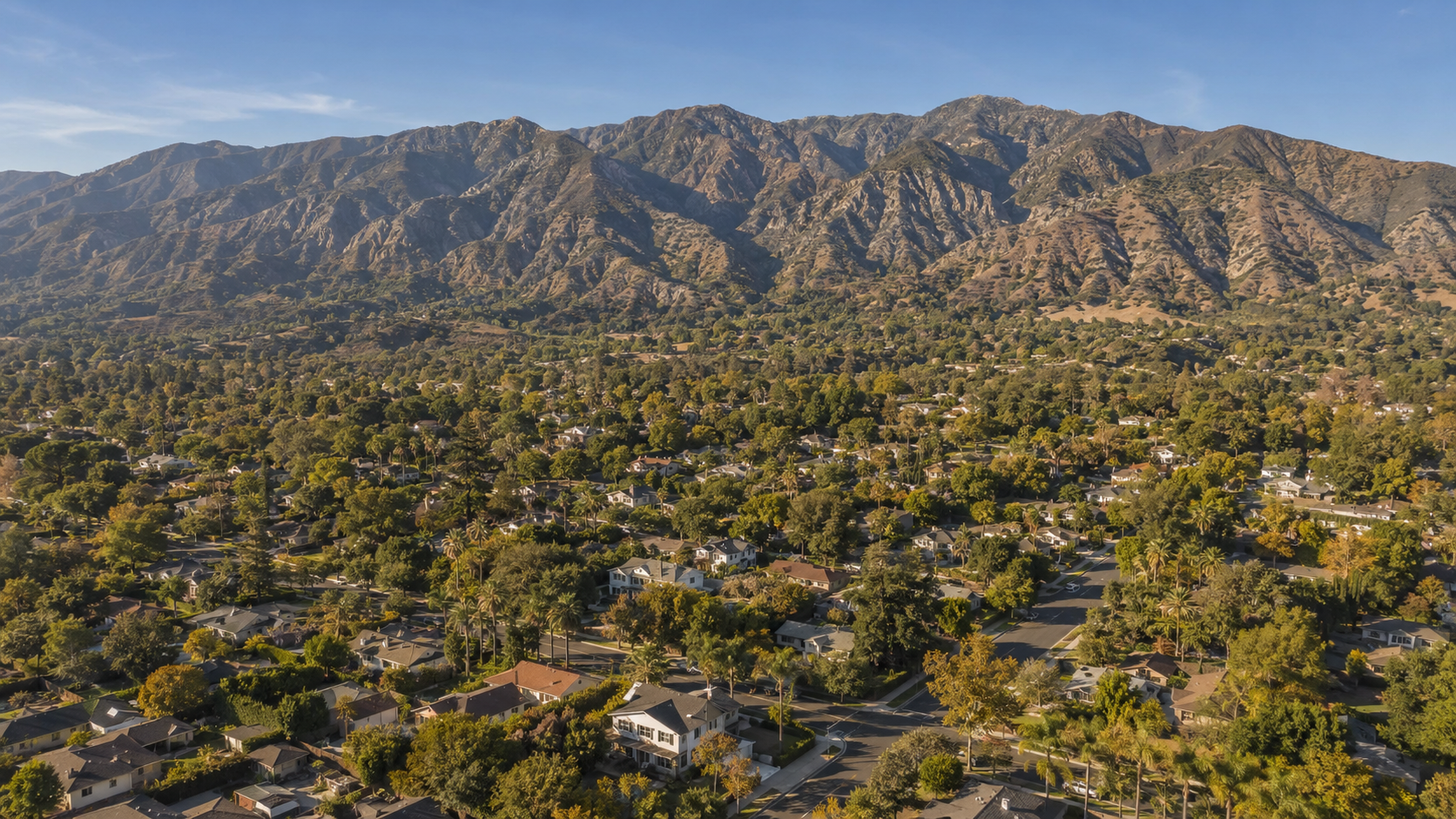
Altadena
Permit Expediting
Eaton Fire Rebuild: We are actively supporting Altadena homeowners and property owners rebuilding after the January 2025 Eaton Fire. We navigate LA County's expedited rebuild permitting process and help owners move from debris clearance to permit issuance as efficiently as possible.
Altadena is unincorporated Los Angeles County — a critical distinction that changes the entire permitting process compared to neighboring cities. Getting this wrong costs months.
Because Altadena has no city government of its own, all building permits are issued by the Los Angeles County Department of Building & Safety (LACBS) and land-use approvals come from the LA County Department of Regional Planning (DRP) — not LADBS, not the City of Pasadena, and not any other city department. Property owners who submit to the wrong agency lose weeks or months before the error is discovered.
Following the January 2025 Eaton Fire, the County has activated emergency permitting pathways for fire-affected properties. These include streamlined plan check processes, state-required timeline mandates under AB 2234, fee deferral programs, and fire rebuild-specific inspection programs. Ocean Permits & Development guides Altadena owners through every step — from debris removal and site clearance and haul-route and debris-hauling coordination coordination to final inspection. We also support neighboring La Cañada Flintridge property owners dealing with smoke and ash impacts or hillside rebuild questions tied to the same fire. Many Altadena rebuilds also involve seismic retrofit scope for surviving structures or solar panel permits as part of the new build, and hillside foothill lots frequently need a geotechnical soils report before grading plans can move forward.
Unincorporated LA County adopts the California Building Code and California Residential Code through LA County Code Title 26 (Building Code) and Title 22 (Planning and Zoning), both administered with County-specific amendments distinct from the Los Angeles Municipal Code that governs the neighboring City of Los Angeles. Fire-hazard construction standards for Altadena's High and Very High FHSZ designations are layered on top of these titles under the California Building Code's Chapter 7A, and foothill grading work is reviewed against the County's hillside grading ordinance provisions within Title 26.
Altadena's Permitting Agencies
LA County Building & Safety (LACBS)
Issues structural, mechanical, electrical, and plumbing building permits for unincorporated Altadena. This is not LADBS — it is a completely separate agency with its own staff, submittal portal, plan-check standards, and inspection procedures. Submitting to the wrong agency is one of the most common and costly mistakes Altadena permit applicants make.
LA County Department of Regional Planning (DRP)
Handles zoning, land use, conditional use permits, variances, and environmental review for unincorporated LA County. Zoning compliance and DRP clearances are required before LACBS will issue a building permit for many project types.
Fire Hazard Severity Zone (FHSZ)
Most of Altadena is designated High or Very High FHSZ by CAL FIRE. New construction and major remodels must comply with Chapter 7A of the California Building Code — fire-resistant construction standards covering roofing, exterior walls, vents, eaves, decks, and exterior glazing.
LA County Fire Department
Fire life safety review, including access requirements, sprinkler systems, and defensible space compliance, is coordinated through the LA County Fire Department — separate from LAFD, which serves the City of Los Angeles.
Our Rebuild Process
- 01
Agency & Status Verification
We confirm your property's unincorporated status, identify the correct permitting agencies (LACBS and DRP), research the property's permit history, and determine whether post-fire streamlining programs apply. This prevents the costly misdirection of submitting to the wrong agency.
- 02
Rebuild Pathway Analysis
We assess whether your project qualifies for expedited ministerial review, self-certification, or pre-approved plan programs under the post-Eaton Fire emergency protocols. We structure the submittal strategy to put your project in the fastest available track.
- 03
Application Preparation
We coordinate with your architect or engineer to prepare a complete, code-compliant submittal package — including Chapter 7A fire-resistant construction documentation, Title 24 energy compliance, grading plans where required, and any DRP clearances needed before LACBS review.
- 04
Plan Check & Corrections
We track the application through LACBS plan check, respond to corrections promptly, and communicate directly with County plan checkers to resolve technical questions. Correction response time is critical in the post-fire rebuild environment.
- 05
Inspection Coordination
We prepare your contractor for the LA County inspection sequence — which differs from LADBS city inspections — including required special inspections for fire-resistant construction and any grading or foundation inspections specific to foothill properties.
Our Altadena Expertise
- LA County Building & Safety permit coordination for unincorporated Altadena
- LA County Department of Regional Planning (DRP) submittals
- Eaton Fire wildfire rebuild permits — expedited county tracks
- Fire Hazard Severity Zone (FHSZ) compliance documentation
- Residential new construction and additions under County code
- ADU and garage conversion permits under LA County ADU standards
- Grading permits for hillside and foothill properties
- Code violation resolution for unincorporated LA County
- Demolition permits and debris clearance coordination
- Self-certification program coordination with licensed design professionals
Eaton Fire rebuild sequence: County approvals, not LADBS
Altadena is unincorporated Los Angeles County. Begin with County Regional Planning's disaster-recovery determination and County Public Works Building and Safety, using EPIC-LA or the County One-Stop process as appropriate. County Fire, Public Health, the water provider and other reviewers join when the parcel or scope triggers their clearance. A Pasadena or City of Los Angeles application does not replace these County approvals.
Establish the pre-fire legal use, size and location using the permit record, site plan and ownership documents. The County's current recovery FAQ describes Eaton Fire like-for-like modifications of up to 10 percent or 200 square feet, whichever is greater, while also requiring the applicable location, use and other eligibility conditions. Have Regional Planning confirm which measurements and provisions apply; a floor-area allowance is not automatic permission to change every height, setback or footprint. Title 22, Chapter 22.256 provides the disaster-recovery framework; confirm current Eaton-area amendments and application conditions with Regional Planning.
Like-for-like zoning relief is not a waiver of building, fire or health-and-safety requirements. A different scope can need a different planning path. The County generally requires disaster-recovery applications within two years of the emergency declaration, with extensions potentially available. Confirm the current deadline and any extension for the actual application. Do not promise eligibility from a contractor's informal description alone.
Debris closeout, soils, drainage and fire-resistant construction
The County allows plan preparation and application review while debris closeout is being resolved, but its recovery FAQ requires debris removal to be complete before building permit issuance. Government-assisted removal and private opt-out removal have different approval records. A private opt-out project needs Public Works approval; retained foundations require engineering evidence of suitability, and later removal of a retained, unsuitable foundation can create a separate demolition scope. Review the existing fire debris removal guide before assuming a hauling receipt is the final clearance.
Grading is evaluated from the earthwork, backfill and actual site conditions. County Building Code Appendix J and the applicable approved erosion plan govern the grading work. The post-fire erosion control and debris-flow approval guide explains why a cleared foothill lot still needs wet-weather protection, and why permanent LID relief is not a blanket temporary-erosion exemption. Coordinate this with the grading and retaining-wall design, especially where a new foundation relies on the same slopes or drainage outlets.
Chapter 7A is the familiar earlier-code wildfire building framework; the newer 2025 California Wildland-Urban Interface Code and the project's accepted code edition must also be checked for 2026 permits. Confirm the current County rebuild requirements instead of treating like-for-like zoning relief as permission to omit ignition-resistant features. The fire-zone building-code guide and fuel-modification plan guide address different parts of that coordination. Vegetation clearance does not replace building-envelope compliance.
Obtain the required water will-serve documentation and resolve sewer or onsite-wastewater questions with the serving agencies. New or changed bedrooms can affect septic review. Utility service is not established by a building permit alone; use the post-fire utility reconnection guide while confirming the actual providers for the Altadena parcel. Ask whether an eligible ADU or revised footprint changes any of the recovery assumptions before finalizing the design.
Published County fees, fee relief and review targets
| Review / cost | Published basis for an owner without qualifying fee relief | Timing and relief conditions |
|---|---|---|
| Regional Planning | County recovery FAQ: $1,429 like-for-like; $1,623 non-like-for-like without a hearing | Like-for-like initial review target 10 business days; rechecks 5 business days; eligibility confirmed separately |
| Building plan check and permit | County examples: approximately $12,000 for 1,500 sq ft; $22,000 for 3,000 sq ft | Valuation/scope-dependent examples, not a per-square-foot quote; complete plans and all clearances required |
| Fire plan and sprinkler review | FAQ lists $565 building plan review and $565 sprinkler plan review when applicable | Separate inspections and fuel-modification scope can add charges; verify current invoice and relief |
| Grading, erosion and geotechnical review | Current volume, review-hour, inspection and scope calculations | Site conditions and separate approvals can extend the rebuild path; confirm each fee's relief status |
| Private design, construction and other excluded costs | Separate proposals; no universal price | Not waived by the County permit-fee program; utilities, addressing, surveys and other listed exclusions remain |
These amounts are the County recovery FAQ's published examples reviewed October 22, 2026, not Ocean Permits prices or a guaranteed final invoice. Its waiver/refund guidance covers qualifying single-family owners who both owned and lived in the property before January 7, 2025. Published covered categories include zoning, building review/permit/inspection, qualifying soils/geology, fire review/inspection and applicable Public Health fees. Private designer/builder charges, addressing, corner-record surveys, construction recycling deposits and specified external-agency charges are not made free by that program. Confirm eligibility and each line item with the County.
The County publishes 10-business-day initial reviews and five-business-day rechecks for the described rebuild process, including its like-for-like Planning review. These are review-cycle commitments, not a promise that a home is permitted or rebuilt in ten days. Consultant preparation, corrections, debris completion, water service, soils, other clearances and construction remain separate dependencies. Track one correction matrix across the County agencies and design team. Program-specific self-certification, where accepted, does not eliminate eligibility checks, required permits, inspections or final closeout.
Official County references — reviewed October 22, 2026
Current recovery FAQ: like-for-like, fee examples/waivers, debris and review targets.
Regional Planning disaster recovery and County Code Titles 22 and 26, including disaster-recovery and grading provisions.
County grading review sheet: Appendix J/J110 and erosion-control requirements.
Common Questions
Who qualifies for the County's fire-rebuild permit-fee relief?
The County recovery FAQ describes waiver/refund eligibility for qualifying single-family owners who both owned and lived in the property before January 7, 2025. Confirm each fee and the owner's eligibility with the County. Private design and construction, addressing, specified surveys, deposits and external-agency charges are not automatically covered.
Does debris removal completion mean grading and erosion review are finished?
No. The debris closeout allows the rebuild to advance, but grading depends on earthwork, backfill and site conditions. An approved temporary erosion plan can still be required for rainy-season grading, and drainage or retaining structures may need additional review.
Can an Eaton Fire like-for-like rebuild be somewhat larger?
The County's published guidance describes modifications of up to 10 percent or 200 square feet, whichever is greater, subject to the applicable use, location and other recovery criteria. Regional Planning must confirm the proposal's eligibility. Do not assume a floor-area allowance authorizes every change in height, footprint or setback.
Who issues building permits in Altadena?
Altadena is an unincorporated community in Los Angeles County — not a city. Building permits are issued by the Los Angeles County Department of Building & Safety (LACBS) and land-use approvals come from the LA County Department of Regional Planning (DRP). These are completely separate agencies from LADBS, which serves the City of Los Angeles. This distinction affects the entire permitting process: the portal, the plan checkers, the standards, and the inspection procedures are all different.
Is there a streamlined process for Eaton Fire rebuild in Altadena?
Yes. Following the January 2025 Eaton Fire, LA County and the State of California implemented expedited permitting pathways for fire-affected properties. These include streamlined plan check, state-required timeline mandates under AB 2234, fee deferrals, self-certification options for licensed design professionals, and pre-approved standard plan programs. We navigate these pathways and structure every submittal to qualify for the fastest available track.
What is the typical permit timeline in Altadena?
The County recovery FAQ publishes initial review commitments of 10 business days and rechecks of five business days for its described rebuild process, including like-for-like Planning review. These are review cycles, not an end-to-end permit or construction guarantee. Design preparation, corrections, debris closeout, grading, utilities and required clearances remain separate dependencies.
Do Altadena properties need to comply with Fire Hazard Severity Zone requirements?
Confirm the parcel's current fire-hazard mapping and the County's applicable wildfire-construction requirements. Chapter 7A is familiar earlier-code terminology; the newer Wildland-Urban Interface Code and the accepted rebuild code edition must also be checked for a 2026 permit. Like-for-like zoning relief does not automatically waive building, fire or health-and-safety requirements.
Can I rebuild a larger home than what burned?
Rebuilding a home that is larger or different in design than the original structure adds regulatory complexity. Like-for-like rebuilds qualify for the most streamlined review pathways. Expansions, design changes, or projects that require variances or DRP discretionary approvals face additional review steps and longer timelines. We assess what your specific parcel and project scope qualifies for and advise accordingly.
What is the self-certification program for Altadena rebuilds?
LA County has implemented a self-certification program for qualified fire rebuild projects, allowing licensed architects and structural engineers to certify that their plans comply with applicable codes — reducing or eliminating the County plan check cycle for eligible projects. Not all projects qualify. We coordinate with your design team to evaluate self-certification eligibility and manage the program requirements when it's the fastest path.
Can I add an ADU as part of my Altadena rebuild?
Yes. State ADU law applies in unincorporated LA County the same as it does in incorporated cities, and many Eaton Fire rebuild projects include a new or reconstructed ADU alongside the primary residence. LA County's own ADU development standards — setbacks, height, and parking — apply on top of the state framework, and a rebuild property may also qualify for fire-rebuild-specific streamlining on the ADU portion. We scope the ADU alongside the main house submittal rather than as a separate, later permit.
Does a surviving structure need a seismic or structural evaluation before rebuilding around it?
A partially damaged structure that the owner intends to keep — a garage, a detached structure, or a portion of the original foundation — typically needs a structural engineer's evaluation to confirm it can be incorporated into new construction, and in some cases a seismic retrofit scope if the surviving structure has deficiencies independent of fire damage. We coordinate this evaluation early, since it affects both the foundation plan and the overall rebuild timeline.
Is solar required on an Altadena rebuild?
A true like-for-like rebuild under the County's streamlined fire-rebuild exemption may qualify for a narrower solar-ready wiring requirement rather than the full Title 24 photovoltaic mandate, while a rebuild that exceeds the like-for-like threshold is generally treated as new construction and must include solar under the state's standard mandate. We confirm which category applies before the electrical and roof plans are finalized, and many Altadena rebuild clients choose to add solar and battery storage regardless, given the wildfire-prone area's exposure to Public Safety Power Shutoffs.
How does grading work on Altadena's foothill lots?
Altadena's foothill properties sit against the San Gabriel Mountains, and many lots require grading review under LA County's hillside grading provisions for cut-and-fill volume, drainage, and slope stability — on top of any Chapter 7A fire-construction requirements for the structure itself. A geotechnical soils report is typically required before grading plans can be approved. We coordinate the soils engineer, the grading plan, and the building permit as one sequenced submittal rather than three separate processes.
Rebuilding in Altadena?
We help Eaton Fire-affected property owners navigate LA County's rebuild permits and get back on track faster.
Schedule a ConsultationOr call +1 (213) 277-8777
Related Resources
- Fire Rebuild Permit Guide
- Pacific Palisades Permits
- La Cañada Flintridge Permits
- Sunland-Tujunga Permit Expediting
- San Marino Permit Expediting
- ADU Permits
- Code Violation Permits
- Blog: Rebuilding Palisades & Altadena
- Blog: Private Well & Water System Permits
- Blog: Fuel Modification Plan Permit
- Blog: Haul Route & Debris Hauling
- Blog: Temporary Power Pole Permits
- Blog: Asbestos Survey & Rule 1403