_1781464136662.png)
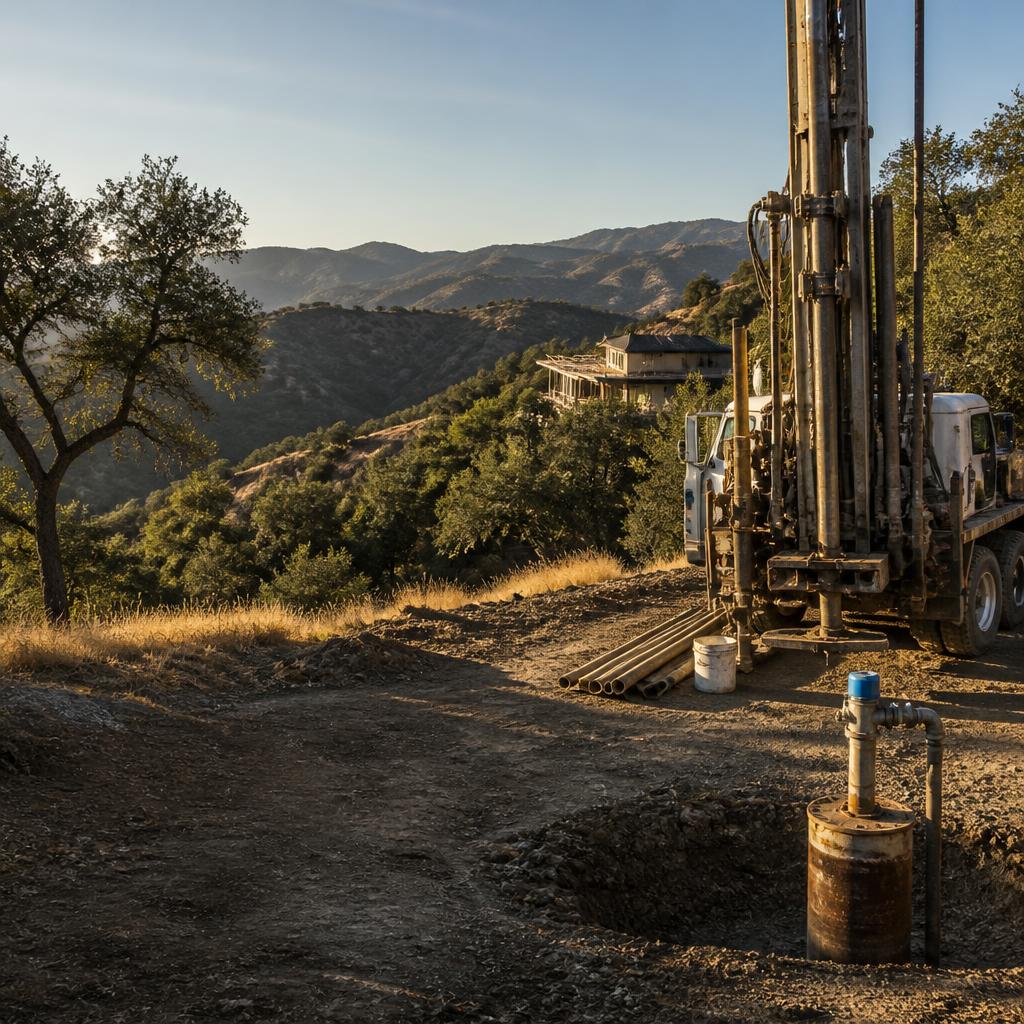
Women-owned, LA-based permit expediting firm. We coordinate private well, potable water, septic, fire-flow, and building permit reviews for hillside rebuilds in Altadena, Topanga, Malibu, and unincorporated Los Angeles County. Free consultation — call 213-277-8777.
Many hillside homes in upper Altadena, Topanga Canyon, rural Malibu, and other unincorporated foothill areas do not receive water from a conventional public water main. Instead, the house depends on a private groundwater well, a pump, pressure equipment, and sometimes a storage tank. After a fire or major reconstruction, that private system becomes a permitting issue in its own right.
A private well is not just a hole in the ground and it is not interchangeable with a septic system or a fire cistern. It is the source of drinking water for the home. The County needs to know where it is, how it was constructed, whether it can produce an adequate supply, whether the pump and wellhead survived, and whether laboratory testing supports potable use before the rebuilt house is occupied. Those questions can run alongside, but are not answered by, the building permit.
This guide explains the private-well permit path for a rebuild: how LA County Department of Public Health's Drinking Water Program fits into the process, when an existing well may qualify for a like-for-like evaluation, what triggers reconstruction or a new well, how to coordinate well and septic locations, which tests commonly matter, what happens to an abandoned well, and how to sequence all of this with the building permit.
What a Private Well Water System Includes
A private domestic water system usually has several connected parts: the groundwater well and casing, a sanitary wellhead, a submersible or other pump, electrical controls, pressure tank, distribution piping, storage or treatment equipment where needed, and the fixtures inside the home. The permit question is not limited to drilling depth. A rebuild can affect the location of the wellhead, the route of water lines, the electrical service, the pressure system, the storage volume, and the equipment needed to make the water suitable for drinking.
Hillside sites add practical constraints. A well may sit below the house and need a pump to move water uphill. A narrow canyon road can restrict the drilling rig or a crane. A post-fire site may have damaged buried piping, ash or sediment in equipment, unstable slopes, or a temporary access route that is different from the original driveway. These conditions affect both the design and the cost. They also explain why a well that worked for the former house cannot simply be assumed to serve a new plan without review.
For an existing system, we start by identifying every component that will remain. For a new or reconstructed system, the site plan should show the proposed well location, access for the driller, the building, septic or OWTS components, property lines, and other features that influence groundwater protection. Clear documentation gives the County a basis for deciding whether the project is an evaluation, repair, reconstruction, deepening, new construction, or destruction application.
Who Regulates the Well in LA County?
In unincorporated Los Angeles County, private well work is generally reviewed by the Los Angeles County Department of Public Health, Environmental Health Division, Drinking Water Program. The County's review operates within the statewide framework for well standards administered by the State Water Resources Control Board. The County program is the practical point of coordination for applications involving private domestic well construction, deepening, reconstruction, and destruction in the County jurisdiction.
That is different from the building permit agency. A property in unincorporated Altadena or Topanga generally follows the LA County Public Works Building and Safety path. A property in the City of Malibu follows Malibu's local building process, and another incorporated property may follow its own city agency. The same parcel can also have a separate septic review through LA County Public Health's Onsite Wastewater Treatment Program and a separate fire review for storage or access. Getting the agency map right at the start prevents a common delay: submitting a building package while the water-source question is still unresolved.
Well-specific field work should be performed by an appropriately licensed contractor, generally a California C-57 well drilling contractor. The C-57 requirement matters because drilling, casing, developing, testing, and destroying a well are specialized activities. The contractor's work should follow the approved scope and produce records that can be included in the property file. We do not substitute an invented citation number for the County's current requirements; instead, we confirm the current application and documentation requirements for the actual parcel.
Like-for-Like Rebuilds: When the Existing Well May Stay
A like-for-like rebuild does not automatically mean “no water permit.” It means the County has a clearer basis to evaluate the existing source instead of requiring a wholly new water-system design. If the original well is identifiable, its construction history is available, the well and pump remain usable, and the replacement home does not materially increase demand, the County may allow the well to remain in service after an evaluation and required testing.
The practical review questions include: Is the well on the same parcel and in a location that can remain sanitary and accessible? Is the wellhead intact? Does the pump operate? Is there evidence of casing, piping, or electrical damage? Can the system provide adequate quantity and pressure for the proposed fixtures? Are the well records and prior tests consistent with the site? Is the water safe for domestic use? A “yes” to the original existence of a well does not answer all of these questions after a fire.
A like-for-like analysis can change if the plans add bedrooms, an ADU, new occupancy, irrigation demand, larger fixture counts, a pool, or a fire-protection storage connection. Even when the well itself is unchanged, increased demand can trigger a capacity review. Our broader like-for-like rebuild guide explains the general rebuild concept; this page focuses on the separate private water-source questions that still need to be answered.
When Reconstruction, Deepening, or a New Well Is Needed
A well commonly moves out of the simple evaluation path when its physical condition or the proposed project changes. Fire damage to the casing, wellhead, pump, controls, or buried water line can require reconstruction or replacement work. A failed pump alone may be a repair, but changing the wellhead, casing, depth, or sanitary seal can create a permit question that should be resolved before work starts. A well that no longer produces enough water may need development, pump changes, deepening, or a new source, depending on the contractor's findings and County direction.
A new home plan can also change the analysis. An added ADU or additional bedrooms can increase domestic demand. A different foundation or grading plan can make the old well location inaccessible. A new septic field, driveway, pool, retaining wall, or fire-flow tank can create conflicts with the source or its access. The right answer is not to move the well on the drawing after the building permit is approved; it is to overlay the systems early and confirm the viable locations.
New drilling is also not a guaranteed solution to every water problem. A new location still needs agency review, a qualified driller, access planning, development and testing, pump and pressure equipment, and an acceptable relationship to the wastewater system. A hillside parcel may have a technically possible location that is not practical for a rig or that conflicts with slope stability. We treat drilling as a coordinated permit and construction decision, not as a standalone purchase order.
Well, Septic, and Fire Cistern Are Three Different Systems
The three systems are often mentioned together on canyon rebuilds, but each has a different job. The well brings groundwater into the property for drinking, bathing, and other domestic uses. The septic tank, cesspool, leach field, or seepage pit handles wastewater leaving the home. The cistern or water tank stores water for fire protection or another dedicated purpose. A well may refill storage, and a home may have all three, but approval of one does not approve the others.
The well and OWTS must be shown together because drinking-water protection depends on their relationship. The County generally requires a protective separation between a well and wastewater disposal components, but the exact distance and site-specific determination should come from the reviewing agency and the accepted design rather than an online rule of thumb. Rock, slope, groundwater conditions, system type, and existing legal conditions can affect the review. Do not place a new well or leach area based only on a generic diagram.
Fire protection adds another layer. A fire cistern can be required because the public hydrant or water supply cannot provide the required fire flow, especially on a hillside or in a Very High Fire Hazard Severity Zone. That tank is reviewed with fire protection infrastructure and access. Our water tank and fire cistern guide covers that path. It should not be treated as a substitute for potable well testing or a domestic water permit.
Water Quality Testing Before Occupancy
A rebuilt home should not be occupied on the assumption that a private well is safe because it worked before the fire. Fire response, damaged equipment, disturbed soil, standing water, changes in the sanitary seal, or a long period without use can all justify renewed testing. Bacteriological and nitrate testing are commonly important for a domestic well, and the County may request additional constituents based on the well's history, location, work performed, or test results.
Testing is more than ordering a bottle from a laboratory. The sample must be collected from an appropriate point, using a method the reviewing agency accepts, and the laboratory report must identify the source and results clearly. If a result is not acceptable, the project may need disinfection, flushing, treatment, retesting, or a technical response. Treatment equipment can then affect power, drainage, maintenance, and the building plans. Scheduling the first test early gives the design team time to react.
Water quality documentation can also matter at final inspection and occupancy. The building permit may be ready while a well report or retest is still missing. We track the laboratory deliverables with the building and OWTS submittals so the private source is not treated as an afterthought at the end of the rebuild.
Well Destruction and Abandonment
Some rebuilds keep the original well. Others cannot. A well may be physically destroyed, inaccessible, undocumented, contaminated, dry, or located where the new foundation and site plan cannot preserve it. If it will no longer be used, the appropriate path is generally a County well destruction or abandonment permit followed by work from a qualified well contractor. Informally covering the opening is not a substitute for proper destruction and recordkeeping.
Proper abandonment protects groundwater and prevents an unused well from becoming a conduit for surface contamination. It also gives the County and future owners a clear record of what happened to the original source. The contractor's completion documentation should be retained with the permit set, well records, and final rebuild file. If a replacement well is proposed, the destruction and new-source paths may need to be coordinated rather than handled as unrelated jobs.
Destruction is especially important when a new well or a new septic layout is being considered. The old source still appears on historical records and may affect how the County evaluates the proposed site. Resolve that record before construction closes the area or the old well becomes impossible to inspect.
Well Permit Costs and Timelines for LA County Rebuilds
| Item | Typical Cost | Typical Timeline |
|---|---|---|
| Well permit application / County review | Typically several hundred dollars; exact fee depends on the application type and current County schedule | Often several weeks for a complete submittal; corrections or technical review can extend the cycle |
| Existing well evaluation and records research | Typically $500–$2,500+ for site inspection, pump information, records research, and contractor coordination | About 1–3 weeks, depending on access and whether historical records can be located |
| New well drilling or well reconstruction | Commonly $15,000–$50,000+; depth, geology, access, casing, pump, and water storage can change the total substantially | Several weeks to several months, including driller scheduling, drilling, development, and required documentation |
| Potable water quality testing | Typically $300–$1,500+ for laboratory testing; a broader panel or retesting adds cost | Usually several days to a few weeks after the sample is collected, plus time for any corrective treatment |
| Well destruction / abandonment permit | Typically several hundred to a few thousand dollars including County review and licensed contractor work | Often 1–4 weeks for approval and scheduling, with final documentation after the well is properly destroyed |
These are planning ranges, not quotes or guarantees. Government fees, driller availability, laboratory charges, geology, access, pump selection, treatment, storage, and required corrections can move the total. A well review also does not include design, building-permit, septic, fire, or construction costs unless specifically listed in a project proposal.
Coordinating the Well With the Rebuild Permit
The safest sequence is to establish the water-system facts before the building plans are locked. We review the parcel's jurisdiction, obtain any available well and septic records, identify the proposed occupancy and fixture demand, and overlay the well, wastewater, building, grading, driveway, and fire-protection plans. That early map often reveals whether the original well can stay, whether a new source is realistic, or whether an abandoned source needs to be documented.
For unincorporated parcels, the broader LA County building-permit guide explains the Building and Safety side. The well application is a separate review, and the septic application is separate again. A complete rebuild schedule should show each submission, correction cycle, field visit, test, and final document. If the property is in Altadena, our Altadena permit page provides the local fire-rebuild context. For Topanga and Malibu, the applicable jurisdiction and Coastal Zone questions should be confirmed at the parcel level.
We submit and track the water-source work in parallel with the building permit rather than waiting for final inspection to discover that the well file is incomplete. That coordination is part of our permit expediting service. For a full fire-rebuild overview, see our fire rebuild services page.
Frequently Asked Questions
Who regulates a private drinking-water well in Los Angeles County?
For an unincorporated Los Angeles County property, private well construction, deepening, reconstruction, and destruction are generally reviewed through the Los Angeles County Department of Public Health Drinking Water Program. The County administers its local review within the State Water Resources Control Board framework for well standards. The building permit itself is a separate track through LA County Public Works Building and Safety, or through the applicable city agency for an incorporated parcel such as Malibu. We confirm the jurisdiction and the County's current submittal requirements before filing.
Does a like-for-like fire rebuild need a new well permit?
Not necessarily. If the existing well is documented, remains functional, can provide adequate potable water for the replacement home, and the rebuild does not materially change the water demand or the well infrastructure, the County may allow the existing system to remain in service after evaluation and testing. A pump replacement, damaged casing, changed wellhead, new treatment equipment, or a change in occupancy can create a separate permit or review need. Like-for-like treatment is parcel-specific; it is not an automatic exemption from well documentation or water-quality requirements.
Is a private well the same thing as a septic system?
No. A well supplies potable water; a septic system or other onsite wastewater treatment system disposes of household wastewater. They are separate systems reviewed under separate regulatory programs, and the well-to-septic relationship matters because the County must protect the drinking-water source from wastewater contamination. A property can need both a well review through the Drinking Water Program and an OWTS review through Environmental Health. Our guide to septic and OWTS permits explains that separate process, while this guide focuses only on the drinking-water side.
Is a well the same thing as a fire cistern or water storage tank?
No. A well is a source of groundwater for domestic use. A cistern or dedicated fire-flow tank is storage intended to supply firefighting infrastructure, and it is typically evaluated with the fire protection, access, hydrant, standpipe, pump, and building-permit package. A well may fill a storage tank, but that does not make the well itself a fire cistern, and a fire tank does not replace the need to prove potable domestic water. See our separate fire cistern guide for the fire-flow permit path.
Do I need a C-57 licensed well driller?
Well drilling, reconstruction, deepening, development, and destruction should be performed by an appropriately licensed contractor, generally a California C-57 well drilling contractor. The driller's scope should match the approved permit and the work should be documented for the County. A plumber or general contractor may coordinate related building work, but that does not substitute for the qualified well driller required for well-specific work.
What water tests are required before I occupy a rebuilt home?
The exact panel depends on the County's direction, the well history, the work performed, and the proposed use. Bacteriological testing and nitrate testing are commonly important before a private well serves a rebuilt residence, and the County may request additional constituents based on the site and circumstances. Samples must be collected and analyzed in the manner the reviewing agency accepts. A passing result is not something to assume from a clear-looking sample; laboratory documentation is part of the occupancy and approval record.
Can I add an ADU or more bedrooms to a home served by a private well?
Possibly, but the additional occupancy can trigger a new evaluation of both water supply capacity and wastewater disposal. The County may want evidence that the well produces enough water for the proposed demand, that the pump and pressure system are adequate, and that the well and septic layout remains protective of groundwater. An ADU can also change the building, septic, fire-flow, and utility scope. We review the full site plan before treating the project as a simple addition to an existing well.
What if the original well was destroyed or cannot be found after the fire?
Start with records and field verification rather than assuming a new well can be drilled anywhere on the parcel. Historical permits, well completion information, pump records, utility drawings, photographs, and surviving site features can help identify the original location and construction. If the well cannot be reused, the County may require a reconstruction, new well, or destruction process depending on what remains. A proposed new location must also be coordinated with the septic or OWTS layout, property boundaries, access, geology, and the building site.
Does an abandoned well need to be destroyed or sealed?
Generally, yes. A well that will no longer be used should not simply be capped informally or left undocumented. The County typically requires a well destruction or abandonment permit and work by a qualified well contractor so the well is sealed in a way that protects groundwater and prevents the opening from becoming a pathway for contamination or a physical hazard. The completed destruction report should be retained with the property and rebuild records.
How does the well permit run with my building permit?
The two approvals should be coordinated in parallel. The building plans establish the proposed occupancy, fixtures, utility layout, grading, access, and sometimes fire protection demand. The well review establishes whether the private source can remain, be repaired, be reconstructed, or be replaced, and what testing or documentation is needed before use. Waiting until the building permit is nearly approved can force redesign if the well location conflicts with the septic reserve area, foundation work, driveway, or required separation. We track the well, building, OWTS, and fire-related review items as one rebuild schedule.
How much does a private well permit cost in LA County?
There is no single all-in price because the cost depends on whether you are documenting an existing well, reconstructing a damaged well, drilling a new source, adding treatment, or destroying an abandoned well. County review fees are separate from the C-57 driller, laboratory, pump, engineering, and construction costs. For planning, a straightforward evaluation and testing path may be measured in hundreds or a few thousand dollars, while a new hillside well can run into the tens of thousands before related storage or treatment work. The table below gives planning ranges, not a quote.