_1781464136662.png)
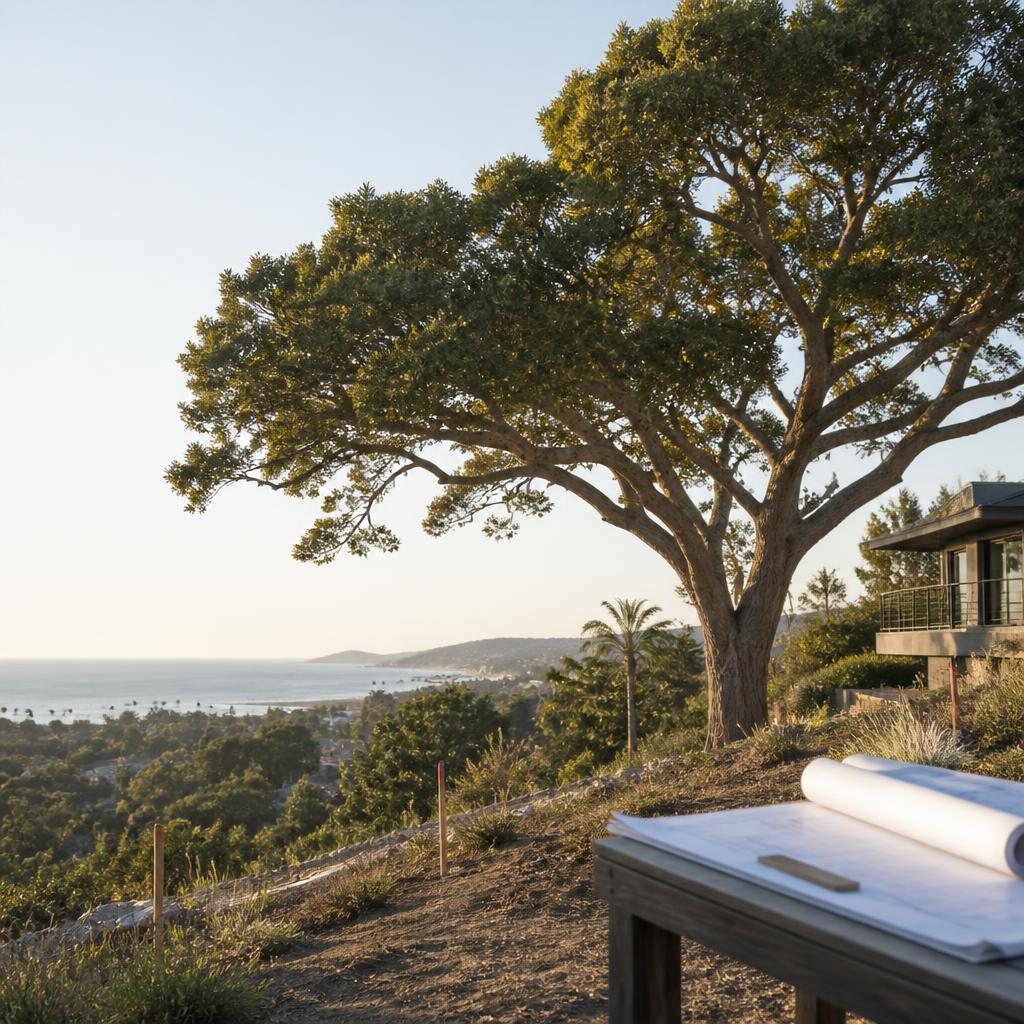
Los Angeles protected-tree rules require a permit before removing, relocating, or performing destructive work on certain native trees and shrubs. This guide explains LAMC Chapter I, Article 6, the four-inch trunk threshold, Urban Forestry Division review, arborist reports, replacement trees, costs, fines, and fire-rebuild coordination.
A homeowner often asks, “Can I remove this tree before I start construction?” In Los Angeles, that question is not answered by the building permit alone. A native oak may be protected even when it is on private property. A tree in the public right-of-way can involve a separate StreetsLA process. A remodel, ADU, hillside grading plan, driveway, utility trench, or wildfire rebuild may affect the roots or grade without technically calling the work “tree removal.” The permit question is therefore about the species, measurement, location, proposed impact, and reason for the work together.
The controlling framework for the City of Los Angeles is LAMC Chapter I, Article 6, Sections 46.00 through 46.10. Those sections work as a set: they establish disclosure and protection rules, define regulated trees, require approval for relocation or removal, address application and review conditions, and provide enforcement consequences. City guidance from the Bureau of Street Services and its Urban Forestry Division turns that framework into an application and inspection process. This guide explains the practical sequence without treating a protected-tree permit as a generic LADBS building permit.
Trust and local context: Ocean Permits & Development is a women-owned Los Angeles permit expediting firm. We coordinate multi-agency permit work for remodels, ADUs, hillside projects, and fire rebuilds in communities including Pacific Palisades and Altadena. Call 213-277-8777 or send the site address and proposed scope for an initial permit review.
The short answer: identify, document, and get approval first
If a tree may be protected, stop before removal, relocation, excavation, trenching, heavy equipment access, or major pruning. First identify the species and measure the trunk correctly. Then determine whether the tree is on private property, in the public right-of-way, or close enough to the property line that both conditions need to be mapped. Next, have a qualified Tree Expert prepare the technical record and submit the correct application through StreetsLA Urban Forestry Division or the agency identified by the City.
A permit is not guaranteed because a tree is inconvenient, blocks a view, conflicts with a preferred floor plan, or makes a rebuild more expensive. The strongest applications explain the actual site constraint, show what alternatives were studied, and include a replacement or mitigation proposal when required. If the tree is hazardous, document the hazard promptly; do not treat an emergency as permission to skip the record.
What LAMC Chapter I, Article 6, Sections 46.00–46.10 cover
Article 6 is often called the Protected Tree and Shrub Ordinance. Section 46.00 is important at the front end of a project because it connects protected-tree disclosure and protection to submitted site plans. Sections 46.01 and 46.02 establish the definition and the requirement to apply for and obtain a Public Works permit before relocating or removing a regulated tree that is not governed by another specialized article. The remaining provisions in Sections 46.03 through 46.10 address the application, decision, conditions, replacement and enforcement structure. The exact current text and any later amendments control over a summary, so a project team should read the code and current Urban Forestry Division instructions together.
The practical point is that “removal” is broader than cutting a trunk. Current City guidance describes removal as an act that causes a protected tree or shrub to die, including damage to roots or other parts by fire, toxic substances, equipment or machinery, or a change in natural grade through excavation. That matters on a hillside project: a footing, retaining wall, pool, driveway, utility trench, or grading operation can create a regulated tree issue even when the plans do not show a tree-removal line item.
Article 6 does not replace all other approvals. Planning review, LADBS building or grading permits, a public-right-of-way permit, fire review, utility clearance, a Coastal Development Permit, or environmental review may also apply. The protected-tree application should be coordinated with those plans so the City is not asked to approve a tree solution that conflicts with the construction set.
Which trees are protected, and how the four-inch threshold works
Los Angeles protects specified Southern California native species rather than every tree in the City. The commonly encountered list includes the following species. The common name is not enough for an application: a Tree Expert should confirm the scientific identification, condition, and whether a multi-stem specimen is one tree for measurement purposes.
Under the Article 6 definition, a listed native tree or shrub is generally protected at four cumulative inches or more in diameter, measured four and one-half feet above ground level at the base of the tree. “Cumulative” is significant. A specimen with several trunks may meet the threshold even if no single trunk is four inches. A measurement taken at the wrong height, or after a grade change, can produce a misleading conclusion. Photograph the measurement and show the datum on the arborist report.
Urban Forestry Division and StreetsLA: the agency path
StreetsLA is the Bureau of Street Services, and its Urban Forestry Division manages the City’s public-right-of-way trees and administers protection for certain native trees and shrubs on private property. The Division receives an application, reviews the location and supporting material, and may inspect the tree before communicating findings or requesting revisions. If removal cannot be justified, or if redesign can preserve the tree, the application can be denied. Three or more removals may require an additional Board of Public Works presentation under the current process.
That agency role is why a protected-tree request should not be filed as an ordinary LADBS correction. LADBS can review the house, ADU, addition, structural work, or grading. Urban Forestry Division reviews the tree decision. The Bureau of Engineering or another Public Works unit can have authority over the street tree, sidewalk, driveway approach, or public right-of-way. A complete permit strategy identifies each approval and assigns the site plan information consistently.
Start with the official StreetsLA tree-removal instructions and current City forms, then verify the application requirements for the address. The City can update forms, review routes, fees, and submission methods. A current report and a clear site plan are more valuable than a generic application downloaded for a different project type.
What belongs in an arborist or Tree Expert report
The report is the technical backbone of the application. It should let a reviewer understand what is there, what is being requested, why it is being requested, and whether a less destructive solution exists. A useful report typically includes the site address, date of field visit, tree tag or reference number, species, trunk diameter measurement, height and canopy estimate, health and structural condition, defects or hazards, photographs, root-zone observations, and the recommended treatment.
For a development project, the report should overlay or cross-reference the proposed footprint, grading limits, retaining walls, utilities, access, temporary protection fencing, and finished grade. If preservation is feasible through a smaller addition, shifted foundation, pier design, hand excavation, root pruning, air-spade work, or construction protection zone, the report should explain the alternative. If the tree is dead, unstable, burned, infected, or structurally compromised, document the evidence and the urgency.
Do not ask an arborist to justify a finished plan
Engage the Tree Expert before the architect locks the footprint and before a contractor clears the site. Early tree information can change the foundation, driveway, grading, landscape, and fire strategy while those changes are still affordable. A report written after demolition or root damage has already occurred is a compliance record, not a design coordination tool.
Removal, relocation, pruning, and construction damage
The permit decision should match the requested treatment. Removal means taking the tree out or causing it to die. Relocation can be a separate regulated action and is not automatically a safer alternative: a large native tree may not survive transplanting, and the application should address feasibility, equipment, root ball, destination, irrigation, and monitoring. Pruning may be routine when performed correctly, but topping, severe canopy reduction, trunk cuts, or root cutting can create a hazard or kill the tree.
Construction protection is equally important. Establish a fenced protection zone, keep material storage and washout outside the root area, prohibit unnecessary compaction, coordinate trench routes, and require the contractor to stop if roots larger than anticipated are found. A change in natural grade can be especially serious on a slope because it changes both the tree’s root environment and the stability or drainage assumptions for the site.
If a contractor says a tree is “not in the way” because the trunk is outside the foundation, ask about the canopy, roots, excavation limits, access path, and final grade. If the work could destroy the tree, the safe answer is to submit the question before work starts.
Replacement trees, mitigation, and permit closeout
An approved removal can carry conditions. Depending on the case, the City may require replacement planting, a specified species or size, a location, irrigation, ongoing maintenance, tree protection for remaining specimens, or another mitigation measure. Read the approval letter rather than relying on the original application: conditions can be added during review or after a site inspection.
A replacement proposal should be realistic for the site. Show mature canopy conflicts, overhead utilities, sidewalks, walls, driveways, fire access, slope drainage, and irrigation. The largest available tree is not automatically the right tree. A qualified landscape professional can coordinate the replacement with defensible-space requirements, Chapter 7A wildfire design, water use, and the existing tree canopy.
Treat closeout as a separate project milestone. Photograph planting, retain nursery and installation records, confirm irrigation, schedule any required inspection, and keep the permit and conditions with the property file. This matters when a home is sold, when a rebuild reaches final inspection, or when a later addition affects the replacement tree.
Planning costs and timelines
The ranges below are planning estimates, not City fee quotes or a guarantee. The current application, inspection, and Board of Public Works requirements control. Consultant pricing changes with tree count, access, testing, emergency conditions, report detail, and whether the work is tied to a larger permit set.
Timing is often lost before the application is submitted. A missing species identification, stale field visit, unclear property line, inconsistent tree tag, absent replacement proposal, or plan set that shows a different footprint can create a correction cycle. For a project with a fixed construction start, complete the tree inventory during concept design and reserve time for agency inspection and revisions.
Remodels, ADUs, hillside work, and fire rebuilds
A remodel can trigger tree review when it adds a second story, expands a foundation, changes a driveway, installs a pool, relocates utilities, or changes finished grade. An ADU can fit within a backyard area that looks clear from above but has roots, a protected canopy, or an access route that crosses the root zone. Coordinate tree data with the ADU plans; do not wait for a building correction to discover that the landscape scope needs a separate City decision. For ADU permitting context, see our ADU permits service.
Hillside work adds grading and stability questions. A protected tree may help hold a slope, while excavation or a retaining wall may change root conditions and drainage. Pair this guide with our hillside grading and retaining wall guide and Baseline Hillside Ordinance guide. Fire clearance also has limits: our brush clearance and defensible-space guide explains why PRC §4291 and a City tree permit are related but not interchangeable.
Pacific Palisades and Altadena fire rebuilds require special coordination. Before a like-for-like or expanded rebuild, confirm debris clearance and site access, survey remaining trees, evaluate fire damage and hazard, and coordinate the arborist report with Chapter 7A, defensible-space, grading, landscape, utility, and building plans. If the fire damaged a protected tree, the fact that it is unsafe may support the request, but it does not eliminate the need for documentation and agency direction. Our fire-rebuild permitting overview and guide to wildfire debris removal cover related prerequisites.
A practical application workflow
- 01
Map the site
Show property lines, public right-of-way, structures, proposed work, existing trees, tags, trunks, canopies, utilities, access, slopes, and grade changes on one coordinated base.
- 02
Confirm the species and measurement
Use a qualified Tree Expert to identify protected species, measure cumulative diameter at 4.5 feet, and explain multi-stem conditions.
- 03
Separate the requested actions
List removal, relocation, pruning, root-zone excavation, grading, construction access, and preservation measures instead of hiding them under one generic landscape note.
- 04
Study preservation alternatives
Test a shifted footprint, smaller excavation, hand work, root protection, pier or grade adjustments, utility rerouting, or a different access sequence when feasible.
- 05
Prepare the report and replacement plan
Include current photographs, hazard or condition evidence, the reason for work, site impacts, proposed protection, replacement planting, irrigation, and maintenance.
- 06
Submit to the correct City path
Coordinate StreetsLA Urban Forestry Division with LADBS, Planning, Public Works, fire, utility, and coastal approvals that apply to the project.
- 07
Track conditions through closeout
Do not remove the tree before approval. Complete approved work, install replacements, document inspections, and retain the permit record with the property file.
Protected tree removal permit FAQs
What is a protected tree under Los Angeles Municipal Code Article 6?
LAMC Chapter I, Article 6, Sections 46.00 through 46.10 protects designated Southern California native tree and shrub species. The commonly encountered protected trees include coast live oak, valley oak, California black walnut, western sycamore, and California bay. A listed tree is generally regulated when its cumulative trunk diameter measures at least four inches at four and one-half feet above ground at the base of the tree. Always confirm the current ordinance and the species identification with a qualified Tree Expert.
Do I need a permit to remove a protected tree on private property?
Usually, yes. LAMC Sections 46.00 et seq. require an owner or applicant to apply for and obtain the required City approval before relocating or removing a protected tree, or before performing an activity that could cause a protected tree to die. Private-property location does not automatically remove the tree from Urban Forestry Division jurisdiction. The application path and supporting documents depend on the species, size, condition, reason for removal, and related development work.
Who issues a protected-tree removal permit in Los Angeles?
The Board of Public Works or its designated officer, administered through the StreetsLA Urban Forestry Division, is the central City authority for regulated tree-removal permits. Urban Forestry Division review is different from LADBS building plan check. A building permit for a remodel, ADU, grading project, or rebuild does not by itself authorize removal of a protected tree. The site can require both approvals, with the tree decision coordinated into the building or planning plans.
What native species are protected by the Los Angeles ordinance?
The ordinance and current City guidance identify Southern California native species including coast live oak, valley oak, California black walnut, western sycamore, and California bay. Species names can be confused in the field, and a hybrid, ornamental planting, or non-native tree may be treated differently. Do not rely on a contractor's common-name identification. A Tree Expert should identify the tree, measure the cumulative diameter, document its condition, and note whether multiple stems are part of one protected tree.
What is the four-inch rule for protected trees?
The threshold is a cumulative trunk diameter of four inches or more, measured four and one-half feet above ground level at the base of the tree. Cumulative diameter matters when a protected tree has multiple stems or trunks, so measuring only the largest stem can produce the wrong result. The measurement is not a general rule that every four-inch tree in Los Angeles is protected; the species and applicable code section still matter.
Does pruning or grading require the same permit as tree removal?
Not necessarily, but destructive work can still be regulated. Article 6 treats removal broadly enough to include an act that causes a protected tree or shrub to die, including serious root damage, toxic substances, equipment damage, or changing the natural grade by excavation. Major pruning, trenching, compaction, foundation work, retaining walls, or utility installation inside a root zone should be reviewed before construction. A permit exemption for routine maintenance is not permission to damage the tree.
What is a Tree Expert or arborist report used for?
The report gives the City an independent technical record of species, trunk measurement, condition, structure, defects, site constraints, requested work, and alternatives. Urban Forestry Division materials may require a report prepared by a qualified Tree Expert, often with a recent field visit. The report should support the actual reason for removal, not simply repeat a contractor's request. A complete report can also help the design team preserve the tree or document why redesign, pruning, or relocation is not feasible.
Can a fire rebuild remove a protected tree without approval?
No. A Pacific Palisades or Altadena fire-rebuild project may have urgent safety, access, debris, and defensible-space needs, but those needs do not automatically waive the City protected-tree permit. Fire-damaged trees may be hazardous and should be evaluated quickly, but removal, relocation, root-zone disturbance, and grading still need the correct agency path. Coordinate the arborist, fire-safety, grading, and building scopes instead of removing a tree first and trying to document it afterward.
Are replacement trees required after an approved removal?
They can be. A permit approval may require replacement planting, a replacement plan, maintenance, irrigation, location, species, or a security or inspection condition. The replacement obligation depends on the reason for removal, the tree type, the approval conditions, and whether the tree is on private property or in the public right-of-way. Keep photographs, invoices, planting records, and inspection documentation because an approved removal is not necessarily the end of the compliance file.
How much does a protected-tree removal permit cost in Los Angeles?
There is no single project price. A planning range for a private-property tree review may include an arborist or Tree Expert report, City application or inspection charges if applicable, replacement planting, and permit coordination. A simple one-tree scope may be measured in hundreds to low thousands of dollars before removal work; a development site, emergency condition, multiple trees, or contested removal can cost substantially more. Confirm current City charges and the consultant's scope before relying on any estimate.
How long does Urban Forestry Division review take?
A straightforward, complete one-tree application can sometimes move in a few weeks, while a multiple-tree request, incomplete report, public-right-of-way issue, redesign discussion, or Board of Public Works item can take longer. Fire rebuilds do not guarantee a particular review time. The best way to protect the schedule is to submit a legible site plan, current report, clear photographs, specific justification, replacement proposal, and coordinated construction drawings at the start.
Need to coordinate a protected-tree application?
Send the property address, photographs, survey or site plan, tree report if available, and proposed scope. We will help separate Urban Forestry Division review from LADBS, grading, fire, and rebuild approvals.
Request a Permit Review