_1781464136662-DVw5IPjt.png)
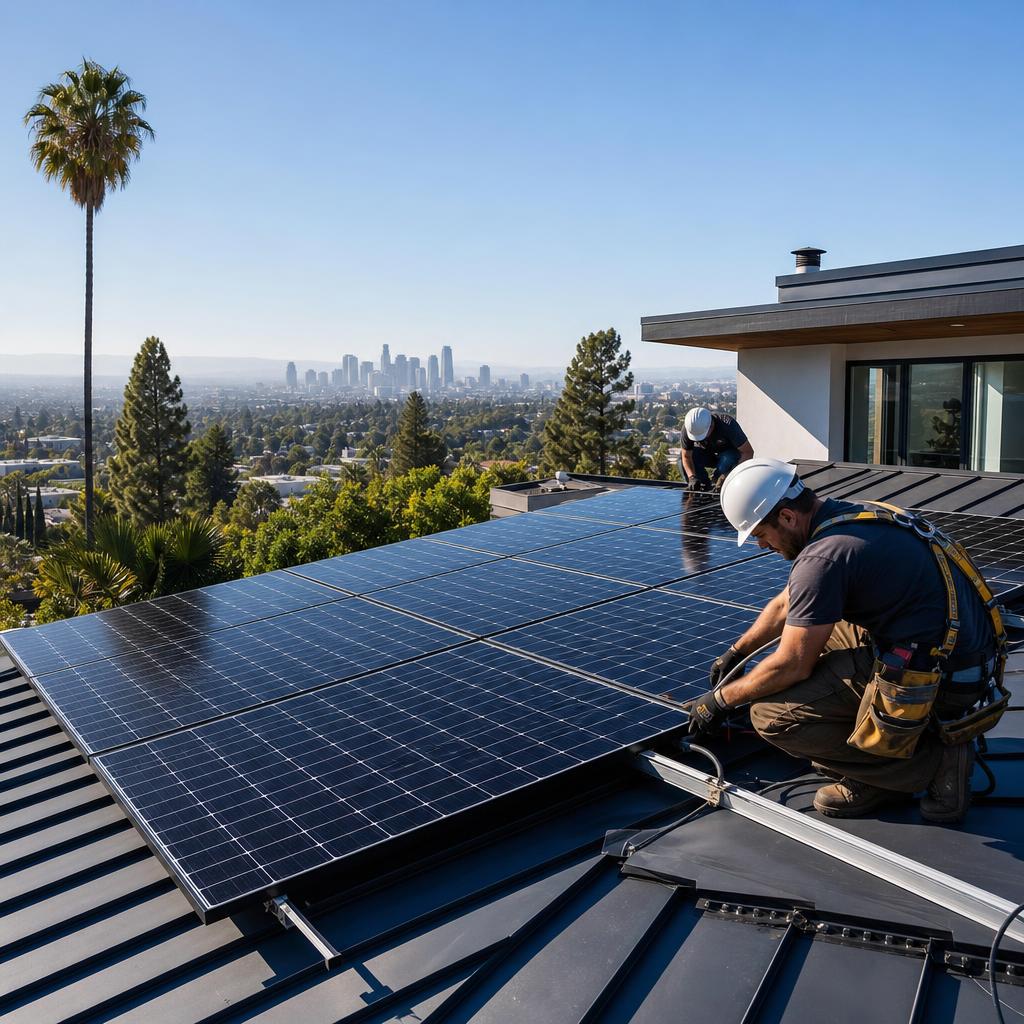
Solar Panel
Permit Expediting
Rooftop solar and battery storage in Los Angeles move through two separate approvals — LADBS building and electrical plan check, and LADWP net energy metering interconnection — before a system can legally operate.
Women-owned, Los Angeles-based permit expediting firm. For general background on how LA solar permitting and the Title 24 mandate work, see our solar permit guide. This page covers our dedicated expediting service. Free initial consultation — call 213-277-8777.
A Los Angeles solar installation is really two parallel approvals: an LADBS building and electrical permit for the physical system, and a separate LADWP net energy metering interconnection application for utility approval to export power to the grid. Both have to clear — and LADWP has to issue Permission to Operate — before a system can be legally energized.
LADBS runs a streamlined, often same-day express review for standard residential systems that meet prescriptive structural and fire-setback requirements. Systems with added battery storage, unusual roof conditions, or a commercial scope typically fall outside that express path and move through standard plan check instead, which is where sequencing the LADBS submittal against the LADWP interconnection application starts to matter.
New construction and qualifying rebuilds carry an additional layer: the 2022 California Energy Code's Title 24, Part 6, §150.1(c)14 solar mandate applies to new single-family homes and new low-rise multifamily buildings statewide. For Pacific Palisades and Altadena fire rebuild clients, whether a project qualifies for a narrower solar-ready exemption under a true like-for-like rebuild, or falls under the full mandate, is a question we resolve before the roof and electrical design is finalized — see our Title 24 compliance guide and our Pacific Palisades and Altadena rebuild guide.
Ocean Permits & Development tracks the LADBS submittal and the LADWP interconnection application as one coordinated project, rather than two disconnected timelines managed by different parties.
Two Agencies, One Coordinated Timeline
LADBS and LADWP review a solar project on separate tracks with separate document requirements, and a delay on either side holds up Permission to Operate. We submit both applications in parallel wherever the review paths allow it, and track corrections on each track so a client isn't managing two agency relationships themselves.
LADBS Building & Electrical Plan Check
Every rooftop solar system needs LADBS review of the structural mounting, electrical interconnection point, and fire-setback access pathways, whether through the express review path or standard plan check.
LADWP Net Energy Metering Interconnection
Separate from the building permit, LADWP reviews and approves the interconnection application that allows the system to export power to the grid under its net energy metering tariff.
Permission to Operate (PTO)
A system cannot be legally energized until LADWP issues Permission to Operate, which requires both a finaled LADBS permit and a completed interconnection review.
Fire Department Rooftop Access Setbacks
LAFD rooftop access and pathway requirements govern panel placement and spacing on the roof, particularly for multifamily and commercial buildings with more complex roof plans.
Battery Storage Fire & Electrical Review
A paired battery system adds its own electrical and fire-life-safety review covering placement, ventilation, and access, independent of the solar array's own permit.
Title 24 New Construction Solar Mandate
New homes, new low-rise multifamily buildings, and rebuilds that exceed the like-for-like threshold must comply with the state's photovoltaic mandate under Title 24, Part 6, §150.1(c)14.
Battery Storage and Commercial Systems
A battery energy storage system paired with solar adds its own electrical and fire-life-safety review covering placement, ventilation, and fire department access — a separate scope from the solar array's own permit, even when both are installed at the same time. Commercial and multifamily solar projects typically add a service upgrade, structural engineering for a larger array, and in some cases an LADWP interconnection study if system size approaches circuit capacity limits, so we scope these individually rather than assuming a residential-scale timeline.
Solar Project Types, Review Paths & Our Approach
| Project Type | When It Applies | Typical Review Path | Our Approach |
|---|---|---|---|
| Standard residential rooftop solar | Prescriptive system on a standard roof with no battery storage | LADBS solar express plan check, LADWP NEM interconnection | We file for LADBS express review where the system qualifies and submit the LADWP interconnection application in parallel. |
| Solar plus battery storage | Rooftop solar paired with a home or commercial battery system | LADBS electrical and fire-life-safety review for the battery, standard or express solar review, LADWP interconnection | We scope the battery and solar permits together so placement, ventilation, and access requirements are resolved before submittal. |
| New construction or qualifying rebuild | New single-family home, new low-rise multifamily building, or a rebuild exceeding the like-for-like threshold | Title 24, Part 6 solar mandate compliance folded into the building permit, LADWP interconnection | We confirm whether the project falls under the full mandate or a narrower solar-ready requirement before the roof and electrical design is finalized. |
| Commercial or multifamily solar | Larger array, service upgrade, or multi-tenant building | Standard LADBS structural and electrical plan check, LAFD rooftop access review, LADWP interconnection study | We scope service capacity and rooftop access requirements early, since these projects rarely qualify for express review. |
| Stalled or rejected solar project | System installed but never received PTO, or an open LADBS or LADWP correction | LADBS correction resubmittal, LADWP interconnection document correction | We review what was submitted, identify the specific correction, and manage resubmittal through PTO. |
These are planning-level descriptions, not fee quotes or guaranteed timelines. We confirm current fees, forms, and feasibility for your specific address and scope during a free consultation.
Our Process for a Solar Permit Project
- 01
Confirm system scope and mandate status
We determine whether the project is a standard retrofit, a new-construction or rebuild project subject to the Title 24 solar mandate, and whether battery storage is included.
- 02
Assemble the LADBS submittal
We prepare the structural mounting details, electrical single-line diagram, and fire-setback layout needed for LADBS plan check, routing standard residential systems through express review where eligible.
- 03
File the LADWP interconnection application
We submit the net energy metering interconnection application in parallel with the LADBS permit so both tracks move together rather than sequentially.
- 04
Track plan check and interconnection review
We monitor both the LADBS correction cycle and LADWP's interconnection review, coordinating responses so neither agency is working from outdated information.
- 05
Coordinate inspection and final sign-off
We schedule the LADBS final inspection and confirm LADWP's documentation requirements are complete before requesting Permission to Operate.
- 06
Confirm Permission to Operate
We verify PTO is issued before the system is energized, closing out both the building permit and the utility interconnection record.
Why Ocean Permits & Development for Solar Permitting
We coordinate the LADBS building and electrical permit with the LADWP interconnection application as one project, so a homeowner, installer, or developer knows the real end-to-end timeline to Permission to Operate rather than just the building permit's own schedule. Every engagement starts with a free consultation — call 213-277-8777 or reach out through our contact page.
Frequently Asked Questions
What's the difference between this page and your solar permit guide on the blog?
Our blog guide walks through how LA solar permitting works in general, including the NEM interconnection process and the Title 24 solar mandate for new construction and fire rebuilds. This page is our dedicated solar permit expediting service — the scope, deliverables, and process we run for a client who wants us to manage the LADBS and LADWP submittals directly rather than read about how the process works.
Which agencies are involved in a Los Angeles solar permit?
A rooftop solar installation in the City of Los Angeles needs an LADBS building and electrical permit for the physical installation, plus an LADWP interconnection application for utility approval to connect the system to the grid. LADWP's own net energy metering (NEM) review and Permission to Operate (PTO) issuance happen on a separate track from the LADBS permit, and both need to clear before the system can be legally energized.
Does LADBS have an expedited process for solar permits?
LADBS offers streamlined, often same-day plan check for standard residential rooftop solar systems that meet prescriptive structural and fire-setback requirements, through its solar-specific express review. Systems with unusual roof conditions, added battery storage, a non-standard structural condition, or a commercial scope typically fall outside the express path and go through standard plan check instead.
Do I need a separate permit for battery storage?
Yes. A battery energy storage system added alongside solar needs its own LADBS electrical and fire-life-safety review, covering battery placement, ventilation, fire department access, and in some cases LAFD sign-off depending on battery chemistry and capacity. We scope the battery permit together with the solar permit so both submittals are coordinated rather than filed as two disconnected projects.
Is solar required on my new home or rebuild?
Under the 2022 California Energy Code (Title 24, Part 6, §150.1(c)14), new single-family homes and new low-rise multifamily buildings in California are generally required to include a photovoltaic system. A true like-for-like fire rebuild under a streamlined exemption may qualify for a narrower solar-ready requirement instead of the full mandate, but a rebuild that exceeds the like-for-like threshold is typically treated as new construction and must comply in full. We confirm which category applies before a rebuild's electrical and roof design is finalized — see our Title 24 guide and our Pacific Palisades and Altadena rebuild coverage for the fire-rebuild-specific rules.
How long does LADWP take to issue Permission to Operate (PTO)?
Once the LADBS permit is finaled and the interconnection paperwork is complete, LADWP's PTO review can move in roughly one to two weeks, but the full span from initial permit submittal to PTO commonly runs several weeks to a few months depending on queue volume and whether corrections are needed on either the building or interconnection side. Energizing a system before PTO is issued is a utility tariff violation, not a minor technicality, so we sequence both tracks to avoid that outcome.
What does a commercial or multifamily solar project need beyond a residential system?
Commercial and multifamily solar typically involves a larger service upgrade, structural engineering for a bigger array, often a separate fire department access and pathway review for rooftop equipment, and in some cases a more involved LADWP interconnection study if the system size approaches circuit capacity limits. We scope these projects individually rather than assuming a residential-scale timeline applies.
Can you help if my system failed LADBS or LADWP inspection?
Yes. We regularly step in on stalled projects — an LADBS structural or electrical correction, an LADWP interconnection document rejection, or a system that was installed but never received PTO. We review what was submitted, identify the specific correction needed, and manage the resubmittal through final sign-off.
Why use Ocean Permits & Development for solar permitting?
Ocean Permits & Development is a women-owned, Los Angeles-based permit expediting firm that tracks the LADBS building and electrical permit and the LADWP interconnection application in parallel, so a solar installer or homeowner isn't managing two separate agency timelines themselves. We offer a free initial consultation — call 213-277-8777 or reach out through our contact page.
Planning a Solar Installation?
We coordinate your LADBS permit and LADWP interconnection as one project.
Related Services
Related Guides