
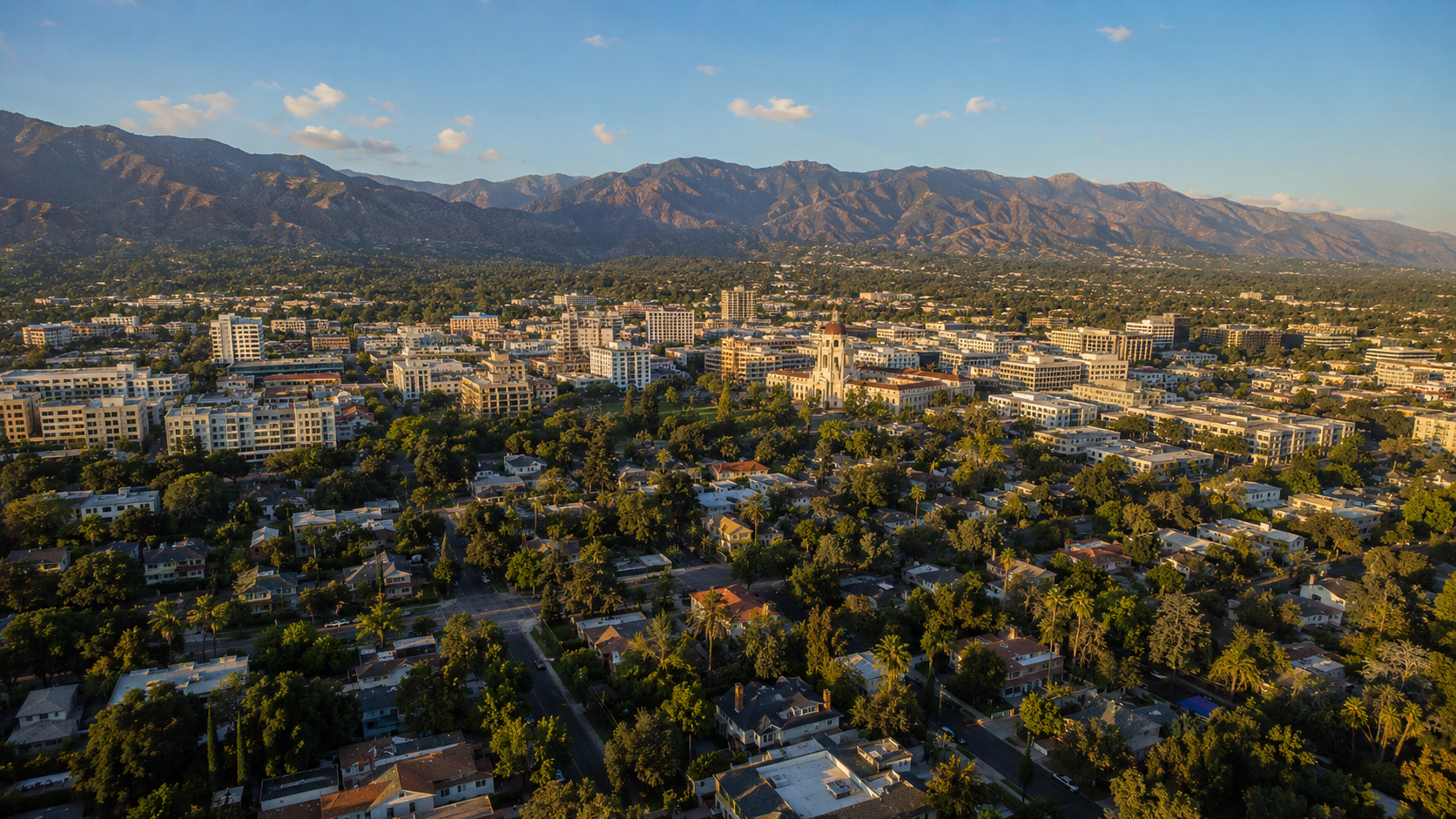
Pasadena Permit Department
Experts
The Pasadena permit department oversees one of the richest architectural heritage environments in Southern California — and its independent municipal code means local expertise makes a measurable difference on every project.
Pasadena operates its own Planning & Community Development Department with a distinct municipal code and design standards. The city is home to more than 20 designated historic districts — including Bungalow Heaven, Madison Heights, and the Old Town commercial core — where projects require Historic Preservation Design Review in addition to standard building permits.
This dual-track requirement — standard building permit plus Historic Preservation review — is where most projects in Pasadena lose time. Applicants who submit to Building & Safety without first clearing Historic Preservation, or who prepare drawings that don't meet the Secretary of Interior's Standards, face corrections and resubmittals that push timelines back by months.
Ocean Permits & Development provides pre-submittal research to determine your property's overlay and landmark status, prepares Historic Preservation submittals that meet the Secretary of Interior's Standards, and manages all departmental coordination from application through final inspection.
How the Pasadena Permit Department Works
The Pasadena permit department sits within the city's Planning & Community Development Department and is entirely independent from LADBS and LA County — Pasadena issues its own permits, maintains its own online submittal portal, and applies its own local amendments to the California Building Code. Building & Safety staff handle structural, electrical, plumbing, and mechanical plan check, while Planning staff and the Historic Preservation section handle zoning compliance and design review.
What makes the Pasadena permit department distinctive is how often a project needs sign-off from more than one section before Building & Safety will issue: a property in a historic district needs Historic Preservation clearance first, a project in Old Town needs Design Commission approval, and a CUP or variance needs a Zoning Hearing Officer determination — each running on its own review calendar.
We work directly with the Pasadena permit department across each of these sections — confirming which reviews your specific property triggers before drawings are finalized, and sequencing submittals so the discretionary and ministerial tracks move in parallel rather than one after another.
Pasadena's Historic Districts
Pasadena has more designated historic resources than most California cities of its size. Key districts include:
Bungalow Heaven Landmark District
One of the largest historic districts in California, covering blocks of Craftsman bungalows in northeast Pasadena. Exterior alterations require Historic Preservation Design Review.
Madison Heights
Residential historic district with a mix of bungalows and Period Revival homes. Design review applies to exterior alterations visible from the street.
Garfield Heights Historic District
Early 20th-century residential neighborhood. Projects affecting character-defining features require submittal to Pasadena's Historic Preservation staff.
Downtown Pasadena / Old Town
Commercial corridor with design standards administered through the Design Commission. Exterior alterations, new storefronts, and signage require Design Commission approval.
Other Designated Properties
Beyond historic districts, individual landmarks and structures of merit across Pasadena may require Historic Preservation review regardless of district location.
Our Pasadena Expertise
- Pasadena Building & Safety plan check coordination
- Historic Preservation Design Review submittals (Secretary of Interior Standards)
- Old Town Pasadena tenant improvement permits
- Craftsman bungalow addition and renovation permits
- ADU permits in Pasadena — attached, detached, and garage conversions
- Commercial new construction and restaurant permits
- Conditional Use Permits (CUP) and variances before the Zoning Hearing Officer
- Mills Act property compliance coordination
- Design Commission submittals for Downtown Pasadena projects
- Accessibility (ADA) path-of-travel compliance for commercial TIs
Private Coordination Budget Allowances
The ranges below are illustrative coordination-budget allowances, not Pasadena government fees or binding Ocean Permits prices. Obtain a project-specific proposal identifying included services and exclusions; engineering, design, hearing work and City charges must be confirmed separately.
Governing Code & Planning-Range Timeline
Pasadena adopts the California Building Code with local amendments under the Pasadena Municipal Code, and discretionary reviews — Historic Preservation, Design Commission, and Zoning Hearing Officer matters — are governed by Municipal Code Title 17's Zoning Code. These are planning-range estimates, not city guarantees — actual timelines depend on plan completeness, hearing calendars, and current department workload.
| Review type | Governing code | Planning-range timeline |
|---|---|---|
| Historic Preservation Design Review | Pasadena Municipal Code Title 17 (Zoning Code), Secretary of Interior's Standards for Rehabilitation | +4–6 weeks |
| Design Commission Review (Old Town Pasadena) | Pasadena Municipal Code Title 17, Design Review provisions | +4–8 weeks |
| ADU / JADU | Pasadena Municipal Code ADU standards within state ADU law | 5–9 weeks |
| Tenant Improvement, simple (no historic overlay) | Pasadena Municipal Code Title 14 (Building Code, CBC local amendments) | 2–4 weeks |
| Conditional Use Permit / Variance before Zoning Hearing Officer | Pasadena Municipal Code Title 17, Zoning Hearing Officer procedures | 8–14 weeks |
Pasadena's own Permit Center: scope, submittal and concurrent review
Pasadena is an incorporated city. Its Building & Safety Division in Planning & Community Development handles local building review; neither LADBS nor LA County Building and Safety issues the ordinary building permit for a Pasadena parcel. Confirm the APN and city boundary before using a portal. Nearby unincorporated Altadena is a different jurisdiction, even when the two properties share a postal-area description or contractor.
The City's Citizen Self-Service system accepts applications and plans for additions, conversions, ADUs, tenant improvements and other listed projects. The separate Express Permit Portal handles qualifying subtrade permits; it is not a shortcut for structural alterations or a change of occupancy. Pasadena's published online-permit guidance describes concurrent review by required reviewers and a consolidated correction report. Identify the responsible designer for each comment, revise the same coordinated plan set and track outstanding clearances before asking for issuance.
Start with permit history and the existing legal use, then distinguish cosmetic work from structural changes, new dwelling units and commercial occupancy changes. A tenant improvement can require accessibility, exiting, plumbing, mechanical and fire review beyond the visible finishes. A restaurant buildout also needs the correct health authority: Pasadena operates its own Public Health Department, so do not automatically route the food plans to County Environmental Health.
Building, hillside, historic and zoning codes are separate layers
The City's current code page lists the 2025 California codes effective January 1, 2026 and points to Pasadena Municipal Code Chapters 14.03 and 14.04 for local building provisions. It also lists optional earlier-code provisions for eligible Eaton Fire rebuilds; confirm the permitted code election with the City rather than applying it to every project. Chapter 14.05 addresses hillside grading and Chapter 14.06 addresses unreinforced masonry. A historic building does not become exempt from structural safety because its facade must be preserved.
Title 17 governs zoning, and Chapter 17.62 addresses historic preservation. Identify an actual designation and the scope of work before deciding whether a Certificate of Appropriateness, staff review or a hearing is required. Being near a Craftsman home is not itself a historic designation. The California Historical Building Code can provide appropriate alternatives for qualified historic buildings; it does not eliminate the need for approval. Coordinate seismic retrofit engineering with preservation requirements before choosing a structural solution.
For an ADU or garage conversion, show the existing permitted structure, proposed living area, utility service and any exterior work. Distinguish applicable ministerial ADU requirements from other approvals on the same lot. Ask the City which preservation standards and state-law limitations apply to the specific proposal, instead of assuming every historic-district ADU needs a discretionary hearing. A feasibility study should resolve those distinctions before full design.
Pasadena government fees and review dependencies
| Approval or cost | Actual fee basis | Timing / dependency |
|---|---|---|
| Building permit and plan check | Current General Fee Schedule, fees 221–363; City valuation and scope calculation | Complete plans, applicable clearances and consolidated corrections |
| Planning / historic preservation | Current FY2027 Planning fee schedule and the required application type | Designation, scope and staff-versus-hearing decision before affected work |
| Mechanical, electrical or plumbing | Current City subtrade fee calculation | Express portal only for qualifying work; otherwise coordinated plan check |
| Restaurant health / fire scope | Serving Pasadena agencies' current charges | Equipment, suppression, layout and food-process approvals as triggered |
| Private design / permit coordination | Separate project-specific professional proposals | Not a government charge and not included in a City valuation fee |
Pasadena states that building permit valuation uses the current International Code Council Building Valuation Data table. That administrative valuation is not a contractor's bid or an official estimate of what the owner will actually spend. Obtain a current City calculation and identify planning, fire, health, trade and other triggered costs separately. Coordination allowances shown above are budgeting examples, not a City fee schedule or a binding Ocean Permits quote.
After issuance, the contractor follows the approved inspection sequence and obtains required finals before the new use or occupancy begins. Keep approved plans, revisions and inspection records together. Neither paying the application fee nor receiving a business license proves that the building scope is approved. For a scope comparison across the boundary, see Altadena's County rebuild process; do not copy its fee waivers or review commitments into a Pasadena application.
Official Pasadena sources — reviewed October 22, 2026
Permit Center Online: CSS, Express and concurrent review.
Current fee schedules and valuation methodology.
Adopted codes and local Chapters 14.03–14.06; Pasadena Municipal Code, including Title 17 and Chapter 17.62.
Common Questions
Which online portal should I use for Pasadena permits?
Pasadena's Citizen Self-Service portal accepts the listed plan-review applications. Its separate Express Portal is for qualifying subtrade permits. Confirm the category with the Permit Center; an express electrical permit is not approval for a structural remodel or change of occupancy.
How are Pasadena government permit fees calculated?
The City directs applicants to General Fee Schedule items 221–363 and uses current ICC Building Valuation Data for building permit valuation. Planning, trade, fire and health charges depend on scope. That administrative valuation is not a contractor's construction bid, and government fees are separate from privately quoted permit coordination.
Does a Pasadena restaurant use LA County Environmental Health?
Pasadena has its own Public Health Department. Confirm its food-facility approval requirements as well as City Building and Safety and Fire review; do not automatically submit the health plans to County Environmental Health.
Which local code chapters should a Pasadena designer check?
The City code page identifies building provisions in Chapters 14.03 and 14.04, hillside grading in 14.05, unreinforced masonry in 14.06 and zoning in Title 17. Historic preservation is addressed in Chapter 17.62. Confirm the current adopted code edition and any eligible Eaton Fire rebuild code election for the actual project.
Does Pasadena have its own Building & Safety department?
Yes. Pasadena is an independent city with its own Planning & Community Development Department. It operates separately from the City of Los Angeles and LA County. Projects are submitted through Pasadena's own permit portal and reviewed by local plan checkers applying the Pasadena Municipal Code, which adopts the CBC with local amendments.
Are there historic preservation requirements in Pasadena?
Yes. Pasadena has numerous designated historic districts, including Bungalow Heaven, Madison Heights, and Garfield Heights, plus hundreds of individual landmark properties and structures of merit. Projects in or on these properties require Historic Preservation Design Review in addition to standard building permits. The review evaluates proposals against the Secretary of the Interior's Standards for Rehabilitation — the federal standard for appropriate historic preservation. We identify historic overlay status at project outset and prepare submittals accordingly.
What is the Secretary of the Interior's Standards for Rehabilitation?
The Secretary of the Interior's Standards for the Treatment of Historic Properties are federal guidelines that define appropriate approaches to preserving, rehabilitating, restoring, and reconstructing historic buildings. Pasadena's Historic Preservation staff uses these standards to evaluate proposed changes to historic properties — including window replacements, additions, and material changes. Proposals that don't meet the standards require redesign. We prepare historic preservation submittals that are designed to satisfy these standards from the first submission.
What is the Mills Act in Pasadena?
The Mills Act is a California property tax incentive for owners of qualified historic properties who agree to maintain and rehabilitate the historic character of their buildings. Pasadena has an active Mills Act program. Properties with Mills Act contracts have maintenance obligations that affect what modifications are permitted. We advise Mills Act property owners on how proposed improvements interact with their contract obligations.
What is the permit timeline in Pasadena?
Timing depends on scope, completeness, required reviewers and any staff or hearing-level planning approval. Pasadena describes concurrent plan review and consolidated corrections, not a blanket same-day approval for tenant improvements. Planning-range estimates on this page are not City service commitments; confirm the actual review path before promising a construction start.
Can you handle ADU permits in Pasadena?
Yes. Pasadena permits ADUs and JADUs consistent with California state law. The city has adopted local ADU standards within the framework of state requirements. For properties in historic districts, ADU design may be subject to historic preservation review — we identify this trigger upfront. Garage conversion ADUs are common in Pasadena's Craftsman neighborhoods and follow a relatively straightforward permitting path when the property is not in a historic district.
Project in Pasadena?
Historic district or standard permit — we handle both tracks and keep your project moving.
Schedule a ConsultationOr call +1 (213) 277-8777