_1781464136662-DVw5IPjt.png)
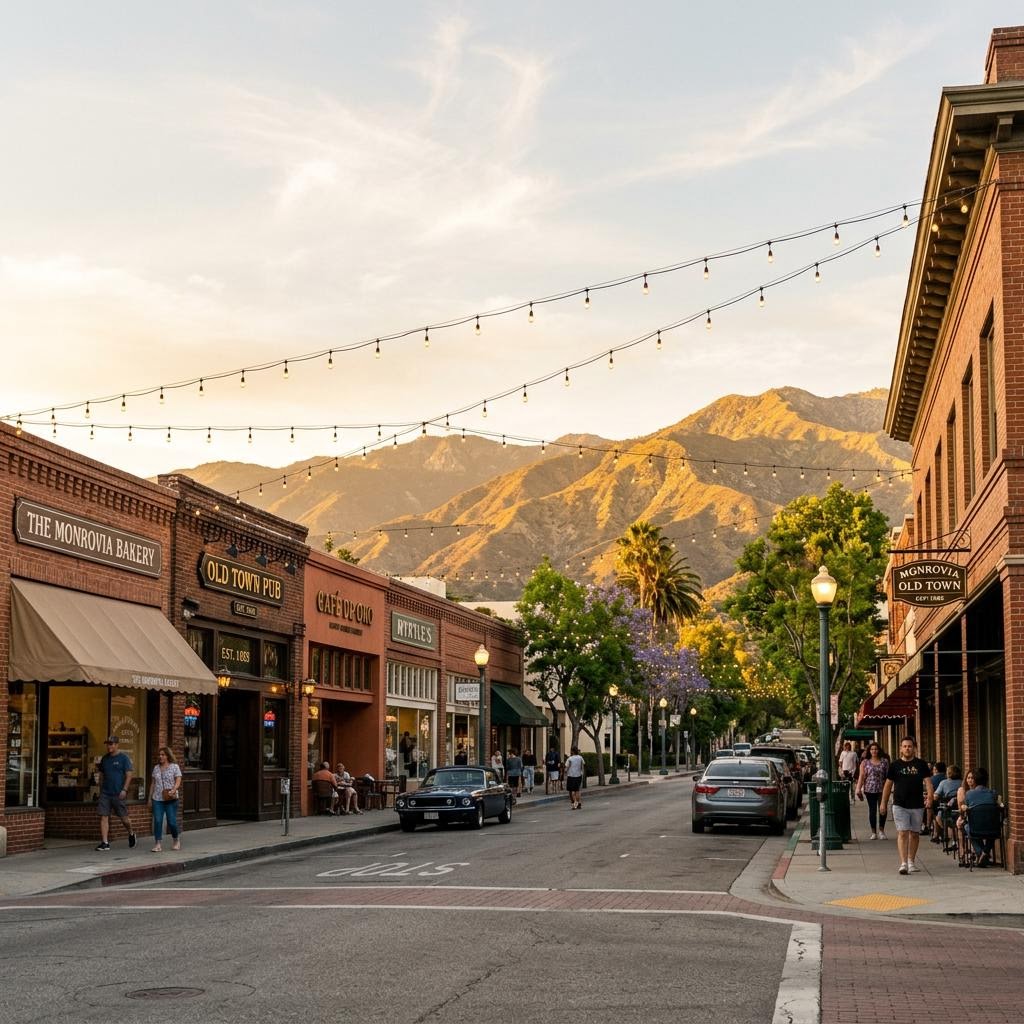
Monrovia
Permit Expediting
Independent-city permits for Old Town storefronts, foothill homes, and Station Square transit-area projects — not LADBS.
Women-owned, LA-based permit expediting firm. We manage Monrovia's own city process — including its Old Town historic review and foothill fire-hazard construction rules — with the same coordination discipline we bring to Pacific Palisades and Altadena fire-rebuild permitting. Start with a free consultation or call 213-277-8777.
Monrovia is an independently incorporated San Gabriel Valley city stretched between the flatland grid near the 210 Freeway and steep foothills that climb toward the Angeles National Forest. That geography produces two very different permitting experiences inside the same city: a historic downtown with its own design standards, and a foothill fringe where fire hazard mapping and hillside terrain drive real construction requirements. LADBS has no jurisdiction here — building permits, plan check, and inspections run through Monrovia's own municipal process.
For owners and design teams more familiar with a neighboring San Gabriel Valley city, that independence is easy to underestimate. Monrovia's code amendments, its Old Town Specific Plan design standards, and its foothill fire-hazard construction requirements are specific to Monrovia and need to be confirmed directly with the city rather than inferred from a similar-looking project in Arcadia or elsewhere in the valley.
Ocean Permits & Development does not replace the licensed architect, structural engineer, or fire-protection consultant on a Monrovia project. We confirm the correct city jurisdiction and review track before drawings are finalized, and we coordinate the design, engineering, and historic or fire-zone review so the submittal tells one consistent story rather than a set of documents assembled from different assumptions.
City jurisdiction: an independent building department, not LADBS
Monrovia is a separate city government from the City of Los Angeles and from Los Angeles County, with its own community development and building function handling plan review, permit issuance, and inspections. A Monrovia address bordering Duarte, Arcadia, or unincorporated county land does not change this; the parcel's location inside Monrovia's incorporated boundary determines which agency has authority. We confirm the exact jurisdiction and current submittal process for every Monrovia address before proceeding, rather than assuming a workflow carried over from a neighboring city.
This confirmation step matters most at the edges of the city, where Duarte or unincorporated county parcels sit close enough to Monrovia that an owner or contractor can reasonably mistake the correct filing agency. Getting the jurisdiction wrong at the outset — even briefly — costs real time, since a submittal filed with the wrong agency has to be withdrawn and resubmitted through the correct one.
Old Town Monrovia: historic and design review on Myrtle Avenue
Old Town Monrovia's commercial district along Myrtle Avenue is one of the San Gabriel Valley's better-preserved historic downtowns, and exterior work in the district — storefront changes, signage, facade alterations, awnings — is generally evaluated under the area's specific-plan and design or historic-preservation standards before or alongside the standard building permit. That review looks at how a proposed change relates to the historic character of the block, not just whether it meets structural and life-safety code.
A tenant improvement or storefront project in Old Town should therefore be scoped with this review in mind from the start: gather historic photographs and existing-condition documentation, confirm which design or preservation body reviews the specific block, and build that review into the schedule as a distinct step. Our tenant improvement and pre-submittal consulting services are built for exactly this kind of layered review, where the building permit is only one of the approvals that determine an opening date.
Foothill fire hazard zones and hillside construction
Monrovia's northern edge climbs into the foothills toward the Angeles National Forest, and portions of that area sit in or near mapped Very High Fire Hazard Severity Zones. Homes within these zones are generally subject to ignition-resistant construction standards covering roofing, vents, eaves, exterior siding, and similar assemblies, on top of the standard structural and energy requirements every project must meet. Grading, access, and defensible-space obligations can also come into play for hillside lots in ways that a flatland Monrovia project never encounters.
Fire hazard severity zone maps are maintained and periodically updated by state and local authorities, so the correct designation for a specific parcel should be confirmed directly with the City rather than assumed from a general sense of the neighborhood's wildfire exposure or a map from another jurisdiction. Where a foothill remodel, addition, or new residence is proposed, we help the design team confirm the applicable fire-zone requirements early enough that the architectural and structural drawings reflect them from the first submittal.
Typical Monrovia project paths
| Project Type | Planning Timeline | Review Complexity |
|---|---|---|
| Interior remodel, flatland home | 3–6 weeks after complete plans | Standard building, electrical, plumbing, and mechanical review |
| Old Town Monrovia storefront or exterior change | 6–14+ weeks | Historic/design review for the Old Town Specific Plan area, plus standard building disciplines |
| Foothill addition or new residence | 10–20+ weeks | Fire Hazard Severity Zone construction requirements, hillside grading, and structural/energy review |
| ADU or garage conversion | 6–14+ weeks | State ADU framework, local objective standards, utilities, and foothill fire-zone requirements where applicable |
| Station Square / transit-area project | Varies by scope and entitlement layer | Specific-plan zoning, density, parking, and design standards near the L Line station |
| Pool or hardscape addition | 6–12 weeks | Building, electrical/bonding, drainage, and setback compliance |
These planning ranges are not city deadlines or approval guarantees. Historic-review outcomes, fire-zone confirmation, correction cycles, and current workload can materially change the schedule.
Station Square, ADUs, and everyday flatland projects
Not every Monrovia project sits in Old Town or the foothills. The city's flatland neighborhoods handle a steady stream of standard remodels, additions, and accessory dwelling units, and California's ADU statutes give Monrovia the same ministerial framework other cities use, layered with the city's own objective local standards. Near the L Line Station Square area, transit-oriented specific-plan zoning introduces its own density, parking, and design questions that should be screened before a project is designed around conventional single-family assumptions.
Whatever the location within the city, we gather the existing-condition documentation early — prior permits where available, current photographs, and a clear scope description — and confirm zoning, fire-zone, and any specific-plan requirements before drawings are finalized. A free consultation at 213-277-8777 is a useful starting point for sorting a straightforward remodel from a scope that will need historic, fire-zone, or specific-plan review.
Common Questions
Does LADBS issue building permits in Monrovia?
No. Monrovia is an independently incorporated San Gabriel Valley city, not a Los Angeles neighborhood, and it runs its own building and safety review rather than going through LADBS. A Monrovia address bordering Arcadia, Duarte, or unincorporated county land does not change which city government has permitting authority; the parcel's location inside Monrovia's city limits controls.
Which department reviews a Monrovia building permit?
Monrovia's own community development and building function handles plan check, permit issuance, and inspections for construction within the city. Planning or design-review staff become involved for projects in the Old Town Specific Plan area, near the L Line Station Square district, or where zoning entitlements are required. We confirm the current submittal process directly with the City before assuming an Arcadia- or Pasadena-style workflow applies.
What makes Old Town Monrovia projects different?
Old Town Monrovia's historic commercial district along Myrtle Avenue is subject to design and historic-preservation review for exterior storefront, signage, and facade work, generally evaluated against preservation standards for the district's character. A tenant improvement that would be routine in a standard commercial corridor can need a separate design or historic review step here before — or alongside — the building permit itself.
Is my Monrovia property in a Very High Fire Hazard Severity Zone?
Portions of Monrovia's northern foothill areas, closer to the Angeles National Forest, sit in or near mapped fire hazard severity zones, which can trigger ignition-resistant construction requirements, defensible-space obligations, and closer scrutiny of grading and access. Fire hazard severity zone mapping is maintained by state and local authorities and is periodically updated, so we confirm the current designation for a specific parcel rather than assuming based on a neighboring address or an older map.
Who provides water and power in Monrovia?
Monrovia is served by Southern California Edison for electrical service, not LADWP. Water service is typically administered through the City of Monrovia's own municipal water operation, and sewer connections in this part of the San Gabriel Valley are frequently tied to the Los Angeles County Sanitation Districts system. Confirm the specific meter, service, and connection requirements directly with each provider before MEP drawings are finalized.
Are ADUs allowed in Monrovia?
California's ADU statutes require a ministerial approval pathway for qualifying accessory dwelling units, and Monrovia administers that framework alongside its own objective local standards. On a flatland lot, feasibility questions are usually about setbacks, parking, and utility routing; on a foothill lot, fire-zone construction requirements, access, and grading can become the deciding factors for whether a proposed unit is straightforward to build.
What is the Station Square Specific Plan?
Monrovia's Station Square area, near the L Line (Gold Line) Metro station, is governed by transit-oriented specific-plan zoning intended to support higher-density, walkable development close to rail transit. Projects in this area should be screened against the specific plan's density, use, parking, and design standards early, since those can differ meaningfully from the standards applied to a conventional single-family or commercial parcel elsewhere in the city.
Do foothill homes need special fire-resistant construction?
Homes within a mapped Very High Fire Hazard Severity Zone are generally subject to ignition-resistant construction standards covering roofing, vents, eaves, siding, and other assemblies, layered on top of standard building code requirements. Whether a specific Monrovia foothill parcel is subject to these requirements depends on current state and local fire hazard mapping, which should be confirmed with the City before design begins rather than assumed from a general sense of the neighborhood's wildfire exposure.
How does Monrovia differ from neighboring Arcadia or Duarte?
Monrovia, Arcadia, and Duarte are adjacent San Gabriel Valley cities, but each maintains its own building department, zoning code, and fee schedule, and Duarte borders unincorporated Los Angeles County areas served by a different agency altogether. A plan set organized around a neighboring city's conventions should still be reviewed against Monrovia's actual current requirements rather than assumed to transfer directly.
Can a permit expediter guarantee approval or a specific date?
No responsible expediter can guarantee a city decision or a fixed calendar date, particularly where historic, fire-zone, or specific-plan review is involved. Our role is to confirm the correct Monrovia process, organize a complete submittal, track plan-check and design-review comments, and keep the owner, architect, and consultants coordinated so the project moves as efficiently as the city's process allows.
Project in Monrovia?
Women-owned, LA-based. We coordinate Monrovia city permits, Old Town historic review, foothill fire-zone requirements, and consultant teams. Free consultation.
Schedule a ConsultationOr call +1 (213) 277-8777