_1781464136662-DVw5IPjt.png)
Eagle Rock
Permit Expediting
Craftsman remodels, hillside additions above Hill Drive, and Colorado Boulevard commercial permits — all run through LADBS, with the Baseline Hillside Ordinance and fire-zone rules layered in where they apply.
Women-owned, LA-based permit expediting firm. The same LADBS coordination and hillside-ordinance experience we bring to fire-rebuild clients in Altadena and Pasadena carries directly over to Eagle Rock's Craftsman remodels, hillside additions, and Colorado Boulevard commercial projects. Free consultation — call 213-277-8777.
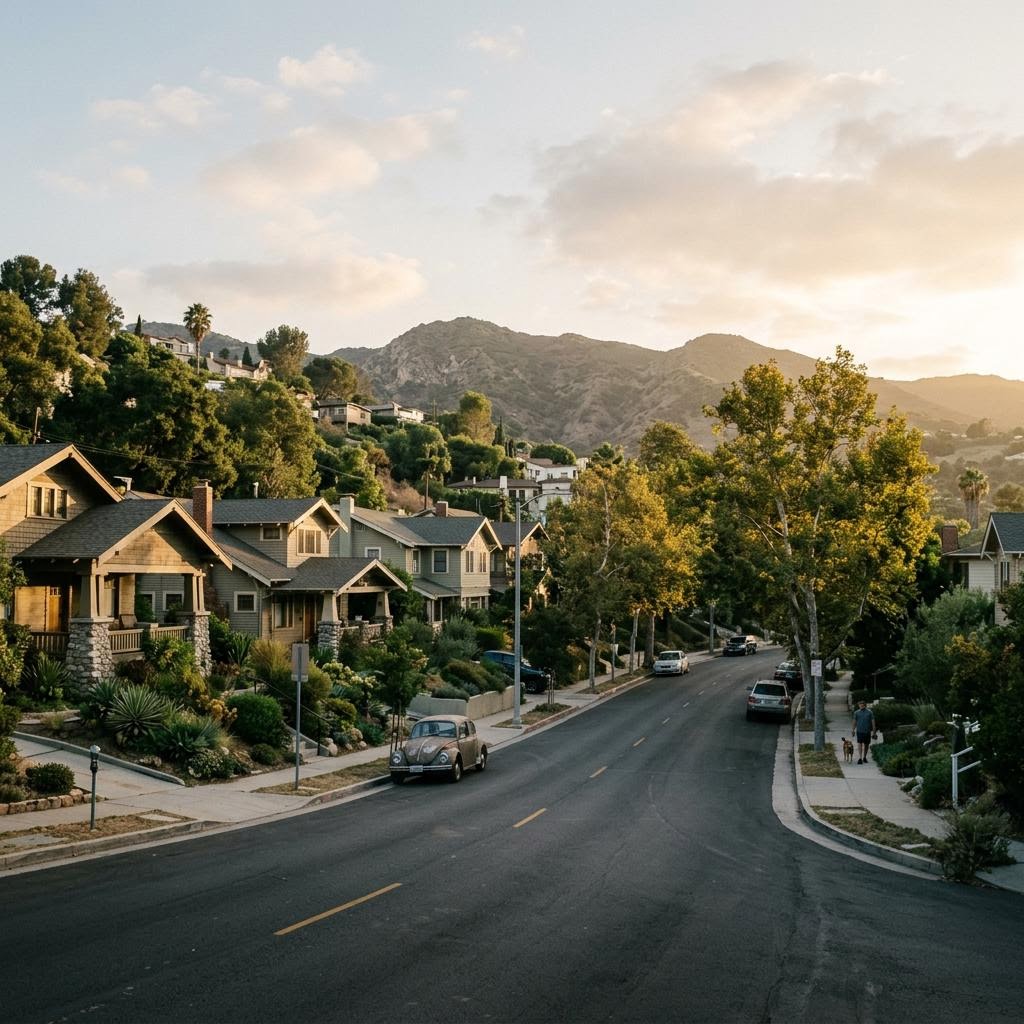
Eagle Rock is a City of Los Angeles neighborhood on LA's northeast side, bordered by Glendale to the north, Highland Park to the south, and Mount Washington and Glassell Park to the southwest — its terrain rising from a flat commercial core along Colorado Boulevard into hillside residential streets toward the San Rafael Hills.
That geographic split shapes permitting the same way it does in nearby hillside LA neighborhoods. Flatland Eagle Rock — the streets around Colorado Boulevard, Eagle Rock Boulevard, and the flatter residential grid closer to the Glendale (2) Freeway — generally faces standard LADBS plan check plus Baseline Mansionization Ordinance floor-area review, given the neighborhood's steady stream of Craftsman-era remodels and additions. Hillside Eagle Rock — Hill Drive, Yosemite Drive, and the streets climbing toward the San Rafael Hills — adds the Baseline Hillside Ordinance, potential grading and retaining wall review, and in some upper areas, Very High Fire Hazard Severity Zone construction requirements.
Eagle Rock's housing stock is dominated by early-20th-century Craftsman bungalows and Spanish Revival homes, many of which are being remodeled, expanded, or converted to add ADUs rather than torn down — which means floor-area calculations, setback compliance, and (on some parcels) historic-character considerations come up constantly, even on projects that never touch the Baseline Hillside Ordinance.
Ocean Permits & Development handles both sides of Eagle Rock's permitting landscape — routine LADBS plan check for flatland Craftsman remodels and ADUs, and the more technical grading, geology, and fire-zone coordination that hillside construction above Hill Drive requires.
LADBS Jurisdiction & the Baseline Hillside Ordinance
Eagle Rock sits entirely within the City of Los Angeles, so every building permit — residential or commercial — is filed and reviewed through LADBS, the same citywide agency that handles permits from Downtown to the San Fernando Valley. There is no separate Eagle Rock city hall or building department the way there is in independent cities like Glendale directly to the north or South Pasadena to the east; Eagle Rock property owners use the same LADBS online portal, forms, and fee schedule as any other LA neighborhood.
Where Eagle Rock's terrain diverges — its hillside streets rising toward the San Rafael Hills — LADBS applies the Baseline Hillside Ordinance, which caps allowable floor area based on lot size and slope, restricts grading quantities, and often triggers a coordinated grading permit reviewed by LADBS's Grading Division and Geology & Soils Engineering Section. Retaining walls above certain heights require their own structural engineering review as part of that submittal. We confirm hillside ordinance applicability for the specific parcel at the very start of a project — not after a design is already drawn to a flatland floor-area assumption.
Common Project Types in Eagle Rock
Craftsman and bungalow remodels
Eagle Rock's dominant housing stock of early-20th-century Craftsman and Spanish Revival homes generates a steady flow of kitchen, bath, and whole-house remodels, many of which layer in Baseline Mansionization Ordinance floor-area calculations for additions.
Room additions and second stories
Second-story additions on Eagle Rock's flatland lots are common as families expand within the existing footprint rather than tearing down; these projects require FAR, setback, and stepped-back massing compliance under LAMC zoning rules.
ADUs and garage conversions
Eagle Rock's mid-sized lots and detached garages are well suited to both new detached ADUs and JADU conversions, both processed under California's streamlined statewide ADU review timelines through LADBS.
Hillside additions and new construction (Hill Drive, Yosemite Drive)
Construction on Eagle Rock's hillside streets requires Baseline Hillside Ordinance compliance, often with a coordinated grading permit and geotechnical/soils engineering review.
Retaining walls and hillside grading
Slope stabilization and site grading for hillside lots typically require LADBS Grading Division review, with structural engineering for taller walls.
Colorado Boulevard commercial tenant improvements
Eagle Rock's commercial corridor along Colorado Boulevard sees a steady mix of café, retail, and office tenant improvements, with alcohol-service or extended-hours uses commonly triggering a Conditional Use Permit from LA City Planning.
Typical Timelines and Costs
| Project Type | Typical Timeline | Typical Permit Cost |
|---|---|---|
| Kitchen/bath remodel or systems-only work | 2–6 weeks through LADBS Express Permit for qualifying systems-only scope | $800–$3,000 in permit fees |
| Room addition / second story (flatland) | 8–14 weeks depending on FAR and setback compliance | $5,000–$14,000+ depending on valuation |
| Hillside addition or new construction (Baseline Hillside Ordinance) | 12–24+ weeks including grading/geology review | $10,000–$35,000+ depending on grading scope and valuation |
| ADU (detached, standard plan) | 4–8 weeks LADBS plan check under state ADU streamlining | $3,000–$8,000 in permit and expediting fees |
| Colorado Blvd commercial tenant improvement | 6–14 weeks depending on use type and whether a CUP applies | $3,000–$10,000+ depending on scope |
| Retaining wall / hillside grading permit | 8–18 weeks including geotechnical report review | $4,000–$15,000+ depending on wall height and quantity |
These are typical ranges consistent with our Los Angeles permit timeline guide, not quotes — actual timelines depend on lot conditions, plan completeness at submittal, and current LADBS plan check backlog.
Fire Hazard Zones & the Altadena Connection
Eagle Rock's hillside terrain near the San Rafael Hills, bordering Glendale and Mount Washington, carries Very High Fire Hazard Severity Zone designations in places, bringing Chapter 7A fire-hardening construction standards and LA Fire Department clearance into the permit process for new construction and qualifying remodels. Flatland Eagle Rock generally sits outside these zones, but zone status is parcel-specific and worth confirming rather than assuming.
Eagle Rock sits a short drive from Altadena across similar hillside terrain along the San Rafael Hills and San Gabriel foothills, and since the 2025 Eaton Fire we've worked with Eagle Rock homeowners on fire-hardening upgrades — roofing, vents, and defensible space work — on existing hillside homes, independent of whether their specific parcel was in the burn perimeter. Our direct fire-rebuild experience in Altadena and coordination on our fire rebuild services page carries over to Eagle Rock's own Very High Fire Hazard Severity Zone parcels.
Our Eagle Rock Expertise
- LADBS Northeast Valley/Metro District Office plan check coordination
- Baseline Hillside Ordinance compliance for Eagle Rock's hillside streets above Yosemite Drive and Hill Drive
- Baseline Mansionization Ordinance floor-area calculations for flatland lots
- Craftsman and early-20th-century home remodels, including compatibility with neighborhood character
- ADU and JADU permits on Eagle Rock's mid-sized residential lots
- Colorado Boulevard commercial tenant improvement and CUP applications
- Grading and retaining wall permits for hillside parcels
- LA Fire Department clearance for Very High Fire Hazard Severity Zone hillside properties
- Coordination with Altadena and Glendale fire-rebuild clients on adjacent hillside terrain
Common Questions
What department handles building permits in Eagle Rock?
Eagle Rock is a neighborhood within the City of Los Angeles, so building permits go through the Los Angeles Department of Building and Safety (LADBS) — the same citywide agency that serves every LA neighborhood from Downtown to the Valley. There is no separate Eagle Rock permitting office; applications are filed through LADBS's standard citywide intake system and reviewed by LADBS plan-check staff, most commonly out of the Metro or Northeast district offices depending on current staffing assignments.
Does the Baseline Hillside Ordinance apply to my Eagle Rock project?
It depends on where your parcel sits. Eagle Rock's flatland areas near Colorado Boulevard and the commercial core are generally subject to standard zoning and the citywide Baseline Mansionization Ordinance, while the neighborhood's hillside streets rising toward the San Rafael Hills — around Hill Drive, Yosemite Drive, and the upper reaches near Mount Washington and Glassell Park — can fall under the Baseline Hillside Ordinance, which caps floor area based on lot size and slope and often requires a grading permit for site work. We confirm hillside ordinance applicability for the specific parcel before design work is finalized, since it changes both the allowable floor area and the review track.
Is Eagle Rock in a fire hazard zone?
Portions of Eagle Rock's hillside terrain near the San Rafael Hills and bordering Glendale and Mount Washington carry Very High Fire Hazard Severity Zone designations, which bring Chapter 7A fire-hardening construction requirements and LA Fire Department clearance into the permit process for new construction and qualifying remodels in those areas. Flatland Eagle Rock, including most of the neighborhood along and below Colorado Boulevard, generally sits outside these zones, but we verify zone status for every specific parcel rather than assuming based on general neighborhood location.
Has Eagle Rock seen more rebuild or fire-hardening interest because of the Altadena fire?
Yes. Eagle Rock sits within a short drive of Altadena and shares similar hillside terrain and vegetation patterns along the San Rafael Hills, and since the 2025 Eaton Fire we've fielded more inquiries from Eagle Rock homeowners about fire-hardening upgrades — roofing, vents, and defensible space work — on existing hillside homes, even where the specific parcel wasn't in the burn area. Our direct experience managing Altadena rebuild permits carries over to Eagle Rock's own Very High Fire Hazard Severity Zone hillside parcels.
What is the Baseline Mansionization Ordinance and does it apply in Eagle Rock?
The Baseline Mansionization Ordinance (BMO) limits the floor-area ratio of single-family homes relative to lot size across most of the City of Los Angeles, including Eagle Rock's flatland residential streets, to keep new construction proportionate to surrounding homes. Given Eagle Rock's mix of original Craftsman-era houses and more recent remodels and additions, BMO floor-area calculations are relevant on most significant residential projects here — we run these calculations early in design so a project isn't drawn past the allowable envelope before submittal.
How long does an ADU permit take in Eagle Rock?
A standard detached ADU on an Eagle Rock lot typically moves through LADBS plan check in 4–8 weeks under California's state-mandated ADU streamlining timelines, assuming the plan set is complete on first submittal and the lot doesn't sit in a Baseline Hillside Ordinance zone that adds grading or geology review. Eagle Rock's mid-sized lots are well suited to detached ADUs and JADU conversions of existing garages, both of which follow the same statewide streamlined process.
Do Colorado Boulevard businesses need a Conditional Use Permit?
It depends on the use. Standard retail, café, and office tenant improvements along Colorado Boulevard typically move through LADBS as a standard commercial TI permit without additional discretionary review. Uses involving alcohol service, extended hours, or certain restaurant configurations commonly trigger a Conditional Use Permit reviewed by LA City Planning, which runs on a separate — and longer — timeline than the building permit itself. We identify CUP triggers during initial scoping so both tracks can proceed in parallel rather than sequentially.
Are there historic preservation rules that apply to Eagle Rock homes?
Eagle Rock has a significant concentration of early-20th-century Craftsman and Spanish Revival homes, and while the neighborhood does not have the same density of formal Historic Preservation Overlay Zones (HPOZs) found in neighborhoods like Pasadena or parts of Highland Park, some individual Eagle Rock properties carry Historic-Cultural Monument status or sit within a designated HPOZ subarea, which triggers Certificate of Appropriateness review for exterior changes. We check a property's historic status early, since retrofitting a remodel to satisfy historic design review after the fact is far more costly than designing for it from the start.
What's the difference between permitting in Eagle Rock and neighboring Glendale?
Eagle Rock is a City of Los Angeles neighborhood served by LADBS, while Glendale immediately to the north is its own incorporated city with a separate Community Development Department and its own building code amendments, fee schedule, and plan-check staff. A project that straddles or sits near this jurisdictional line needs a clear determination of which city actually has authority before submittal — filing with the wrong agency is a common and costly mistake for parcels near the Eagle Rock–Glendale boundary.
Why hire a permit expediter for an Eagle Rock project instead of going through LADBS directly?
LADBS reviews plan sets from across the entire city, and Eagle Rock's mix of flatland BMO-governed lots, hillside Baseline Hillside Ordinance parcels, and Colorado Boulevard commercial corridor each carry different review paths. We track plan-check status daily rather than waiting on the queue, respond to correction letters immediately, and identify whether a project needs hillside grading, BMO calculations, or historic review before submittal — catching issues that would otherwise surface as costly corrections weeks into the process.
Can I get a hillside retaining wall permit in Eagle Rock without a full grading permit?
It depends on the wall's height and the amount of associated earthwork. A short, standalone retaining wall with minimal excavation can sometimes be permitted on its own through LADBS's standard structural review. Taller walls, or walls tied to a larger grading scope — common on Eagle Rock's hillside streets — typically require a coordinated grading permit reviewed by LADBS's Grading Division alongside geotechnical/soils engineering. We scope which path applies before a client commissions engineering drawings, since the two paths have meaningfully different documentation requirements.
How much does permit expediting cost for an Eagle Rock project?
Cost depends on project type and whether hillside review, historic status, or a Colorado Boulevard commercial CUP is involved — a flatland ADU is priced differently than a hillside addition requiring grading and geology coordination. We provide a firm, project-specific quote after a free consultation reviewing your property, lot conditions, and project scope.
Project in Eagle Rock?
Women-owned, LA-based. We know LADBS, the Baseline Hillside Ordinance, and Colorado Boulevard commercial permitting. Free consultation.
Schedule a ConsultationOr call +1 (213) 277-8777