_1781464136662-DVw5IPjt.png)
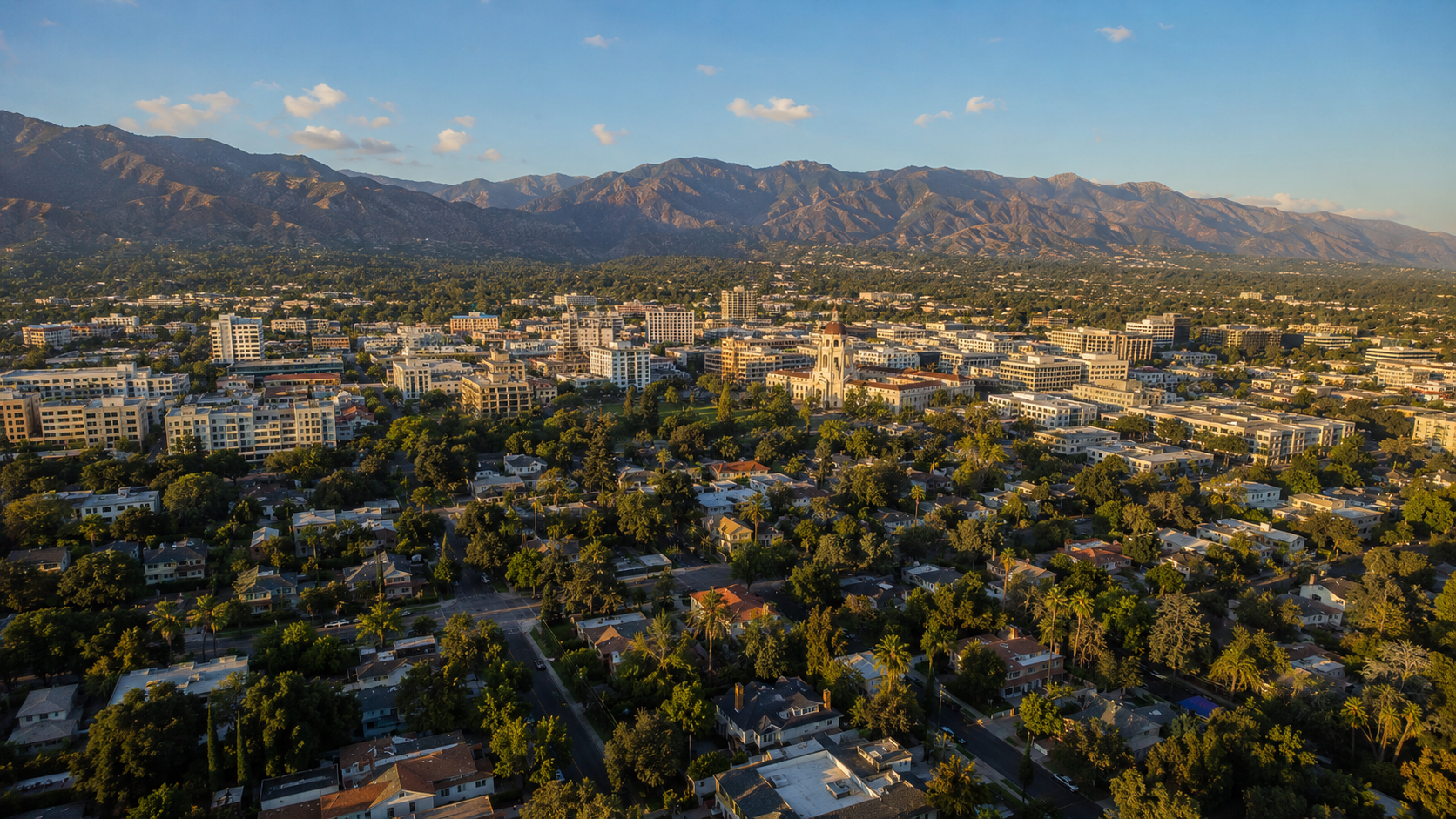
Glendale
Permit Expediting
Glendale ≠ Los Angeles: Glendale has its own municipal building department — the Community Development Department, Building & Safety Division — that is entirely separate from LADBS. Permits here are issued under the Glendale Municipal Code, not the Los Angeles Municipal Code. Submitting a Glendale project to LADBS is a jurisdictional error that delays projects by weeks. We know the difference.
Glendale is one of the largest cities in Los Angeles County — and one of the most technically complex permitting environments in the San Gabriel Valley foothills.
With its own Building & Safety Division, active Historic Preservation Commission governing two recognized residential historic districts, a mandatory seismic soft-story retrofit program, and large portions of the Verdugo Mountains foothills designated Very High Fire Hazard Severity Zone, Glendale permits require city-specific expertise that extends well beyond generic California Building Code knowledge. Adding to the complexity: food service health permits in Glendale are issued by Los Angeles County Department of Environmental Health (LACDEH) — a separate County agency operating on an independent timeline.
Ocean Permits & Development manages Glendale permits across all project types — ADU and residential additions, commercial tenant improvements, restaurant build-outs requiring concurrent LACDEH coordination, seismic retrofit compliance, historic district approvals, and multi-location rollout programs that span both Glendale and the neighboring City of Los Angeles. As a women-owned business enterprise (WBE) headquartered in Los Angeles, we have active experience on both sides of the Glendale–LA boundary.
Glendale's Permitting Framework
Glendale Community Development Department — Building & Safety Division (GMC Title 8 / California Building Code)
Glendale has its own municipal building department — the Community Development Department, Building & Safety Division — that is entirely separate from LADBS. All building permits in Glendale are issued under the Glendale Municipal Code (GMC Title 8, Buildings and Construction), which adopts the California Building Code (Title 24 CCR) and California Residential Code with local Glendale amendments. Plan check, permit issuance, and construction inspections all go through Glendale's own counter and portal. LADBS has no authority in Glendale. Contractors and architects who work exclusively in the City of Los Angeles are in an unfamiliar regulatory environment when they cross into Glendale — different forms, different fee schedules, different correction standards.
Glendale Planning Division — Zoning, CUPs & Environmental Review (GMC Title 30)
The Glendale Planning Division administers zoning under GMC Title 30, which establishes the City's residential, commercial, industrial, and mixed-use zoning districts. The Planning Division processes Conditional Use Permits (CUPs), variances, zone changes, administrative use permits, design review, and environmental determinations under CEQA. For most commercial projects — restaurants with alcohol, auto dealerships on Brand Boulevard, entertainment venues, extended-hours operations — Planning approval must precede or run concurrently with Building & Safety plan check. Sequencing these tracks correctly is one of the highest-value contributions an expediter makes.
Glendale Historic Preservation Commission — Historic Districts & Landmarks
Glendale has designated historic districts and individual landmark properties that require Certificate of Appropriateness review by the Historic Preservation Commission (HPC) before exterior building permits can be issued. The two primary residential historic districts are Rossmoyne (1920s–30s Spanish Colonial, Mediterranean Revival, and Period Revival homes along Kenneth Road and Rossmoyne Avenue) and Riverside Rancho (one of Glendale's earliest planned communities near Chevy Chase Drive). Any exterior alteration — new windows, roof materials, additions, new construction within a district — on a contributing structure requires HPC approval evaluated against the Secretary of the Interior's Standards for Rehabilitation. HPC review adds 4–8 weeks and requires submittal of detailed elevation drawings, material samples, and a written standards analysis.
Seismic Retrofit — Glendale Municipal Code Chapter 8.60 (Verdugo & San Fernando Fault Proximity)
Glendale lies near the Verdugo Fault, which runs along the eastern face of the Verdugo Mountains through the city's eastern boundary. Under GMC Chapter 8.60, Glendale has a mandatory retrofit program for wood-frame soft-story buildings — typically two or more stories over a weak or open first floor built before 1980. Covered buildings must undergo a structural engineering evaluation and, where deficiencies are found, complete seismic retrofit to City-specified performance targets. Retrofit permits are issued by Glendale Building & Safety and require plans stamped by a California-licensed structural engineer meeting the City's technical standards. Non-compliant buildings face escalating City enforcement after the mandatory deadline passes.
Very High Fire Hazard Severity Zone — Chapter 7A of the California Building Code
Glendale's Verdugo Mountains foothill neighborhoods — Chevy Chase Canyon, La Crescenta, Montecito Park, and adjacent areas — are designated Very High Fire Hazard Severity Zone (VHFHSZ) by CAL FIRE under Government Code §51178. New construction and substantial improvements in VHFHSZ areas must comply with Chapter 7A of the CBC, requiring fire-resistant assemblies for roofing, exterior siding and cladding, vents and attic openings, eaves, exterior decks, and windows facing vegetated exposures. Glendale borders the Altadena foothill communities affected by the January 2025 Eaton Fire — owners in Glendale's foothill zones face materially identical fire-interface risk and the same Chapter 7A compliance requirements.
Los Angeles County Department of Environmental Health (LACDEH) — Food Service Establishments
Despite being an independent city, Glendale's food service health permits are issued by the Los Angeles County Department of Environmental Health — a County agency, not the City of Glendale. LACDEH reviews restaurant plans for kitchen layout, grease interceptor design, handwashing stations, equipment specifications, and food storage. LACDEH conducts construction-phase inspections at key milestones (rough plumbing, hood installation, pre-opening). LACDEH approval is required before any food service establishment can open, and it runs on a separate timeline from Glendale Building & Safety plan check. We submit to LACDEH concurrently with Glendale plan check so both agencies' approvals arrive in parallel rather than sequentially.
Permit Types, Timelines & Expediting Fees
| Permit Type | Standard Timeline | Expedited Approach | Expediting Fee Range |
|---|---|---|---|
| Residential remodel / addition | 4–8 weeks | 2–4 weeks (pre-app meeting) | $1,500–$4,500 |
| ADU (Accessory Dwelling Unit) | 60-day statutory maximum | Complete submittal from day 1 | $2,000–$5,500 |
| Commercial tenant improvement (TI) | 6–12 weeks | Pre-app + concurrent Planning | $3,000–$8,000 |
| Restaurant TI (new build-out) | 8–14 weeks (Building + LACDEH) | Parallel-track coordination | $4,500–$10,000 |
| Seismic soft-story retrofit | 4–10 weeks | Concurrent engineering review | $2,500–$6,000 |
| Solar PV system (residential) | 1–3 weeks (OTC eligible) | Same-day OTC when eligible | $750–$1,500 |
| Historic district (HPC + Building) | HPC 4–8 wks + Building 4–8 wks | Pre-HPC consultation | $3,500–$9,000 |
Timelines are estimates under current conditions. Expediting fee ranges are Ocean Permits' service fees — separate from Glendale City permit fees, plan check fees, and consultant fees. Contact us for a project-specific quote.
How We Navigate Glendale Permits
- 01
Jurisdiction & Property Research
We verify your property is in the City of Glendale (not unincorporated LA County, not the City of Los Angeles), pull the permit history, confirm the zoning district under GMC Title 30, and identify any historic resource designations — including whether the property is a City landmark or a contributing structure within the Rossmoyne or Riverside Rancho historic districts. This step determines which agencies are involved and in what sequence, and identifies any non-obvious overlays (VHFHSZ, seismic retrofit compliance status, LACDEH) before the project begins.
- 02
Pre-Application Strategy
We schedule and attend a pre-application meeting with Glendale Building & Safety or Planning staff when project scope warrants it. Pre-app meetings are not required but are highly effective for non-standard projects: historic district alterations, seismic retrofit design, large commercial TIs requiring both Planning and Building sign-off, or projects where the code interpretation is ambiguous. Resolving these questions before submittal eliminates the correction cycles that extend typical timelines by 4–8 weeks.
- 03
Complete Application Preparation
We coordinate with your architect, structural engineer, and mechanical/electrical/plumbing consultants to assemble a complete, code-compliant permit application. For Glendale this includes: GMC-compliant plans and specifications, Title 24 energy compliance documentation, CalGreen mandatory measures checklist, Chapter 7A fire-resistant construction details (if in VHFHSZ), HPC elevation drawings and materials analysis (if in a historic district), and LACDEH kitchen drawings for food service projects. Incomplete submittals are the single most common cause of extended plan check — completeness is non-negotiable.
- 04
Parallel-Track Submittal
We submit to Glendale Building & Safety and any concurrent agencies — Planning (for CUP or design review), LACDEH (for restaurant health permits), Glendale Fire Prevention Bureau — simultaneously rather than sequentially. Running parallel tracks compresses overall project timelines by weeks or months compared to the sequential approach most applicants default to. We track each track independently and coordinate between agencies when one agency's comment affects another's review.
- 05
Plan Check & Correction Management
We track the application through Glendale Building & Safety's plan check queue, retrieve correction lists promptly when issued, and work with your design team to prepare complete, technically sufficient responses. We communicate directly with Glendale plan checkers when corrections are ambiguous or require interpretation of Glendale's local code amendments. Rapid, complete correction responses are the primary lever for compressing plan check timelines.
- 06
Permit Issuance & Pre-Construction Coordination
After plan check approval, we coordinate permit issuance with Glendale Building & Safety and communicate inspection requirements to your contractor in advance. Glendale's inspection sequence, timing, and documentation requirements differ from LADBS — we prepare contractors unfamiliar with Glendale's procedures to avoid field inspection failures that halt construction.
- 07
Inspection Support & Close-Out
We monitor the inspection sequence through to final inspection and certificate of occupancy (for commercial projects) or final sign-off (for residential permits). Where inspection issues arise, we facilitate resolution between your contractor and the Glendale inspector. For projects requiring HPC Certificate of Appropriateness, we confirm that as-built exterior conditions match the approved HPC submittal before requesting final inspection.
Our Glendale Expertise
- Glendale Community Development Department — Building & Safety Division permit coordination
- Glendale Planning Division — CUP, administrative use permit, and design review applications
- Historic Preservation Commission Certificate of Appropriateness (Rossmoyne and Riverside Rancho districts)
- City landmark designation review and compliance documentation
- Glendale ADU permits — detached, attached, JADU, and garage conversion
- Seismic soft-story retrofit permits under GMC Chapter 8.60
- Commercial tenant improvement permits — office, retail, restaurant, medical, industrial
- Restaurant permit coordination: Glendale Building & Safety + Fire Prevention Bureau + LACDEH
- Very High Fire Hazard Severity Zone (VHFHSZ) — Chapter 7A compliance documentation
- Conditional Use Permit applications for alcohol, entertainment, and drive-through uses
- Solar PV and battery storage permits — residential and commercial
- Grading and drainage permits for hillside and foothill properties
- Code violation resolution and Notice of Violation response
- Multi-location rollout programs spanning Glendale and City of Los Angeles (LADBS)
Why Choose Ocean Permits in Glendale
Ocean Permits & Development is a women-owned business enterprise (WBE) founded in 2021 by Katherine Amaya. We focus exclusively on permit expediting — we do not do design, construction, or general contracting. That focus means our entire operation is built around navigating permitting agencies efficiently, and our client relationships are conflict-free.
Our Glendale practice is particularly relevant for three client profiles. First, property owners and developers with projects in both Glendale and the City of Los Angeles — we know both regulatory environments and manage multi-jurisdiction project portfolios without requiring separate expediting relationships for each city. Second, restaurant and commercial operators opening locations in Glendale who need coordinated management of Glendale Building & Safety, Glendale Fire Prevention Bureau, and LACDEH simultaneously. Third, owners of Glendale foothill properties dealing with fire-interface risk — we have active experience with Chapter 7A fire-resistant construction requirements from our work on Altadena Eaton Fire rebuilds and Pacific Palisades fire rebuild permits, and that expertise transfers directly to Glendale's VHFHSZ zones in the Verdugo Mountains.
All new clients receive a free initial consultation. Call us at +1 (213) 277-8777 or submit a project inquiry online and we will assess your project's specific Glendale permit pathway, timeline, and scope within one business day.
Common Questions About Glendale Permits
Who issues building permits in Glendale, CA?
Building permits in Glendale are issued by the City of Glendale's Community Development Department, Building & Safety Division. This is an entirely separate agency from LADBS (Los Angeles Department of Building and Safety), which serves only the City of Los Angeles. Glendale operates under the Glendale Municipal Code (GMC), which adopts the California Building Code (Title 24 CCR) with local amendments. Submitting a Glendale project to LADBS is a jurisdictional error — LADBS has no authority over Glendale construction. Applications, plan check, inspections, and permit issuance all go through Glendale's own systems.
What is the Glendale Historic Preservation Commission and when does it apply?
The Glendale Historic Preservation Commission (HPC) reviews exterior alterations, additions, and new construction affecting designated historic landmarks and properties within Glendale's designated historic districts — primarily Rossmoyne (a 1920s–30s Spanish Colonial and Mediterranean residential neighborhood) and Riverside Rancho (one of the earliest planned residential communities in the Glendale foothills). Any exterior work on a City-designated historic landmark or on a contributing structure within one of these districts requires a Certificate of Appropriateness from the HPC before a building permit can be issued. The HPC evaluates proposed work against the Secretary of the Interior's Standards for Rehabilitation. Design review at the HPC level adds 4–8 weeks to the permitting timeline. We assess historic resource status at the start of every Glendale project and structure submittals to satisfy HPC standards before plan check — avoiding the costly scenario of obtaining a building permit only to have HPC require exterior design revisions.
Does Glendale have a seismic retrofit requirement?
Yes. Glendale sits in a seismically active area between the Verdugo Fault (running through the Verdugo Mountains along Glendale's eastern edge) and the broader San Fernando Valley fault system. The City of Glendale adopted a mandatory soft-story wood-frame building retrofit program under the Glendale Municipal Code (GMC Chapter 8.60) requiring owners of qualifying multi-family soft-story buildings (typically two or more stories over a weak or open first-floor garage or commercial level, built before 1980) to complete a structural engineering evaluation and, where required, complete seismic retrofit work on a compliance schedule set by the City. Retrofit permits are issued by Glendale Building & Safety, and all retrofit work must be designed by a California-licensed structural engineer to meet City-specified performance targets. We manage the retrofit permit process from engineering coordination through permit issuance and inspection.
How long does a building permit take in Glendale?
Permit timelines in Glendale vary by project type. Simple residential permits (reroofs, HVAC replacements, water heaters, electrical panels) are typically issued over-the-counter same day or within 1–5 business days. Standard residential remodels and additions: 4–8 weeks plan check. ADU projects are subject to California's 60-day statutory review deadline (Government Code §65852.2) from the date the application is deemed complete. Commercial tenant improvements: 6–12 weeks, depending on scope and whether Planning approval is required. Projects in historic districts requiring HPC review add 4–8 weeks before plan check can begin. Glendale does not advertise a formal Priority Plan Check program equivalent to some neighboring cities, but pre-application meetings with Building & Safety staff can resolve code questions in advance and compress correction cycles. We structure every submittal for completeness from day one to avoid the back-and-forth that extends most standard timelines.
How do ADU permits work in Glendale?
Glendale processes ADU permits under California state ADU law (Government Code §65852.2 for ADUs and §65852.22 for Junior ADUs), with local implementation through the Glendale Municipal Code and Glendale Building & Safety plan check. Qualifying ADUs must be ministerially approved — Glendale Planning cannot impose discretionary design review conditions that were prohibited by state law after 2020. Glendale permits detached ADUs up to 1,200 sq ft, attached ADUs, garage conversions, and Junior ADUs (up to 500 sq ft within the primary dwelling). The 60-day review deadline under Government Code §65852.2 begins when Glendale deems the application complete. We prepare complete ADU submittals — including Title 24 energy compliance, California Residential Code structural compliance, and site plans showing setbacks and lot coverage — to start that 60-day clock from the first submission.
What permits does opening a restaurant in Glendale require?
Opening a restaurant in Glendale requires coordinating several separate permits simultaneously: (1) A Building Permit from Glendale Building & Safety for the tenant improvement — covering ADA compliance, Type I kitchen hood and ventilation, grease interceptor, fire suppression (Ansul system), electrical, plumbing, and structural work; (2) A Fire permit and inspection from the Glendale Fire Prevention Bureau for life safety systems; (3) A Health Permit from the Los Angeles County Department of Environmental Health (LACDEH) — the governing health authority for food service establishments in Glendale, which is a County agency distinct from the City of Glendale; (4) A Conditional Use Permit (CUP) or Administrative Use Permit from Glendale Planning if alcohol service (ABC license) is involved or if the use requires discretionary approval under Glendale's zoning code; (5) A Sign Permit from Glendale Building & Safety for any new exterior signage; and (6) A Glendale Business License. Pursuing these sequentially is the most common cause of restaurant project delays. We manage all tracks concurrently.
Is Glendale in a Very High Fire Hazard Severity Zone?
Yes, substantial portions of Glendale — particularly the Verdugo Mountains foothills neighborhoods such as Chevy Chase Canyon, La Crescenta, and the Montecito Park area — are designated Very High Fire Hazard Severity Zone (VHFHSZ) by CAL FIRE under California Government Code §51178 et seq. New construction and substantial remodels in VHFHSZ areas must comply with Chapter 7A of the California Building Code, which requires fire-resistant construction for roofing material, exterior siding, vents and attic openings, eaves and overhangs, exterior decks, and windows facing vegetated slopes. Glendale also borders the Altadena foothill communities affected by the January 2025 Eaton Fire. Property owners in Glendale's foothill zones face the same fire-interface risk profile and the same Chapter 7A construction requirements that now apply to post-fire rebuilds in neighboring Altadena.
What is a Conditional Use Permit (CUP) in Glendale and when is it required?
A Conditional Use Permit (CUP) in Glendale is a discretionary approval from the Glendale Planning Division required for uses that may be compatible with a given zoning district but warrant site-specific review of their operational impacts. Common CUP triggers in Glendale include: on-sale alcohol (ABC Type 41, 47, or 48 license) in commercial zones; drive-through facilities; auto dealerships on Brand Boulevard Auto Row; extended-hours commercial operations; certain large-format retail; and other sensitive uses enumerated in the Glendale Municipal Code Title 30 (Zoning). CUP applications require a project description, site and floor plans, an operational statement, and a CEQA environmental determination. The Glendale Planning Commission hears most CUP applications after a public notice period. Processing typically takes 10–16 weeks from complete application to decision. Conditions of approval are recorded against the property and bind future tenants and owners. We prepare CUP applications, operational statements, and hearing-ready materials, and advise on condition compliance post-approval.
What is the difference between Glendale permits and Los Angeles (LADBS) permits?
Glendale and the City of Los Angeles are neighboring but entirely separate municipalities with separate building departments, separate codes, separate portals, and separate plan checkers. LADBS has no jurisdiction in Glendale. Glendale building permits are issued under the Glendale Municipal Code, which adopts the California Building Code with Glendale-specific local amendments distinct from the LA City amendments that LADBS applies. Glendale's historic preservation overlay (Rossmoyne, Riverside Rancho districts) has no direct equivalent in the LADBS jurisdiction — the City of LA's HPOZ process is different in scope, procedures, and standards. An expediter, architect, or contractor whose experience is exclusively with LADBS is operating in an unfamiliar regulatory environment in Glendale. Ocean Permits & Development has active experience in both jurisdictions, which is directly relevant for clients with multi-site projects spanning LA City and Glendale.
Can you handle Glendale seismic retrofit permits?
Yes. We manage the Glendale soft-story retrofit permit process from beginning to end: coordinating the structural engineering evaluation, working with your engineer to prepare the retrofit design documents required by Glendale Building & Safety, submitting the permit application, tracking plan check, responding to corrections, and scheduling inspections. We also advise building owners on the City's compliance schedule and the cost-benefit analysis of completing retrofit work in advance of the City's mandatory deadline versus waiting. Proactive compliance is often less expensive than emergency compliance, particularly when coordination with a structural engineer and contractor can be scheduled on the owner's timeline rather than under a City enforcement order.
Glendale Permit Help
Free consultation. We assess your Glendale permit pathway — Building & Safety, Planning, Historic Preservation, LACDEH — and quote a fixed expediting fee within one business day.
Schedule a Free ConsultationOr call +1 (213) 277-8777
Glendale Quick Facts
- Building Dept.Community Development Dept. — Building & Safety Division
- Building CodeGlendale Municipal Code Title 8 (adopts CBC Title 24 CCR)
- Zoning CodeGMC Title 30
- Historic DistrictsRossmoyne; Riverside Rancho
- Seismic ProgramMandatory soft-story retrofit — GMC Chapter 8.60
- Fire Hazard ZoneVHFHSZ — Verdugo Mountains foothills
- Health PermitsLA County LACDEH (County agency, not City of Glendale)
- ADU StatuteGov. Code §65852.2 — 60-day review deadline