_1781464136662-DVw5IPjt.png)
Residential Permits · September 10, 2026
Roof & Reroofing Permits in Los Angeles
When you need a permit, LADBS's express reroof path, Title 24 cool-roof rules, and Chapter 7A Class A roofing in fire hazard zones.
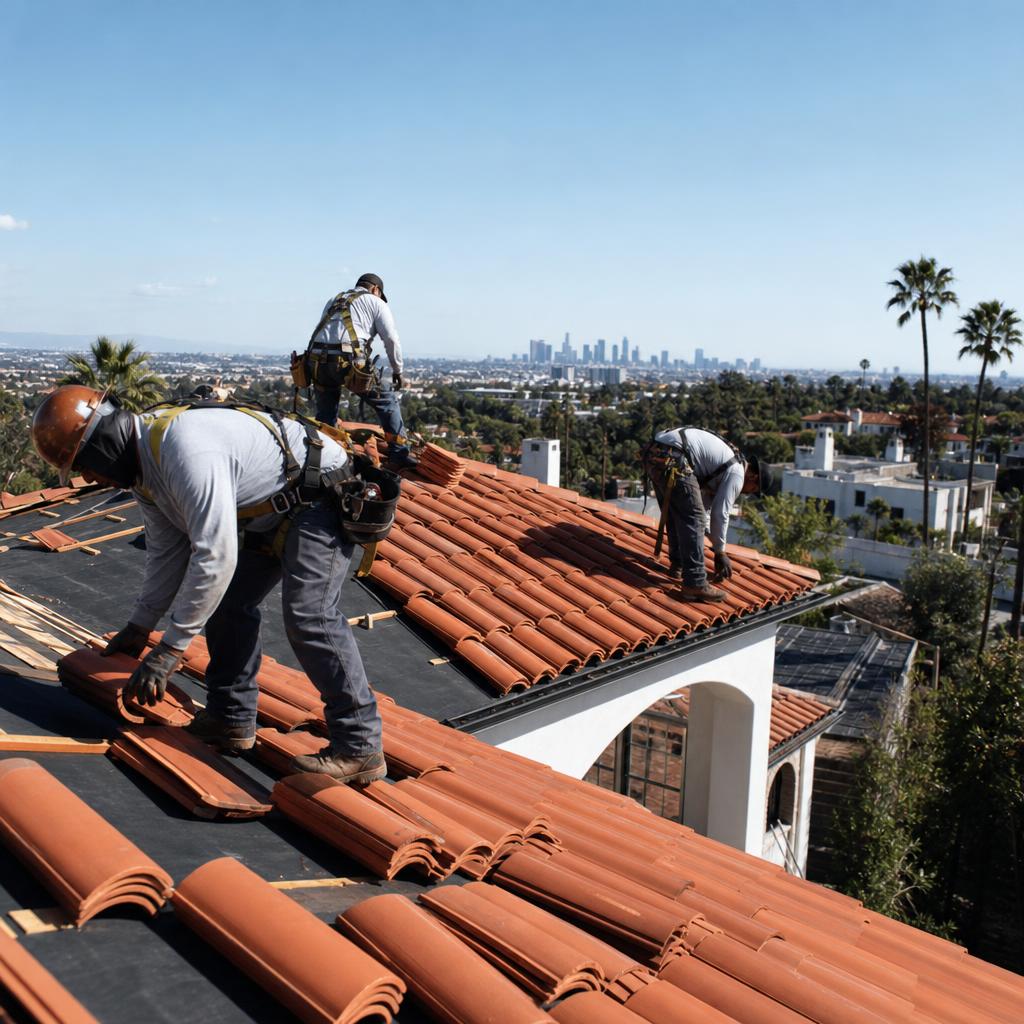
Not every reroof needs a full LADBS plan check, but plenty of Los Angeles homeowners get this wrong in both directions — either pulling no permit for work that needs one, or over-scoping a project that could move through LADBS Express Permits. This guide covers when a roof permit is required, LADBS's no-plan-check express reroof path, Title 24 cool-roof reflectance and emittance requirements, and the Class A fire-rated roofing covering required by Chapter 7A in Very High Fire Hazard Severity Zones. Free consultation: call Ocean Permits at 213-277-8777.
Does Your Reroof Need a Permit?
LADBS requires a permit for essentially every full reroof in the City of Los Angeles — a complete tear-off and replacement of the roofing material on a single-family home, multifamily building, or commercial structure. Where homeowners get this wrong is at the margins: a small leak repair that seems minor at the outset can expand into a much larger scope once a roofer opens up the roof deck and finds deteriorated sheathing, at which point the project has effectively become a partial or full reroof requiring a permit even if that wasn't the original plan.
The opposite mistake is just as common: assuming every reroof needs the same full plan-check process as a room addition. For a large share of straightforward single-family reroofs, LADBS offers a faster, no-plan-check path — but qualifying for it depends on the specific scope, material, and the property's fire hazard zone status.
LADBS Express Permits: The No-Plan-Check Path for Straightforward Reroofs
LADBS bulletin P/GI 2026-003, revised June 10, 2026, lists reroofing with Class A or B coverings weighing less than 6 pounds per square foot over existing solid sheathing and over new solid sheathing. Class A covering is required within a Very High Fire Hazard Severity Zone. Express permits can be obtained through the published online path or the Department's appointment-based counters; eligibility does not guarantee immediate issuance.
The current bulletin does not make new solid sheathing an automatic reason for full plan check. Instead, distinguish the listed reroof scope from added roof openings, altered structural framing, heavier materials or separate electrical work. A skylight opening or new solar system may require additional permits even if the roof covering itself qualifies for Express processing.
| Scope | Permit Path | Note |
|---|---|---|
| Minor repair — under 100 sq ft, no structural work, like-for-like material | Generally not required for very small patch repairs, but confirm with LADBS before assuming; anything approaching a full reroof crosses into permit territory | Homeowners commonly under-scope a leak repair that turns into a larger tear-off once the roofer opens it up |
| Full tear-off and reroof, same roof type (e.g., asphalt shingle to asphalt shingle) | Permit required — often eligible for LADBS's no-plan-check Express Permit counter process for straightforward single-family reroofs | Express path still requires Title 24 cool-roof compliance documentation and, in fire hazard zones, Class A material |
| Roof covering weighing less than 6 pounds per sq ft over existing or new solid sheathing | Listed in LADBS Express Permit bulletin P/GI 2026-003, subject to its conditions | New solid sheathing alone does not automatically exclude the published Express route; structural framing changes must be scoped separately |
| Added skylights, heavier roofing or structural framing changes | Confirm the additional building or trade review with LADBS | Roofing eligibility does not automatically authorize new openings, altered framing or a solar electrical installation |
| Reroof on a property in a Very High Fire Hazard Severity Zone (VHFHSZ) | Permit required, with Chapter 7A Class A fire-rated roof assembly documentation as part of the submittal | Applies broadly across the Santa Monica Mountains, San Gabriel foothill communities, and rebuild areas in Pacific Palisades and Altadena |
Title 24 Cool-Roof Reflectance & Emittance Requirements
California's Title 24 Building Energy Efficiency Standards set minimum solar reflectance and thermal emittance values for new and replacement roofing on most buildings, aimed at reducing how much heat a roof absorbs and transfers into the building below. The specific thresholds vary by roof slope category (low-slope versus steep-slope) and by the building's climate zone, and the Cool Roof Rating Council (CRRC) maintains published reflectance and emittance ratings for compliant roofing products that manufacturers and contractors reference during material selection.
In practice, this means the roofing material proposed for a permitted reroof needs a CRRC rating meeting the applicable Title 24 threshold for the property's climate zone and roof slope, and this documentation typically needs to be included with the permit application whether the project goes through the express counter path or full plan check. A homeowner or contractor choosing roofing material based on appearance or cost alone, without checking CRRC compliance, can create a documentation gap that holds up permit issuance.
Chapter 7A: Class A Fire-Rated Roofing in Very High Fire Hazard Severity Zones
Properties located within a Very High Fire Hazard Severity Zone (VHFHSZ), as mapped by CAL FIRE and enforced locally through LAFD and LADBS, face an additional layer of roofing requirements under Chapter 7A of the California Building Code and Residential Code. These zones cover large portions of the Santa Monica Mountains — including Pacific Palisades, Topanga, Malibu, and Bel Air — and San Gabriel foothill communities including Altadena and parts of La Cañada Flintridge, along with other hillside neighborhoods across the city and county.
Chapter 7A requires a Class A fire-rated roof covering assembly in these zones — meaning the entire tested and listed assembly, including underlayment, not simply a shingle product with a Class A label applied in isolation. Concrete and clay tile, standing-seam metal roofing, and many fiberglass or asphalt composition shingle products rated Class A as a complete assembly are common compliant choices for a reroof in these zones. Untreated wood shake and shingle roofing is effectively excluded, since it does not achieve a Class A rating as an assembly under standard testing.
This applies with particular force to fire rebuild projects in Pacific Palisades and Altadena, where a home's pre-fire roof — sometimes wood shake or an older, non-compliant material — cannot be replicated like-for-like, because the rebuild is treated as new construction under current code. For the full set of ignition-resistant construction requirements beyond roofing that apply to these rebuilds — vents, siding, windows, decking, and defensible-space landscaping — see our Chapter 7A wildfire construction guide and our fire rebuild services page.
Structural Considerations When Changing Roofing Material
Swapping to a heavier roofing material changes the dead load the roof framing has to carry — concrete and clay tile weigh substantially more per square foot than asphalt shingle — and LADBS plan check will typically require a structural calculation or a licensed structural engineer's letter confirming the existing framing can support the added weight before approving a material change. This requirement generally doesn't apply to a like-for-like material replacement, which is one reason a like-for-like reroof can qualify for the faster express path while a material upgrade cannot.
A Practical LADBS Reroof Application Checklist
First confirm the jurisdiction and permit history, then prepare a written scope that states the roof area, existing material, replacement material and whether the work includes new sheathing or altered framing. One roofing square equals 100 square feet; the permit quantity should agree with the contractor's roof measurement rather than the home's floor area.
- Check the current LADBS Express qualifications and identify any separate building or trade scope.
- Collect the roofing assembly's fire classification, product listing and weight information; document the site's fire hazard classification.
- Confirm the applicable energy requirements. The current bulletin specifies CRRC-certified cool-roof product for residential roof replacement exceeding 50 percent of total roof area and references Title 24, Part 6, Section 141.0(b)2B for nonresidential reroofing.
- Submit the correct permit description and applicant/contractor information; answer any corrections before starting permitted work.
- Arrange the required inspections with LADBS and the roofer so covered work can be inspected when required. Keep the final permit record with the product documentation.
For budget planning, separate the roof contract from government permit fees, any engineering for structural changes, energy documentation and permit coordination. Fees and review time depend on scope and current agency schedules; an Express-eligible covering does not promise a fixed-price project or a guaranteed same-day permit.
Read the official LADBS Express Permit page and current qualifications bulletin. Pacific Palisades follows City permitting, while Altadena rebuilding requires County review. Confirm current adopted code provisions rather than applying an old permit's material approval to new work.
A combined project may also need our solar panel permit coordination, the window and skylight replacement guide, or Title 24 energy compliance documentation. For redevelopment with a basement or major foundation work, shoring and excavation review is a separate construction-phase dependency, not a roofing approval.
Related Guides
If your reroof is part of a broader fire rebuild, also read our Chapter 7A ignition-resistant construction guide. If you're weighing whether to manage the permit process yourself, our permit expediting vs. DIY comparison covers the general tradeoffs. For our full service catalog, see the services overview.
Frequently Asked Questions
Do I always need a permit to reroof a house in Los Angeles?
In almost every case, yes. LADBS requires a permit for a full reroof — a complete tear-off and replacement of the roofing material — on a single-family home, multifamily building, or commercial structure. The narrow exception is very small patch repairs that don't approach a full reroof in scope, and even then it's worth confirming with LADBS or an expediter before assuming no permit applies, since 'small' repairs have a way of expanding once a roofer opens up the existing roof and finds deteriorated sheathing underneath.
What is LADBS's Express Permit process for reroofing, and does my project qualify?
LADBS bulletin P/GI 2026-003 lists Class A or B roof coverings weighing less than 6 pounds per square foot over existing or new solid sheathing. Class A is required in a Very High Fire Hazard Severity Zone. The bulletin also states its residential cool-roof requirement for replacement of more than 50 percent of the total roof area. Confirm the exact scope and current bulletin with LADBS; new openings or framing changes can require additional review. New solid sheathing alone is not an automatic disqualification.
What does Title 24 require for cool-roof reflectance and emittance?
California's Title 24 Building Energy Efficiency Standards set minimum solar reflectance and thermal emittance values for new and replacement low-slope and steep-slope roofing on most residential and nonresidential buildings, intended to reduce cooling loads by keeping roof surfaces cooler in direct sun. The specific reflectance and emittance thresholds vary by roof slope category and climate zone, and manufacturers publish Cool Roof Rating Council (CRRC) ratings for compliant products, which a contractor should reference when selecting roofing material for a permitted reroof. A roofer proposing a material that doesn't carry a compliant CRRC rating for the applicable climate zone can create a Title 24 compliance gap that shows up during plan check or inspection.
What is a Very High Fire Hazard Severity Zone (VHFHSZ) and how do I know if my property is in one?
The California Department of Forestry and Fire Protection (CAL FIRE), together with the Los Angeles Fire Department for the City's local responsibility areas, maps Very High Fire Hazard Severity Zones based on vegetation, terrain, and fire history. These zones cover large parts of the Santa Monica Mountains including Pacific Palisades, Topanga, and Bel Air, San Gabriel foothill communities including Altadena and parts of La Cañada Flintridge, and other hillside areas across Los Angeles. LAFD and LADBS both maintain fire hazard zone lookup tools, and a property's zone status directly determines whether Chapter 7A roofing requirements apply to a reroof project.
What roofing materials qualify as Class A fire-rated under Chapter 7A?
Chapter 7A of the California Building Code and Residential Code requires a Class A fire-rated roof covering assembly in Very High Fire Hazard Severity Zones — not just a Class A-rated shingle in isolation, but the full roofing assembly including underlayment, as tested and listed together. Concrete and clay tile, standing-seam metal roofing, and many fiberglass or asphalt composition shingle products rated Class A as a complete assembly are common compliant choices. Untreated wood shake and shingle roofing is effectively excluded in these zones unless installed as part of a rare tested and listed ignition-resistant assembly, which is uncommon and costly.
I'm rebuilding after the Palisades or Eaton fires — does my new roof need to be Class A even if my old roof wasn't?
Yes. A fire rebuild in Pacific Palisades, Malibu, Topanga, or Altadena is new construction under current code, not a like-for-like replacement of the pre-fire roof, which means the Class A fire-rated roof assembly requirement under Chapter 7A applies regardless of what roofing material the original home had. This is one of the most common code-driven cost increases rebuild clients encounter, particularly if the original home had a wood shake or shingle roof that can no longer be replicated.
Does a reroof need a structural engineer's review?
It depends on whether the new roofing material weighs meaningfully more than what's being removed. Switching from a lightweight material like asphalt shingle to a heavier material like concrete or clay tile changes the dead load on the roof framing, and LADBS plan check will generally require a structural calculation or a structural engineer's letter confirming the existing framing can support the added weight before approving the reroof. A like-for-like material swap generally doesn't trigger this requirement.
Can I add solar panels at the same time as a reroof?
Yes, and doing so together is common and often more cost-effective than reroofing now and adding solar later, since it avoids removing new panels for a future reroof. However, combining the two scopes generally moves the project out of LADBS's express reroof path and into a submittal that also addresses solar-ready conduit, structural attachment points, and any additional Title 24 solar-related compliance documentation.
What happens if I reroof without a permit in Los Angeles?
An unpermitted reroof can surface later during a point-of-sale inspection, an insurance claim after storm or fire damage, or a future permit application on the same property, and LADBS can require the owner to obtain a retroactive permit, which may involve exposing portions of the completed roof for inspection. Homeowners' insurance claims involving roof damage can also be complicated by an inability to document that the existing roof was permitted and code-compliant.
How much does a reroof permit cost in Los Angeles, and how long does it take?
LADBS permit fees for a reroof are calculated based on valuation and scope, and an express-path reroof on a single-family home is typically issued same-day at the counter once documentation is in order, while a full plan-check submittal — for a material change, added structural scope, or a larger commercial building — takes considerably longer. We give clients a project-specific estimate once we've reviewed the property's fire hazard zone status, roofing material, and scope.
How does a roof permit differ from the broader wildfire construction requirements covered elsewhere on your site?
Our wildfire and urban interface Chapter 7A guide covers the full set of ignition-resistant construction requirements for a rebuild in a fire hazard zone — vents, siding, windows, decking, and landscaping in addition to roofing. This guide focuses specifically on the roofing permit process itself: when a permit is required at all, the LADBS express path for straightforward reroofs, Title 24 cool-roof compliance, and how Chapter 7A's roofing-specific requirement fits into that broader picture. Read both if you're planning a fire-zone rebuild rather than a standard reroof.
What documents should I prepare before applying for a reroof permit?
Prepare the address, roof area and number of roofing squares, existing and proposed covering, weight per square foot, whether solid sheathing will be replaced, applicable fire classification and product listing, and required cool-roof certification. Identify any skylights, structural repairs or solar work separately so the permit description matches the actual work.
Does the same permitting agency handle Pacific Palisades and Altadena roofs?
No. Pacific Palisades is within the City of Los Angeles and uses LADBS. Altadena is unincorporated Los Angeles County and uses County building processes. Confirm the jurisdiction and applicable permit conditions before using a City Express Permit checklist.
Why use Ocean Permits & Development for a reroofing permit?
Ocean Permits & Development is a women-owned, Los Angeles-based permit expediting firm that confirms fire hazard zone status, Title 24 compliance documentation, and structural requirements before a reroof is submitted, and manages the LADBS express counter or full plan-check process end to end. We offer a free initial consultation — call 213-277-8777 or reach out through our contact page.
Reroofing in Los Angeles?
We confirm fire hazard zone status, Title 24 compliance, and the fastest available permit path for your reroof.