_1781464136662-DVw5IPjt.png)
Commercial Battery Storage Permits
for Los Angeles BESS Projects
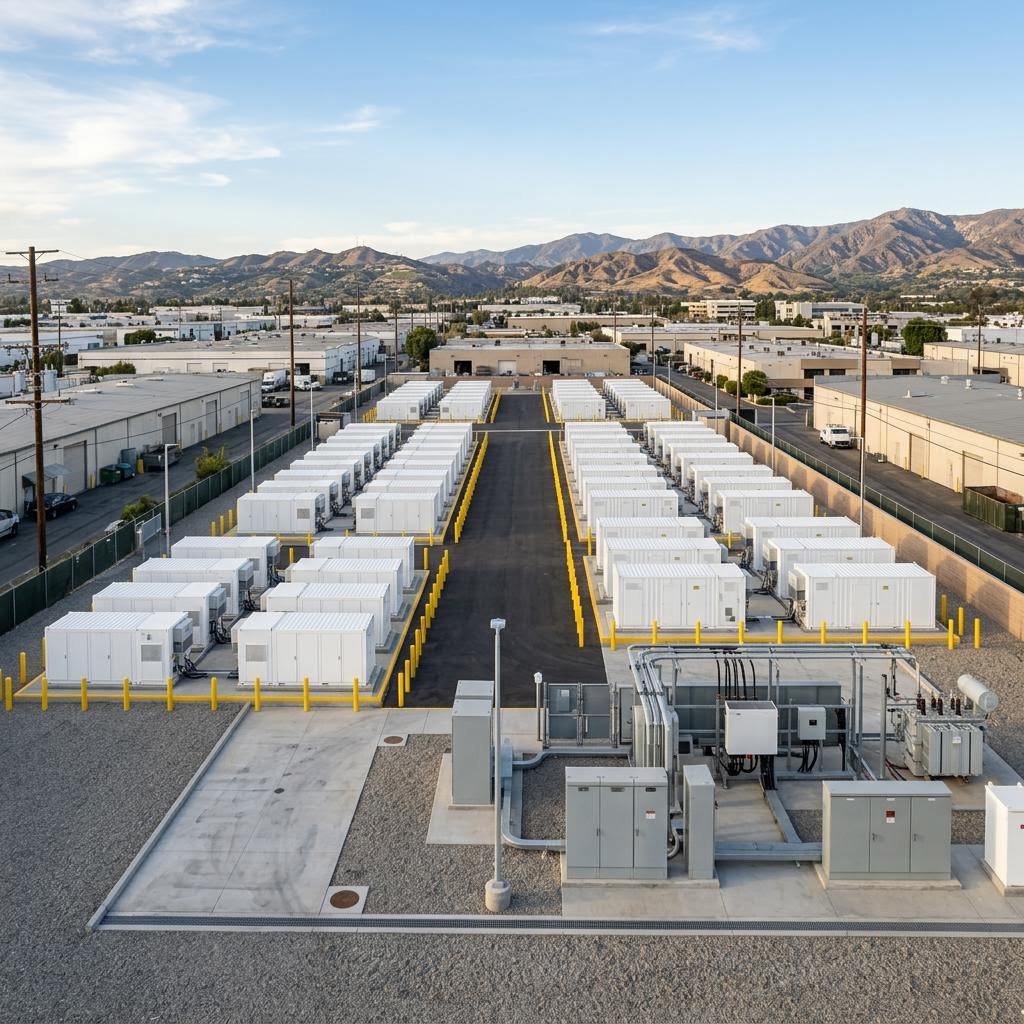
A commercial battery energy storage system sits at the intersection of three reviews: the building and electrical permit, fire department coordination for an energy storage hazard, and the utility's own interconnection process. Approval from one does not answer the questions of the other two.
Ocean Permits & Development is a women-owned Los Angeles permit expediting firm. For commercial battery energy storage systems (BESS), we organize the application path, track agency comments and keep the owner, electrical engineer, fire protection consultant, installer and utility representative working from the same document set. Qualified, licensed engineers design, install and test the system; Ocean coordinates the permitting and the correction cycle around their work.
This page addresses commercial and industrial storage: batteries paired with rooftop or carport solar at a warehouse, peak-shaving systems at a manufacturing site, backup storage for a cold storage facility, or storage serving a mixed-use building's common loads. It is not our residential battery guidance. A homeowner adding a wall-mounted battery to a single-family house follows a narrower path, described in our home battery storage article, and the LAFD memo written for that situation should not be used to scope a commercial installation.
Jurisdiction comes first. Inside the City of Los Angeles, the building and electrical permit is issued by LADBS, LAFD coordinates the fire-safety aspects, and LADWP decides how the system may connect to its grid. Projects in independent cities or unincorporated county areas follow their own building, fire and utility authorities, so we confirm the parcel's jurisdiction and serving utility before any drawings are routed.
Three approvals, not one: LADBS, LAFD and LADWP
LADBS reviews the electrical installation and any structural or building elements: equipment pads, rooftop or wall anchorage, enclosures, conductors, disconnects, overcurrent protection and the relationship to existing service equipment. Large or complicated electrical work typically goes through electrical plan check rather than an over-the-counter permit. A structural engineer usually documents anchorage and equipment weight where the system is mounted on a roof, a mezzanine or an existing slab.
LAFD coordination addresses the fire-safety characteristics of the specific battery system. For a commercial project that conversation is design-dependent: equipment siting, fire department access, separation from exposures and occupied spaces, hazard mitigation, evidence about how the system behaves in a thermal runaway event, emergency response information, ventilation or exhaust where the chemistry and enclosure call for it, and any fire protection or detection the design relies on. We do not publish blanket clearance distances, because the appropriate answer depends on the equipment listing, test data, location and the adopted code provisions applied by the reviewer.
LADWP decides whether and how the system may operate in parallel with its grid. Its interconnection requirements, including whether the system exports, its protection scheme and whether the existing transformer and service have capacity, are utility determinations. An issued LADBS permit is not permission to energize or interconnect. The project needs the utility's own approval sequence before the system operates in parallel with the grid.
- LADBS: electrical permit, plan check where required, structural anchorage and field inspection.
- LAFD: commercial energy storage coordination based on the actual equipment, siting and hazard mitigation.
- LADWP: interconnection documents, engineering review and the utility's authorization to operate.
- Owner and designers: equipment selection, listing documentation and test evidence supporting the design.
What LADWP asks for in a customer-generation interconnection
LADWP's published commercial interconnection requirements list the documents a customer-generation application should include when storage is part of the system. These include a BESS Technical Data Form, solar photovoltaic system information where storage is paired with solar, a plot or site plan, a load schedule and a single-line diagram. Getting these consistent with the LADBS electrical drawings matters: an inverter rating or a disconnect location that differs between the utility package and the permit set is one of the most common sources of avoidable comments.
LADWP distinguishes two values that are easy to confuse. Nameplate continuous power, expressed in kilowatts, describes how fast the system can deliver energy. Energy capacity, expressed in kilowatt-hours, describes how much energy it stores. A 250 kW system might store 500 kWh or 1,000 kWh. Forms, single-line diagrams and the site plan should state both values clearly and consistently rather than using one figure for both.
Under LADWP's customer-generation framework, systems above 30 kW up to 100 kW, and systems above 100 kW but below 1 MW, follow the Type 3 process, while systems of 1 MW and larger follow Type 4. In those larger categories LADWP requires an engineering meeting and a preconstruction meeting, and its process does not offer a photo inspection in place of a field visit. These categories describe LADWP's customer-generation interconnection program as published; they should not be extrapolated to every standalone or utility-scale storage installation, which may follow different procurement or transmission-level processes.
Fire code framework: what is law and what is a reference
Energy storage systems are addressed in the California Fire Code, Section 1207, as adopted and locally amended for the application's code cycle. The edition that governs your project is the one in effect when the application is filed, together with any Los Angeles amendments, not the newest model code published nationally. Thresholds, room and enclosure requirements and the specific provisions applied to a project should be confirmed by the designer against the current adopted edition.
NFPA 855 is the national standard for the installation of stationary energy storage systems and is a valuable technical reference. It is not automatically law in its latest edition; it applies to the extent the adopted code references it or the reviewer relies on it for a specific question. We ask design teams to cite the adopted code section first and the standard second, so reviewers can follow the logic quickly.
Two UL documents are frequently confused. UL 9540 is a safety standard under which an energy storage system is listed. UL 9540A is a test method that evaluates thermal runaway fire propagation at the cell, module, unit and installation levels. UL explains that 9540A produces data; it is not itself a system listing and not a permit. Reviewers may ask for the 9540A test report to support siting, separation or a reduced-protection argument, while also asking whether the system carries a UL 9540 listing. A package should present each document for what it is.
Why the residential LAFD memo is not a commercial shortcut
LADBS publishes an LAFD Energy Storage System memo and checklist dated May 2023. It is written for R-3 occupancies and exterior installations, meaning residential battery systems at homes. It is helpful for that scope, and we use it on residential projects, but it is not an exemption for commercial buildings and it does not establish clearance numbers for a warehouse, office or industrial site.
For commercial projects we expect a project-specific LAFD conversation. That usually means presenting the equipment data, the 9540 listing status, the 9540A test results, the proposed location relative to exits, openings, property lines and other exposures, the access route for fire apparatus and personnel, emergency shutdown and signage, and the fire protection or detection features the design relies on. When the reviewer asks for an alternative or additional mitigation, the design team decides how to respond; we track the comment and make sure the revised sheets match across all three agency packages.
Our BESS coordination process
Step one is a records and capacity review. We gather permit history, existing electrical single-line diagrams, service size, available utility account information and any existing solar approvals. Where an existing solar system was permitted years ago, its documentation often needs to be reconciled before storage can be added.
Step two is document alignment. The engineer prepares the electrical drawings, structural details where needed, equipment schedules and the LADWP forms. We compare inverter ratings, kW and kWh values, disconnect locations, conductor routing and site plan dimensions across the LADBS set and the utility package before anything is submitted.
Step three is parallel submittal. LADBS plan check, LAFD coordination and the LADWP interconnection application proceed on their own timelines. We maintain a single correction log assigning every comment to the electrical engineer, structural engineer, fire protection consultant, installer or owner.
Step four is construction and inspection. After permit issuance, the contractor installs to the approved plans and schedules LADBS inspections. LAFD field verification and LADWP's preconstruction and field requirements are scheduled with the installer. Commissioning and testing are performed by the qualified team; we track the documentation.
Step five is closeout and authorization. A finaled building permit and LADWP's written authorization to operate are separate milestones. We do not treat the end of construction as permission to energize, and we keep the owner informed of which approval is still outstanding.
Common project types we see
Solar-plus-storage at a distribution warehouse is the most frequent scenario. Large roof areas host photovoltaic arrays, and storage is added to manage demand charges or provide backup. The solar permit, the storage permit and the interconnection application must describe the same system, which is why we coordinate closely with our solar panel permit service on these projects.
Backup storage for refrigerated or cold storage operations raises questions about which loads the system serves, transfer equipment and interaction with existing generators. Storage serving a mixed-use building's common loads raises questions about location relative to residential units and egress. Storage inside a tenant space as part of a tenant improvement requires coordination with the landlord's electrical service and with any alarm or detection interfaces documented under a separate fire alarm permit.
Budget and schedule without fixed agency quotes
We do not publish a flat agency fee for BESS permits, because one does not exist. LADBS fees depend on the scope, valuation and electrical equipment; plan check fees and inspection fees are calculated against current schedules. LADWP engineering, study or facility charges, if applicable, are determined by the utility. Ocean's coordination fee is quoted separately after reviewing the scope.
Time is driven by document completeness, the size category, whether LADWP must study transformer or service capacity, and how quickly design teams respond to comments. Bring the address, existing single-line diagram, proposed equipment data sheets, kW and kWh values and target operation date to the consultation.
System, agency and document scope
A planning checklist of who reviews what. The responsible authority and licensed engineers determine the actual submittal.
| Element | Primary agency | Typical documents | Key qualification |
|---|---|---|---|
| Electrical installation | LADBS | Single-line diagram, equipment schedule, conductor and protection details | Plan check for complex scope; permit required before installation |
| Structural support | LADBS | Anchorage calculations, roof or slab details, equipment weights | Required where mounting affects structure |
| Fire safety coordination | LAFD | UL 9540 listing status, UL 9540A test report, siting and access plan, emergency information | Design-dependent; residential memo does not apply |
| Interconnection | LADWP | BESS Technical Data Form, solar information, site plan, load schedule, single-line diagram | Export, protection and capacity are utility determinations |
| Authorization to operate | LADWP | Utility approval following field requirements | Permit issuance is not permission to energize |
Agency roles summarized for City of Los Angeles projects served by LADWP. Other jurisdictions and utilities differ.
Timeline planning allowances
These are internal planning allowances for complete, coordinated documents. They are not published agency deadlines and may run longer.
| Project profile | Permit planning allowance | Interconnection considerations |
|---|---|---|
| Storage added to existing permitted solar, 30 to 100 kW | 6 to 12+ weeks | Type 3 process; engineering and preconstruction meetings |
| Commercial storage above 100 kW and below 1 MW | 10 to 20+ weeks | Type 3 process; capacity questions can extend the schedule |
| Customer generation 1 MW and larger | 16 to 30+ weeks | Type 4 process; utility study scope varies |
| Storage inside a tenant improvement | 8 to 16+ weeks | Coordinate landlord service and alarm interfaces |
Excludes design time, equipment procurement and construction. Utility review runs on its own schedule.
Fee basis and cost drivers
| Cost component | Basis | Who determines it |
|---|---|---|
| LADBS electrical permit and plan check | Equipment, scope and current fee schedule | LADBS |
| Building or structural permit | Valuation of structural work | LADBS |
| Fire coordination | Scope and any required review or inspection | LAFD |
| Interconnection engineering or facility work | Capacity, protection and upgrade needs | LADWP |
| Design, testing and commissioning | Professional proposals | Owner's consultants |
| Permit coordination | Project-specific proposal | Ocean Permits |
No fixed agency fees are implied. Use the LADBS fee calculator and utility estimates for current figures.
Frequently Asked Questions
Does an LADBS permit allow me to turn on a commercial battery system?
No. Permit issuance and final inspection address building and electrical compliance. LADWP must separately authorize the system to operate in parallel with its grid after its interconnection requirements are met.
What documents does LADWP request for a BESS interconnection?
LADWP's commercial interconnection requirements list a BESS Technical Data Form, solar system information where applicable, a plot or site plan, a load schedule and a single-line diagram. Values should match the permit drawings.
Why do kW and kWh both matter?
Nameplate continuous power in kW describes delivery rate; energy capacity in kWh describes stored energy. Utility forms and permit drawings should state both clearly rather than using one number for both.
Which LADWP process applies to my system size?
For customer generation, systems above 30 kW up to 100 kW and above 100 kW but below 1 MW follow Type 3, and 1 MW or larger follow Type 4, with engineering and preconstruction meetings and no photo inspection. Standalone utility-scale projects may follow different processes.
Can I use the LAFD residential energy storage checklist for a commercial project?
No. The May 2023 LAFD memo and checklist covers R-3 residential and exterior installations. Commercial projects need project-specific LAFD coordination.
Is a UL 9540A report the same as a UL listing?
No. UL 9540A is a thermal runaway test method that produces data. UL 9540 is the system safety listing. Neither is a permit.
Is NFPA 855 the law in Los Angeles?
NFPA 855 is a technical reference. California Fire Code Section 1207, as adopted and locally amended for the applicable cycle, is the governing framework, and the reviewer applies it to the specific design.
Do you have a fixed price for a BESS permit?
No. Agency fees depend on scope and current schedules, and utility charges are determined by LADWP. Ocean quotes coordination separately after a free consultation. Call 213-277-8777.
Does Ocean Permits design the battery system?
No. Qualified licensed engineers design, install and test the system. Ocean Permits, a women-owned firm, coordinates applications, corrections and agency sequencing.
Relevant Ocean Permits Resources
Align the permit, fire and utility packages
Send the address, single-line diagram, equipment data and kW and kWh values. We will map the LADBS, LAFD and LADWP sequence for your project.
Free Initial ConsultationCall 213-277-8777
Official permitting references
Reviewed October 12, 2026. Confirm current requirements with the responsible authority; this page is permitting guidance, not system design or approval.
LADWP commercial interconnection requirements
LAFD Energy Storage System memo and checklist (May 2023, R-3 and exterior installations)