_1781464136662-DVw5IPjt.png)
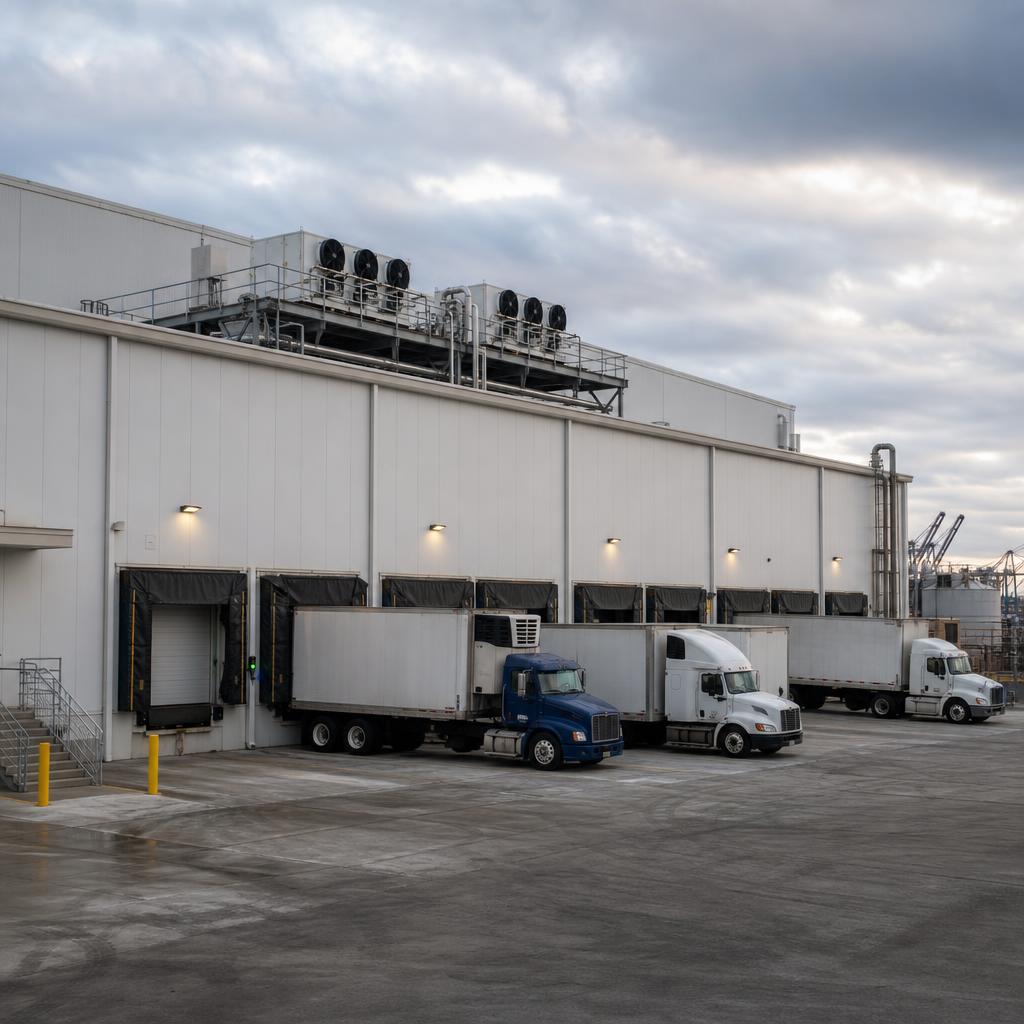
Cold Storage & Refrigerated
Warehouse Permits
A refrigerated distribution facility is a warehouse permit plus a parallel refrigeration-and-hazmat permit — LADBS building and electrical review, LAFD ammonia and hazardous materials review, SCAQMD refrigerant permitting, and freeze-rated NFPA 13 sprinkler design, all moving together.
Women-owned, Los Angeles-based permit expediting firm. For general distribution tenant improvement, change of use, and racking permits, see our warehouse and industrial permits page. This page covers the refrigeration-specific agencies and code triggers a cold storage facility adds on top of that scope. Free initial consultation — call 213-277-8777.
Cold storage and refrigerated distribution facilities carry every permit a dry warehouse needs, plus a parallel set of agencies triggered specifically by mechanical refrigeration: SCAQMD permitting for ammonia or other regulated refrigerants, LAFD hazardous materials review for the refrigeration plant, and freeze-rated fire sprinkler design under NFPA 13 for the commodity mix typical of food and pharma cold-chain storage.
3PL operators, food distributors, and cold-chain pharma tenants near the Ports of Los Angeles and Long Beach and the surrounding South Bay industrial corridor most often come to us with one of three scopes: a tenant improvement inside an existing refrigerated shell, a new or expanded ammonia refrigeration plant, or a ground-up cold storage building. Each carries a different combination of the agencies above, and the difference matters — a TI inside a shell whose SCAQMD and LAFD approvals already cover the intended use can move at roughly the pace of a standard warehouse permit, while a new or expanded refrigeration plant adds real review time on the SCAQMD and LAFD tracks that a standard warehouse project never encounters.
High-piled storage review inside a refrigerated facility follows the same California Fire Code Chapter 32 thresholds as a dry warehouse, but the commodity mix is often different. Corrugated cartons, plastic totes, shrink wrap, and foam packaging common in cold-chain operations frequently fall into higher NFPA 13 commodity classes, and low-temperature environments require sprinkler piping and heads rated to resist freezing — a detail that a sprinkler contractor accustomed to ambient warehouses can miss if the facility's operating temperature isn't communicated clearly.
Ocean Permits & Development tracks the LADBS building and electrical permit, the SCAQMD refrigerant permit, and the LAFD hazardous materials review as one coordinated project, so a facility operator isn't managing three separate agency relationships against a lease, launch, or inventory delivery date. For South Bay and port-adjacent industrial jurisdiction context, see our Carson location page.
Four Agencies, One Coordinated Timeline
LADBS, SCAQMD, and LAFD each review a cold storage project on a separate track with separate document requirements, and a delay on any one holds up the facility's certificate of occupancy. We submit the building, refrigerant, and hazmat applications in parallel wherever the review paths allow it, so corrections on one track inform rather than derail the others.
LADBS Building, Mechanical & Electrical Plan Check
The core building permit covers the facility's thermal envelope, insulated panel construction, refrigeration equipment mounting, and the electrical service sized for compressors, evaporator fans, and backup generator capacity.
SCAQMD Refrigerant System Permitting
Ammonia and other regulated industrial refrigerants used in the cooling plant require South Coast Air Quality Management District permitting tied to refrigerant charge size, with leak detection and monitoring requirements that scale with system capacity.
LAFD Hazardous Materials & Fire Prevention Review
A sizable ammonia or refrigerant plant is reviewed as a hazardous materials occupancy, covering machine room ventilation, emergency shutoff, refrigerant detection and alarms, and emergency response documentation.
NFPA 13 High-Piled Storage & Freeze-Rated Sprinklers
Commodity classification for cold-chain packaging drives sprinkler density under California Fire Code Chapter 32, and low-temperature storage needs piping and heads rated to resist freezing.
Electrical Service & Backup Generator Capacity
Compressor and fan loads, plus backup generator interconnection to protect perishable or pharmaceutical inventory during an outage, are scoped early to avoid an underestimated service upgrade stalling the permit.
Loading Dock Thermal Envelope Review
Insulated dock doors, dock seals or shelters, and in some cases a dedicated anteroom are reviewed as part of the building's thermal envelope wherever temperature-controlled loading is part of the design.
Electrical Load, Backup Power & Loading Dock Design
Refrigeration compressors, evaporator fans, and insulated door heaters draw significantly more electrical load than a comparable dry warehouse, and many cold storage buildouts add backup generator capacity to protect perishable or pharmaceutical inventory during a power outage — we scope service size and generator interconnection early since an underestimated electrical upgrade is one of the more common causes of a stalled cold storage permit. On the loading side, insulated dock doors, dock seals or shelters, and in some cases a dedicated anteroom to limit temperature loss are reviewed as part of the building's thermal envelope, and we confirm truck court clearance and dock leveler specifications against the facility's actual trailer mix before equipment is ordered.
Cold Storage Project Types, Review Paths & Our Approach
| Project Type | When It Applies | Typical Review Path | Our Approach |
|---|---|---|---|
| Cold storage TI in an existing refrigerated shell | No change to refrigerant charge or commodity classification | LADBS building/electrical/mechanical plan check | We confirm the existing SCAQMD and LAFD approvals cover the proposed use before scoping the TI as a standard permit. |
| New or expanded ammonia refrigeration plant | New machine room, added compressors, or increased refrigerant charge | SCAQMD refrigerant permit, LAFD hazmat review, LADBS mechanical/electrical permit | We scope the refrigerant charge and machine room design against SCAQMD and LAFD thresholds before equipment is ordered. |
| High-piled cold-chain storage racking | Storage above code height thresholds for cartons, totes, or pharma packaging | LAFD high-piled storage plan check, NFPA 13 freeze-rated sprinkler design | We evaluate commodity class and operating temperature together so sprinkler design accounts for both from the start. |
| Ground-up cold storage facility | New construction of a dedicated refrigerated distribution building | Full LADBS plan check, SCAQMD permitting, LAFD hazmat and sprinkler review, electrical service design | We sequence all four tracks from pre-design so site and shell decisions don't force a redesign once refrigeration engineering is finalized. |
| Loading dock and thermal envelope modification | Adding insulated dock doors, dock seals, or an anteroom to an existing facility | LADBS building permit | We confirm truck court clearance and dock equipment specs against the facility's actual trailer mix before ordering equipment. |
These are planning-level descriptions, not fee quotes or guaranteed timelines. We confirm current fees, forms, and feasibility for your specific facility and refrigerant system during a free consultation.
Our Process for a Cold Storage Permit Project
- 01
Confirm refrigerant type, charge size, and commodity mix
We determine the refrigeration system's chemical type and charge size, and the commodity classification of what's being stored, since both drive which agencies and code thresholds apply.
- 02
Scope the SCAQMD and LAFD hazmat tracks
For ammonia or other regulated refrigerants, we assemble the SCAQMD permit application and the LAFD hazardous materials submittal in parallel with the building permit rather than after it.
- 03
Coordinate NFPA 13 sprinkler design for the actual operating temperature
We work with the fire protection engineer to confirm commodity class and freeze-rated piping and head selection before the sprinkler drawings are finalized.
- 04
Submit the LADBS building, mechanical, and electrical package
We file the core building permit covering the thermal envelope, refrigeration equipment, and electrical service sizing, cross-referenced against the parallel SCAQMD and LAFD submittals.
- 05
Manage corrections across all four tracks
We track LADBS, SCAQMD, and LAFD corrections as one coordinated project, since a change requested by one agency often has implications for the others.
- 06
Coordinate inspection and final sign-off
We sequence building, fire, and refrigerant system inspections so the facility can be commissioned and stocked on schedule.
Who We Serve: 3PL, Food Distribution & Cold-Chain Pharma
Third-party logistics operators, food and beverage distributors, and cold-chain pharmaceutical tenants each bring a different pressure to a cold storage permit: a 3PL needs a facility ready before a client contract's start date, a food distributor is often racing a perishable inventory delivery schedule, and a pharma cold-chain tenant needs documented temperature control and licensing alignment before product can be stored at all. We scope the permit timeline against whichever deadline is actually driving the project, rather than a generic warehouse schedule. For general distribution and high-piled storage racking scopes without the refrigeration-specific agencies, see our warehouse and industrial permits page.
Why Ocean Permits & Development for Cold Storage Permitting
We coordinate the LADBS building and electrical permit with the parallel SCAQMD refrigerant permit and LAFD hazardous materials review as one project, so an operator knows the real end-to-end timeline to occupancy rather than just the building permit's own schedule. Every engagement starts with a free consultation — call 213-277-8777 or reach out through our contact page.
Frequently Asked Questions
How is a cold storage permit different from a standard warehouse permit?
Our warehouse and industrial permits page covers general distribution and logistics tenant improvement, change of use, and high-piled storage racking. A refrigerated facility layers additional agencies on top of that same LADBS and LAFD review: SCAQMD permitting for ammonia or other industrial refrigerants, LAFD hazardous materials review for the refrigeration plant itself, and NFPA 13-based fire sprinkler design that accounts for the plastic pallets, cartons, and packaging typical of cold-chain storage. A cold storage project is a warehouse permit plus a refrigeration-and-hazmat permit running in parallel.
Does an ammonia refrigeration system need a separate permit from SCAQMD?
Yes, in most cases. The South Coast Air Quality Management District regulates industrial refrigeration systems using ammonia or other regulated refrigerants under its permitting rules, including requirements tied to refrigerant charge size and leak monitoring equipment. Depending on system size, this can also trigger federal risk management program requirements under the EPA's Clean Air Act Section 112(r) for large ammonia charges. We confirm the system's refrigerant type and charge before the mechanical design is finalized so the SCAQMD application moves in parallel with the LADBS mechanical permit rather than surfacing as a surprise after installation.
What does LAFD review for an ammonia or refrigerant-based cold storage plant?
LAFD's Fire Prevention Bureau treats a sizable ammonia refrigeration system as a hazardous materials occupancy, reviewing the machine room's ventilation and emergency shutoff design, refrigerant detection and alarm systems, secondary containment where applicable, and emergency response information under the California Fire Code's requirements for refrigeration systems using toxic or highly toxic compressed gases. This review runs alongside — not instead of — the standard building and high-piled storage sprinkler review for the warehouse itself.
How does high-piled storage work in a refrigerated warehouse?
The same California Fire Code Chapter 32 high-piled combustible storage thresholds that apply to a dry warehouse apply inside a cold storage facility, but the commodity mix is often different — corrugated cartons, plastic totes, shrink wrap, and foam packaging common in food and pharma cold-chain storage frequently fall into higher commodity classes under NFPA 13, which changes the required sprinkler density and can require in-rack sprinklers rated for the facility's operating temperature. Low-temperature freezer environments also need sprinkler piping and heads rated to resist freezing, which is a design detail a standard ambient-warehouse sprinkler contractor can miss if the facility's temperature range isn't communicated up front.
What's involved in an electrical permit for a cold storage facility?
Refrigeration compressors, evaporator fans, and insulated door heaters draw significantly more electrical load than a comparable dry warehouse, and many cold storage buildouts add backup generator capacity to protect perishable or pharmaceutical inventory during a power outage. We scope the electrical service size, generator interconnection, and any required LADWP coordination early, since an underestimated service upgrade is one of the more common causes of a stalled cold storage permit.
Do loading docks need anything different for a cold-chain facility?
Refrigerated and frozen loading docks typically add insulated dock doors, dock seals or shelters to maintain temperature during loading, and sometimes a dedicated vestibule or anteroom to limit temperature loss — each of which is reviewed as part of the building permit's thermal envelope and, where mechanical equipment is added, the mechanical permit. We also confirm truck court clearance and dock leveler specifications against the facility's actual trailer mix before dock equipment is ordered.
Does a cold storage facility need any health department or food-specific approvals?
A facility storing or handling food products for human consumption may need a California Department of Public Health or county environmental health registration or permit for food storage, separate from the LADBS building permit — this depends on the specific commodities stored and whether any food handling (not just storage) occurs on site. Pharmaceutical cold-chain storage carries its own separate state licensing requirements outside our scope, though we coordinate the building and fire permits around whatever licensing timeline the operator is managing.
How long does a cold storage tenant improvement or new facility typically take to permit?
A straightforward TI inside an existing refrigerated shell with no SCAQMD refrigerant charge change can move through LADBS in a timeframe comparable to a standard warehouse TI. A new ammonia refrigeration plant, a significant change in commodity classification affecting sprinkler design, or a ground-up cold storage building adds the SCAQMD and LAFD hazmat review tracks, which typically extends the realistic timeline. We give clients a project-specific range after reviewing the refrigerant type, charge size, and commodity mix rather than quoting a single number up front.
Which Los Angeles and Long Beach port-adjacent submarkets do you cover for cold storage?
We actively work cold storage and refrigerated distribution permits in the South Bay industrial corridor near the Ports of Los Angeles and Long Beach, including Carson and the Alameda Corridor industrial belt, as well as inland distribution submarkets serving 3PL and food distribution operators. See our Carson location page for South Bay-specific jurisdictional detail.
Why use Ocean Permits & Development for cold storage permitting?
Ocean Permits & Development is a women-owned, Los Angeles-based permit expediting firm that coordinates the LADBS building, mechanical, and electrical permits with the parallel SCAQMD refrigerant permit and LAFD hazardous materials review as one managed project, so a 3PL operator, food distributor, or cold-chain pharma tenant isn't tracking three agencies separately against a lease or launch deadline. We offer a free initial consultation — call 213-277-8777 or reach out through our contact page.
Planning a Cold Storage Facility?
We coordinate LADBS, SCAQMD, and LAFD review for refrigerated warehouses as one project.
Related Services