_1781464136662-DVw5IPjt.png)
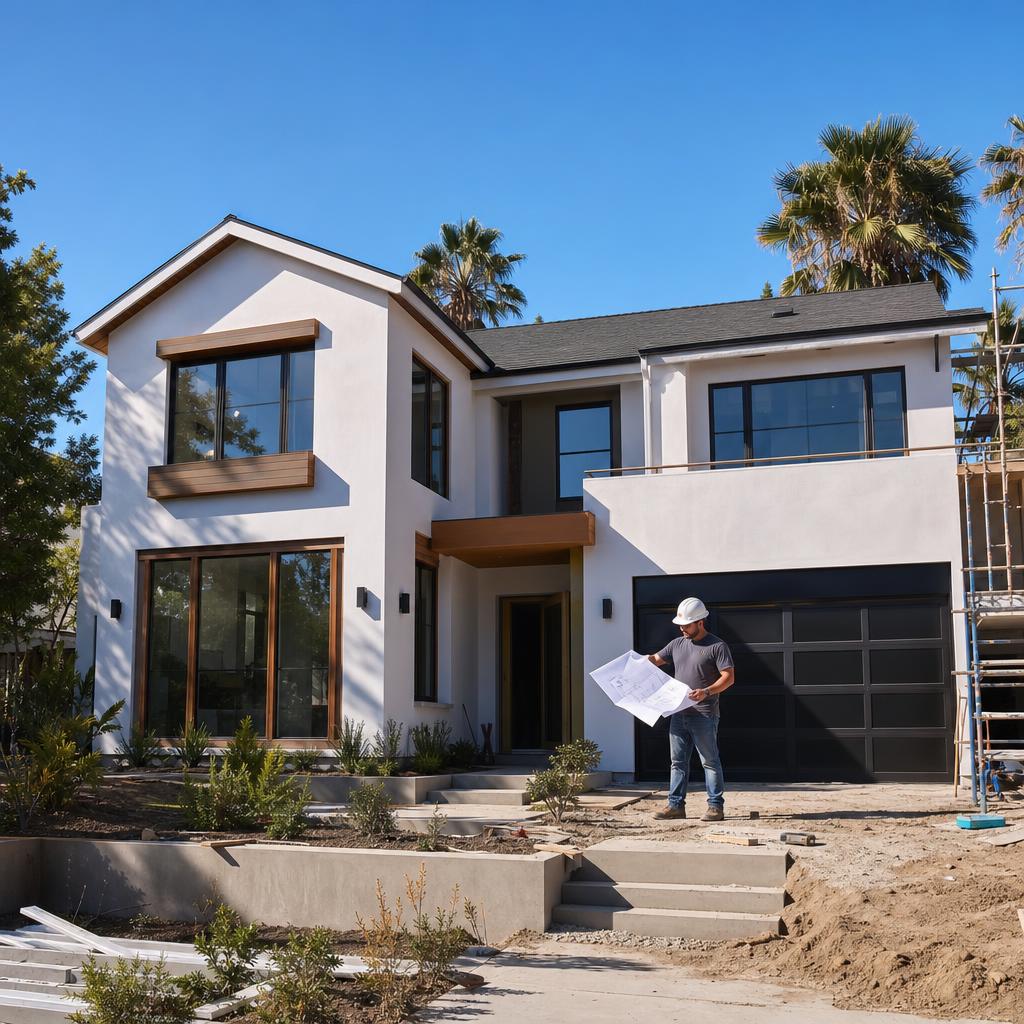
Quick Answer
A like-for-like rebuild restores a fire-destroyed home to substantially the same footprint, height, story count, and unit count as before the fire. In the City of LA (Pacific Palisades) and unincorporated LA County (Altadena), qualifying like-for-like rebuilds get waived or reduced permit fees, expedited plan check through dedicated rebuild centers, and — in the Coastal Zone — an emergency exemption from full Coastal Development Permit review. Code-current upgrades (sprinklers, seismic, Title 24 energy) are still required. Adding square footage, height, or units generally moves the project to standard review.
Nearly two years after the January 2025 firestorm destroyed thousands of homes across Pacific Palisades and Altadena, the single most consequential permitting decision facing rebuild homeowners is whether their project qualifies as a "like-for-like" rebuild — and if it does, how to keep it within that qualification through design and construction.
The like-for-like designation is not a formality. It is the gateway to the fastest, least expensive path back into a rebuilt home: waived permit fees under the framework set by Governor Newsom's Executive Order N-4-25 and its subsequent local implementing actions, dedicated expedited plan check through the LADBS One-Stop Rebuild Center or LA County's parallel rebuild program, and — for Coastal Zone parcels in Pacific Palisades — an emergency exemption from the Coastal Development Permit process that would otherwise add months to the timeline.
This guide explains exactly what qualifies as like-for-like, what falls outside it, how the City and County programs differ, and the fee and timeline consequences of each choice. This guide is for general informational purposes; program terms have been clarified and revised since early 2025 and specific eligibility should always be confirmed with the applicable rebuild center before finalizing design decisions.
What "Like-for-Like" Actually Means
A like-for-like rebuild reconstructs a fire-destroyed structure to substantially the same footprint, height, number of stories, number of dwelling units, and general use it had immediately before the fire. It is a comparison against a documented pre-fire baseline — not a subjective judgment — which is why establishing that baseline with real records (prior permits, assessor data, pre-fire surveys) is the foundation of the entire streamlined process.
Stays within like-for-like
Same footprint and height; interior layout changes within that envelope; code-required upgrades such as fire sprinklers, seismic bracing, updated electrical, and Title 24 energy compliance; minor material or finish changes.
Generally exits like-for-like
Added square footage beyond the pre-fire footprint; an added story or increased height; an added dwelling unit; a change of use (e.g., converting a single-family home to a duplex); substantial changes to the building's siting on the lot.
Case-by-case
Modest additions may retain some streamlined provisions depending on current program terms and the specific jurisdiction, but generally lose the fastest plan check track, the broadest fee waiver, and — in the Coastal Zone — the CDP emergency exemption. We model this tradeoff for every client before finalizing scope.
LADBS One-Stop Rebuild Center vs. LA County Rebuild Program
Pacific Palisades is within the City of Los Angeles; Altadena is unincorporated LA County. These are administratively separate systems with separate intake, separate plan check staff, and their own program-specific documentation requirements — a rebuild team fluent in one does not automatically transfer that fluency to the other.
City of LA (Pacific Palisades)
- LADBS One-Stop Rebuild Center coordinates Building, Fire, Planning
- City of LA Planning handles Coastal Zone / CDP exemption review
- LADWP handles utility reconnection coordination
- City fee waiver program under EO N-4-25 implementation
Unincorporated LA County (Altadena)
- LA County Public Works Building and Safety Division handles plan check
- County Planning and County Fire coordinate on entitlement/fire review
- Separate rebuild intake system from LADBS
- County fee waiver/reduction program parallels the City's but is administered independently
Ocean Permits & Development manages both tracks and routes each client to the correct jurisdiction's specific intake, forms, and rebuild center from the first conversation — one of the most common early mistakes we see is a homeowner or contractor assuming their prior experience with one system applies directly to the other.
Like-for-Like Eligibility by Scenario
| Scenario | Like-for-Like Status | Program Treatment |
|---|---|---|
| Same footprint, same height, same number of stories and units | Qualifies as like-for-like | Fee waiver, expedited plan check, CDP exemption (Coastal Zone) |
| Modest interior layout changes within the same footprint | Generally still qualifies | Fee waiver, expedited plan check |
| Code-required upgrades (sprinklers, seismic, electrical, Title 24) | Expected, does not disqualify | Fee waiver, expedited plan check |
| Modest square footage addition beyond pre-fire footprint | Case-by-case; often loses expedited track | Standard plan check likely applies |
| Added story, added height, or added dwelling unit | Does not qualify as like-for-like | Standard new-construction review + entitlements |
| Change of use (e.g., single-family to multi-family) | Does not qualify as like-for-like | Standard discretionary review + zoning analysis |
| Pacific Palisades property in Coastal Zone, like-for-like scope | Qualifies for CDP emergency exemption | City of LA Coastal Branch emergency determination |
| Altadena property, unincorporated LA County | Processed under County program, not LADBS | LA County Public Works rebuild track |
Program terms are subject to periodic revision by the City, County, and Coastal Commission. Confirm current eligibility for your specific parcel before finalizing design. This table is for general guidance only — not legal advice.
The Like-for-Like Rebuild Process — Step by Step
From confirming jurisdiction to final Certificate of Occupancy, here is how a qualifying like-for-like rebuild moves through the streamlined process.
- 01
Confirm Jurisdiction and Program
Determine whether the parcel is within the City of Los Angeles (LADBS One-Stop Rebuild Center — most of Pacific Palisades) or unincorporated LA County (County Public Works Building and Safety — Altadena and surrounding unincorporated areas). This determines which department, which intake system, and which specific documentation requirements apply. A small number of parcels sit near jurisdictional boundaries and should be confirmed rather than assumed.
- 02
Verify Site Clearance and Debris Removal Status
Confirm the parcel has completed debris removal — either through the government-coordinated FEMA/Army Corps program or an approved private contractor opt-out — and obtain the site clearance documentation the rebuild program requires before plan check can begin. This step is a prerequisite gate; rebuild applications for parcels without confirmed site clearance are held.
- 03
Establish the Pre-Fire Baseline
Document the pre-fire footprint, height, number of stories, unit count, and use of the destroyed structure using available records: prior building permits on file with the City or County, prior Certificate of Occupancy, county assessor records, and — where available — pre-fire surveys or as-built drawings. This baseline is what the like-for-like determination is measured against, so establishing it accurately and with documentation the plan checker will accept is foundational to qualifying for the streamlined track.
- 04
Determine Like-for-Like Eligibility and Coastal Zone Status
Compare the proposed rebuild design against the documented pre-fire baseline to confirm it falls within the like-for-like definition, and — for Pacific Palisades properties — verify Coastal Zone and appealable-area status to determine whether the CDP emergency exemption applies. Where a client wants to add square footage or make other changes beyond like-for-like, we model the tradeoff between the added scope and the resulting move to standard review timelines and fee treatment before finalizing the design.
- 05
Prepare and Submit the Rebuild Plan Set
Prepare a complete plan set incorporating current code requirements (fire sprinklers, seismic and structural provisions, Title 24 energy compliance, current electrical and plumbing code) within the like-for-like footprint, and submit through the dedicated rebuild intake — LADBS One-Stop Rebuild Center or the County's rebuild program — rather than the standard commercial or residential plan check queue. Where a pre-approved standard plan is available and suitable for the site, using it can bypass much of the individualized structural and architectural plan check.
- 06
Coordinated Multi-Discipline Plan Check
The rebuild program routes the application through Building, Structural, Electrical, Mechanical, Plumbing, Fire, and — where applicable — Coastal and Grading review as a single coordinated track with dedicated staff, rather than the sequential or separately queued review a standard permit would receive. Corrections, where needed, are typically consolidated into fewer rounds than standard plan check.
- 07
Permit Issuance and Fee Determination
Once plan check clears, the permit issues with the applicable fee waiver or reduction applied for qualifying like-for-like scope. We confirm the specific fee treatment at time of issuance, since program terms have been clarified and adjusted since the emergency orders were first issued in early 2025, and not every ancillary fee is covered by every version of the waiver.
- 08
Inspections and Certificate of Occupancy
Construction proceeds under standard LADBS or County inspection sequencing (foundation, framing, rough MEP, insulation, final), coordinated with LAFD or County Fire for sprinkler and alarm system final inspection. A rebuilt single-family home receives Certificate of Occupancy at final inspection sign-off across all required disciplines, at which point the home can be legally occupied.
How Ocean Permits Manages Fire Rebuild Coordination
Ocean Permits & Development is a women-owned business enterprise founded in 2021 by Katherine Amaya, and fire rebuild coordination for Pacific Palisades and Altadena has been a specific focus of our practice since January 2025. We handle permit expediting exclusively — no design, no construction — so our role is entirely focused on establishing your pre-fire baseline correctly, confirming like-for-like eligibility, and routing your application through the correct jurisdiction's rebuild center as fast as the program allows.
For Coastal Zone parcels in Pacific Palisades, we coordinate the Coastal Development Permit emergency exemption alongside the building permit. All initial consultations are free. Call +1 (213) 277-8777 or submit a project inquiry online.
Common Questions About Like-for-Like Rebuilds
What does 'like-for-like' rebuild mean in Los Angeles fire rebuild permitting?
'Like-for-like' means rebuilding a structure that was destroyed by fire to substantially the same footprint, height, number of stories, number of dwelling units, and general use as existed immediately before the fire. Under the streamlined rebuild frameworks adopted by the City of Los Angeles and Los Angeles County following the January 2025 fires, a like-for-like project is eligible for expedited plan check, waived or reduced permit fees, and — in the Coastal Zone — an emergency exemption from full Coastal Development Permit review. The standard is not pixel-for-pixel identical; minor changes such as code-required upgrades (fire sprinklers, seismic bracing, updated electrical panels) and modest interior layout changes generally remain within the like-for-like definition. Adding square footage, adding a story, adding units, or expanding the building envelope beyond the pre-fire footprint takes the project outside like-for-like and into standard discretionary and full plan check review.
Which fires does the like-for-like rebuild program cover?
The current streamlined rebuild frameworks in the City of Los Angeles and Los Angeles County were adopted specifically in response to the January 2025 firestorm, which included the Palisades Fire (affecting Pacific Palisades and adjacent coastal areas within the City of LA) and the Eaton Fire (affecting Altadena, an unincorporated community governed by LA County rather than the City). Both the City's LADBS One-Stop Rebuild Center and LA County's parallel rebuild permitting program apply the like-for-like framework, but they are administered by different departments with separate intake systems, separate staff, and — in some particulars — separate documentation requirements. A property owner should confirm which jurisdiction their parcel falls under before assuming the same process applies; Pacific Palisades is City of LA, Altadena is unincorporated LA County.
Are permit fees waived for a like-for-like fire rebuild?
Yes, for qualifying like-for-like rebuilds of a primary residence destroyed in the January 2025 fires, both the City of Los Angeles and Los Angeles County have waived or substantially reduced standard building permit plan check and issuance fees, consistent with the direction set by Governor Newsom's Executive Order N-4-25 and subsequent local implementing actions. The fee waiver typically covers the building permit itself; it does not necessarily extend to every ancillary fee (certain utility connection fees, school district fees, or fees tied to state or regional agencies outside the City's or County's direct control may still apply depending on the specific fee and current program terms). Because fee waiver programs are subject to periodic clarification and sunset provisions, we confirm current fee treatment for each client's specific permit package at the time of submittal rather than relying on the terms as they stood earlier in the rebuild effort.
Does a like-for-like rebuild in Pacific Palisades still need a Coastal Development Permit?
Much of Pacific Palisades sits within the California Coastal Zone, where new construction ordinarily requires a Coastal Development Permit (CDP) from the City of LA's Planning Department, and in appealable areas is subject to a further Coastal Commission appeal window. Following the Palisades Fire, the California Coastal Commission approved emergency exemption procedures specifically for qualifying like-for-like rebuilds — same footprint, height, and unit count — allowing many fire-rebuild projects to proceed without the full discretionary CDP process, or through a fast-tracked administrative determination instead. This exemption is scoped to like-for-like projects only; any expansion beyond the pre-fire envelope removes the project from the emergency exemption and requires a standard CDP. We verify Coastal Zone status and CDP exemption eligibility for every Palisades rebuild client before finalizing the construction drawings, since exceeding the like-for-like scope even modestly can add months back onto the schedule via full CDP review.
How is a like-for-like rebuild permit processed faster than a standard permit?
The City's LADBS One-Stop Rebuild Center and LA County's equivalent program bring plan check disciplines that are normally sequential or separately queued — Building, Structural, Electrical, Mechanical, Plumbing, Fire, Grading/Geology where applicable — into a single coordinated intake and review track dedicated to fire rebuild applications, staffed separately from the general plan check queue. Pre-approved standard plan sets for common single-family rebuild configurations are also available in some cases, which can bypass a significant portion of individualized plan check entirely for a homeowner willing to use a pre-approved design. For a genuinely like-for-like project using standard construction methods, this can compress a plan check process that might normally take three to six months down to a period measured in weeks, though actual timing depends on submittal completeness, whether a pre-approved plan is used, and current program workload.
Can I add square footage and still qualify for streamlined rebuild permitting?
Modest additions may still be eligible for some streamlined provisions depending on the specific program terms in effect and how much the addition exceeds the pre-fire footprint, but a project that meaningfully increases square footage, height, or unit count is generally treated as a standard new-construction project rather than a like-for-like rebuild for purposes of fee waivers, the fastest plan check track, and — in the Coastal Zone — the CDP emergency exemption. Many rebuild clients want to add modest square footage (a larger primary suite, an updated kitchen footprint) as part of the rebuild, and that is a legitimate choice — but it should be made with full awareness that it likely moves the project into standard review timelines and standard fee treatment rather than the expedited like-for-like track. We model both scenarios for clients early so the tradeoff between speed/cost and additional square footage is an informed decision, not a surprise mid-process.
Do I still need to meet current fire and building code requirements even in a like-for-like rebuild?
Yes. 'Like-for-like' governs the footprint, height, and use of the rebuilt structure — it does not exempt the project from current California Building Code, California Fire Code, and Title 24 energy code requirements that apply to new construction. This means a like-for-like rebuild will typically include code-current features the original home may not have had: automatic fire sprinklers (required for new one- and two-family dwellings under the California Residential Code in jurisdictions that have adopted the requirement), updated seismic bracing and foundation anchoring, current electrical panel and wiring standards, and Title 24 energy efficiency compliance including insulation, glazing, and — depending on current code cycle — solar-ready or all-electric provisions. These code-current upgrades are expected within a like-for-like rebuild and do not, by themselves, disqualify the project from streamlined review.
What is the difference between the LADBS rebuild process and the LA County rebuild process?
Pacific Palisades and other City of Los Angeles fire-affected areas fall under the LADBS One-Stop Rebuild Center, which coordinates City Building and Safety, City Planning (including Coastal Zone review where applicable), LA Department of Water and Power reconnections, and LA Fire Department review under one intake process. Altadena and other unincorporated communities affected by the Eaton Fire fall under Los Angeles County's parallel rebuild program, administered by LA County Public Works Building and Safety Division rather than LADBS, with its own dedicated rebuild intake, its own plan check staff, and coordination with County Planning and County Fire rather than the City equivalents. The programs are structurally similar in intent — both prioritize like-for-like rebuild speed and fee relief — but they are administratively separate systems, and a rebuild team experienced with the City process cannot assume the County process works identically. Ocean Permits manages both tracks and matches each rebuild client to the correct jurisdiction's specific submittal requirements from the outset.
Do I need a permit to demolish the fire-damaged remains before rebuilding?
In most cases, debris removal and demolition of fire-destroyed structures in the January 2025 fire footprint was coordinated through the federally supported debris removal program (administered through the Army Corps of Engineers under FEMA's Consolidated Debris Removal Program, or through opt-out private contractor removal), which operated separately from the standard LADBS or County demolition permit process. Once a parcel has cleared debris removal and received sign-off that the site is clear, the rebuild permit application proceeds as new construction on a now-vacant lot rather than requiring a separate demolition permit for the fire-damaged structure itself. Homeowners who opted out of the government-coordinated debris removal program and used a private contractor should confirm with LADBS or County Building and Safety what site clearance documentation is required before rebuild plan check can proceed.
How long does a like-for-like rebuild actually take from permit to move-in?
Permit issuance for a genuinely like-for-like single-family rebuild using standard construction and, where available, a pre-approved plan set, can run from a few weeks to roughly two to four months depending on submittal completeness and current program workload — meaningfully faster than the four-to-six-month plan check timeline typical of standard new single-family construction in the City or County outside the rebuild program. Construction duration itself is independent of the permit timeline and depends on contractor scheduling, material and labor availability (which has been under sustained regional demand pressure since the fires), and the complexity of the specific design. Most owners should plan for construction itself to run nine to eighteen months after permit issuance for a typical single-family rebuild, though this varies significantly by project size and contractor capacity.