_1781464136662-DVw5IPjt.png)
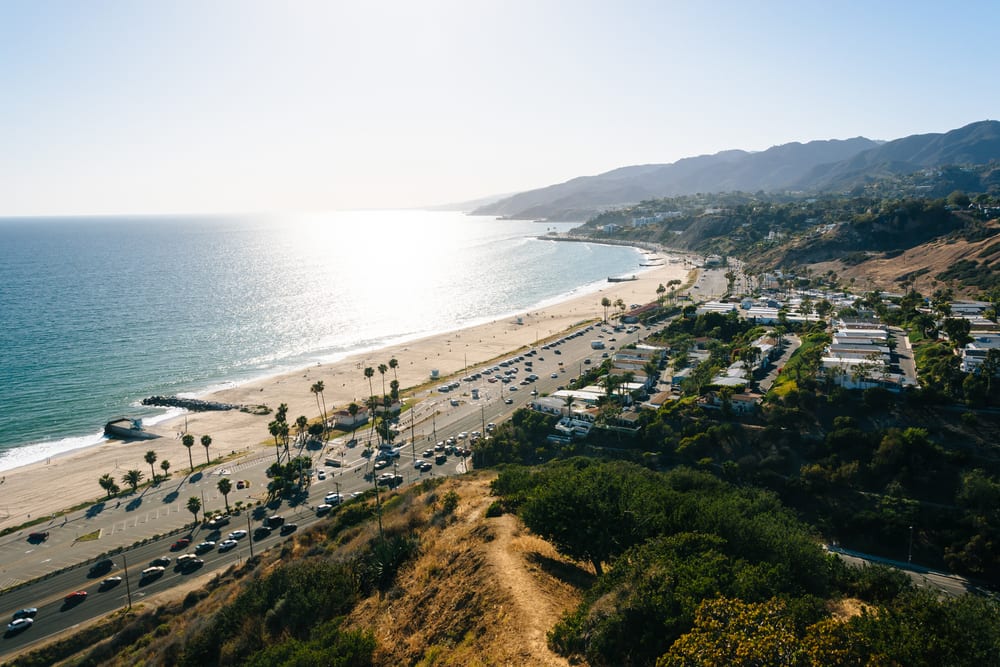
Malibu
Permit Expediting
Fire Rebuild Support: We actively support property owners rebuilding after the January 2025 Palisades Fire and the 2018 Woolsey Fire. We navigate the City of Malibu's CDP process, emergency executive order fast-track pathways, Chapter 7A compliance, and Coastal Commission appellate jurisdiction — the same expertise we apply daily for Pacific Palisades and Altadena rebuild clients.
Malibu has one of the most complex permitting environments in California — the only city in the Los Angeles region where every parcel sits inside the Coastal Zone and every permit decision is governed by a local Coastal Program certified by the California Coastal Commission.
The most important thing to understand about Malibu permits: Malibu is not served by LADBS. It is an incorporated city with its own Building & Safety Department and its own Planning Department — both operating under the Malibu Municipal Code (Title 8 for Building, Title 17 for Zoning). An expediter, architect, or contractor who is fluent in LADBS procedures is working in an entirely different regulatory environment when they cross into Malibu. The forms, portals, fee schedules, plan checkers, and review processes are separate from the City of Los Angeles, Santa Monica, and every other jurisdiction in the region.
The second defining feature of Malibu permitting: because the entire city falls within the California Coastal Zone, virtually every development project — new construction, additions, ADUs, significant remodels, and grading — requires a Coastal Development Permit (CDP) from the City of Malibu Planning Department under its Local Coastal Program (LCP). The California Coastal Commission certified Malibu's LCP in 2002, which means most CDPs are issued locally rather than by the Commission directly. But for properties near the shoreline, wetlands, coastal bluffs, or Environmentally Sensitive Habitat Areas (ESHA), the Commission retains appellate jurisdiction — a post-issuance review window that requires active monitoring.
Ocean Permits & Development is a women-owned Los Angeles permit expediting firm with direct experience in the City of Malibu's CDP process, fire rebuild pathways, and the California Coastal Act framework (California Public Resources Code, Division 20, §30000 et seq.). We offer a free initial consultation — +1 (213) 277-8777 — to assess your project's regulatory requirements, confirm whether a CDP is required or a categorical exclusion applies, and give you a realistic timeline estimate.
Malibu's Regulatory Layers
City of Malibu Building & Safety Department (MMC Title 8)
Malibu is an incorporated city — it has its own Building & Safety Department that is completely separate from LADBS. All building permits in Malibu are issued under the Malibu Municipal Code, Title 8 (Building), which adopts the California Building Standards Code (Title 24 CCR) with Malibu-specific local amendments. The City's building counter reviews structural, mechanical, electrical, and plumbing plans under these local standards. Submitting a Malibu project to LADBS — a frequent mistake by contractors and owners unfamiliar with the area — loses weeks before the error is caught.
City of Malibu Planning Department (MMC Title 17 — Zoning)
Malibu's Planning Department administers the City's Zoning Code (Malibu Municipal Code Title 17) and, critically, the Coastal Development Permit process under the certified Local Coastal Program. Most significant development in Malibu requires Planning Department review before Building & Safety will issue a building permit. This sequencing — Planning first, then Building — is different from many jurisdictions and is a common source of delay for project teams unfamiliar with Malibu's process.
California Coastal Act & Malibu Local Coastal Program (Pub. Resources Code §30000 et seq.)
The entire City of Malibu falls within the California Coastal Zone — meaning virtually all development requires a Coastal Development Permit under the California Coastal Act (California Public Resources Code, Division 20, §30000 et seq.). The California Coastal Commission certified Malibu's Local Coastal Program (LCP) in 2002, authorizing Malibu to issue CDPs locally for most projects. The LCP consists of a Land Use Plan and an Implementation Plan that establish Malibu-specific coastal policies governing development intensity, public beach access, visual access, environmentally sensitive habitat protection, and water quality. Every Malibu permit submittal must be evaluated against both the LCP's land use policies and implementation standards.
California Coastal Commission — Appellate Jurisdiction
Even with a certified LCP, the California Coastal Commission retains appellate jurisdiction over locally issued CDPs for projects in the most sensitive areas: approximately within 300 feet of the mean high tide line, within 100 feet of wetlands, streams, or coastal bluffs, or within Environmentally Sensitive Habitat Areas (ESHA). After the City issues a CDP for a project in these zones, there is a 10-working-day period during which the Commission may accept an appeal. If a substantial issue is found, the Commission holds its own hearing. Managing this appellate window — with correct project documentation and post-issuance monitoring — is part of what an experienced Malibu expediter provides.
Very High Fire Hazard Severity Zone — Chapter 7A
Malibu is designated Very High Fire Hazard Severity Zone (FHSZ) by CAL FIRE. All new construction and substantial improvements must comply with Chapter 7A of the California Building Code, which mandates fire-resistant construction materials and methods for roofing (Class A minimum), exterior walls, vents, eaves, decks, exterior glazing, and landscaping setbacks. The Woolsey Fire (2018) and the Palisades Fire (2025) both demonstrated the consequences of non-compliant construction in this zone. Chapter 7A compliance is reviewed by Building & Safety and must be explicitly documented in the plan submittal.
Hillside Grading & Geotechnical Requirements
Malibu's predominantly hillside and canyon terrain makes grading permits and geotechnical reports a standard requirement for most construction projects — not an exception. The City's grading ordinance (MMC Chapter 16.24) requires a grading permit for earth movement exceeding 50 cubic yards, for excavations deeper than 3 feet, or for grading on slopes steeper than 10%. A licensed geotechnical engineer's soils report is required with grading plans. These requirements interact directly with the CDP process: grading in the Coastal Zone is subject to LCP standards for slope stability, erosion control, and habitat protection.
The Malibu CDP Process — Step by Step
The Coastal Development Permit is the central regulatory instrument for development in Malibu. Understanding the sequence — and starting it concurrently with the Building Permit, not after — is the most important factor in compressing the total project timeline.
- 01
Pre-Application Meeting
Before preparing any plans or formal documents, we schedule a pre-application meeting with the City of Malibu Planning Department. This confirms whether the project requires a CDP or qualifies for a categorical exclusion under the LCP, identifies any ESHA, wetland, or bluff setback issues that will shape the design, and flags any LCP policies that will govern the review. Discovering these issues before drawings are prepared saves significant redesign cost and schedule time.
- 02
Categorical Exclusion Determination
If the project may qualify for exemption from CDP requirements — routine maintenance, interior remodeling that doesn't alter footprint or use, or other LCP-listed categories — we document the basis for exemption and obtain confirmation from the Planning Department in writing. This written confirmation protects the project from Coastal Act enforcement if a neighbor or Commission staff later questions whether a permit was required.
- 03
CDP Application Preparation
For projects requiring a CDP, we prepare a complete application package: site plans and elevations showing existing conditions and proposed development, LCP consistency analysis demonstrating how the project meets each applicable LCP policy, ESHA assessment (if proximity to sensitive habitat is a factor), project description, and all required City of Malibu Planning forms. We simultaneously prepare the Building & Safety permit application so both tracks start on the same day.
- 04
Planning Department Review & Completeness Check
The City reviews the application for completeness before beginning substantive review. Incomplete applications are returned — and the clock starts only when the application is accepted as complete. We structure every submittal to pass the completeness check on the first attempt. After acceptance, the Planning Department's staff planner reviews the project's consistency with LCP policies, zoning standards (MMC Title 17), and any applicable special conditions.
- 05
Public Notification (When Required)
Projects that are not categorically excluded and are above a certain threshold require public notification — typically posting a notice at the property and mailing notice to adjacent property owners. For projects near environmentally sensitive areas, blufftops, or in visually prominent locations, public notification can generate neighbor comments or objection letters that the Planning Department must address in its staff report. We review draft staff reports before they are finalized to correct factual errors and ensure the LCP consistency analysis is accurately represented.
- 06
Planning Commission Hearing (If Triggered)
Some CDP applications — typically for larger projects, projects in sensitive locations, or those that receive neighbor objections — are set for a Planning Commission hearing rather than administrative (staff-level) approval. We prepare the hearing presentation, respond to any objections, and ensure the record supports a legally defensible CDP decision. Hearings are typically scheduled 4–8 weeks after the completeness date.
- 07
CDP Issuance & Coastal Commission Appeal Window
Once the City issues the CDP, there is a mandatory 10-working-day period during which the California Coastal Commission may accept an appeal for projects in the appellate jurisdiction zone (within 300 feet of mean high tide, 100 feet of wetlands or bluffs, or in ESHA). We monitor the appeal window and confirm no appeal has been filed before advising the client to proceed with construction or making any commitments that depend on CDP finality.
- 08
Concurrent Building Permit Plan Check & Inspection Coordination
We run the Building & Safety plan check concurrently with the CDP process — not sequentially — so that the building permit is ready to issue the same week the CDP becomes final. Once the permit issues, we coordinate the inspection sequence (foundation, grading, framing, Chapter 7A fire-resistant elements, rough MEP, insulation, final) with the contractor so construction moves without inspection scheduling gaps.
Fire Rebuild in Malibu: Woolsey Fire & Palisades Fire
Malibu has been affected by two major wildfire events in recent years, each creating distinct rebuilding circumstances.
Woolsey Fire (November 2018)
The Woolsey Fire burned approximately 96,949 acres across Ventura and Los Angeles Counties, destroying approximately 1,643 structures — with Malibu absorbing the heaviest losses of any single city. California and the City of Malibu implemented emergency rebuild permit programs in 2019 and 2020, including streamlined CDP processing, CEQA categorical exemptions for like-for-like reconstruction, and reduced or waived fees for fire-affected applicants. Most Woolsey-specific emergency programs have sunset, but owners who have not yet completed reconstruction should contact us to assess which current pathways apply — California ADU law, standard CDP processing, and fire rebuild building standards may all offer relevant benefits.
Palisades Fire (January 2025) — Malibu-Adjacent Areas
The Palisades Fire, which ignited in January 2025 and devastated Pacific Palisades, also burned through portions of the Malibu coastal zone and canyon communities. Governor Newsom's Executive Order N-4-25 and related emergency orders suspended certain requirements of the California Environmental Quality Act (CEQA) and the California Coastal Act specifically for like-for-like residential rebuilds on parcels within the declared disaster area — which includes portions of Malibu. These suspensions were designed to allow the City of Malibu Planning Department to issue CDPs for qualifying like-for-like rebuilds without the standard CEQA documentation and without certain Coastal Act findings that would otherwise apply. These are emergency measures with defined time periods and specific eligibility criteria — property owners must confirm current applicability with the City and with our team. We monitor the status of these orders and advise all Malibu rebuild clients on current eligibility.
Chapter 7A — Required for All Rebuilds Regardless of Pathway
Every fire rebuild in Malibu — whether processed under an emergency executive order or standard review — must comply with Chapter 7A of the California Building Code (fire-resistant construction standards). This means current code requirements apply to the rebuilt structure: Class A roofing, ignition-resistant exterior walls, ember-resistant vents, enclosed or protected eaves, tempered or fire-rated glazing, and ignition-resistant decking. The original structure's construction standard is not grandfathered. Chapter 7A compliance must be explicitly documented on the building plans and in a compliance checklist submitted with the Building & Safety application.
Our fire rebuild expertise in Pacific Palisades and Altadena applies directly to Malibu — the same January 2025 regulatory framework, the same Chapter 7A standards, and the same urgency to get homeowners permitted and cleared for construction as quickly as legally possible. See also our comprehensive fire rebuild permit guide. For coastal-adjacent hillside communities on the other side of the Peninsula, see our Palos Verdes Estates permitting guide.
Malibu Permit Types at a Glance
Ocean Permits Service Fee Ranges — Malibu Projects
These are estimated ranges for Ocean Permits' permit expediting service fees — not official City of Malibu government permit fees. City permit fees are set by the City's adopted fee schedule and are separate. Project-specific fee quotes are provided after a free initial consultation.
Our Malibu Expertise
- City of Malibu Coastal Development Permit applications (residential and commercial)
- LCP consistency analysis — demonstrating compliance with Malibu's certified policies
- Categorical exclusion determinations — avoiding unnecessary CDP applications
- Coastal Commission appellate jurisdiction monitoring and post-issuance tracking
- Like-for-like fire rebuild permits — Woolsey Fire and Palisades Fire properties
- Emergency executive order fast-track applications for qualifying fire rebuild projects
- Malibu Building & Safety plan check coordination (MMC Title 8 / CBC Title 24)
- Grading permit applications with geotechnical coordination (MMC Chapter 16.24)
- Chapter 7A fire-resistant construction compliance documentation
- ADU permits in the Coastal Zone — CDP + Building Permit concurrent track
- ESHA setback analysis and habitat assessment coordination
- Pre-application strategy meetings with City Planning staff
Women-Owned Business Enterprise
Why Malibu clients work with Ocean Permits
Ocean Permits & Development is a women-owned business enterprise (WBE) founded in Los Angeles in 2021 by Katherine Amaya. We are one of the few expediting firms in the region with hands-on experience across both City of Los Angeles (LADBS) and City of Malibu Building & Safety permit tracks — a distinction that matters when clients have properties or projects in multiple coastal jurisdictions.
Our fire rebuild expertise was built directly through the January 2025 Palisades Fire response — managing permits for Pacific Palisades and Altadena property owners navigating overlapping emergency executive orders, Chapter 7A compliance, Coastal Zone requirements, and unprecedented permit volume. That regulatory chronology and agency relationship experience applies directly to Malibu rebuild projects, which operate under the same post-fire emergency framework.
We offer a free initial consultation for every Malibu project — residential or commercial, fire rebuild or new development. We assess your parcel's regulatory requirements, confirm whether a CDP or categorical exclusion applies, identify fee waiver eligibility for qualifying fire rebuild projects, and give you an honest timeline estimate before you retain us.
Common Questions — Malibu Permits
Does Malibu use LADBS for building permits?
No. Malibu is an incorporated city with its own Building & Safety Department — it is completely separate from LADBS (Los Angeles Department of Building and Safety), which serves the City of Los Angeles. Malibu building permits are issued under the Malibu Municipal Code, Title 8 (Building), which adopts the California Building Code (Title 24 CCR) with local amendments. Applications go through the City of Malibu's planning counter, not through LADBS's portal or plan check queues. Submitting a Malibu project to LADBS — a common mistake made by contractors or owners unfamiliar with the area — loses weeks before the error surfaces.
What is the Malibu Local Coastal Program and why does it matter?
The Malibu Local Coastal Program (LCP) is a planning document — combining a Land Use Plan and Implementation Plan — that the California Coastal Commission certified in 2002. The LCP is the legal framework that authorizes the City of Malibu to issue Coastal Development Permits (CDPs) locally, without requiring applicants to go directly to the California Coastal Commission in Sacramento for most projects. The LCP implements the California Coastal Act (California Public Resources Code, Division 20, §30000 et seq.) at the local level. All development within the Coastal Zone that is not categorically excluded must comply with the LCP and obtain a CDP from the City of Malibu Planning Department before any work begins. The LCP is available on the City of Malibu Planning Department website.
Does every project in Malibu require a Coastal Development Permit?
Not necessarily. The California Coastal Act and Malibu's LCP include categorical exclusions — categories of development so minor that they are exempt from CDP requirements. These typically include routine interior remodeling, certain repairs and maintenance that do not alter the structure's footprint or intensity of use, and some utility connections. However, any development that expands a structure's footprint, changes the use, involves grading, or is located in a sensitive area (ESHA, wetland buffer, or within 300 feet of the mean high tide line) will require a CDP. The City of Malibu Planning Department makes the categorical exclusion determination during the pre-application phase. We confirm exemption status before any submittal — because proceeding without a required CDP exposes the property owner to stop-work orders and mandatory restoration requirements under the Coastal Act.
How long does it take to get a Coastal Development Permit in Malibu?
For a standard residential addition or ADU project that does not require a public hearing, a Malibu CDP typically takes 6–12 weeks from a complete submittal. Projects that require a Planning Commission hearing — generally those that are more complex, involve ESHA adjacency, or have neighbors who request a hearing — add 4–8 weeks to schedule and conduct the hearing. Projects within the Coastal Commission's appellate jurisdiction (roughly within 300 feet of the mean high tide line, or within 100 feet of wetlands or bluffs, or in ESHA) have a 10-working-day window after City CDP issuance during which the Coastal Commission may accept an appeal — adding uncertainty to the final timeline. We structure every CDP submittal to be complete and defensible so it moves through Planning review on the first pass.
What is the Coastal Commission's appellate jurisdiction in Malibu?
Even though Malibu has a certified LCP that allows it to issue CDPs locally, the California Coastal Commission retains appellate jurisdiction over certain areas and project types. Specifically, the Commission can accept appeals of locally issued CDPs for projects located: (1) within approximately 300 feet of the mean high tide line; (2) within 100 feet of wetlands, estuaries, or streams; (3) within 100 feet of the edge of coastal bluffs; or (4) in Environmentally Sensitive Habitat Areas (ESHA). If a CDP is issued by the City for a project in these zones, there is a 10-working-day period during which any aggrieved person — including the Coastal Commission's executive director — may file an appeal. If a substantial issue is found, the project goes to a Commission hearing. This adds a layer of post-approval uncertainty that experienced expediters track and manage proactively.
Is the emergency post-fire permit pathway still active for Malibu rebuild projects?
Following the January 2025 Palisades Fire — which, in addition to devastating Pacific Palisades, impacted portions of the Malibu-adjacent coastal zone — California Governor Gavin Newsom issued Executive Order N-4-25 and related emergency orders that suspended certain requirements of the California Environmental Quality Act (CEQA) and, significantly, certain provisions of the California Coastal Act for like-for-like residential rebuilds on parcels where a structure was destroyed by the declared wildfire disaster. This suspension was intended to allow expedited CDP processing for like-for-like rebuilds in the Coastal Zone without the usual CEQA documentation or Coastal Act findings that would otherwise apply. These are emergency measures with defined time periods. Property owners with Malibu parcels affected by the Palisades Fire or the 2018 Woolsey Fire should confirm the current status and applicability of these orders directly with the City of Malibu Planning Department and with our team — we monitor the status of these orders and advise clients accordingly.
My Malibu home was destroyed in the Woolsey Fire (2018). Can I still get expedited permits to rebuild?
The Woolsey Fire (November 2018) destroyed or damaged hundreds of structures in Malibu. For Woolsey-affected properties, California AB 3182 (2020) and various state and local emergency measures created streamlined permit pathways for like-for-like rebuilds that remained available for several years after the fire. However, the specific emergency expediting provisions for Woolsey rebuilds have largely wound down. Owners with Woolsey-affected parcels who have not yet completed their rebuild should contact us for a current assessment — there may still be applicable streamlining under state ADU law, the City's standard CDP process, or fire rebuild standards that apply to replacement structures. The January 2025 executive orders apply specifically to the Palisades Fire and Eaton Fire disaster areas; we confirm whether any Malibu parcels were included in those declarations.
What is a like-for-like rebuild and does it qualify for expedited permits in Malibu?
A like-for-like rebuild means reconstructing a destroyed or severely damaged structure at the same location, with the same footprint, the same square footage, and substantially the same design as the original. Under the January 2025 emergency executive orders, like-for-like rebuilds in declared disaster areas — including areas of Malibu affected by the Palisades Fire — are eligible for expedited CDP processing with suspension of certain CEQA and Coastal Act findings. Critically, even a like-for-like rebuild must comply with current California Building Code standards (Title 24 CCR) and Chapter 7A fire-resistant construction requirements — the original structure's construction standards are not grandfathered. Any expansion of footprint, height, or square footage beyond the original structure converts the project from a like-for-like rebuild to a new development project subject to full CDP and building permit review.
What permits are required to build an ADU in Malibu?
Building an ADU in Malibu requires both a Coastal Development Permit (in most cases) and a Building Permit from the City of Malibu Building & Safety Department. California state law (Government Code §65852.2) mandates that cities ministerially approve qualifying ADUs, but ADUs in the Coastal Zone still require a CDP under the Coastal Act unless the project meets a categorical exclusion. The City of Malibu has Local Coastal Program provisions for ADUs, and the planning counter can confirm whether a specific parcel and ADU configuration qualifies for any expedited or categorical treatment. We prepare the complete CDP + Building Permit package for Malibu ADU projects and manage both review tracks simultaneously.
How are Malibu permits different from Pacific Palisades permits?
The regulatory structure is fundamentally different. Pacific Palisades is part of the City of Los Angeles — building permits go through LADBS, and the Coastal Development Permit (where required) is processed through LA City Planning's Coastal Division under LA's certified Local Coastal Program. Malibu is a separate incorporated city — building permits go through the City of Malibu's own Building & Safety Department, and the CDP is processed through Malibu's Planning Department under Malibu's own certified LCP. The codes, forms, portals, plan checkers, fee schedules, and regulatory contacts are entirely different. An expediter who knows LADBS does not automatically know Malibu's permit process. Our team has experience with both jurisdictions, which is especially relevant for clients with properties in both communities.
What are typical building permit fees in Malibu?
City of Malibu building permit fees are calculated based on the project's valuation under the City's adopted fee schedule. For a typical single-family residence rebuild or major remodel, total city permit fees (building permit + plan check + inspections) commonly range from $5,000 to $20,000+ depending on project size and complexity. CDP filing fees are separate and are set by the City of Malibu Planning Department's fee schedule. For fire rebuild projects qualifying under emergency executive orders, the City of Malibu has implemented fee reduction or deferral programs — we confirm current eligibility and apply for all available waivers as part of every rebuild submittal package. These are official city fees; our permit expediting service fees are separate and are quoted on a project basis.
Do I need a grading permit for a Malibu construction project?
Most hillside construction projects in Malibu require a Grading Permit in addition to the building permit and CDP. Malibu's grading ordinance (Malibu Municipal Code Chapter 16.24) requires a grading permit for any movement of earth exceeding 50 cubic yards, for excavations deeper than 3 feet, or for grading on slopes steeper than 10%. Given Malibu's predominantly hillside terrain, the vast majority of new construction, significant additions, and many ADU projects require grading permits. Grading permits require a geotechnical (soils) report prepared by a licensed geotechnical engineer, grading plans stamped by a licensed civil engineer, and erosion control measures. We coordinate the grading permit application with the building permit and CDP applications so all three run concurrently rather than sequentially.
Malibu project?
We navigate the City of Malibu's CDP process, Building & Safety, Coastal Commission appellate jurisdiction, and fire rebuild fast-track programs.
Free initial consultation — no obligation.
Schedule a ConsultationOr call +1 (213) 277-8777
333 S Grand Ave, Ste 3310, Los Angeles