_1781464136662-DVw5IPjt.png)
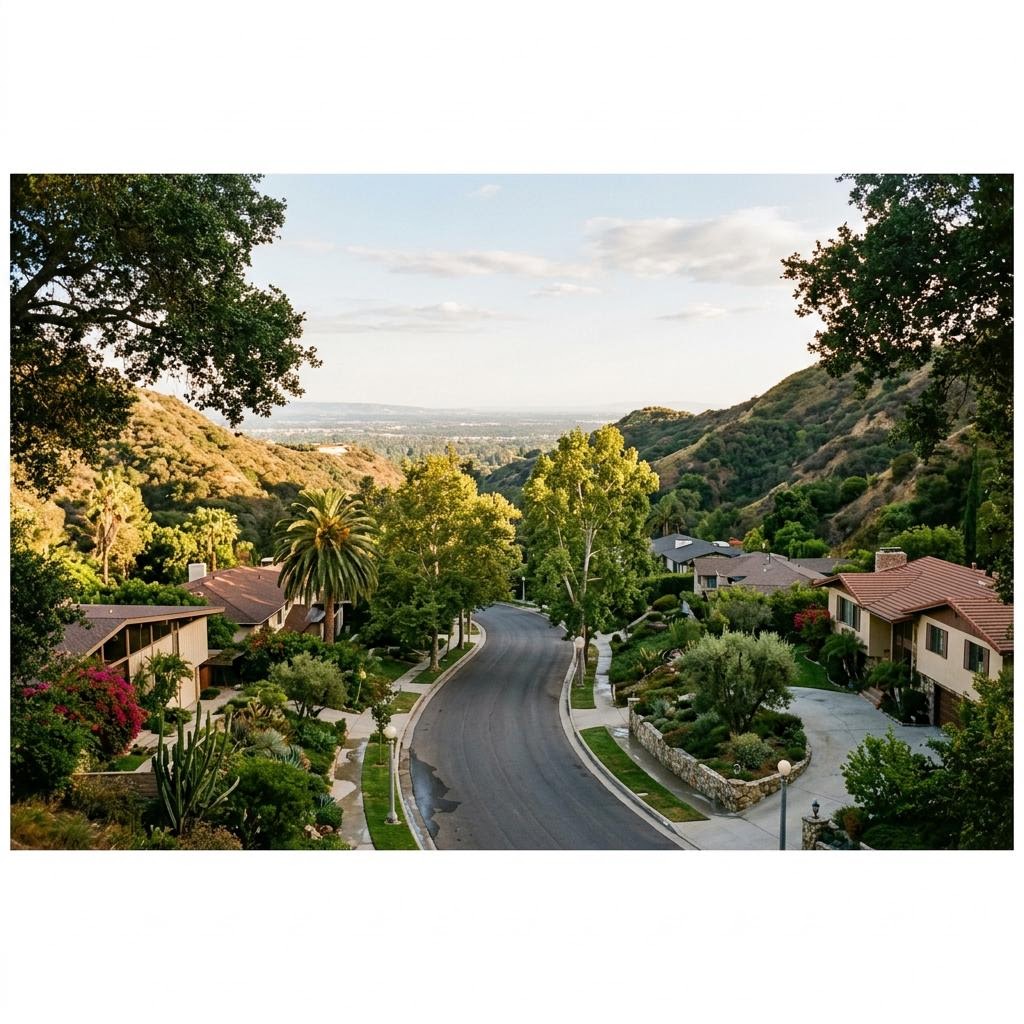
Studio City
Permit Expediting
Studio City is City of LA territory — LADBS issues every permit. We navigate the Baseline Hillside Ordinance in Fryman Canyon and Wrightwood, the Ventura Blvd Specific Plan, and production-office TI permitting near CBS Studio Center.
Women-owned, LA-based permit expediting firm. The same disciplined multi-agency coordination we bring to fire-rebuild clients in Pacific Palisades and Altadena carries over to any Studio City project — hillside, flatland, or commercial. Free consultation — call 213-277-8777.
Studio City is a City of Los Angeles neighborhood in the San Fernando Valley — permits go through LADBS, not a separate department — but the neighborhood packs an unusual mix of terrain and land use into a compact footprint: flatland R1 tracts south of Ventura Boulevard, hillside terrain toward Fryman Canyon and Wrightwood, a dense Ventura Blvd commercial corridor, and one of the industry's most recognizable production lots at CBS Studio Center.
Most homeowners here are in single-family houses, whether flatland mid-century homes in Colfax Meadows or larger hillside estates climbing toward Mulholland Drive; multifamily and mixed-use buildings cluster along Ventura Boulevard and Laurel Canyon Boulevard. The result is a permitting profile that shifts block by block — a flatland kitchen remodel follows a completely different track than a Fryman Canyon hillside addition or a production-office buildout near Radford Avenue.
Ocean Permits & Development scopes each of these tracks before submittal so a Studio City project doesn't stall midway through construction planning on a hillside floor-area shortfall, a Specific Plan compliance requirement, or an occupancy classification nobody flagged early. See our LADBS permit process guide for the citywide baseline these overlays sit on top of.
Studio City Is City of Los Angeles — LADBS, Not a Separate Department
Studio City has no independent municipal building department. Every permit is processed by LADBS using the city's standard online portal, plan-check staff, and fee schedule. What differentiates a Studio City project isn't the issuing agency, but which of the neighborhood's overlapping overlays and use patterns applies to a given parcel.
LADBS — Studio City Is City of LA, Not a Separate Department
Studio City is a City of Los Angeles neighborhood, so every permit is issued and inspected by LADBS using the city's standard portal, plan-check staff, and fee schedule. There is no independent Studio City building department.
Baseline Hillside Ordinance — Fryman Canyon & Wrightwood
The hillside terrain north and south of the flatland grid, including Fryman Canyon and Wrightwood, is subject to the BHO's slope-based Residential Floor Area calculation and limits on grading quantity, retaining wall height, and ridgeline development.
Ventura–Cahuenga Boulevard Corridor Specific Plan
Covers commercial and mixed-use development along the Ventura Boulevard corridor through Studio City, setting FAR limits, ground-floor use restrictions, and parking/setback standards, with a Project Permit Compliance review typically required before LADBS finalizes the building permit.
Production & Soundstage-Adjacent Tenant Improvements
CBS Studio Center and the surrounding cluster of post-production, editorial, and production-office space drive steady demand for commercial TI permits with occupancy classifications and equipment loads distinct from a standard office buildout.
Baseline Mansionization Ordinance — Flatland R1 Lots
Studio City's flatland R1 neighborhoods, including Colfax Meadows, are governed by the citywide Baseline Mansionization Ordinance, which sets maximum Residential Floor Area based on lot size.
ADU & Remodel Demand
A steady stream of detached ADUs, kitchen and bathroom remodels, and second-story additions across Studio City's flatland tracts, reviewed under LADBS's standard residential process.
Studio City Permit Types, Complexity & Additional Review
| Permit Type | When It Applies | Reviewing Department | Typical Timeline |
|---|---|---|---|
| Standard flatland remodel/addition | Flatland R1 lots outside the BHO and Specific Plan boundaries, e.g. Colfax Meadows | LADBS | 6–10 weeks |
| Hillside addition in Fryman Canyon or Wrightwood (BHO) | Hillside parcels; slope-based floor area, grading, and ridgeline limits apply | LADBS + City Planning (BHO) | 10–20+ weeks |
| Ventura Blvd commercial TI under the Specific Plan | Commercial or mixed-use buildouts fronting the boulevard | LADBS + City Planning (Project Permit Compliance) | 10–24+ weeks |
| Production office / soundstage-adjacent TI | Office, editorial, or production-support buildouts near CBS Studio Center | LADBS (occupancy-specific plan check) | 8–16 weeks depending on scope |
| ADU / detached accessory dwelling unit | Flatland or hillside lot, ministerial review under Gov. Code §65852.2 | LADBS | 6–14 weeks |
| Pool / hillside grading permit | New pool or grading tied to a hillside addition in the BHO area | LADBS Grading Division + Building & Safety | 6–14 weeks |
Timelines are estimates based on typical LADBS plan-check patterns described in our Los Angeles permit timeline guide, adjusted for Studio City's hillside and Specific Plan overlays. Actual timelines depend on plan completeness, correction cycles, and which overlay applies.
Our Process for a Typical Studio City Project
- 01
Parcel & Overlay Confirmation
We confirm whether a Studio City parcel falls within the Fryman Canyon or Wrightwood BHO hillside boundary, the Ventura–Cahuenga Specific Plan corridor, or standard flatland R1 territory — the single biggest factor in scoping the project correctly.
- 02
Floor Area & Design Review Prep
For hillside parcels we run the BHO's slope-based floor-area calculation and prepare grading and retaining wall documentation; for Ventura Blvd commercial projects we prepare the Specific Plan compliance package.
- 03
Occupancy Classification (Production/TI Projects)
For production office, editorial, or soundstage-adjacent TI permits, we confirm the correct occupancy classification and fire/life-safety requirements before submittal, since misclassification is a common source of plan-check delay near CBS Studio Center.
- 04
LADBS Submittal
We submit the complete building or TI permit package through LADBS's standard portal, referencing the applicable BHO or Specific Plan findings so plan checkers have the full regulatory picture from intake.
- 05
Plan Check & Correction Management
We manage the correction cycle with LADBS plan-check staff and any City Planning reviewers handling Specific Plan compliance, resolving comments promptly to keep the project moving.
- 06
Permit Issuance & Inspection Coordination
Once LADBS issues the permit, we coordinate the inspection sequence with your contractor or structural engineer through to final sign-off and Certificate of Occupancy where required.
Baseline Hillside Ordinance: Fryman Canyon & Wrightwood
The hillside terrain framing Studio City's flatland core — including the Fryman Canyon area and the Wrightwood neighborhood climbing toward Mulholland Drive — sits within the Baseline Hillside Ordinance. Rather than a flat Floor Area Ratio, the BHO calculates maximum Residential Floor Area on a sliding scale tied to both lot size and average slope, so a steep Fryman Canyon or Wrightwood parcel typically has a smaller buildable envelope relative to its raw square footage than a comparably sized flatland lot. The ordinance also caps grading quantity, limits retaining wall height, and restricts development that would break the ridgeline. We run the BHO calculation for a specific hillside parcel before a client invests in full architectural drawings, and coordinate the geotechnical and grading review LADBS requires alongside the base building permit. See our Baseline Hillside Ordinance guide and hillside grading permit guide for how the citywide calculation and grading process work.
Ventura Boulevard Commercial Corridor
Studio City's commercial spine along Ventura Boulevard sits within the Ventura–Cahuenga Boulevard Corridor Specific Plan, the same overlay we navigate for clients in neighboring Sherman Oaks and Encino. It applies its own FAR limits, restricts certain ground-floor uses to protect pedestrian-oriented retail frontage, and sets parking and setback standards distinct from base zoning. Most commercial buildouts and new construction on this corridor require a Project Permit Compliance review from City Planning before LADBS finalizes the building permit. We scope both tracks together at project intake rather than assuming a Ventura Blvd project is a standard LADBS-only submittal. See our tenant improvement services page for more on how we manage commercial TI permitting.
Production Offices & Soundstage-Adjacent TI Near CBS Studio Center
CBS Studio Center, on Radford Avenue, is one of the neighborhood's defining features, and the production activity it anchors radiates outward into a cluster of post-production houses, editorial suites, and production office space along Radford Avenue and the surrounding commercial streets. Tenant improvements in this space follow standard LADBS Building & Safety plan check, but the occupancy classification often differs from a conventional office buildout — production support space, editorial bays, and soundstage-adjacent office use can carry their own fire and life-safety requirements depending on equipment load and occupant density. We confirm the correct occupancy classification at intake so a production-related TI isn't misfiled under a generic office use, which is one of the more common sources of plan-check delay we see in this part of the neighborhood.
Why Studio City Property Owners & Businesses Work With Ocean Permits
Ocean Permits & Development is a women-owned permit expediting firm based in Los Angeles. Few LA neighborhoods pack as much regulatory range into so small a footprint as Studio City — a Fryman Canyon hillside addition, a Ventura Blvd retail buildout, and a production-office TI near CBS Studio Center can all be underway within a few blocks of each other, each following a different review path. We bring the same coordinated, multi-track project management to these projects that we use for fire-rebuild clients in Pacific Palisades and Altadena — though Studio City itself sits outside those fire footprints — plus nearby San Fernando Valley communities including Sherman Oaks and North Hollywood. We offer a free consultation — call 213-277-8777 or reach out through our contact page.
Frequently Asked Questions
Is Studio City its own city, or does it fall under LADBS?
Studio City is not an incorporated city — it's a City of Los Angeles neighborhood in the San Fernando Valley, so every building permit is issued through LADBS, the same agency that serves the rest of Los Angeles. There is no separate Studio City building department. What makes the neighborhood distinctive isn't a different issuing agency, but the mix of flatland R1 tracts, hillside terrain toward Fryman Canyon, and a Ventura Boulevard commercial spine that all fall under different review layers within the same LADBS process.
How does the Baseline Hillside Ordinance affect Fryman Canyon and Wrightwood?
The hillside areas of Studio City rising north and south of the flatland grid — including Fryman Canyon and Wrightwood — are subject to the Baseline Hillside Ordinance (BHO), which calculates maximum Residential Floor Area on a sliding scale tied to lot size and average slope rather than a flat FAR. Steeper Fryman Canyon and Wrightwood parcels get a proportionally smaller buildable envelope than their raw lot size might suggest, and the BHO also limits grading quantity, retaining wall height, and ridgeline development. See our Baseline Hillside Ordinance guide for how the calculation works citywide before we apply it to a specific Studio City hillside parcel.
What is the Ventura–Cahuenga Boulevard Corridor Specific Plan and does it apply to Studio City?
Yes. Studio City's commercial spine along Ventura Boulevard sits within the Ventura–Cahuenga Boulevard Corridor Specific Plan, the same overlay that governs Ventura Blvd frontage in neighboring Sherman Oaks and Encino. It sets Floor Area Ratio limits, restricts certain ground-floor uses to preserve pedestrian-oriented retail, and applies its own parking and setback standards, typically requiring a Project Permit Compliance review from City Planning before LADBS finalizes the building permit.
Does CBS Studio Center's presence affect permitting demand in Studio City?
Yes, indirectly. CBS Studio Center on Radford Avenue is one of the neighborhood's defining features, and the production activity it anchors — along with smaller post-production houses, editorial suites, and production office space scattered through Studio City's commercial corridors — drives steady demand for commercial tenant improvement permits: soundstage-adjacent office buildouts, production suites, and light industrial-to-office conversions. These TI permits follow standard LADBS Building & Safety plan check, layered with Ventura–Cahuenga Specific Plan compliance where the space fronts the boulevard.
What kind of ADU and remodel projects are most common in Studio City?
Studio City's flatland R1 neighborhoods south of Ventura Boulevard and in the Colfax Meadows area see a steady stream of detached ADUs, kitchen and bathroom remodels, and second-story additions, reviewed under LADBS's standard residential process and the citywide Baseline Mansionization Ordinance's floor-area limits. ADU applications are reviewed ministerially under Government Code §65852.2 regardless of location, though hillside lots toward Fryman Canyon or Wrightwood also have to satisfy BHO setback and grading limits on top of the standard ADU review.
How long does a standard Studio City remodel take through LADBS?
A flatland remodel or addition that doesn't touch the BHO hillside boundary or the Ventura–Cahuenga Specific Plan generally follows LADBS's standard residential plan-check timeline — commonly 6 to 10 weeks for first review, consistent with our Los Angeles permit timeline guide. Hillside projects near Fryman Canyon or Wrightwood, or Ventura Blvd commercial buildouts requiring Specific Plan compliance, typically add several weeks to a few months for the additional review layer.
What does a production office or soundstage-adjacent TI permit involve near CBS Studio Center?
A commercial tenant improvement near CBS Studio Center or along the Radford Avenue and Ventura Boulevard corridors has to satisfy standard LADBS Building & Safety plan check for the buildout scope, plus fire and life-safety review for the specific occupancy — production offices, editorial suites, and soundstage support space often carry occupancy classifications and equipment loads that differ from a standard office TI. Where the space fronts Ventura Boulevard, Specific Plan compliance is layered on as well. We scope the occupancy classification and applicable overlay together at intake so the permit isn't misclassified from the outset.
Do hillside grading and pool permits in Studio City require a geotechnical report?
Generally yes, for parcels in the Fryman Canyon and Wrightwood hillside area. Grading tied to a hillside addition, retaining wall, or pool installation is reviewed by LADBS Grading Division against BHO slope-stability and drainage requirements, and a geology and soils report is typically required before a grading permit is issued. Flatland pools in Colfax Meadows and other flatland tracts are more straightforward but still require accurate setback and easement verification.
What triggers a public hearing for a Studio City project versus over-the-counter review?
Standard remodels, repairs, and equipment replacements that don't touch the BHO boundary or the Ventura–Cahuenga Specific Plan can generally proceed through plan check without a hearing. Projects requiring a variance, a hillside floor-area exception, or discretionary Specific Plan compliance — including larger Ventura Blvd commercial developments — are more likely to require a public hearing or a City Planning sign-off with its own notice period. We identify which track applies before submittal so the timeline expectation is accurate from day one.
How much does permit expediting cost for a Studio City project?
Cost tracks with complexity: a flatland ADU or remodel is priced differently from a Fryman Canyon hillside addition under the BHO or a Ventura Blvd production-office TI under the Specific Plan. We provide a firm, project-specific quote after a free consultation reviewing your address, project scope, and which overlays apply.
Can Ocean Permits manage plan check corrections directly with LADBS on our behalf?
Yes. We manage the full correction cycle with LADBS plan-check staff and, where applicable, City Planning reviewers handling Specific Plan compliance — reviewing correction comments, coordinating responses with your architect, structural engineer, or contractor, and resubmitting promptly so a Studio City project doesn't lose weeks to a slow back-and-forth.
Does Ocean Permits' fire-rebuild coordination experience apply to Studio City projects?
Studio City itself was not in the footprint of the January 2025 fires, but the same disciplined multi-track coordination we use for fire-rebuild clients in Pacific Palisades and Altadena — sequencing LADBS plan check, City Planning Specific Plan or BHO review, and grading approvals into one coordinated timeline — is exactly the skill set a Fryman Canyon hillside addition or a Ventura Blvd commercial TI needs.
Building in Studio City?
We coordinate LADBS, the Baseline Hillside Ordinance, and the Ventura Blvd Specific Plan as one process.
Related Services