_1781464136662-DVw5IPjt.png)
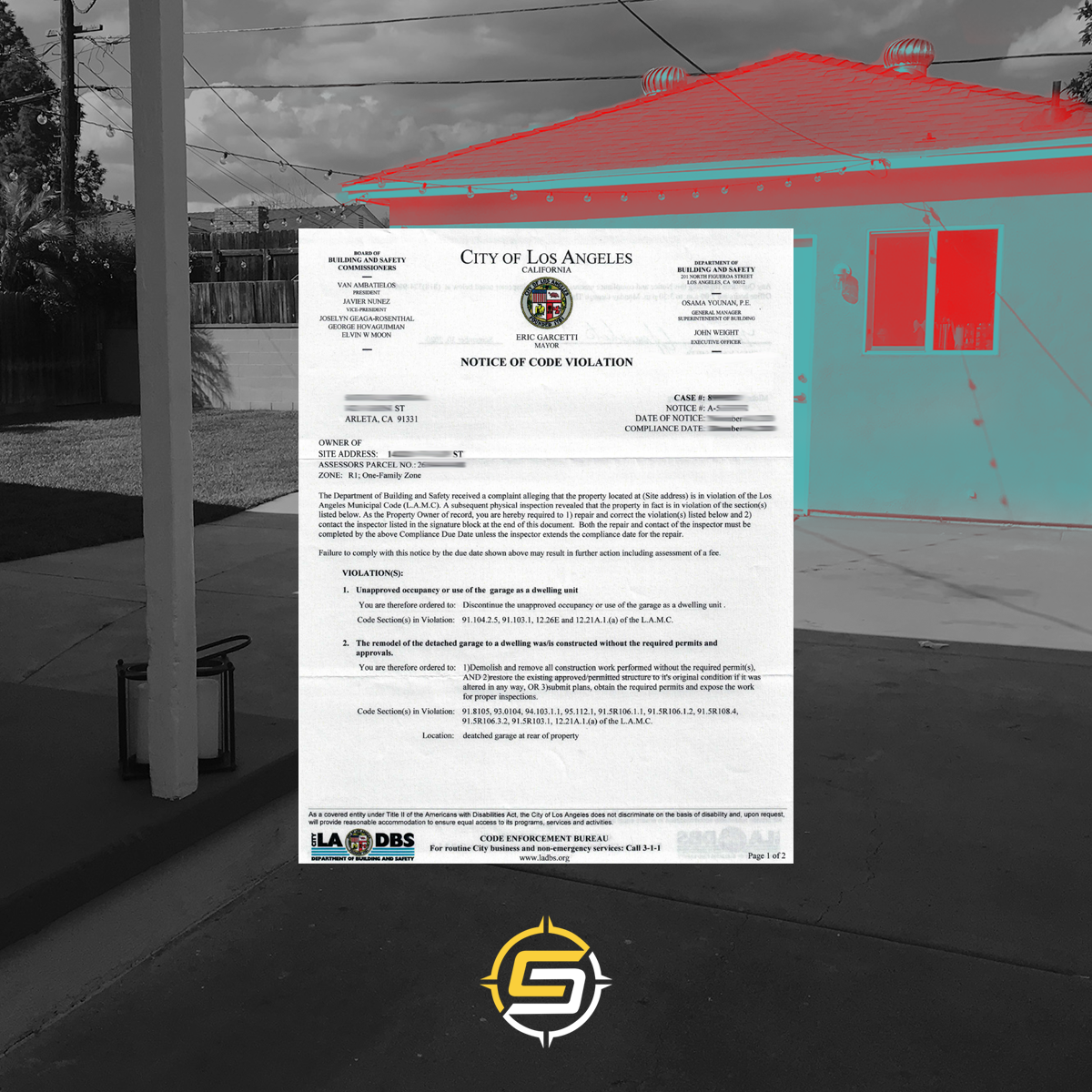
If you've ever stood at a Los Angeles Department of Building and Safety counter holding a stack of drawings and wondered who, exactly, is going to review them and in what order, you're not alone. LADBS is not one office with one line — it's a multi-track, multi-discipline review system built on decades-old case-management software, staffed by plan checkers who specialize in narrow codes, and layered with zoning, fire, and accessibility sign-offs that all have to line up before a permit is issued. Most delays don't come from bad luck. They come from not understanding the machine.
This guide walks through the mechanics of that machine: how LADBS is organized, which track your project belongs on, what a plan checker is actually doing to your drawings, why correction cycles happen, how permits get issued and paid for, the inspection sequence that follows, and what changes for the fire-rebuild parcels in Pacific Palisades and Altadena. (If you're trying to estimate how long your specific project will take, see our companion post on how long LA permits take — this guide is about how the process works, not how long it runs.)
LADBS as an Agency: What It Is and Isn't
LADBS is the City of Los Angeles department responsible for enforcing the Los Angeles Municipal Code (LAMC) Chapter IX — Building Regulations — which incorporates, and locally amends, the California Building Standards Code (Title 24 of the California Code of Regulations). That includes the LA Building Code, LA Residential Code, LA Electrical Code, LA Plumbing Code, LA Mechanical Code, and the CALGreen Green Building Standards Code. Under LAMC 91.106, a permit is required before you construct, alter, repair, move, demolish, or change the occupancy of nearly any structure in the city.
Across the City of Los Angeles, LADBS operates through a network of Development Services Centers — the largest being Metro (downtown, at Figueroa Plaza), Valley/Van Nuys, and West LA — plus smaller district offices. Critically, LADBS is a City of Los Angeles department. It has jurisdiction over Pacific Palisades because Pacific Palisades is inside LA city limits. It does not have jurisdiction over Altadena, which is unincorporated Los Angeles County territory governed instead by the LA County Department of Public Works, Building and Safety Division, and the LA County Department of Regional Planning under County Code Title 26 (Building Code) and Title 22 (Planning and Zoning). We cover that distinction in detail below.
Behind the counters, every application, plan check, correction, and inspection is tracked in the Plan Check and Inspection System (PCIS) — LADBS's internal case-management database — which is exposed to the public through the Permit and Inspection Report at permitla.org. Our permit expediting team lives inside PCIS daily.
Step One: Pre-Submittal — Zoning Compliance and ZIMAS
Before a single sheet goes to a plan checker, the project has to clear zoning. LA City Planning maintains ZIMAS (Zone Information and Map Access System), the public GIS tool that shows a parcel's zone, height district, overlays (Hillside, Coastal, Historic Preservation Overlay Zone, Very High Fire Hazard Severity Zone, etc.), specific plans, and any prior entitlements. An experienced expediter always pulls this first — it's the fastest way to catch a setback, height, or overlay conflict before it becomes a plan check correction six weeks in.
Once an application is filed and fees are paid, it routes internally to the Department of City Planning's Zoning Review Division as part of the LADBS plan check queue. A project that skips this pre-check and gets caught at zoning plan check instead of at the drawing-board stage can lose weeks. This is one of the highest-leverage places for a consulting engagement before drawings are even finalized.
Step Two: Choosing the Right Plan Check Track
This is the decision that shapes everything downstream. LADBS runs four distinct submittal paths.
| Track | Best For | Typical Process | Where / How |
|---|---|---|---|
| Express Permit | Simple, code-defined scopes with no plan check required — water heater swaps, panel upgrades, re-roofs, like-for-like window/door replacement, minor non-structural remodels | Walk in (by appointment), staff verifies the scope against pre-set Express criteria, permit issued same visit — LADBS advertises roughly 30–60 minutes counter time, with a fee-waiver guarantee if it runs long | Any Development Services Center (Metro, Van Nuys, West LA) or online via the PermitLA e-permit portal |
| Plan Check by Appointment | Small to mid-size projects needing a licensed plan checker's eyes but not a full multi-week queue — ADUs, room additions, small commercial TIs | Applicant books a specific appointment slot, meets one-on-one with a plan checker who reviews the set in real time and issues corrections or approval at the counter | Development Services Centers, scheduled through LADBS's online appointment system |
| Full (Regular) Plan Check | Larger, more complex, or multi-discipline projects — new SFDs, multi-family buildings, commercial construction, structural additions | Plans are logged in, distributed to each required discipline (Building/Structural, Grading, Electrical, Mechanical, Plumbing, Fire, Disabled Access), reviewed independently, returned with a consolidated correction list | Metro, Valley/Van Nuys, and West LA district offices |
| Electronic Plan Check (ePlanLA) | Any project where the applicant wants to submit and track review remotely, including most fire-rebuild projects now | Applicant creates an Angeleno account, uploads scaled PDF drawings through ePlanLA, reviewers mark up and return corrections digitally, corrected sets are re-uploaded, permit fees are paid online, stamped plans download from the applicant dashboard | eplanla.lacity.org — fully remote, no counter visit required |
In practice these tracks overlap: a project can be submitted electronically through ePlanLA and still be routed as a Full Plan Check internally if its scope requires multi-discipline review. Choosing wrong — for example, trying to push a structural addition through an Express counter — is a common, avoidable source of delay. Our permit expediting service starts every engagement by classifying the project against LADBS's own track criteria before submittal.
Step Three: The Multi-Discipline Plan Check Review
Once a Full Plan Check application is filed and logged into PCIS, it's distributed to however many disciplines the scope touches:
Building/Structural
Reviews the architectural and structural drawings against the LA Building Code and LA Residential Code — foundation design, framing, lateral system, egress, fire separation.
Grading
Reviews any earthwork — cut/fill quantities, retaining walls, drainage, slope stability — particularly relevant for hillside parcels in the Palisades and foothill lots in Altadena.
Electrical, Mechanical, and Plumbing (MEP)
Plan checkers review their systems independently.
Fire
Handled by the Los Angeles Fire Department for scopes that trigger fire-life-safety requirements — sprinklers, fire access, hydrant spacing, defensible-space requirements in Very High Fire Hazard Severity Zones.
Disabled Access
Plan checkers independently verify accessibility compliance under Title 24 Part 2 (California Building Code, Chapter 11) for public/common-use spaces.
Each discipline reviews independently and produces its own correction comments, consolidated into a single correction list. This is the structural reason multi-discipline projects take longer: the permit can't be issued until every discipline clears it, and each works its own queue on its own timeline.
Step Four: Corrections and Resubmittal Cycles
Almost no project clears plan check on the first pass — two to three correction cycles is typical even for straightforward scopes. A correction list itemizes exactly what each discipline needs changed, referencing specific code sections, and the applicant must respond to every item before resubmitting. This is where most real-world delay accumulates:
Incomplete responses bounce the entire resubmittal back for another round.
LADBS generally routes a resubmittal back to the same plan checker, keeping interpretation consistent but also meaning the project waits for that individual's queue.
Cross-discipline conflicts: a revision made to satisfy Structural can inadvertently violate a Mechanical or Fire comment.
Appointment-only resubmittal: for plan-check-by-appointment corrections, resubmittals often require booking a new appointment slot — a two-day fix can sit for two weeks waiting for calendar availability.
This is precisely where an experienced permit expediter earns their fee. See our breakdown of what a permit expediter costs in LA. Some homeowners consider pulling their own permit as an owner-builder instead of hiring a contractor — see our guide to owner-builder permits in Los Angeles for the legal requirements and real risks before going that route.
Step Five: Permit Issuance and Fee Payment
Once every discipline has cleared its corrections, the plan check is marked complete in PCIS and the project moves to issuance. Under LAMC 91.107, permit and plan check fees are calculated from the project's valuation, and a plan check fee is charged up front before the department accepts the plans for review. Additional fees layer on for grading permits, Systems Development fees, Fire hydrant/access fees, School District fees, and Sewer/LID clearances through LA Sanitation. For ePlanLA projects, fees are paid online and the stamped plan set downloads immediately after payment. The permit itself has to be posted at the job site before any inspected work begins.
Step Six: The Inspection Sequence
A permit authorizes construction in a specific, code-mandated order, with an inspection gate at each phase.
- 01
Foundation/Footing
Excavation, rebar, forms inspected before concrete is poured.
- 02
Framing
Structural framing, shear walls, connections inspected before insulation or drywall.
- 03
Rough MEP
Rough electrical, plumbing, mechanical inspected while exposed.
- 04
Insulation
Verified before drywall.
- 05
Drywall/Lath Nailing
Inspected before taping or plaster.
- 06
Trade Finals
Electrical, plumbing, mechanical finals, each signed off independently.
- 07
Building Final
The general building inspector confirms the completed structure matches the approved plans.
A red tag (failed inspection) halts progress on that trade until corrected and re-inspected.
Step Seven: Certificate of Occupancy
For new buildings and occupancy changes, the final step is the Certificate of Occupancy (C of O), issued only after the building final inspection passes and every other required clearance is closed: LA Sanitation, LA Fire Department where triggered, Public Works, and Planning. See our dedicated guide to getting a Certificate of Occupancy in Los Angeles.
The Wildfire Rebuild Track: Palisades vs. Altadena
The January 2025 Palisades and Eaton fires triggered two separate emergency permitting frameworks — separate because the two burn areas sit in two different jurisdictions.
Pacific Palisades is inside the City of Los Angeles, so rebuilds there go through LADBS under a series of Mayoral emergency executive orders. Executive Order 1, issued within days of the fire, directed City departments to complete plan check review within 30 days or less for like-for-like rebuilds, waived certain rebuilding fees, and cut through several standard procedural steps. LADBS has reported completing plan check review on qualifying rebuild projects in roughly six days — about twice the pre-fire pace. A subsequent executive directive launched the Standard Plan Pilot Program, a public library of pre-approved, code-compliant single-family home designs; a homeowner who selects one of these pre-vetted plans can move to permit issuance in roughly three to four weeks. See our coverage of like-for-like rebuild rules and our Pacific Palisades rebuild resources.
Altadena is unincorporated Los Angeles County territory — not the City of Los Angeles — so LADBS has no jurisdiction there at all. Eaton Fire rebuilds instead go through the LA County Department of Public Works, Building and Safety Division, alongside the LA County Department of Regional Planning, under LA County Code Title 26 (Building Code) and Title 22 (Planning and Zoning). Following a Board of Supervisors motion, the County established a Unified Permitting Authority operating out of the Altadena One-Stop Permit Center (464 W Woodbury Rd., Altadena), which co-locates staff from Regional Planning, Building and Safety, LA County Fire, and Public Health. Like-for-like projects there are targeted for a roughly two-week zoning turnaround, with LA County Fire aiming for a 10-business-day plan review. See our Altadena rebuild resources.
The practical takeaway: two neighboring, similarly devastated communities are rebuilding under two entirely different agencies, code sets, and expedited-review programs. Knowing which portal, which one-stop center, and which executive framework applies to your specific parcel is the biggest time-saver available to a fire-rebuild applicant, and it's the first thing our team confirms on every rebuild consultation.
Where the Process Actually Breaks Down (and Where an Expediter Helps)
Across every track, the recurring failure points are the same: filing in the wrong track for the scope, an incomplete correction reply that triggers an unnecessary extra cycle, cross-discipline conflicts nobody catches until a later resubmittal, and appointment-calendar gaps that turn a same-week fix into a month-long wait. A permit expediting firm that works inside PCIS and ePlanLA daily exists specifically to close that fluency gap. The same logic applies to ADU permits and to code violation cases, where an open Code Enforcement case has to be resolved in parallel with any new permit application.
Work With a Team That Knows the System From the Inside
Ocean Permits is a women-owned permit expediting firm based in Los Angeles, built specifically around the fire-rebuild caseload in Pacific Palisades and Altadena — which means we work both the LADBS system and the LA County system, daily. We offer a free consultation to walk through your specific parcel, scope, and jurisdiction before you file anything. Call 213-277-8777, or visit our contact page.
Frequently Asked Questions
What's the difference between an Express Permit and a Full Plan Check?
An Express Permit covers simple, code-defined scopes that LADBS has pre-determined don't need a licensed plan checker's independent review, issued at a counter visit within about an hour. A Full Plan Check routes plans through every applicable discipline before a permit can issue.
Do I need a permit for every home improvement project in LA?
Under LAMC 91.106, most construction, alteration, repair, or occupancy-change work requires a permit, with narrow exemptions for minor work.
What is PCIS and how do I check my permit status?
PCIS is LADBS's internal case-management database. The public-facing window is the Permit and Inspection Report at permitla.org, searchable by address or PCIS number.
What's the difference between ePlanLA and PCIS/PermitLA?
ePlanLA is the electronic submittal portal. PCIS is the backend system tracking the case, and PermitLA is the public lookup tool for that same data.
How many correction cycles should I expect during plan check?
Two to three cycles is typical even for straightforward projects. Complex or multi-discipline projects can run more.
Will the same plan checker review my resubmittal?
Generally yes — LADBS routes a resubmittal back to the original reviewer for consistency, meaning your fix waits for that person's schedule.
What disciplines review a typical new home plan check?
Building/Structural, Grading (if earthwork), Electrical, Mechanical, Plumbing, Fire (LAFD, for triggered scopes), and Disabled Access.
What's the inspection sequence after my permit is issued?
Foundation/footing, framing, rough electrical/plumbing/mechanical, insulation, drywall nailing, trade finals, then building final.
Do I automatically get a Certificate of Occupancy when construction is finished?
No. The C of O is issued only after final building inspection passes and every other required clearance is closed.
Is LADBS the right agency for an Altadena rebuild?
No. Altadena is unincorporated LA County, so LADBS has no jurisdiction there. Altadena rebuilds go through LA County Building and Safety and Regional Planning, coordinated through the Unified Permitting Authority at the Altadena One-Stop Permit Center.
How much faster is the wildfire rebuild process compared to normal plan check?
LADBS has reported completing plan check review on qualifying Palisades like-for-like rebuilds in roughly six days under Executive Order 1 — about twice pre-fire speed. In LA County, like-for-like Altadena projects target about a two-week zoning turnaround with a 10-business-day Fire review.
What's the fastest way to reduce delays in my plan check?
Confirm zoning compliance through ZIMAS before finalizing drawings, choose the correct submittal track, and respond to every correction item completely the first time. A free consultation is a good place to find out exactly where your project stands — call 213-277-8777.