_1781464136662-DVw5IPjt.png)
Permit Expediting in
La Crescenta-Montrose, CA
Unincorporated LA County — not LADBS: La Crescenta-Montrose is unincorporated territory. Building permits go through LA County Public Works, Building and Safety Division, and fire-hazard review runs through LA County Fire — separate agencies from LADBS, from neighboring Glendale, and from neighboring La Cañada Flintridge's own department.
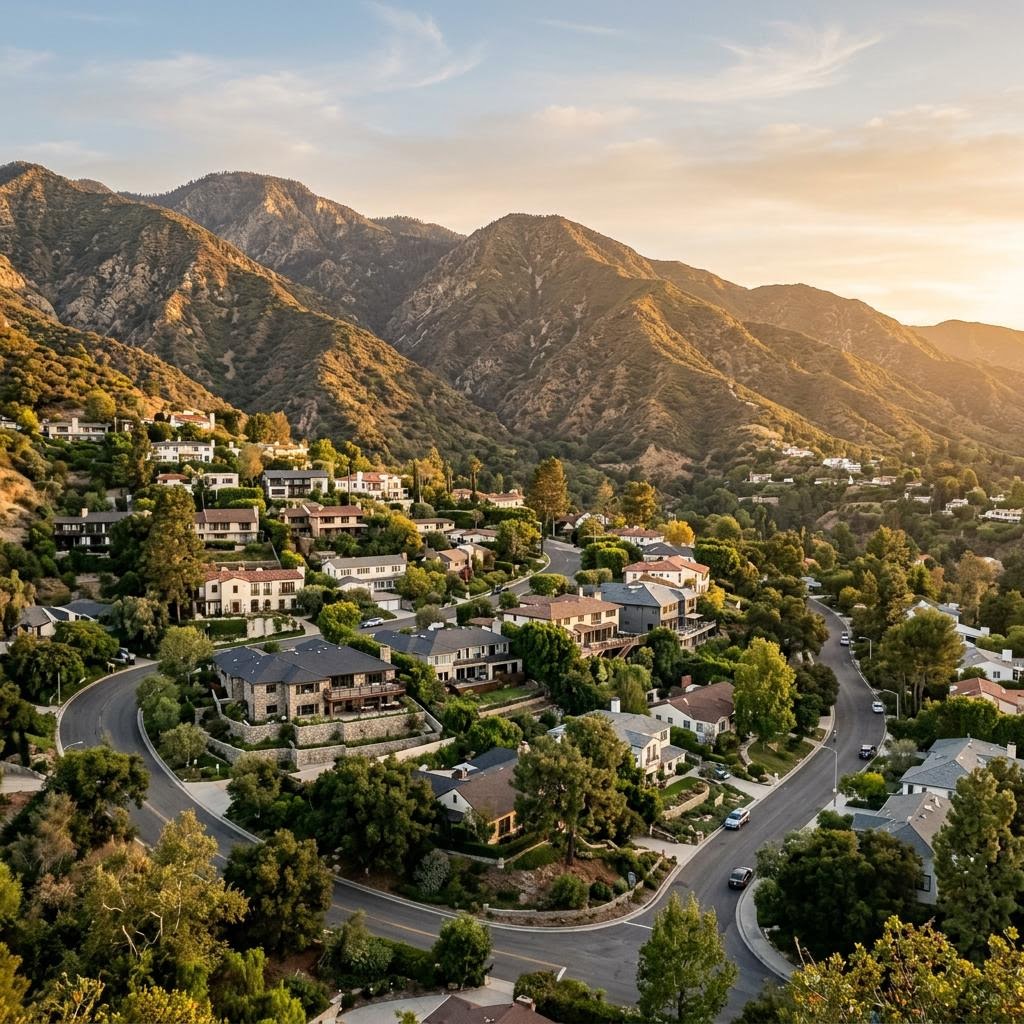
La Crescenta-Montrose sits directly against the San Gabriel Mountains front range, wedged between the City of Glendale, the independent city of La Cañada Flintridge, and unincorporated Altadena — three neighbors, three different permitting relationships, and a community that answers to none of them.
As unincorporated LA County territory, La Crescenta-Montrose's building permits, fire-hazard review, and zoning all run through County departments rather than a city hall. That single jurisdictional fact shapes everything else about how a project moves through the system here — and it's easy to get wrong for a contractor or designer used to working just across the border in Glendale or La Cañada Flintridge, where a completely different department handles the exact same kind of remodel or addition.
Ocean Permits & Development is a women-owned Los Angeles permit expediting firm founded in 2021 by Katherine Amaya. We do not design or build — we manage the permitting process exclusively, and our active work helping Altadena and Pacific Palisades homeowners navigate post-fire rebuild permitting gives us direct, current experience with exactly the kind of fire-hazard construction standards, defensible space compliance, and rebuild-readiness questions that La Crescenta-Montrose property owners are asking today, given how close this community sits to the Eaton Fire's footprint.
Why It's LA County, Not LADBS — or Any Neighboring City
La Crescenta-Montrose has never been annexed into the City of Los Angeles, and it is not an independent incorporated city like its neighbor La Cañada Flintridge or nearby Glendale. It is unincorporated Los Angeles County territory, which means the Los Angeles Department of Building and Safety (LADBS) has no jurisdiction here whatsoever — and neither does Glendale's or La Cañada Flintridge's own building department, even though both border the community directly.
Building permits for La Crescenta-Montrose properties are issued and plan-checked by the County of Los Angeles Department of Public Works, Building and Safety Division, under the Los Angeles County Building Code — the same County department that serves neighboring unincorporated Altadena, but a different department entirely from the ones serving Glendale or La Cañada Flintridge. Fire protection follows the same County line: La Crescenta-Montrose is served by the Los Angeles County Fire Department, not LAFD (City of LA only) and not a separate municipal fire department the way some neighboring cities operate. County Fire's Forestry Division and Fuel Modification Unit review defensible space and vegetation management as part of the permitting picture.
For teams accustomed to working across this stretch of the foothill corridor, the practical risk is treating three geographically adjacent communities as if they shared one permitting process. They don't — and confirming the correct department before submittal is the first step on every La Crescenta-Montrose project we manage.
Regulatory Layers in La Crescenta-Montrose
LA County Public Works — Building and Safety Division
La Crescenta-Montrose is unincorporated Los Angeles County, not a City of LA neighborhood and not part of any adjacent incorporated city. Every building permit is issued and plan-checked by the County of Los Angeles Department of Public Works, Building and Safety Division, under the Los Angeles County Building Code — a materially different process, portal, and fee schedule from LADBS or from neighboring La Cañada Flintridge's own Community Development Department.
Very High Fire Hazard Severity Zone (VHFHSZ)
The upper foothill portion of La Crescenta-Montrose, closest to the Angeles National Forest boundary, is mapped as Very High Fire Hazard Severity Zone. New construction and qualifying additions/rebuilds in that area must meet Chapter 7A of the California Building Code, and defensible space compliance under Public Resources Code §4291 is administered by LA County Fire's Forestry Division.
LA County Fire Fuel Modification Unit
For qualifying VHFHSZ parcels, a fuel modification plan — a landscaping and vegetation-management plan reducing fire fuel load around the structure — must be reviewed and approved by LA County Fire's Fuel Modification Unit, generally as a condition tied to the building permit.
Debris Flow / Watershed Management
Because La Crescenta-Montrose sits directly below burn-scarred San Gabriel Mountains terrain, some parcels — particularly near canyon mouths, debris basins, and flood-control channels — fall within debris flow risk areas mapped by the LA County Flood Control District. LA County Public Works, Watershed Management Division reviews qualifying projects in these areas for drainage and grading conditions.
LA County Department of Regional Planning
Discretionary zoning matters, and any applicable Community Standards District overlay specific to this unincorporated community, are reviewed by LA County's Department of Regional Planning rather than a city planning department.
LA County Fire Department
La Crescenta-Montrose is served by the Los Angeles County Fire Department, not LAFD. County Fire reviews access, water supply for fire suppression, defensible space, and fuel modification as part of the overall project review.
Fire Hazard Severity Zone: A Foothill Community With Fire History
La Crescenta-Montrose's upper foothill parcels, closest to the Angeles National Forest boundary, are mapped as Very High Fire Hazard Severity Zone. This isn't a new or abstract concern for the area: the 2009 Station Fire burned a very large portion of the Angeles National Forest directly above these foothill communities, and that fire history is part of the basis for the fire-hazard designations that apply to upper La Crescenta-Montrose parcels today.
New construction, and in many cases substantial additions or full rebuilds, on VHFHSZ-designated parcels must comply with Chapter 7A of the California Building Code — Class A fire-rated roofing, ember- and flame-resistant vents, ignition-resistant exterior wall materials, protected eaves and soffits, fire-resistant deck construction, and tempered, radiant-heat-resistant exterior glazing. LA County Public Works Building and Safety Division reviews Chapter 7A compliance as a standard part of plan check for qualifying parcels, and defensible space — a managed vegetation buffer required under California Public Resources Code §4291 — is administered locally by LA County Fire's Forestry Division.
More recently, the January 2025 Eaton Fire brought this risk into sharp, immediate focus for the community. The fire's primary destruction was concentrated in neighboring Altadena, but La Crescenta-Montrose — bordering Altadena's western edge — was placed under evacuation warnings during the event given its direct proximity. The community was not the site of the fire's main structural losses, and we want to be precise about that distinction rather than overstate it. But the close call has understandably prompted many La Crescenta-Montrose homeowners to ask about defensible space compliance, Chapter 7A hardening for existing homes, and rebuild-readiness planning — the same questions we help homeowners in Altadena and Pacific Palisades work through as part of active fire rebuild permitting in those communities today.
Fuel Modification: A Separate Review From Standard Landscaping
For qualifying VHFHSZ parcels, a fuel modification plan — a specific landscaping and vegetation-management plan designed to reduce wildfire fuel load in defined zones around a structure — must be reviewed and approved by the LA County Fire Department's Fuel Modification Unit, generally as a condition tied to the building permit. This is a distinct technical review from a standard landscape plan, addressing plant selection, spacing, irrigation, and maintenance obligations specific to fire-hazard reduction, and it runs on its own track alongside — but administratively separate from — LA County Public Works Building and Safety Division's structural plan check. Scoping fuel modification requirements early, before landscape design is finalized, avoids a late-stage redesign of the site's planting plan.
Debris Flow Risk: The Consequence of Fire Above a Foothill Community
A wildfire burning steep mountain terrain doesn't just threaten structures directly — it strips slopes of the vegetation that normally holds soil in place, which significantly increases the risk of debris flow (sometimes called mudflow or mudslide) during subsequent heavy rain events. Because La Crescenta-Montrose sits directly below the San Gabriel Mountains front range and its history of burned watershed area, portions of the community — particularly properties near canyon mouths, debris basins, and Los Angeles County Flood Control District channels — can fall within debris flow risk areas that the County maps and monitors.
For projects on or near these parcels, LA County Public Works, Watershed Management Division can require additional review addressing drainage, grading, and site design beyond what a standard building permit in a lower-risk part of the community would need. This isn't a universal requirement across all of La Crescenta-Montrose — it applies specifically to parcels within mapped debris flow risk areas — which is why we treat debris flow screening as a standard, not optional, part of pre-application research for any project near the community's foothill edge or its drainage channels.
Zoning and Regional Planning
As unincorporated territory, La Crescenta-Montrose is zoned under LA County's zoning code and reviewed by the County's Department of Regional Planning for discretionary land use matters — variances, conditional use permits, and other approvals that fall outside ministerial building permit review. Some unincorporated LA County communities have an adopted Community Standards District (CSD), a set of locally tailored zoning standards layered onto base County zoning for that specific area; whether a CSD or other special zoning overlay applies to a given La Crescenta-Montrose parcel is area- and sometimes street-specific, and should be confirmed directly with LA County Regional Planning rather than assumed from a neighboring property.
Wildfire Rebuild Readiness for a Foothill Community
Given La Crescenta-Montrose's fire history, its VHFHSZ designation, and its direct proximity to the Eaton Fire's evacuation zone, we encourage property owners here to treat rebuild readiness as an active, ongoing practice rather than a hypothetical. Based on our current work supporting Altadena and Pacific Palisades homeowners through post-fire rebuild permitting, the single most useful step a homeowner can take today is keeping copies of building permit records, site plans, and any fuel modification plan documentation somewhere other than inside the home itself. Combined with maintaining current defensible space compliance, this preparation measurably speeds up a rebuild application if a wildfire event were ever to affect the property — grounded in the community's real, mapped fire-hazard designation and its documented proximity to the Eaton Fire's evacuation footprint, not any claim of direct structural loss in La Crescenta-Montrose itself.
Permit Types, Responsible Agencies & Typical Timelines
Timelines below are general planning ranges only — actual review times vary by project complexity, submittal completeness, and current department workload. Confirm current processing times directly with LA County Public Works and the relevant agency for your specific project.
| Permit / Review Type | Responsible Agency | Typical Timeline |
|---|---|---|
| Standard building permit (remodel/addition, outside VHFHSZ and debris flow areas) | LA County Public Works, Building and Safety Division | Weeks to a few months, scope-dependent |
| New construction / rebuild with Chapter 7A compliance | LA County Public Works, Building and Safety Division | Longer than a standard remodel — additional plan check for fire-hazard construction detailing |
| Fuel modification plan (qualifying VHFHSZ parcels) | LA County Fire Department, Fuel Modification Unit | Runs parallel to building plan check; site-visit dependent |
| Debris flow / drainage review (mapped risk parcels) | LA County Public Works, Watershed Management Division | Adds a parallel review track for qualifying parcels only |
| Defensible space compliance | LA County Fire Department, Forestry Division | Ongoing obligation; verified at plan check and inspection |
| Discretionary zoning review (CSD / variance, where applicable) | LA County Department of Regional Planning | Longer than ministerial review; scope- and hearing-dependent |
General guidance only, not legal or engineering advice. Confirm current VHFHSZ boundaries, debris flow risk maps, and County processing timelines directly with LA County Public Works, LA County Fire, and LA County Regional Planning for your specific parcel.
The La Crescenta-Montrose Permit Process, Start to Finish
- 01
Parcel & Jurisdiction Research
We confirm VHFHSZ status, debris flow risk designation near canyon mouths and flood-control channels, and any Community Standards District or Regional Planning overlay that applies to the specific parcel before drawings are finalized.
- 02
Fuel Modification Plan Coordination
For qualifying VHFHSZ parcels, we prepare and coordinate the fuel modification plan submittal with LA County Fire's Fuel Modification Unit, running this track in parallel with building plan check rather than waiting for one to finish first.
- 03
County Building & Safety Submittal
We prepare a complete submittal package addressing structural requirements and Chapter 7A ignition-resistant construction detailing for LA County Public Works Building and Safety Division plan check.
- 04
Watershed Management Review (Where Applicable)
For parcels within a mapped debris flow risk area, we coordinate with LA County Public Works, Watershed Management Division on drainage and grading conditions tied to the project.
- 05
Correction Cycle Management
Foothill projects here can generate corrections from more than one department at once — County Building, Fire's Fuel Modification Unit, and Watershed Management where applicable. We manage the response across each track so no single agency becomes the pacing item.
- 06
Inspections & Final Sign-Off
We coordinate the inspection sequence through rough and final stages, including County Fire's sign-off on defensible space and fuel modification compliance, so final permit closeout isn't held up by a track that wasn't scheduled in time.
Our La Crescenta-Montrose Expertise
- LA County Public Works Building and Safety Division plan check coordination
- Chapter 7A ignition-resistant construction compliance review
- Defensible space compliance coordination under Public Resources Code §4291
- LA County Fire Fuel Modification Unit plan submittal and coordination
- Debris flow risk parcel screening and LA County Public Works Watershed Management coordination
- LA County Regional Planning zoning and Community Standards District research
- Wildfire rebuild readiness — permit and fuel modification documentation for fast post-loss rebuilding
- Foothill grading and drainage coordination
- Pre-submittal feasibility review to prevent multi-agency rejection at intake
Common Questions About La Crescenta-Montrose Permits
Does La Crescenta-Montrose use LADBS or LA County for building permits?
La Crescenta-Montrose is unincorporated Los Angeles County — it has never been part of the City of Los Angeles or any neighboring incorporated city like Glendale or La Cañada Flintridge. Building permits are issued and plan-checked by the County of Los Angeles Department of Public Works, Building and Safety Division, under the Los Angeles County Building Code. LADBS has no authority here at all. Because the community sits wedged between the City of Glendale, the independent city of La Cañada Flintridge, and unincorporated Altadena — three different jurisdictional setups within a few miles of each other — this is one of the more common points of confusion for contractors working across the foothill corridor.
Why does my project need Chapter 7A fire-resistant construction?
La Crescenta-Montrose sits directly against the base of the San Gabriel Mountains and the Angeles National Forest, and CAL FIRE maps much of the community's upper foothill area as Very High Fire Hazard Severity Zone (VHFHSZ). New construction, and in many cases substantial additions or rebuilds in that designated area, must comply with Chapter 7A of the California Building Code — covering Class A roofing, ignition-resistant exterior walls, ember-resistant vents, protected eaves, and fire-resistant decks and window assemblies. LA County Public Works Building and Safety Division reviews Chapter 7A compliance as a standard part of plan check for qualifying parcels.
Was La Crescenta-Montrose affected by a major wildfire before?
Yes. The 2009 Station Fire burned a very large area of the Angeles National Forest directly above La Crescenta-Montrose and the broader foothill communities along the San Gabriel Mountains front range. That fire history is part of why the area's upper foothill parcels carry a Very High Fire Hazard Severity Zone designation today, and it's a useful reference point for understanding why fire-hazard construction standards and defensible space requirements are taken seriously here — independent of any more recent fire event.
Was La Crescenta-Montrose evacuated during the Eaton Fire?
The January 2025 Eaton Fire's primary destruction was concentrated in neighboring Altadena. La Crescenta-Montrose, which borders Altadena's western edge, was placed under evacuation warnings during the fire given its proximity, though it was not the area of the fire's main structural losses. That close call is one reason many La Crescenta-Montrose homeowners have since asked us about defensible space compliance, Chapter 7A hardening options for existing homes, and general rebuild-readiness planning — the same questions we help Altadena and Pacific Palisades property owners work through directly as part of active fire rebuild permitting there.
What is debris flow risk, and does it affect my property?
Debris flow (sometimes called mudflow) is a fast-moving slurry of soil, rock, and burned vegetation that can move down a canyon or drainage after a wildfire has stripped a watershed of the vegetation that normally holds soil in place during heavy rain. Because La Crescenta-Montrose sits directly below burn-scarred San Gabriel Mountains terrain, portions of the community — particularly properties near canyon mouths, debris basins, and county flood-control channels — can fall within debris flow risk areas mapped by the Los Angeles County Flood Control District and LA County Public Works, Watershed Management Division. Projects on or near these parcels can require additional review or drainage/grading conditions beyond standard building permit requirements. We verify a parcel's debris flow risk designation as part of pre-application research for any La Crescenta-Montrose project near the foothill edge.
What is defensible space and is it required here?
Defensible space is a managed buffer of cleared and thinned vegetation around a structure, required under California Public Resources Code §4291 for properties within fire hazard severity zones. Given La Crescenta-Montrose's VHFHSZ designation along its upper foothill edge, a substantial share of properties there are subject to defensible space requirements, both as an ongoing maintenance obligation and, frequently, as a condition attached to building permits for new construction, additions, and rebuilds. LA County Fire Department's Forestry Division administers compliance for unincorporated communities like this one.
What is the LA County Fire Fuel Modification Unit and when do I need them?
The Los Angeles County Fire Department's Fuel Modification Unit reviews and approves fuel modification plans — landscaping and vegetation management plans designed to reduce wildfire fuel load around a structure — for new construction and qualifying additions in fire hazard severity zones within the County's jurisdiction. For La Crescenta-Montrose properties in or near the VHFHSZ boundary, a fuel modification plan is frequently required as a condition of the building permit, reviewed on a track that runs alongside, but separately from, LA County Public Works Building and Safety Division's structural plan check.
Does La Crescenta-Montrose have its own zoning rules or a Community Standards District?
As unincorporated territory, La Crescenta-Montrose is governed by LA County's zoning code and is reviewed by the County's Department of Regional Planning for discretionary land use matters, rather than by a city planning department. Certain unincorporated LA County communities have an adopted Community Standards District (CSD) — a set of locally tailored zoning standards layered onto the base County zoning for that specific area. Whether a Community Standards District or other special zoning overlay applies to a given La Crescenta-Montrose parcel should be confirmed directly with LA County Regional Planning, since these designations are area- and sometimes street-specific.
How is La Crescenta-Montrose different from La Cañada Flintridge or Altadena?
All three communities sit along the San Gabriel Mountains foothill front and share Very High Fire Hazard Severity Zone exposure, but their governing jurisdiction differs. La Cañada Flintridge is an independent incorporated city with its own Community Development Department. Altadena is unincorporated LA County, served by the same County Building and Safety Division and County Fire Department that serve La Crescenta-Montrose. La Crescenta-Montrose itself is unincorporated County territory as well, which means its permitting relationship is closer to Altadena's than to La Cañada Flintridge's — though each community has its own zoning specifics, debris flow exposure, and fire history that should be evaluated individually rather than assumed identical.
What's the step-by-step process for a typical remodel or rebuild here?
A typical La Crescenta-Montrose project moves through pre-application research (VHFHSZ status, debris flow risk designation, and any applicable Community Standards District or Regional Planning overlay), a fuel modification plan submittal to LA County Fire's Fuel Modification Unit where required, LA County Public Works Building and Safety Division plan check covering structural and Chapter 7A compliance, LA County Public Works Watershed Management review where a parcel falls within a mapped debris flow risk area, correction-cycle response across whichever tracks generated comments, scheduled inspections through rough and final stages, and final sign-off once fire, structural, and — where applicable — watershed conditions are satisfied.
How long does a typical permit take in La Crescenta-Montrose?
Timelines depend heavily on whether a project triggers fuel modification review, Chapter 7A compliance, and/or debris flow-related Watershed Management review, along with current County plan check workload. A standard remodel outside the VHFHSZ boundary and away from debris flow risk areas generally moves faster than new construction or a rebuild requiring all three of those additional reviews. We give every La Crescenta-Montrose client a parcel-specific timeline after confirming fire zone status, debris flow designation, and project scope, rather than a generic estimate.
Can you help me prepare for a fast rebuild if my home were ever lost to wildfire?
Yes. Drawing on our active work supporting Altadena and Pacific Palisades homeowners through post-fire rebuild permitting, we recommend La Crescenta-Montrose property owners in the VHFHSZ area keep copies of building permit records, site plans, and any fuel modification plan documentation outside the home itself, and stay current on defensible space compliance. This kind of preparation — grounded in the area's real, mapped fire hazard designation and its proximity to the recent Eaton Fire's evacuation zone — meaningfully speeds up a rebuild application if a loss were ever to occur, without requiring any assumption about a specific future event.
Building in La Crescenta-Montrose?
We navigate LA County Building and Safety, Chapter 7A fire-hazard compliance, fuel modification, and debris flow watershed review — all under one point of contact.
Or call +1 (213) 277-8777