_1781464136662-DVw5IPjt.png)
Compton Building Permits
& Permit Expediting
Compton is an independent Gateway Cities municipality with its own Building and Safety Division, a busy auto-commercial corridor, and an active industrial and logistics base.
Women-owned, Los Angeles-based permit expediting firm. We bring the same disciplined multi-agency coordination we use for industrial and commercial clients in Downey and Hawthorne to Compton's auto-commercial corridor, industrial buildings, and residential remodels. Free initial consultation — call 213-277-8777.
Compton is an independently incorporated city in the Gateway Cities region of southeastern Los Angeles County — building permits go through the City's own Building and Safety Division, not LADBS and not LA County Building and Safety, even though Compton borders several other independent cities and unincorporated County pockets.
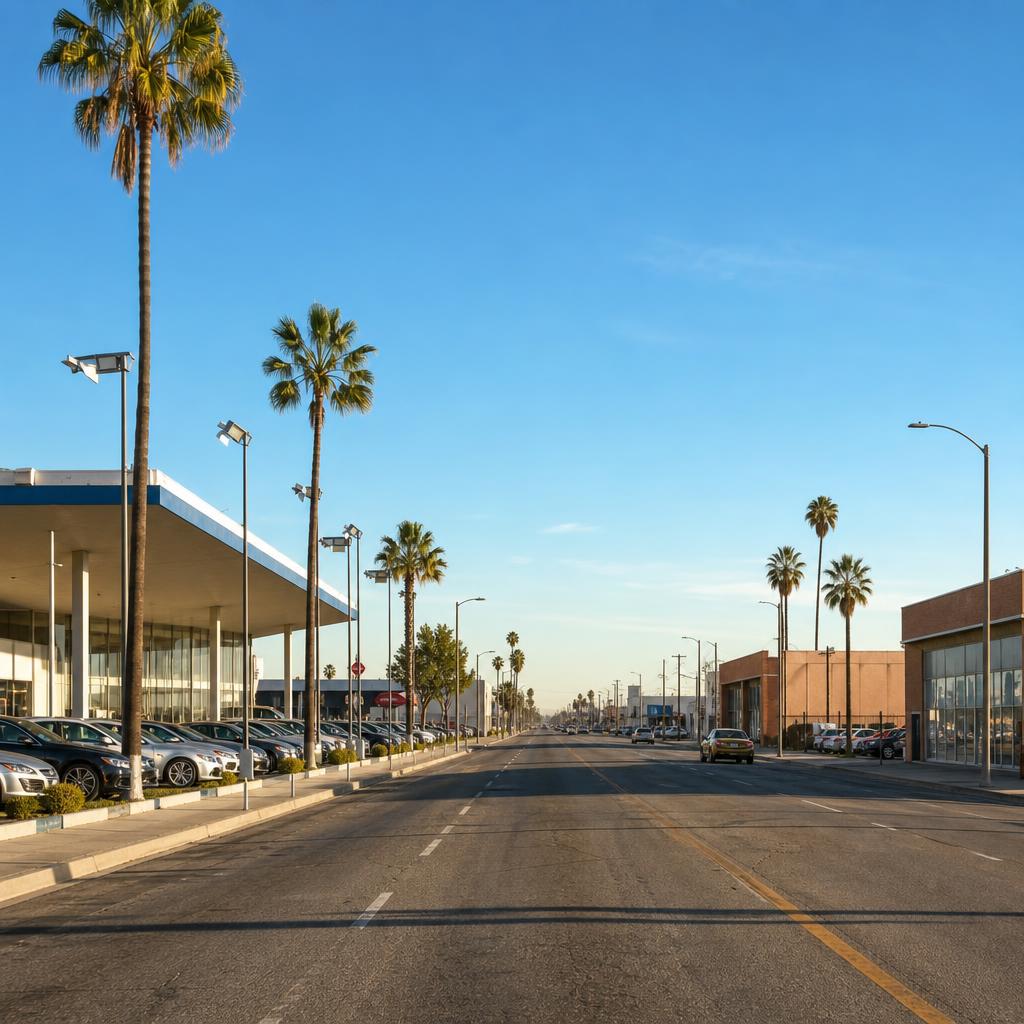
The city's commercial character is shaped by two very different corridors. Long Beach Boulevard carries one of the region's denser concentrations of auto sales lots, auto repair shops, and body shops, each of which can trigger zoning review and a Conditional Use Permit depending on the specific use and hours. A few blocks away, the Alameda Street corridor and its adjacent rail lines have supported industrial, warehousing, and logistics uses for decades — a legacy that shows up today in older industrial buildings that sometimes carry aging infrastructure needing a genuine current-code evaluation before a change of use.
Layered on top of these commercial and industrial corridors is a city of established single-family residential neighborhoods, additional commercial corridors along Compton Boulevard, Alondra Boulevard, and Rosecrans Avenue, and parcels near the Los Angeles River and Compton Creek that can carry FEMA flood zone considerations. Ocean Permits & Development treats each of these — auto-commercial buildout, industrial conversion, corridor retail, and residential remodel — as its own project profile, confirming the applicable zoning and any flood-zone status for the exact address before a client commits to a design or a lease.
For broader regional context, see our Long Beach location guide and our Los Angeles permit expediting page.
An Independent City With Its Own Building Division
Every permit in Compton — from a single-family kitchen remodel to an industrial building conversion along Alameda Street — is reviewed by the City's own Building and Safety Division under the Compton Municipal Code, applying the California Building Code, California Residential Code, California Fire Code, and Title 24 energy standards with the City's local amendments, forms, and fee schedule.
Independent City — Not LADBS
Compton is its own incorporated city with its own Building and Safety Division inside the Department of Public Works, operating under the Compton Municipal Code — separate from LADBS and from LA County Building and Safety.
Long Beach Boulevard Auto-Commercial Corridor
A concentration of auto sales, auto repair, and auto-related commercial uses runs along Long Beach Boulevard, with zoning and Conditional Use Permit review that differs from a typical retail corridor.
Alameda Street Industrial Corridor
Rail-adjacent industrial and logistics uses run along Alameda Street and nearby corridors, with older buildings sometimes carrying legacy infrastructure that needs current-code evaluation before a change of use.
Commercial Corridor Zoning
Compton Boulevard, Alondra Boulevard, and Rosecrans Avenue carry a mix of commercial zoning designations, each with its own permitted-use list, height limit, and parking standard.
LA River & Compton Creek Flood Zones
Parcels near these waterways can fall within a FEMA-designated flood zone, affecting finished-floor elevation and foundation design for new construction or substantial improvement.
Established Single-Family Neighborhoods
Established residential lots across most of the city support ADU and JADU demand under state law and the City's implementing ordinance.
The Long Beach Boulevard Auto-Commercial Corridor
Long Beach Boulevard has one of the region's densest concentrations of auto sales lots, independent repair shops, and body and paint facilities. A new or expanding automotive use along this corridor should confirm base zoning and any Conditional Use Permit trigger before signing a lease — body and paint work in particular commonly requires SCAQMD Rule 1151 paint-booth permitting and hazardous-materials business plan coordination in addition to the standard building permit.
Compton's other commercial corridors — Compton Boulevard, Alondra Boulevard, and Rosecrans Avenue — carry a more conventional mix of retail and restaurant uses, each with its own permitted-use list and parking standard depending on the specific segment.
The Alameda Street Industrial Corridor
Compton's proximity to the ports, the regional rail network, and the surrounding freeway system has made the Alameda Street corridor and adjacent industrial pockets an active market for distribution, warehousing, and light manufacturing. Older buildings in this corridor sometimes carry legacy infrastructure from decades of prior industrial use — aging electrical service, previous manufacturing equipment, or former hazardous-materials handling areas — that needs a genuine current-code evaluation before a change of use or a multi-tenant conversion is approved.
New distribution and light-industrial projects should also confirm high-piled storage racking requirements and Fire Department review early, since these can significantly affect the mechanical and fire-protection scope for an otherwise straightforward warehouse tenant improvement.
Flood Zones, Residential Neighborhoods & ADU Demand
The Los Angeles River and Compton Creek channels run through parts of the city, and parcels near these waterways can fall within a FEMA-designated flood zone that affects finished-floor elevation requirements, foundation design, and flood insurance obligations for new construction or a substantial improvement project. This is a site-specific determination, not a citywide condition, so we confirm FEMA flood zone status for any parcel near these channels before design work is finalized.
Away from the flood-prone areas, Compton's residential neighborhoods sit on established single-family lots that support real demand for ADUs and JADUs under California's statewide ADU law and the City's implementing ordinance, generally allowing ministerial approval for a qualifying unit without a discretionary hearing.
Compton Project Types, Review Paths & Our Approach
| Project Type | When It Applies | Typical Review Path | Our Approach |
|---|---|---|---|
| Auto sales / auto repair buildout | New or expanded automotive sales lot, repair shop, or body shop along Long Beach Blvd or another commercial corridor | Building and Safety Division plan check; Planning use confirmation; CUP if body/paint work or extended hours are proposed | We confirm zoning, CUP exposure, and SCAQMD paint-booth or hazmat requirements before a lease is signed. |
| Industrial / warehouse conversion | Change of use, tenant improvement, or expansion of an industrial or distribution building along the Alameda Street corridor | Building and Safety Division plan check for structural, MEP, and life-safety upgrades; Fire Department review for high-piled storage or hazardous materials | We evaluate existing infrastructure against current code early, since legacy industrial buildings often need real upgrades, not cosmetic changes. |
| Commercial corridor restaurant / retail | New restaurant or retail use on Compton Blvd, Alondra Blvd, or Rosecrans Ave | Building and Safety Division plan check; Planning use confirmation; CUP if alcohol or drive-through service is proposed | We confirm the exact zoning designation and CUP requirement for the specific address before design work proceeds. |
| New construction near the LA River or Compton Creek | New building or substantial improvement on a parcel near either waterway | FEMA flood zone determination; Building and Safety Division plan check for finished-floor elevation and foundation design | We confirm flood zone status and any elevation requirements before the structural design is finalized. |
| Single-family remodel / ADU | Kitchen or bath remodel, room addition, or ADU/JADU on a single-family lot | Compton Building and Safety Division plan check under state ADU law and local ordinance | We confirm lot size, setbacks, flood zone status if near a waterway, and utility capacity before a design is finalized. |
These are planning-level descriptions, not fee quotes or guaranteed timelines. We confirm current fees, forms, and timelines for your specific address and scope during a free consultation.
Our Process for a Compton Project
- 01
Confirm zoning and corridor status
We pull the parcel's zoning and confirm which commercial or industrial corridor it sits on, since the auto-commercial and industrial corridors carry different use restrictions than the citywide default.
- 02
Check flood zone and legacy building conditions
For parcels near the LA River or Compton Creek, we confirm FEMA flood zone status; for older industrial buildings, we review prior permit history and any legacy infrastructure that needs current-code evaluation.
- 03
Coordinate the design and engineering package
We work with the architect, structural engineer, and contractor to align drawings, Title 24 energy compliance, and any required flood-elevation documentation into one consistent submittal.
- 04
File with the Compton Building and Safety Division
We submit through the City's plan-check process, tracking Compton's specific submittal requirements and fee schedule rather than assuming they mirror a neighboring Gateway Cities municipality's process.
- 05
Manage plan-check corrections across every discipline
We track structural, zoning, fire, and MEP corrections as one coordinated package, respond directly with the design team, and resubmit promptly to keep the project moving.
- 06
Issue permits and coordinate inspections through final sign-off
Once permits are issued, we help sequence inspections through final approval and certificate of occupancy, coordinating with any CUP conditions of approval that need to be verified at closeout.
Why Ocean Permits & Development for Compton
We coordinate zoning confirmation, plan-check submittal, correction responses, and inspections for Compton projects ranging from an auto-commercial buildout to an industrial warehouse conversion. Every engagement starts with a free consultation — call 213-277-8777 or reach out through our contact page. See also our auto repair shop permits service and warehouse & industrial permits service for the two commercial categories most common in Compton.
Frequently Asked Questions
Is Compton part of the City of Los Angeles, or does it have its own building department?
Compton is an independently incorporated city in the Gateway Cities region of southeastern Los Angeles County, entirely separate from the City of Los Angeles. Building permits, plan check, and inspections go through the City of Compton's own Building and Safety Division under the Department of Public Works, applying the Compton Municipal Code — not LADBS. Every permit is filed with the City of Compton directly, regardless of how close the address sits to the LA city line.
What zoning applies to Compton's commercial corridors?
Compton's primary commercial corridors — Compton Boulevard, Long Beach Boulevard, Alondra Boulevard, and Rosecrans Avenue — carry a mix of commercial zoning designations, each with its own permitted-use list, height limit, and parking standard. Long Beach Boulevard in particular carries a concentration of auto sales, auto repair, and auto-related commercial uses, and a new automotive use should confirm zoning and any Conditional Use Permit trigger before signing a lease.
Does Compton's industrial history affect permitting for warehouse or manufacturing projects today?
Yes. Compton sits along the Alameda Street corridor and adjacent rail lines that have supported industrial and logistics uses for decades, and older industrial buildings in this corridor sometimes carry legacy infrastructure — aging electrical service, prior manufacturing equipment, or former hazardous-materials handling areas — that needs a current code evaluation before a change of use or a multi-tenant conversion is approved. New distribution and light-industrial projects are common along this corridor given its proximity to the ports and regional freeway network.
Are there flood zone considerations for property near the Los Angeles River or Compton Creek?
Some parcels near the Los Angeles River and Compton Creek channels that run through the city fall within a FEMA-designated flood zone, which can affect finished-floor elevation requirements, foundation design, and flood insurance obligations for new construction or a substantial improvement project. We check FEMA flood zone status for any parcel near these waterways before design work is finalized, since it is not a citywide condition and depends on the specific parcel.
Can I add an ADU on my Compton property?
In most cases, yes. Compton's residential neighborhoods are predominantly zoned single-family on established suburban lots, which generally support ADU and JADU demand under California's statewide ADU law together with the City's implementing ordinance, allowing ministerial approval without a discretionary hearing for a qualifying unit. Lot size, existing structures, setbacks, and utility capacity still need to be confirmed for the specific property before a design is finalized.
What triggers a Conditional Use Permit in Compton?
Uses such as a restaurant or market serving alcohol, an automotive sales or repair use, a drive-through, or a use generating traffic or hours of operation beyond what the base commercial zone anticipates commonly require a Conditional Use Permit reviewed by the Planning Commission. Given the concentration of auto-related businesses along Long Beach Boulevard, confirming CUP exposure before signing a lease is especially important for automotive uses in Compton.
What building code does Compton use for plan check?
Compton adopts the California Building Code, California Residential Code, California Fire Code, and Title 24 energy standards with local amendments codified in the Compton Municipal Code — the same statewide code family used throughout California, applied through the City's own Building and Safety Division plan checkers and fee schedule rather than LADBS or LA County staff.
How does Compton compare to nearby cities like Long Beach or Lynwood for permitting purposes?
Compton, Lynwood, Paramount, and Long Beach are each independently incorporated Gateway Cities-area municipalities with their own building departments, so a project a few miles from Compton in any of these cities is submitted to a different agency, under a different municipal code and fee schedule, even though all sit within the same general southeastern LA County / Gateway Cities region. See our Long Beach location guide for how that city's building department and permitting process compare.
How long does a typical Compton permit take?
A straightforward residential remodel or ADU with a complete application can often move through Compton's Building and Safety Division in a matter of weeks, while a larger commercial or industrial project, or one requiring a CUP hearing, can take considerably longer. We provide a project-specific timeline range after reviewing the address and scope rather than quoting a single generic figure.
Why use Ocean Permits & Development for a Compton project instead of filing directly with the City?
Ocean Permits & Development is a women-owned, Los Angeles-based permit expediting firm that manages zoning confirmation, plan-check submittal, correction responses, and inspection coordination as one process, so a property owner, architect, or contractor isn't learning Compton's specific requirements from scratch while also running a construction project. We offer a free initial consultation — call 213-277-8777 or reach out through our contact page.
Building in Compton?
We coordinate Building and Safety Division plan check, auto-commercial and industrial reviews, and residential ADU permits as one process.
Nearby Locations