_1781464136662-DVw5IPjt.png)
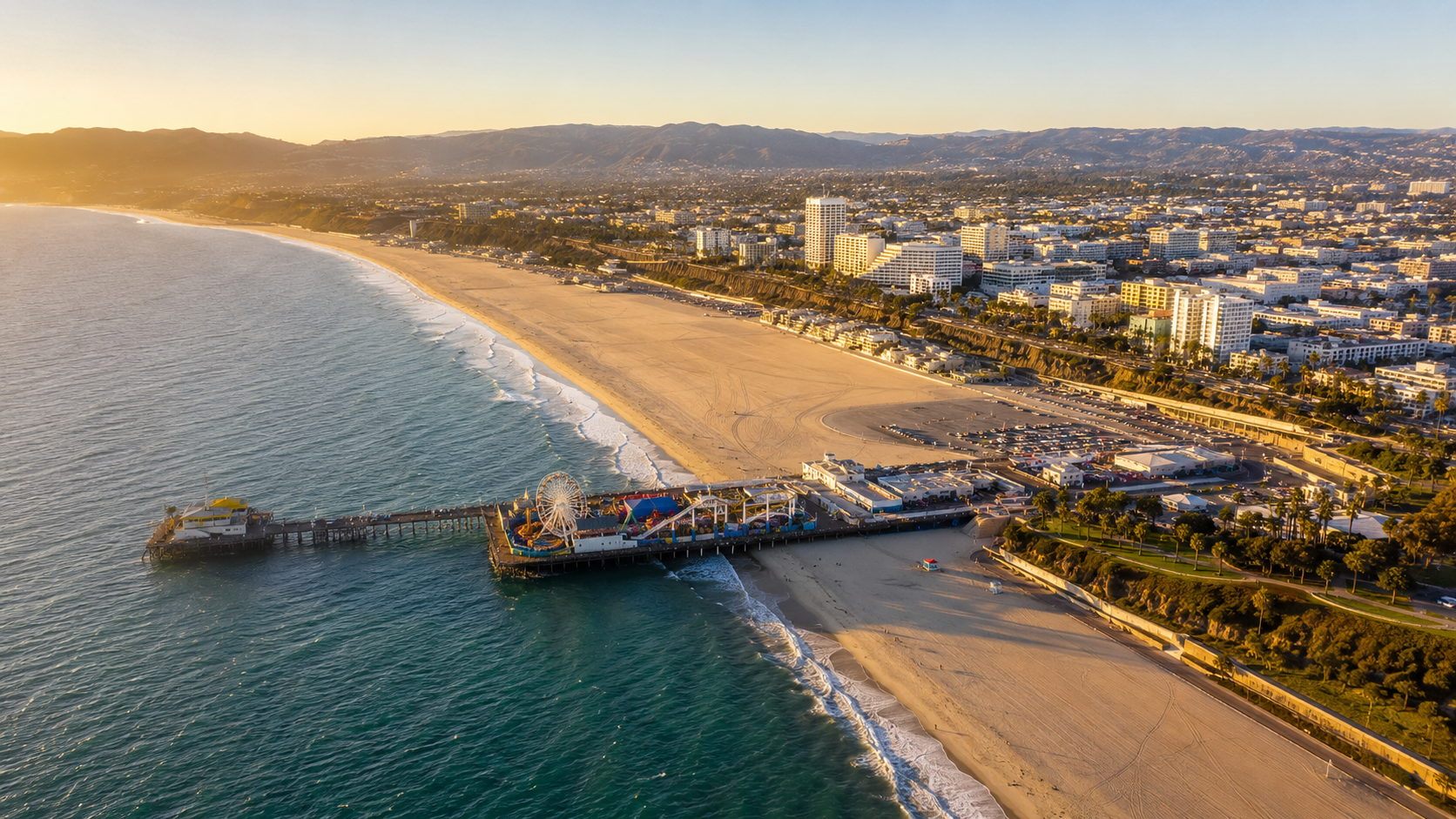
Long Beach
Permit Expediting
Long Beach is not served by LADBS. Long Beach Development Services — Building & Safety Bureau — is an entirely separate permitting authority operating under the Long Beach Municipal Code. If your contractor or architect submits a Long Beach project to LADBS, it will be rejected. We know both systems and work in both jurisdictions.
Long Beach is the second-largest city in Los Angeles County — and one of the most permitting-complex. It is an independent charter city with its own Building & Safety Bureau, its own Planning Bureau, its own certified Local Coastal Program, a major port with separate harbor jurisdiction, and a unique multi-agency coordination requirement for commercial projects that includes Los Angeles County Environmental Health and the Long Beach Fire Prevention Bureau.
The most important thing to understand about Long Beach permits: Long Beach does not use LADBS. Long Beach Development Services, Building & Safety Bureau, operates under the Long Beach Municipal Code — Title 18 for Building Regulations, Title 21 for Zoning, and Title 22 for the Coastal Zone — with its own forms, portals, fee schedules, plan check queues, and inspection staff. An expediter, architect, or contractor who is fluent in LADBS procedures is in an unfamiliar regulatory environment the moment they cross into Long Beach. The two cities share no systems, no portals, and no plan checkers.
The second defining feature of Long Beach permitting is the multi-agency structure of commercial projects. A restaurant opening in Long Beach requires simultaneous coordination with Long Beach Building & Safety, Long Beach Fire Prevention Bureau, and the Los Angeles County Department of Environmental Health (LACDEH) — a County agency, not a City agency — in addition to a Conditional Use Permit from Long Beach Planning if alcohol service or live entertainment is involved. Running these tracks sequentially is the single most common cause of 12–18 month opening timelines for Long Beach restaurants. Running them in parallel typically compresses the timeline to 5–8 months.
Ocean Permits & Development is a women-owned Los Angeles permit expediting firm with direct experience in Long Beach Development Services, the Long Beach Planning Bureau's CUP process, the Long Beach Coastal Zone under the certified LCP, and LACDEH concurrent plan review coordination. We offer a free initial consultation — +1 (213) 277-8777 — to assess your project's regulatory pathway and give you an honest timeline estimate before you retain us.
Long Beach's Regulatory Layers
Long Beach Development Services — Building & Safety Bureau (LBMC Title 18)
Long Beach is an independent charter city — it has its own Building & Safety Bureau under the Long Beach Development Services Department, completely separate from LADBS. All building permits in Long Beach are issued under LBMC Title 18 (Building Regulations), which adopts the California Building Code (Title 24 CCR) and California Residential Code with City-specific local amendments. Plan check, permit issuance, and inspection scheduling all go through Long Beach's own systems. Submitting a Long Beach project to LADBS is a jurisdictional error that delays projects by weeks — LADBS has no authority in Long Beach.
Long Beach Planning Bureau — Zoning & Entitlements (LBMC Title 21)
Long Beach's Planning Bureau administers zoning under LBMC Title 21, which establishes the City's zoning districts, use permissions, development standards, and discretionary approval processes. Conditional Use Permits (CUPs), variances, site plan reviews, and environmental determinations all go through Planning. For projects requiring both Planning and Building approvals, coordinating the two tracks concurrently — rather than sequentially — is the most effective way to compress total project timeline.
California Coastal Act & Long Beach Local Coastal Program (LBMC Title 22 / Pub. Resources Code §30000 et seq.)
Portions of Long Beach fall within the California Coastal Zone under the California Coastal Act (Public Resources Code, Division 20, §30000 et seq.). The California Coastal Commission has certified Long Beach's Local Coastal Program (LCP), authorizing Long Beach Planning to issue Coastal Development Permits (CDPs) locally for most projects in the Coastal Zone. LBMC Title 22 implements the LCP. Coastal Zone areas in Long Beach include the beachfront, Alamitos Bay, Naples Island, the Colorado Lagoon area, and portions of the downtown waterfront. Development in these areas requires a CDP in addition to the standard building permit.
Los Angeles County Department of Environmental Health (LACDEH)
For food service establishments, Long Beach health permits are issued by the Los Angeles County Department of Environmental Health — a County agency, not a City of Long Beach department. LACDEH reviews restaurant plans for kitchen layout, grease interceptor sizing, handwashing station placement, equipment specifications, and food storage. LACDEH approval is required before a restaurant can open for business, and LACDEH inspects during construction at key milestones. We coordinate LACDEH plan submission concurrently with Long Beach Building & Safety plan check so both approvals arrive in parallel.
Long Beach Fire Prevention Bureau
The Long Beach Fire Prevention Bureau reviews and inspects fire protection systems — fire sprinklers, Ansul kitchen suppression systems, fire alarm and detection, egress requirements, and occupancy load determinations. For tenant improvement projects and restaurants, Fire Prevention Bureau approval is a separate track from Building & Safety plan check. We include Fire Prevention Bureau requirements in every commercial tenant improvement submittal package so that Fire approval and Building permit issuance occur simultaneously.
Port of Long Beach — Harbor Department Jurisdiction
Properties on Port of Long Beach-owned land are subject to the Port's Board of Harbor Commissioners rather than standard City of Long Beach Development Services review. The Port operates under the City Charter with independent authority over harbor district lands, and major development on port property requires Harbor Department approval and may trigger CEQA or federal environmental review. Properties adjacent to the port are subject to standard Long Beach Planning and Building review, but may face overlay conditions related to the Port's Community Standards District, including air quality, truck routing, and hazardous materials restrictions.
The Long Beach Permit Process — Step by Step
The fundamental principle of Long Beach permit expediting is parallel tracks. Every agency that needs to see your project should see it simultaneously — not after the previous agency has finished. Here is how we structure every Long Beach engagement.
- 01
Pre-Application Research & Jurisdictional Verification
Before any plans are drawn, we research the parcel: zoning district under LBMC Title 21, Coastal Zone status under LBMC Title 22, any existing CUP conditions on the property, fire hazard designation, and Port proximity overlays. This determines which agencies are in the approval chain and what the critical-path item is — Planning entitlement, Coastal CDP, or straight building permit. Discovering jurisdictional or zoning issues before plans are underway prevents the most expensive delays.
- 02
Planning Pre-Application Meeting (When Required)
For projects requiring a CUP, variance, Coastal CDP, or environmental review, we schedule a pre-application meeting with Long Beach Planning Bureau staff. This confirms the entitlement strategy, identifies any operational conditions likely to be imposed, and establishes the hearing schedule — so the CUP timeline and the Building & Safety plan check timeline can be synchronized rather than run sequentially.
- 03
Complete Application Package Preparation
We prepare a coordinated application package: architectural plans, Title 24 energy compliance, structural calculations (where required), MEP drawings for commercial projects, an operational statement for CUP applications, a Coastal consistency analysis for Coastal Zone projects, and all Long Beach-specific forms and checklists. Application completeness is the single most controllable factor in permit timeline — incomplete submittals are returned, and the clock does not start until completeness is confirmed.
- 04
Simultaneous Submission — Building, Planning & Fire
We submit to Building & Safety Bureau, the Planning Bureau, and the Fire Prevention Bureau on the same day — not sequentially. For restaurant projects, LACDEH plan submission is coordinated simultaneously. Running parallel review tracks rather than sequential approval chains is where the most schedule time is recovered. We manage all agency queues and correction cycles concurrently.
- 05
Plan Check Monitoring & Correction Response
We track each application through Long Beach's plan check system, review all correction notices as they issue, prepare correction responses in coordination with the project's design professional, and resubmit corrections promptly. For projects using Long Beach's Priority Plan Check program, we monitor queue position and follow up directly with plan checkers to resolve ambiguous comments without triggering a full re-review cycle.
- 06
CUP / Entitlement Hearing Preparation (If Required)
For projects requiring a Conditional Use Permit or discretionary Planning approval, we prepare the hearing application, operational statement, and any required CEQA documentation. We attend the Planning Commission or Zoning Administrator hearing and respond to conditions of approval. We review draft conditions before they are finalized to ensure they reflect the project correctly and do not impose unworkable operational restrictions.
- 07
Permit Issuance, Inspection Sequencing & Closeout
Once all approvals are in place, we coordinate permit issuance and prepare the contractor for the inspection sequence required by Long Beach Building & Safety: foundation, framing, rough MEP, insulation, drywall, and final. For commercial projects, we coordinate the Building final, Fire Prevention final, and LACDEH pre-operational inspection so all three occur in the same window — avoiding the common delay of waiting weeks between each agency's final visit.
Long Beach vs. LADBS: Why the Difference Matters
The confusion between Long Beach and LADBS is one of the most common — and most costly — jurisdictional errors in the greater Los Angeles construction market. It happens because the two cities share a county, share zip codes that appear adjacent, and because Long Beach is informally referred to as part of "Los Angeles." But they are legally and operationally separate cities.
Different Building Codes (Same Base, Different Amendments)
Both Long Beach and Los Angeles adopt the California Building Code (Title 24 CCR) as their base, but each city adopts local amendments that differ from one another. Long Beach's amendments are codified in LBMC Title 18; Los Angeles's are in LAMC Chapter IX. Plan sets prepared for LADBS submission often require revision before Long Beach Building & Safety will accept them, and vice versa.
Different Zoning Codes and Approval Processes
Long Beach's zoning code (LBMC Title 21) and LADBS's (LAMC) use different zoning classifications, different use tables, different development standards, and different entitlement procedures. A CUP approved by Long Beach Planning has no effect in the City of Los Angeles, and vice versa. Restaurant operators opening in both cities must obtain separate CUPs and meet separate conditions of approval in each jurisdiction.
Different Coastal Programs
Long Beach administers its Coastal Zone under its own LCP (LBMC Title 22), certified by the California Coastal Commission. The City of Los Angeles administers its Coastal Zone — including Venice, Pacific Palisades, and San Pedro — under a separate certified LCP through LA City Planning. The two programs are legally distinct: a CDP issued under Long Beach's LCP has no relation to a CDP issued under LA's LCP. For properties near the jurisdictional boundary (e.g., near Signal Hill or the harbor), correct identification of the governing LCP is the first step.
Our experience with Los Angeles (LADBS) and Long Beach Development Services allows us to serve clients with projects in both cities without the learning curve that affects firms operating in only one jurisdiction. See also our Culver City, Santa Monica, and Beverly Hills pages for other independent jurisdictions in the region.
Long Beach Permit Types at a Glance
Ocean Permits Service Fee Ranges — Long Beach Projects
These are estimated ranges for Ocean Permits' permit expediting service fees — not official City of Long Beach government permit fees, which are set separately by the City's adopted fee schedule. Project-specific quotes are provided after a free initial consultation.
Our Long Beach Expertise
- Long Beach Building & Safety Bureau plan check coordination (LBMC Title 18 / CBC Title 24)
- Conditional Use Permit (CUP) applications — alcohol, entertainment, restaurant
- Coastal Development Permit applications under Long Beach's certified LCP (LBMC Title 22)
- ADU permits — JADU, attached, detached, garage conversion (Government Code §65852.2)
- Tenant improvement permits — creative office, retail, restaurant, medical, industrial
- Restaurant permits — concurrent coordination of Building, Fire, and LACDEH plan review
- Priority Plan Check program management — Long Beach commercial and residential
- Long Beach Fire Prevention Bureau plan review and inspection coordination
- Los Angeles County LACDEH restaurant plan review and pre-operational inspection management
- CUP condition-of-approval monitoring and amendment applications
- CEQA categorical exemption determinations and initial study coordination
- Port of Long Beach adjacency analysis — overlay requirements and Harbor District boundaries
- Sign permits and exterior signage compliance — LBMC Title 22 sign standards
- Pre-application strategy meetings with Long Beach Planning Bureau staff
Women-Owned Business Enterprise
Why Long Beach clients work with Ocean Permits
Ocean Permits & Development is a women-owned business enterprise (WBE) founded in Los Angeles in 2021 by Katherine Amaya. We serve clients across independent municipal jurisdictions throughout the greater Los Angeles region — including Long Beach, Culver City, Santa Monica, Beverly Hills, and Malibu — as well as the City of Los Angeles itself under LADBS jurisdiction.
Our experience in complex, multi-agency coordination was tested and proven during the January 2025 Pacific Palisades and Altadena fire disaster response — where we managed permit applications simultaneously across LADBS, LA City Planning, California Coastal Commission, Chapter 7A compliance review, and County Environmental Health for dozens of rebuild clients. That coordination capability translates directly to Long Beach commercial projects, where Building, Fire, Planning, and LACDEH must be managed concurrently to achieve reasonable timelines.
We offer a free initial consultation for every Long Beach project — residential or commercial, simple or complex. We assess your parcel's regulatory requirements, identify the critical-path approval, determine Priority Plan Check eligibility, and give you an honest timeline before you engage us. Schedule your consultation or call +1 (213) 277-8777.
Common Questions — Long Beach Permits
Does Long Beach use LADBS for building permits?
No. Long Beach is an independent charter city with its own permitting authority — Long Beach Development Services, Building & Safety Bureau. LADBS (Los Angeles Department of Building and Safety) serves only the City of Los Angeles and has no jurisdiction in Long Beach. Long Beach building permits are issued under the Long Beach Municipal Code Title 18 (Building Regulations), which adopts the California Building Code (Title 24 CCR) and California Residential Code with local amendments. Applications, plan check, inspections, and permits are handled entirely through Long Beach's own systems and counter — not through LADBS's ePlanLA portal or plan check queues. Contractors and owners accustomed to LADBS often make this mistake and lose weeks before the error is discovered.
Who is Long Beach Development Services and what do they do?
Long Beach Development Services is the City of Long Beach's department responsible for planning, building, and code enforcement. Within Development Services, the Building & Safety Bureau issues building permits, conducts plan check, and manages construction inspections under the Long Beach Municipal Code Title 18. The Planning Bureau administers zoning under LBMC Title 21, processes Conditional Use Permits (CUPs), variances, and environmental review, and administers the City's certified Local Coastal Program for projects in the Coastal Zone. The two bureaus are separate tracks — most significant projects require coordination with both. Long Beach Development Services is located at 411 W. Ocean Blvd., Long Beach, CA 90802, and operates its own permitting portal and electronic plan check system separate from LADBS, the City of Los Angeles, or any other municipal system in the region.
Does Long Beach have a Coastal Zone and what permits does it require?
Yes. The western portions of Long Beach — including the beachfront from Belmont Shore south through Alamitos Bay, the Naples Island canals, parts of the Colorado Lagoon area, and the downtown waterfront — fall within the California Coastal Zone as defined by the California Coastal Act (Public Resources Code §30000 et seq.). Development in the Coastal Zone requires a Coastal Development Permit (CDP) in addition to a standard building permit. Long Beach has a California Coastal Commission-certified Local Coastal Program (LCP), which means most CDPs for Long Beach Coastal Zone projects are issued locally by Long Beach Planning — not by the Coastal Commission directly. However, projects in areas of the Coastal Commission's retained or appellate jurisdiction (certain waterfront, wetland, and public-access-adjacent locations) may still require direct Coastal Commission review. LBMC Title 22 governs the Long Beach Coastal Zone consistent with the certified LCP.
How long does a standard building permit take in Long Beach?
Long Beach Building & Safety Bureau offers both over-the-counter (OTC) permit issuance and standard plan check review. Simple residential permits — reroofs, water heater replacements, electrical panel upgrades, mechanical equipment swaps — are typically issued over-the-counter same-day or within 1–3 business days. Residential remodels and additions typically take 4–8 weeks for plan check; ADU projects are subject to California's 60-day statutory review deadline under Government Code §65852.2 once a complete application is accepted. Commercial and tenant improvement projects requiring both Planning and Building review run 6–14 weeks depending on scope and whether a Conditional Use Permit is required. Long Beach also offers a Priority Plan Check program for an additional fee that can compress commercial review timelines by 30–50% compared to standard queue. We structure every submittal for the fastest available track.
What is the Port of Long Beach and how does it affect permitting nearby?
The Port of Long Beach is one of the busiest container ports in the Western Hemisphere and operates as a legally distinct entity — the Board of Harbor Commissioners — with its own jurisdiction over port-owned lands under the City Charter. Properties within the Port of Long Beach's harbor district are generally subject to Port jurisdiction for certain approvals, not standard City of Long Beach Development Services review. Projects on Port-owned land typically require Harbor Department approval and must comply with the Port's Master Plan and environmental requirements under the California Environmental Quality Act (CEQA) and potentially federal environmental review. Properties adjacent to the port — in areas like the West Side, downtown waterfront, or the industrial corridors of Wilmington Road — are subject to standard Long Beach Development Services review, but may also encounter overlay requirements tied to Port proximity: air quality, truck traffic, hazardous materials storage, or Port Community Standards District conditions. We identify these overlapping jurisdictions at the outset of every project near the harbor.
How do ADU permits work in Long Beach?
Long Beach processes ADU permits under California state ADU law (Government Code §65852.2 and §65852.22) with local implementation under LBMC Title 21 (Zoning) and Title 18 (Building). Qualifying ADUs must be ministerially approved — meaning Long Beach Planning cannot impose discretionary design or neighborhood compatibility conditions that would have applied before 2020 state law reforms. Long Beach accepts Junior ADUs (JADUs, up to 500 sq ft within the primary structure), attached ADUs, detached ADUs up to 1,200 sq ft, and garage conversions. For ADUs located in the Coastal Zone, a Coastal Development Permit is also required unless the project qualifies for a categorical exclusion under Long Beach's certified LCP. The 60-day statutory review deadline under Government Code §65852.2 begins when Long Beach accepts the application as complete — not when it is submitted. We prepare complete Long Beach ADU applications (including Title 24 energy compliance, CBC structural compliance, and utility will-serve confirmations) to start the 60-day clock from day one.
What is a Conditional Use Permit (CUP) and when is it required in Long Beach?
A Conditional Use Permit (CUP) is a discretionary Planning approval required for uses that may be appropriate in a given zone but require site-specific review of their potential impacts on neighboring properties. In Long Beach, CUPs are administered by the Planning Bureau under LBMC Title 21 and are required for a broad range of commercial uses: alcohol sales (on-sale and off-sale), live entertainment venues, drive-through facilities, auto dealerships, certain restaurant formats, extended-hours operations, and other sensitive uses. CUP applications require a project description, site plan, operational statement, and in many cases a CEQA determination. The Long Beach Planning Commission or Zoning Administrator hears CUP applications depending on the use type and zoning district. CUP processing typically takes 8–16 weeks from complete application to hearing. Conditions of approval attached to a CUP run with the land — they are permanent operational restrictions that future tenants and owners must comply with. We prepare CUP applications, operational statements, and hearing presentations, and monitor compliance with conditions post-approval.
How are Long Beach permits different from Los Angeles (LADBS) permits?
Long Beach and Los Angeles are separate cities with entirely separate permitting systems. LADBS serves the City of Los Angeles — it has no authority in Long Beach. Long Beach's Building & Safety Bureau operates under the Long Beach Municipal Code, uses different forms, different fee schedules, a different electronic plan check system, and has different plan checkers, review timelines, and correction procedures. Zoning is governed by LBMC Title 21 rather than the Los Angeles Municipal Code. The Coastal Zone process in Long Beach is administered under Long Beach's own certified LCP — separate from the City of LA's certified LCP used in Pacific Palisades and Venice. An expediter, architect, or contractor experienced exclusively with LADBS is working in an unfamiliar regulatory environment in Long Beach, and vice versa. Ocean Permits & Development has active experience with both jurisdictions — which is particularly relevant for clients with projects in both cities or in communities that border one another like Signal Hill, Lakewood, or Paramount.
What permits does a restaurant need in Long Beach?
Opening a restaurant in Long Beach typically requires multiple simultaneous permits and approvals: (1) A Building Permit from Long Beach Building & Safety Bureau for the tenant improvement — covering ADA compliance, kitchen hood and ventilation, grease interceptor, fire suppression (Ansul), electrical, plumbing, and structural work if tenant space is being modified; (2) A Fire Department permit and inspection from Long Beach Fire Prevention Bureau for life safety systems; (3) A Health Permit from the Los Angeles County Department of Environmental Health (LACDEH), which is the governing health authority for food service establishments in Long Beach — this is a County agency, not a City of Long Beach department; (4) A Conditional Use Permit (CUP) from Long Beach Planning if the restaurant will serve alcohol (Type 41, 47, or 48 ABC license) or operate as a bar with live entertainment; (5) A Sign Permit from Building & Safety if new exterior signage is planned; and (6) A Business License from the City of Long Beach. Managing all of these simultaneously — rather than sequentially — is the primary way restaurant projects avoid the 6–18 month delays that are common when agencies are approached one at a time.
What are typical building permit fees in Long Beach?
Long Beach building permit fees are calculated based on project valuation using the City's adopted fee schedule, updated periodically by the City Council. For reference: a residential addition or ADU project valued at $150,000–$300,000 in construction cost typically generates total city fees (building permit + plan check + inspections) in the range of $3,000–$7,000. A commercial tenant improvement valued at $500,000–$1,000,000 typically generates $8,000–$18,000 in city fees. Coastal Development Permit application fees are charged separately by Long Beach Planning and are set by the Planning fee schedule — typically $1,500–$4,000 for standard residential CDPs. Priority Plan Check fees add approximately 50% to standard plan check fees. These are official City of Long Beach fees; Ocean Permits' expediting service fees are separate and are quoted on a project-by-project basis after a free initial consultation.
Does Long Beach have a Priority Plan Check program?
Yes. Long Beach Building & Safety Bureau offers a Priority Plan Check (also referred to as expedited or over-the-counter plan check for eligible projects) program that allows applicants to pay a premium fee — generally 50% above standard plan check fees — in exchange for priority placement in the plan check queue. Priority Plan Check is available for most permit types, including residential additions, tenant improvements, new commercial construction, and ADU projects. For projects where construction schedule delay costs exceed the premium fee, Priority Plan Check is almost always the right choice. We recommend Priority Plan Check as a standard practice for commercial projects and evaluate it case-by-case for residential projects. The program does not guarantee a specific turnaround time but consistently achieves 30–50% faster first-review completion compared to the standard queue.
Can you handle Long Beach permits remotely, or do you need to appear in person?
Most Long Beach building permit applications can be submitted electronically through the City's permitting portal, and plan check corrections are typically exchanged digitally through the City's electronic plan check system. However, there are situations where in-person coordination with Long Beach Building & Safety, Planning, or the Fire Prevention Bureau produces faster resolution — particularly for plan check corrections that are ambiguous, for pre-application meetings with Planning staff on complex projects, and for over-the-counter permit issuance on simple projects where digital submission creates more friction than benefit. Our team is based in Los Angeles County and attends Long Beach counters in person when it serves the project's schedule. We assess the right approach for each project and client.
Long Beach project?
We navigate Long Beach Development Services, the Planning Bureau's CUP process, Coastal Zone CDPs, and multi-agency commercial coordination — including LACDEH and Fire Prevention.
Free initial consultation — no obligation.
Schedule a ConsultationOr call +1 (213) 277-8777
333 S Grand Ave, Ste 3310, Los Angeles