_1781464136662-DVw5IPjt.png)
Auto Repair Shop
Permit Expediting in Los Angeles
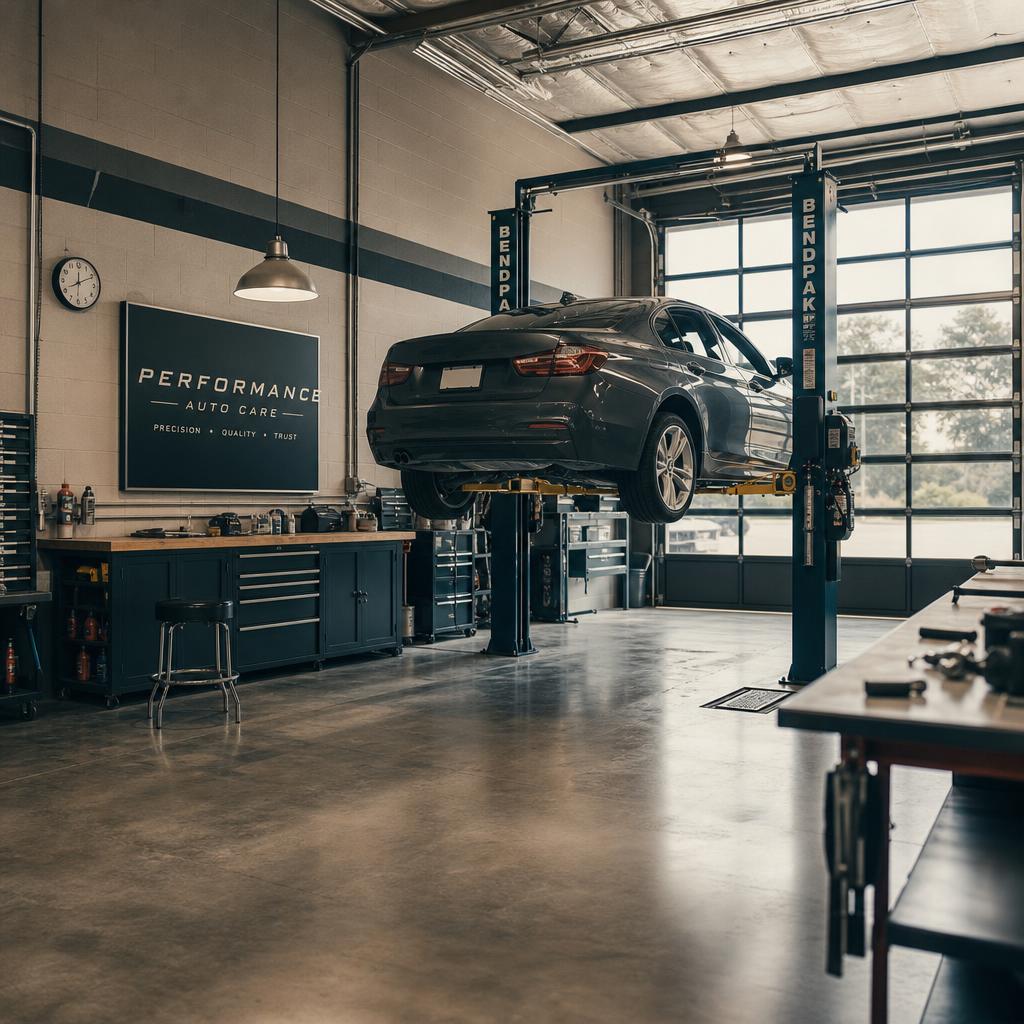
An auto repair or body shop build-out is rarely just a tenant improvement — zoning, a paint booth's air quality permit, and hazardous materials handling each run through a different agency, and any one of them can stall a shop's opening if it isn't scoped before the lease is signed.
Ocean Permits & Development handles the full permitting path for automotive repair, body, and paint shops opening or expanding in Los Angeles: zoning conformance and Conditional Use Permit review where required, LADBS tenant improvement plan check for the physical build-out, South Coast Air Quality Management District (SCAQMD) permits for spray booths and coating operations, LA Fire Department hazardous materials business plan review as the local Certified Unified Program Agency (CUPA), and oil/water separator installation for shops with vehicle washing or fluid drainage.
This is a use category the zoning code treats with particular care because of its combination of noise, traffic, and hazardous materials handling. Depending on the specific zone, an auto repair use can be permitted outright, permitted with restrictions, or require a Conditional Use Permit before LADBS will even accept a building permit application — and getting that zoning determination wrong before signing a lease is one of the most expensive mistakes we see in this industry.
We work with independent repair shops, franchise chains, collision/body shops, tire and quick-lube operations, and specialty shops (performance, EV conversion, fleet maintenance) across LA's commercial and industrial corridors, coordinating the zoning, building, air quality, and fire/hazmat tracks as one project rather than four separate, loosely sequenced applications.
Zoning: Where Auto Repair Is Allowed, and When It Needs a CUP
Under the Los Angeles Municipal Code, general automotive repair is typically permitted by right in the city's industrial zones (M1, M2) and is often allowed with restrictions — or requires a Conditional Use Permit under LAMC 12.24 — in commercial zones such as C2, depending on the specific sub-area, proximity to residential zones, and the scope of work performed (general repair versus body/paint work, which carries a heavier CUP presumption in many commercial corridors). Some community plan areas and specific plans layer additional restrictions on top of the base zoning, including limits on outdoor storage of vehicles awaiting repair.
We pull the zoning designation and any applicable community plan or specific plan overlay for the specific parcel before a client signs a lease, and give a clear answer on whether the intended use — general repair, body and paint, tire/quick-lube, or a combination — is by-right, restricted, or requires a CUP at that address. A CUP for an auto body shop with a paint booth in a C2 zone is a materially different timeline commitment than a by-right general repair shop in an M1 zone, and that difference needs to be priced into a lease decision, not discovered after signing.
- M1/M2 industrial zones: general auto repair typically permitted by right
- C2 and other commercial zones: often permitted with restrictions or requiring a CUP, especially for body/paint work
- Community plan and specific plan overlays can add further restrictions, including outdoor vehicle storage limits
- Body and paint operations carry a heavier CUP presumption in most commercial corridors than general mechanical repair
SCAQMD Paint Booth Permits: Rule 1151 and Related Requirements
Any auto body shop operating a spray booth for automotive coating falls under South Coast Air Quality Management District Rule 1151, Motor Vehicle and Mobile Equipment Coating Operations, which regulates VOC (volatile organic compound) content in automotive coatings, application equipment and technique requirements, and recordkeeping for coating usage. This is a permit issued by SCAQMD, an air quality agency entirely separate from LADBS or the LA Fire Department, and it applies regardless of shop size — a single-bay independent body shop and a large collision center both need SCAQMD permit coverage for their spray booth operations.
The paint booth equipment itself also requires LADBS building and mechanical permit review for its structural installation, ventilation, and fire-rated construction, and LA Fire Department review for the fire suppression system integrated into the booth — meaning a single paint booth typically touches three separate agencies (SCAQMD for air quality, LADBS for mechanical/structural, LAFD for fire suppression) before it can legally operate. We sequence all three so booth equipment isn't ordered or installed before every agency's requirements are confirmed.
- SCAQMD Rule 1151 governs automotive coating VOC content, application equipment, and recordkeeping
- Paint booth structural/ventilation installation requires LADBS building and mechanical permit review
- Booth fire suppression system requires LA Fire Department plan check and inspection
- All three agencies (SCAQMD, LADBS, LAFD) typically apply to any operating spray booth, regardless of shop size
Hazardous Materials & CUPA: LAFD's Role as the Local Enforcement Agency
Auto repair shops handle a range of regulated materials — used motor oil, solvents, brake cleaner, refrigerants, batteries, and coolant — that trigger hazardous materials business plan requirements under California's Unified Program. In the City of Los Angeles, the LA Fire Department serves as the Certified Unified Program Agency (CUPA), the local agency responsible for hazardous materials business plan review, hazardous waste generator compliance, and underground/aboveground storage tank oversight where applicable.
A shop's hazardous materials business plan inventories the types and quantities of regulated materials stored and used on-site and documents emergency response procedures, and it needs to be filed and kept current with LAFD regardless of shop size, though the specific reporting thresholds depend on stored quantities. Shops storing used oil, coolant, or solvents in quantities above CUPA thresholds, or operating any underground fuel or waste oil storage tank, face additional inspection and reporting obligations beyond the base business plan filing.
- LAFD is the CUPA (Certified Unified Program Agency) for hazardous materials in the City of Los Angeles
- Hazardous materials business plan required for shops storing/using regulated quantities of oil, solvents, coolant, batteries
- Underground or aboveground storage tanks for fuel or waste oil trigger additional CUPA oversight
- Hazardous waste generator compliance (used oil, solvent-soaked rags, batteries) applies regardless of shop size
Oil/Water Separators & Wastewater Discharge
Shops with a vehicle wash bay, an outdoor work area exposed to rain, or floor drains connected to the sewer system typically need an oil/water separator to remove petroleum products and sediment before wastewater reaches the municipal sewer system — a requirement enforced through LA Sanitation & Environment's industrial wastewater discharge program. The separator itself requires plumbing permit review through LADBS for its installation, sized appropriately for the shop's specific drainage volume and configuration.
Shops that skip this step — routing shop floor drains directly to the sewer without a separator, or without confirming an existing separator is adequately sized for the new use — are one of the more common sources of code enforcement action against auto repair tenants after they've already opened. We confirm oil/water separator requirements and industrial wastewater discharge permit applicability during initial project scoping, before floor plans are finalized.
- Oil/water separators required for vehicle wash bays, exposed work areas, and floor drains connected to the sewer
- Separator installation requires LADBS plumbing permit review, sized to the shop's drainage configuration
- Industrial wastewater discharge permit through LA Sanitation & Environment for qualifying discharge
- Missing or undersized separators are a common source of post-opening code enforcement action
The Permit Process, Step by Step
A typical auto repair or body shop build-out moves through: zoning verification and CUP applicability review for the specific parcel and intended scope (general repair, body/paint, or both); if a CUP is required, the entitlement process through the Zoning Administrator before LADBS plan check can proceed to permit issuance; concurrent submittal of the LADBS tenant improvement building permit, SCAQMD spray booth permit application (if applicable), and LAFD hazardous materials business plan; oil/water separator plumbing permit review if the shop includes wash bays or exposed drains; coordinated inspections across Building, Fire, and — for paint booth equipment — SCAQMD compliance verification; and final Certificate of Occupancy once every applicable agency has signed off.
The costliest sequencing mistake in this category is finalizing a lease and build-out design before confirming zoning allows the intended scope of work at that address. A body shop with a paint booth planned for a C2 commercial space that turns out to require a CUP — a multi-month entitlement process — can blow well past a tenant's planned opening date if that requirement surfaces only after the lease is signed and the LADBS application is already prepared.
- Zoning verification and CUP applicability review before lease commitment
- CUP entitlement process (if required) before building permit issuance
- Concurrent submittal: LADBS TI permit, SCAQMD spray booth permit, LAFD hazmat business plan
- Oil/water separator plumbing permit review for wash bays and exposed drains
- Coordinated inspections: Building, Fire, SCAQMD compliance verification for paint booths
Why Shop Owners & Franchise Operators Need an Expediter
Auto repair permitting spans more separately governed agencies than almost any other retail or light-industrial use we handle — zoning and CUP review through City Planning, building and plumbing through LADBS, air quality through SCAQMD, and hazardous materials through LAFD's CUPA program — and each agency has its own timeline, application format, and point of contact. A shop owner or franchise operator managing this alone typically discovers the CUP requirement, the paint booth's three-agency review, or the separator sizing issue sequentially, at the point each becomes an obstacle, rather than up front as part of a single coordinated plan.
We scope every applicable agency at the start of a project — before a lease is signed where possible — and manage the zoning, building, air quality, and hazmat tracks as one coordinated timeline, so a franchise operator opening multiple locations, or an independent shop owner opening their first, knows the real timeline and cost before committing to a location.
Auto Repair Shop Permit Timelines by Project Type
Estimated timelines from complete application to permit issuance or final sign-off, City of Los Angeles, 2026 conditions. Actual timelines vary with plan check workload, zoning findings, and submittal completeness.
| Project Type | Primary Agencies | Estimated Timeline | Key Trigger |
|---|---|---|---|
| General repair TI in M1/M2 zone (by-right) | LADBS | 4–8 weeks | Standard tenant improvement, no zoning entitlement needed |
| General repair or body shop in C2 zone requiring CUP | City Planning (Zoning Administrator), LADBS | 4–9 months | Conditional Use Permit entitlement precedes building permit |
| Paint booth installation | SCAQMD, LADBS, LAFD | 8–16 weeks | Three-agency review: air quality, structural/mechanical, fire suppression |
| Hazardous materials business plan filing | LAFD (CUPA) | 2–6 weeks | Regulated quantities of oil, solvents, coolant, or batteries on-site |
| Oil/water separator installation | LADBS (plumbing), LA Sanitation & Environment | 3–8 weeks | Vehicle wash bay, exposed work area, or floor drains to sewer |
| Underground waste oil or fuel storage tank | LAFD (CUPA), LADBS | 8–16 weeks | UST/AST installation or modification triggers added CUPA oversight |
Timelines assume complete, coordinated plan sets on first submittal across all applicable agencies. A required Conditional Use Permit is the single largest timeline driver in this category. This table is for general guidance only.
Frequently Asked Questions
Do I need a Conditional Use Permit to open an auto repair shop in Los Angeles?
It depends on the zone and the specific scope of work. In industrial zones (M1, M2), general auto repair is typically permitted by right without a CUP. In commercial zones like C2, auto repair — and body/paint work in particular — is often permitted only with restrictions or requires a Conditional Use Permit under LAMC 12.24, decided by a Zoning Administrator after a public hearing. We verify the exact zoning designation and any community plan overlay for your specific address before you commit to a lease.
What's the difference in timeline between a by-right shop and one requiring a CUP?
A by-right general repair shop in an M1 or M2 zone can typically move through LADBS tenant improvement plan check in 4 to 8 weeks. A shop requiring a Conditional Use Permit — common for body/paint operations in commercial zones — needs to complete the full CUP entitlement process first, which commonly runs 4 to 9 months depending on CEQA review level and whether the determination is appealed, before the LADBS building permit process can even begin.
Do I need a separate permit for my paint booth?
Yes — a paint booth typically requires review from three separate agencies: South Coast Air Quality Management District (SCAQMD) under Rule 1151 for coating operations and VOC compliance, LADBS for the booth's structural and mechanical/ventilation installation, and the LA Fire Department for the booth's integrated fire suppression system. We sequence all three so booth equipment isn't purchased or installed before every agency's requirements are confirmed.
What is SCAQMD Rule 1151?
SCAQMD Rule 1151, Motor Vehicle and Mobile Equipment Coating Operations, is the South Coast Air Quality Management District regulation governing VOC content limits in automotive coatings, required application equipment and technique, and recordkeeping for coating material usage at auto body and paint shops. It applies to any shop operating a spray booth for automotive coating, regardless of shop size, and is entirely separate from your LADBS building permit.
What is a hazardous materials business plan and do I need one?
A hazardous materials business plan is a required filing with the LA Fire Department, which serves as the Certified Unified Program Agency (CUPA) for hazardous materials compliance in Los Angeles, inventorying the types and quantities of regulated materials — used oil, solvents, coolant, batteries, refrigerants — stored and used on-site, along with emergency response procedures. Most auto repair shops handling these materials in regulated quantities need to file and maintain a current business plan with LAFD, regardless of shop size.
Do I need an oil/water separator for my shop?
If your shop has a vehicle wash bay, an outdoor work area exposed to rain, or floor drains connected to the municipal sewer system, you typically need an oil/water separator to remove petroleum products and sediment before wastewater reaches the sewer, enforced through LA Sanitation & Environment's industrial wastewater discharge program. The separator requires LADBS plumbing permit review and needs to be sized correctly for your shop's specific drainage configuration — an undersized or missing separator is a common source of code enforcement action after a shop opens.
Can I do body and paint work in a general commercial (C2) zone?
It depends on the specific sub-area and any community plan overlay, but body and paint work generally carries a heavier presumption toward requiring a Conditional Use Permit in commercial zones than general mechanical repair does, given its noise, hazardous materials, and air quality profile. We evaluate your specific address's zoning and overlay designations before you finalize a lease assuming a use that may need discretionary approval.
How much does it cost to permit an auto repair shop in Los Angeles?
Costs vary significantly based on whether a Conditional Use Permit is required, whether the shop includes a paint booth (adding SCAQMD, structural, and fire suppression review), and the scope of the tenant improvement itself. A by-right general repair TI in an industrial zone with no paint booth is on the lower end of our typical commercial TI range; a body shop in a commercial zone requiring a CUP and a paint booth involves substantially more agency coordination and cost. We provide a project-specific quote after a free consultation reviewing your intended zone, scope, and equipment.
What if my shop will store used oil or solvents in an underground tank?
Underground or aboveground storage tanks for waste oil or fuel add a further layer of LAFD CUPA oversight beyond the standard hazardous materials business plan, including tank installation or modification review and ongoing monitoring and reporting obligations. We identify tank-related requirements during initial project scoping since they typically add meaningfully to both timeline and cost.
Can Ocean Permits help me evaluate a potential shop location before I sign a lease?
Yes — and this is one of the most valuable things we do in this category. We can review a specific address's zoning designation, community plan overlay, and CUP exposure for your intended scope (general repair, body/paint, or both) before you commit to a lease, so you know whether the location supports your business plan on a realistic timeline rather than discovering a multi-month CUP requirement after signing.
Does a franchise auto repair chain get different treatment than an independent shop?
No — zoning, CUP requirements, SCAQMD, and CUPA rules apply the same way regardless of whether the operator is an independent shop or a franchise location. What differs for franchise and multi-location operators is coordination complexity: we apply the same rollout program model we use for other multi-location retail and restaurant clients, tracking every location's zoning status, CUP need, and permit progress against one master schedule.
How long does the whole process take for a typical auto repair shop?
For a by-right general repair shop in an industrial zone with no paint booth, the LADBS tenant improvement permit alone typically takes 4 to 8 weeks. Add a paint booth, and total project timeline (including SCAQMD, structural, and fire suppression review) commonly runs 8 to 16 weeks. If a Conditional Use Permit is required because of the zone or scope, the CUP entitlement process itself typically adds 4 to 9 months before the building permit process can even begin — which is why confirming zoning and CUP applicability before signing a lease is the single highest-leverage step in this category.
Relevant Ocean Permits Resources
Opening or Expanding an Auto Repair Shop in LA?
We confirm zoning and CUP exposure before you sign a lease, then coordinate LADBS, SCAQMD, and LAFD CUPA review on a single schedule — free initial consultation.
Free Initial ConsultationCall 213-277-8777