
Pet Boarding & Doggy Daycare
Facility Permits in Los Angeles
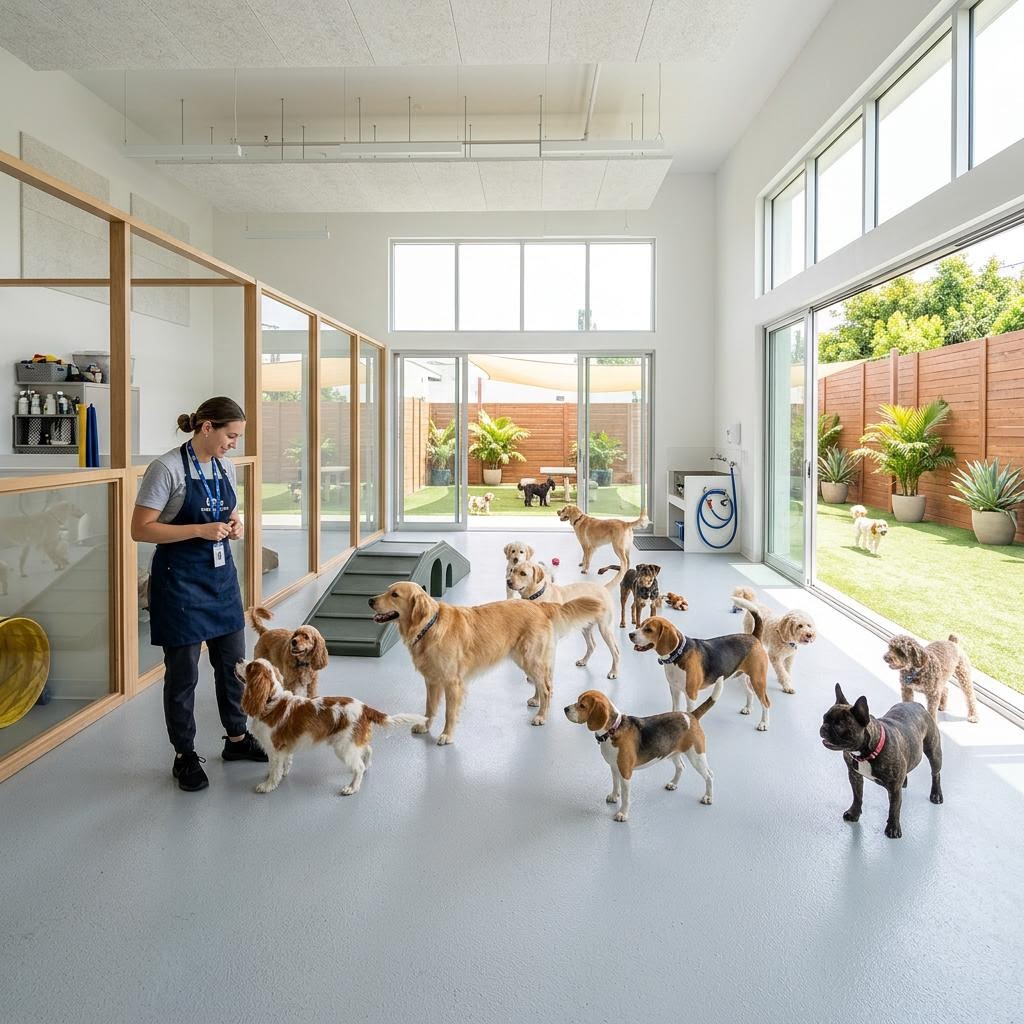
A boarding kennel or dog daycare needs an approved location, a compliant building and the correct animal-business authorization. A former retail lease, a business tax registration or an individual dog's license does not establish all three.
Ocean Permits & Development is a women-owned permit expediting firm coordinating animal-care businesses with Planning, building officials and the responsible animal-services authority. We help owners define the actual operation before committing to a lease: daytime care, overnight boarding, grooming, training, outdoor exercise and veterinary treatment are not interchangeable scopes. Call 213-277-8777 with the address, proposed animal capacity and operating plan.
This service is for commercial pet boarding and dog daycare facilities, not a substitute for veterinary practice registration. A building already used by an animal-related tenant is not automatically approved for a different operator, capacity or schedule. We review existing permits, land-use conditions and the proposed physical changes as separate records so an attractive space does not become an expensive entitlement problem.
Jurisdiction comes first. Within Los Angeles City, the core agencies are City Planning, LADBS, LAFD where triggered and LA Animal Services. In unincorporated County territory, Regional Planning, County Building and Safety, the assigned fire authority and County Animal Care and Control have different processes. Incorporated cities may operate their own departments or contract for selected services; the animal-control provider does not necessarily issue the building permit.
Zoning and CUP feasibility before a lease
Describe what happens at the facility, not simply the brand name. Planning needs to know maximum animals, overnight stays, training activities, pickup hours, outdoor runs, staffing and proximity to residential uses. LA Animal Services' published definitions describe a dog kennel as premises where four or more dogs are kept or maintained; do not assume a daytime-only operation escapes animal-business review merely because no dog sleeps there.
For properties governed by Chapter 1 zoning, City Planning's Conditional Use–General form identifies LAMC 12.24 W.5 for boarding or training domestic animals and other listed uses. That identifies a potential entitlement category, not a promise that every kennel is permitted by right or can obtain a CUP on every parcel. Read the zone, applicable use rules, overlays and existing conditions with Planning before treating a CUP as available.
The current City form distinguishes Chapter 1 zoning from Chapter 1A zoning and directs applicants to the appropriate application. ZIMAS and the actual parcel's applicable regulations control that choice. The animal department's older kennel standards list industrial-zone examples, but those examples are not a current zoning clearance for every industrial or mixed-use property. A warehouse address, an old grooming license or a neighboring kennel does not establish eligibility.
- Check legal use, zoning chapter, overlays and prior entitlements for the address.
- Put animal capacity, overnight care, outdoor activity and operating hours in one consistent description.
- Identify the entitlement path and any notice, hearing or appeal period before promising an opening date.
- Ask the landlord for existing approvals and negotiate contingencies with your own legal advisor.
Animal-services authorization is separate from construction approval
LA Animal Services administers City animal-business permits under LAMC Chapter V, Article 3, including Section 53.50 and the published kennel standards. Its permit page distinguishes dog kennels, cat kennels and grooming parlors. It expressly states that animals may not be kept overnight at a grooming parlor. Adding boarding to a salon therefore calls for a new scope review rather than relying on the grooming authorization.
The Department's published standards address sanitation, food storage, animal separation, isolation of suspected contagious animals, staffing and emergency response. It establishes the permitted animal capacity. Design sufficient space for safe handling, cleaning and separation instead of deriving a business capacity solely from total rentable floor area. An owner's preferred dog count must agree with both the approved facility operation and the building design.
County Animal Care and Control licenses and inspects facilities within its jurisdiction, including participating contract cities. Its facility-licensing guidance calls for land-use and building signoffs; it does not replace them. An incorporated city's personnel may handle the local clearance even where the County provides animal services. We verify the assigned animal-business licensing authority separately from the municipality and do not tell City of Los Angeles operators to obtain a County kennel license by default.
LADBS buildout: occupancy, accessibility and building systems
A design professional should compare the proposed kennel or daycare with the building's approved use and occupancy. New partitions, animal rooms, washing stations, drains, ventilation, electrical equipment and structural alterations can require building and trade permits. A change in legal use or occupancy can introduce additional review even if much of the existing tenant space remains untouched. The actual plans and conditions determine the classification; this page does not assign every facility a universal occupancy group.
Plan the accessible customer entrance, reception, service counter, toilet facilities and applicable routes under the adopted accessibility requirements, including California Building Code Chapter 11B where applicable. Public and staff circulation must work with secure animal-control doors, not through an improvised maze of gates. Escape prevention does not authorize blocking a required exit or using an unapproved locking arrangement.
Mechanical design should address the actual animal spaces, cleaning activities, moisture and odor sources. Plumbing plans must show washing, waste handling and any required drainage approvals; do not route washdown or animal waste to a storm drain. Reconcile equipment loads and water-heating demand with the existing services. Coordinate LAFD review where required for the approved occupancy, fire protection or operational scope rather than assuming a general building permit closes every fire condition.
Noise, outdoor runs and neighbor compatibility
Outdoor exercise can change the entitlement analysis more than a new interior finish. Map residential receptors, enclosure locations, gates, walls, pickup areas and ventilation outlets. A proposed acoustical wall may need its own zoning and structural review; the landlord's permission to use a rear yard does not establish an approved outdoor animal run. Consider where dogs gather during cleaning and how staff prevent uncontrolled activity near adjoining residences.
Operational conditions may address animal numbers, outdoor hours, supervision, enclosure design or noise mitigation. Review those conditions together with the City's applicable noise provisions in LAMC Chapter XI and animal nuisance requirements. There is no single promised decibel allowance or universal separation distance applicable to every parcel. Obtain any required acoustic evaluation from a qualified professional and reflect its recommendations in the operating plan and construction drawings.
Neighbor compatibility also includes early drop-offs, late pickups, waste collection and delivery circulation. A building permit does not waive a land-use condition limiting outdoor activity or overnight operation. Keeping these constraints visible before site selection is usually more useful than trying to obtain relief after a lease is signed and a contractor has mobilized.
How this differs from a veterinary clinic
A veterinary practice has a professional licensing and premises-registration layer under the California Veterinary Medical Board, including Business and Professions Code 4853. A standalone boarding business cannot use a nearby veterinarian's registration as its own animal-business authorization. Conversely, the City's published kennel standards describe a specific exception for a qualifying veterinarian-operated kennel on the same registered veterinary-hospital premises. That narrow circumstance is not an exemption for every business offering boarding.
The proposed clinical services matter. Veterinary treatment, imaging equipment and medical waste can introduce requirements that ordinary boarding does not have. If one property combines a clinic, grooming and overnight boarding, identify each use and the responsible operator; do not describe the entire project as a retail pet service to simplify the application. We coordinate permitting records, while licensed veterinary and legal professionals address practice and registration obligations.
1. Screen the address and define the operating program
Send the address, existing certificate or occupancy records, floor plan, intended capacity, species, daytime and overnight hours, proposed outdoor areas and services. We identify the municipality and assigned animal-services authority, then prepare an approval matrix separating land use, building work, animal licensing and business registration. An unresolved use permission is treated as a feasibility issue, not concealed inside a routine remodel application.
2. Resolve land-use permissions and prepare coordinated plans
Confirm the applicable zoning chapter and whether a by-right path, CUP or other approval is available. Where a discretionary application is required, the applicant and design team prepare the operating narrative, site plans, required findings and supporting studies. Coordinate the resulting conditions with architectural, structural and trade documents so the proposed animal count, outdoor activity and building layout agree across departments.
3. Submit, manage corrections and obtain permits
Use the correct building department's current intake process and submit the required scope-specific package. We maintain a correction log assigning each issue to the owner, architect, engineer, contractor or operations team. Obtain required clearances and issued construction permits before the affected work starts; a pending animal-business application is not permission to install drains or alter a building.
4. Coordinate inspection, animal licensing and opening
Track building and trade inspections, any required fire finals, animal-facility inspection and operating authorization as separate closeout items. Prepare the waste-handling and emergency-evacuation procedures, required animal records and staff responsibilities before inspection. County guidance specifically references Health and Safety Code 122383(f) for emergency evacuation planning. Confirm which procedures and postings the actual licensing authority requires. Do not accept animals based only on a contractor's completion notice or a business license.
Common mistakes that undermine an opening schedule
The highest-risk mistakes begin before construction: signing an unconditional lease on an ineligible site, describing overnight care as grooming, assuming an industrial address guarantees approval, or applying to the wrong animal-services authority. A second group appears during design: missing isolation space, incompatible drainage, uncoordinated ventilation, animal gates obstructing exits and an outdoor operating plan that was never reviewed.
At closeout, owners sometimes confuse a business tax registration with authorization to board animals, or believe that an approval issued to a previous operator automatically transfers unchanged. We ask for the current operator, approved use, conditions and actual work scope before relying on historic records. Ocean Permits coordinates the process; it cannot promise a CUP, waive a safety requirement or authorize operations before the responsible agencies approve them.
Published City animal-permit fees versus the complete project budget
| Budget item | Published amount or calculation basis | Important limitation |
|---|---|---|
| Dog kennel animal-business permit | $305 listed by LA Animal Services | Verify current category and payment with the Department; not a total project price |
| Cat kennel animal-business permit | $290 listed by LA Animal Services | Does not include zoning, building, design or other approvals |
| Animal grooming parlor permit | $180 listed by LA Animal Services | The City's definition does not allow overnight boarding under this category |
| Planning entitlement and building/trade permits | Current agency schedules and project scope | Obtain the responsible agency's calculation; no universal CUP/buildout fee |
| Design, studies and expediting | Separate written professional proposals | Private fees are not government charges; construction is a separate budget |
City animal-permit amounts checked on LA Animal Services' official permit page on October 21, 2026. They are not County fees or Ocean Permits prices. Confirm the current charge, permit term and any additional requirements before payment.
Approval sequence and schedule dependencies
| Stage | Timing basis | Key dependency |
|---|---|---|
| Address and operational feasibility | Illustrative 1–3 weeks once usable records are available | Written use classification and parcel constraints |
| CUP or other discretionary approval, if required | Agency-specific; allow for months rather than a routine trade-permit turnaround | Application completeness, studies, hearing and appeal procedures |
| Design and building/trade review | Designer schedule plus current agency review and corrections | Land-use conditions reflected in the coordinated drawings |
| Construction and agency inspections | Contractor program and inspector availability | Approved work, safe systems and required final inspections |
| Animal-facility inspection and operating authorization | Licensing authority's current process | Approved capacity, procedures, records and required clearances |
The feasibility range is an illustrative coordination allowance, not an agency service commitment. No total duration is guaranteed; entitlement, design, construction and operational licensing have distinct dependencies.
Frequently Asked Questions
Does a dog daycare need a kennel permit if no animals stay overnight?
Daytime-only care is not automatically exempt. LA Animal Services defines a dog kennel as premises where four or more dogs are kept or maintained. Confirm the actual operating category, animal count and required authorization with Animal Services and Planning before opening.
Does every Los Angeles boarding facility need a CUP?
Not every address has the same path. Applicable zoning, the proposed services, outdoor activity and existing approvals determine whether a conditional use or another permission is needed and available. For Chapter 1 parcels, City Planning lists boarding or training domestic animals under LAMC 12.24 W.5; Chapter 1A parcels require their own applicable review.
Can I add overnight boarding to a grooming business?
Do not rely on the grooming permit. LA Animal Services states that animals may not be kept overnight at a grooming parlor. Review the boarding use, animal-business authorization, building scope and any conditions before adding that service.
Should I apply to LA Animal Services or County Animal Care and Control?
The property's jurisdiction and assigned animal-services provider control. Los Angeles City uses LA Animal Services. County Animal Care and Control serves unincorporated areas and participating contract cities, while other cities may have different arrangements. Confirm animal licensing separately from the building department.
Does an existing retail permit cover a new pet boarding buildout?
Not automatically. Check the approved use and occupancy and obtain permits required for partitions, drainage, ventilation, electrical work, structural changes or a change of use. A lease and business tax registration do not replace land-use, building or animal-facility approval.
Can dogs use an outdoor yard at any approved kennel?
Only within the permissions and conditions applicable to the site. Outdoor runs can raise zoning, noise, enclosure, supervision and neighbor-compatibility issues. The landlord's consent is not proof that outdoor animal activity is authorized.
How much is the City of Los Angeles dog kennel permit?
LA Animal Services lists $305 for a dog kennel permit on the page reviewed October 21, 2026. Confirm the current category, charge and permit term directly with the Department. That amount does not include a CUP, building/trade permits, design, construction or Ocean Permits' coordination fee.
Is pet boarding permitted under a veterinarian's premises registration?
A standalone boarding facility cannot rely on another practice's registration. The City's published kennel standards describe a narrow circumstance involving a veterinarian-operated kennel on the same qualifying registered veterinary-hospital premises. Confirm the actual operation with the relevant authorities; it is not a blanket boarding exemption.
What information should I send before signing a lease?
Provide the address, permit and occupancy records, floor plan, desired animal capacity, hours, overnight services, outdoor areas, grooming or training activities and proposed construction. We use these to identify the use-permission risks and agency sequence before a project-specific proposal.
Can Ocean Permits guarantee approval or an opening date?
No. Agencies determine approval and technical professionals remain responsible for design and construction. We coordinate applications, corrections, inspection dependencies and operating-permit documentation so the owner understands the actual requirements and unresolved risks.
Relevant Ocean Permits Resources
Check the site before committing to a boarding facility
Call 213-277-8777 for an initial consultation with Ocean Permits & Development, a women-owned permit expediting firm. Bring the address, operating program and available records so we can scope the correct agency path and a separate written coordination proposal.
Free Initial ConsultationCall 213-277-8777
Official sources, reviewed October 21, 2026
Agency requirements and fees can change. Older standards remain useful for identifying review subjects, but do not replace current parcel-specific Planning and animal-services confirmation.
LA Animal Services: permit definitions, published fees and LAMC Chapter V, Article 3
County Animal Care and Control: facility licensing, local clearances and emergency planning