_1781464136662-DVw5IPjt.png)
Women-owned, LA-based permit expediting firm. We coordinate complex clinical tenant improvements, land-use review, and plan check for specialized businesses. Free consultation — call 213-277-8777.
Opening a veterinary clinic is not simply a retail conversion. The project must make a compliant place to practice veterinary medicine while also producing a code-compliant Los Angeles building and an approved land use for the parcel.
That distinction matters because the California Veterinary Medical Board (VMB) regulates the practice premise, while the Los Angeles Department of Building and Safety (LADBS) regulates construction and City planning staff address zoning and discretionary land-use approvals. A favorable result on one track is not a substitute for the other. The fastest projects identify every track before the lease is signed, rather than discovering a zoning condition or a clinical infrastructure requirement after a contractor has priced the work.
Ocean Permits & Development helps owners, veterinarians, landlords, architects, and contractors turn those parallel requirements into one realistic approval sequence. This page is general planning information, not legal, architectural, veterinary-board, radiation-safety, or waste-management advice; agencies and qualified professionals should confirm requirements for the individual site and practice model.
The Dual-Track Approval Process
Track one is state-level professional regulation. The VMB oversees veterinary medical practice in California, and a practice location may need premise registration or other VMB-required documentation and operational compliance before patients are treated there. The responsible veterinarian should verify current VMB requirements directly, including records, drug storage, sanitation, equipment, supervision, and any rules that apply to the particular services offered. This is an approval path for the practice itself, not a construction permit.
Track two is local approval. A tenant improvement, new building, material alteration, new equipment utility work, or change in approved use can require LADBS permits and plan check. Separately, the Los Angeles Municipal Code (LAMC) zoning analysis asks whether veterinary use is allowed at that address and whether conditions such as overnight boarding, kennel functions, outdoor activity, operating hours, parking, or neighborhood impacts require an entitlement. In some zones, especially for animal hospitals with overnight boarding, a Conditional Use Permit (CUP) may be required or advisable to investigate early.
These tracks are often prior to and parallel with one another. The VMB should not be treated as a final post-construction detail, and building plans should not assume the VMB’s professional requirements can be solved only after inspections. We build a shared matrix of who supplies each item, which agency reviews it, and which decisions affect the lease, layout, and critical path.
Start With the Site, Existing Records, and Zoning
Before committing to a storefront or medical-office suite, obtain the existing Certificate of Occupancy, available permit history, floor plans, and landlord rules. A space marketed as “medical,” “retail,” or “flex” may still lack an approved use or building systems suitable for animal care. Existing electrical capacity, plumbing locations, drains, HVAC distribution, accessible routes, fire-protection systems, and refuse access can determine whether an apparently inexpensive suite becomes an extensive construction project. Read our Certificate of Occupancy Los Angeles guide for the role of that record in a change-of-use analysis.
Zoning is equally early-stage work. LAMC rules are site-specific, and a veterinary use may be treated differently depending on the zone, surrounding uses, proposed intensity, and operational details. Animal hospitals with boarding deserve especially careful review: overnight animals, kennel noise, waste storage, deliveries, and extended hours can change the entitlement conversation. Our Conditional Use Permit Los Angeles overview explains the discretionary-review process, public notice, findings, and why it can take longer than an ordinary building permit.
A CUP is not automatically required for every veterinarian, and an entitlement conclusion should never be guessed from a neighboring business. Confirm the parcel’s zoning, any overlays, the proposed service list, and the exact boarding model with Los Angeles City Planning or qualified land-use counsel. When a discretionary track is implicated, the architecture, operating plan, and neighborhood-impact narrative need to remain consistent across the application and the building plans.
LADBS Tenant Improvement and Occupancy Review
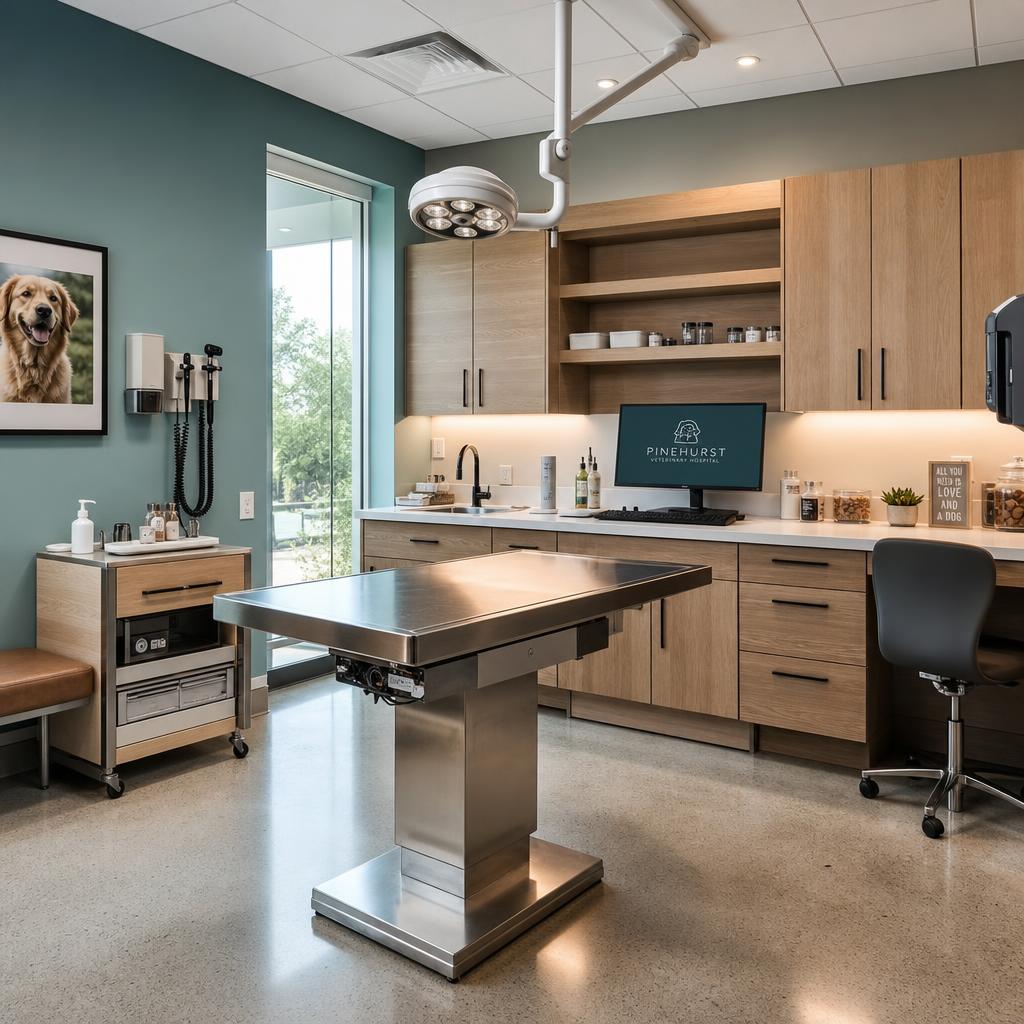
The LADBS portion commonly begins as a commercial tenant improvement. Plans may include reception, exam rooms, treatment and procedure areas, surgery and recovery, pharmacy or supply storage, staff facilities, accessible restrooms, mechanical and plumbing changes, electrical upgrades, alarms, and fire/life-safety work. The scope belongs in a coordinated architectural and engineering package. See our tenant improvement permit service for the typical plan-check coordination behind a commercial conversion.
Occupancy is an important nuance, not a label to copy from another clinic. Exam and office-oriented portions of a veterinary facility are typically considered under Business/B occupancy concepts, but boarding, kennel, animal holding, support spaces, and the configuration of a mixed-use facility can introduce different requirements. Exact triggers depend on the adopted code, the submitted layout, operational use, and LADBS interpretation. A California-licensed architect and an experienced expediter should confirm occupancy, occupant loads, exiting, rated separations, accessibility, plumbing fixtures, and fire-protection expectations during plan check.
Do not assume a small cosmetic permit can cover a clinical build-out. New sinks, floor drains, hot water, ventilation, specialty power, roof equipment, and fire-alarm modifications each can expand the review. For projects that began as retail, our retail store permits resource is useful context on change-of-use diligence, although veterinary operations require their own professional and health-safety coordination.
Facility Type, Complexity, and Planning Timeline
| Facility type | Typical scope | Primary approval complexity | Planning timeline |
|---|---|---|---|
| Small exam-only clinic | Interior refresh, exam rooms, reception; no boarding or imaging | VMB premise registration plus LADBS TI and zoning confirmation | Generally 6–12 weeks after a complete design package |
| General veterinary clinic | Exam, treatment, pharmacy storage and limited procedure space | VMB, LADBS plan check, plumbing/mechanical coordination; zoning review | Generally 10–18 weeks; corrections can extend this |
| Surgery and radiography clinic | Surgery suite, recovery, X-ray equipment and shielding | VMB, LADBS, RHB registration/shielding review, specialized MEP coordination | Generally 14–24+ weeks, often with parallel agency work |
| Animal hospital with boarding | 24-hour care, kennels, surgery, imaging and overnight animals | All of the above, with a CUP or other entitlement commonly worth early zoning review | Generally 6–12+ months when discretionary land-use review is required |
Ranges are planning estimates, not agency commitments. They exclude lease negotiation, design procurement, utility-provider lead times, financing, construction duration, and unusual correction cycles. A CUP or major infrastructure upgrade can make the actual schedule longer.
Radiography, Shielding, and Medical Waste
Veterinary radiography adds a specialized state compliance layer. X-ray equipment is generally subject to registration and oversight by the California Department of Public Health (CDPH) Radiologic Health Branch (RHB). The clinic should coordinate the equipment vendor, a qualified shielding designer or physicist where appropriate, the architect, and the contractor before walls are closed. Shielding assumptions, room layout, viewing positions, doors, glazing, penetrations, and equipment location should be reflected in the construction documents and reviewed through the applicable RHB process. LADBS permits the related building work; RHB requirements are not replaced by a building permit.
Medical waste is operational and spatial. California’s Medical Waste Management Act establishes the framework for handling regulated medical waste. Sharps need secure, suitable containers; infectious or otherwise regulated materials need segregation and storage practices; and a licensed or otherwise qualified collection and disposal arrangement should match the practice’s actual volume. Pharmaceutical waste can have separate disposal constraints, so the veterinary operator should develop protocols with its waste vendor and professional advisers rather than mixing those materials into the ordinary waste stream.
A well-designed clinic allows staff to follow those policies without improvising. That means planning secure waste storage, circulation that separates clean and contaminated functions where appropriate, surfaces and fixtures suited to the clinical use, and service access that works with the landlord and local collection requirements. Those design choices are as important to a successful opening as a permit counter receipt.
A Practical Coordinated Approval Sequence
- 1
Define the operating model. Document species treated, exam and surgery services, boarding, imaging, pharmacy functions, staffing, hours, and waste streams. This program drives both VMB and zoning questions.
- 2
Perform lease and parcel due diligence. Review zoning, existing occupancy records, prior permits, site constraints, parking, landlord approvals, and whether a CUP or other entitlement could apply.
- 3
Align the VMB premise track. Have the responsible veterinarian verify current VMB registration, licensing, equipment, recordkeeping, and premise requirements while the layout is still flexible.
- 4
Design and submit the LADBS package. Coordinate architecture, structural work where needed, MEP, accessibility, fire/life safety, and specialty equipment into a complete tenant-improvement or new-construction application.
- 5
Advance specialist approvals. For radiography, coordinate CDPH RHB registration and shielding review; establish medical-waste protocols and service arrangements before operations begin.
- 6
Resolve corrections and close out inspections. Track agency comments, issue revised plans, schedule inspections, complete final approvals, and confirm that operational licensing and occupancy milestones are in the right order.
Common Questions
Do I need both a VMB registration and an LADBS permit for a veterinary clinic?
Usually, yes. The California Veterinary Medical Board regulates the veterinary practice premise and the City regulates the physical space. A VMB facility or premise approval does not authorize construction, occupancy, or a change of use in Los Angeles; conversely, an LADBS permit does not authorize the professional practice. We plan the two tracks together, with the veterinarian, architect, contractor, and specialty consultants working from one coordinated scope.
Can I open a veterinary clinic in a former retail space?
Sometimes, but a former retail Certificate of Occupancy does not automatically cover veterinary use, treatment rooms, animal holding, surgery, or boarding. LADBS and LA City Planning may need to confirm the proposed use, occupancy assumptions, accessibility work, plumbing fixtures, ventilation, and any tenant improvement scope. A preliminary zoning and existing-records review before signing a long lease is the safer approach.
When does an animal hospital need a Conditional Use Permit in Los Angeles?
The answer is parcel- and operation-specific. Veterinary clinics and animal hospitals may require a Conditional Use Permit or another discretionary entitlement in certain zones, and overnight boarding, kennel activity, outdoor runs, hours, and noise can materially affect the analysis. Review the zoning code and consult City Planning early; our Conditional Use Permit Los Angeles guide explains why entitlement work should not wait until building plans are complete.
What occupancy classification applies to veterinary facilities?
Exam and office-oriented areas are commonly evaluated as Business/B occupancy, but that is not a universal answer for the entire facility. Boarding, kennel, animal-care, storage, surgery support, and mixed-use conditions can change code issues or separations. A California-licensed architect and an experienced expediter should confirm the applicable occupancy, occupant load, accessibility, egress, and fire/life-safety approach with LADBS plan check for the actual plan.
Do veterinary X-ray machines need a separate permit?
The construction work may be part of the LADBS tenant-improvement permit, while the equipment itself is subject to California radiological-health requirements. Veterinary operators using radiography should coordinate registration with the California Department of Public Health Radiologic Health Branch and obtain appropriate shielding design and review. The equipment vendor, qualified physicist or shielding designer, architect, and contractor should align room dimensions, barriers, penetrations, and installation timing.
How does the Medical Waste Management Act affect an animal hospital?
The California Medical Waste Management Act governs the handling of regulated medical waste, including sharps and other applicable waste streams. Veterinary operators should establish documented segregation, containers, storage, pickup, and disposal practices with qualified vendors. Pharmaceutical waste has its own handling considerations and should not be treated as ordinary trash simply because it originates in a small practice. Facility planning should include secure, practical waste-storage locations.
Can VMB and LADBS approvals proceed at the same time?
In many projects they can and should proceed in parallel, although neither agency replaces the other and dependencies vary. We typically begin land-use due diligence, establish the clinical program, coordinate VMB premise requirements, and advance LADBS plans at the same time. If a CUP is needed, its timeline can become the critical path, so it is important to identify that issue before expensive construction documents are finalized.
Will a tenant improvement require a new Certificate of Occupancy?
It depends on the existing approved use, the scope of work, occupancy determination, and whether the project constitutes a change of use or changes the relevant occupancy conditions. LADBS will make the project-specific determination through its review and inspection process. Our Certificate of Occupancy Los Angeles resource explains why the existing certificate should be obtained and compared with the intended operation at the beginning.
How long does veterinary clinic permitting take in Los Angeles?
A straightforward, exam-only conversion with complete plans may move in a few months, while surgery, imaging, major mechanical work, or discretionary zoning review can take substantially longer. The table on this page is a planning range rather than a promise. Lease conditions, plan-check corrections, utility upgrades, landlord approvals, and whether a CUP is required all affect the real schedule.
What can Ocean Permits & Development do for a veterinary project?
We coordinate the permit path: existing-record review, zoning and use due diligence, LADBS tenant-improvement submittals, plan-check comments, inspection readiness, and communication among the owner, veterinarian, architect, engineers, contractor, VMB team, and radiography specialists. Ocean Permits & Development is a women-owned permit expediting firm offering a free consultation at 213-277-8777.