_1781464136662.png)
Dry Cleaner & Laundromat
Permits in Los Angeles
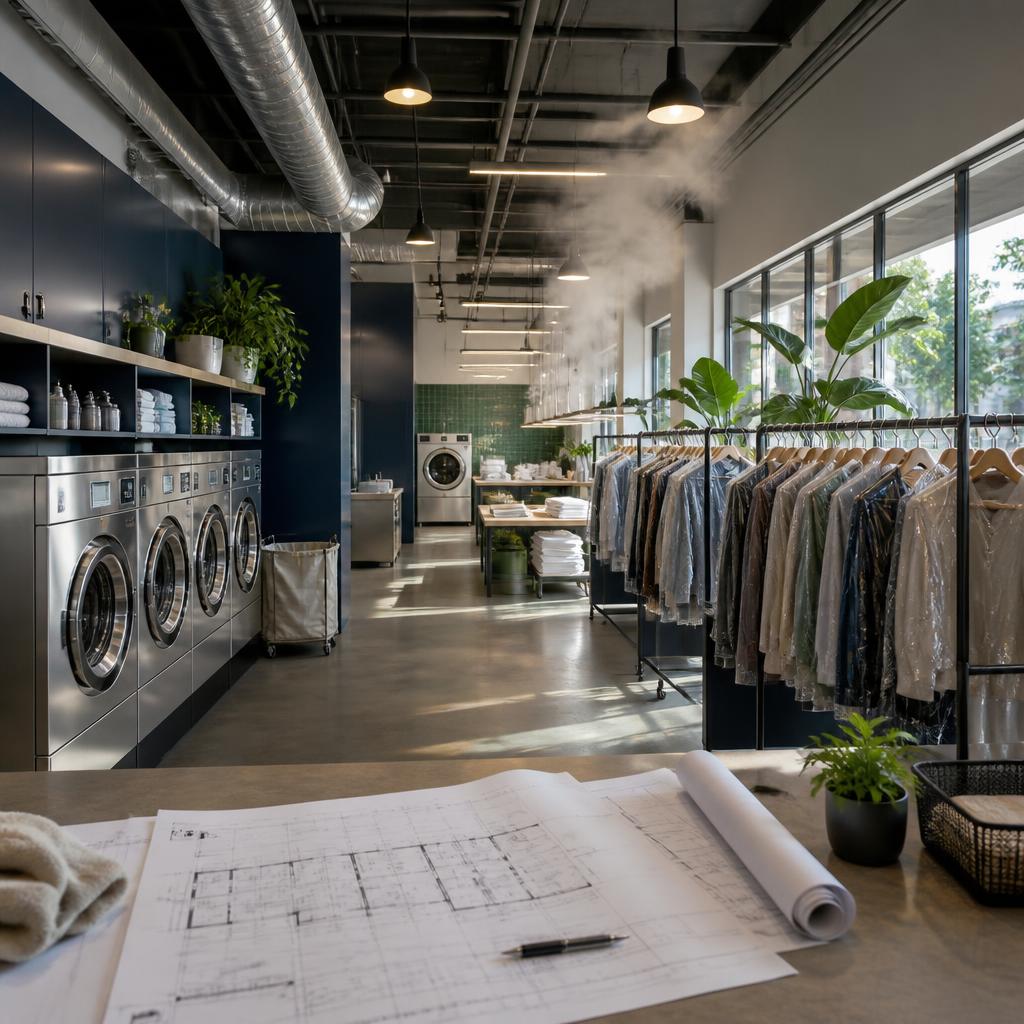
A laundromat or dry-cleaning store combines a customer-facing commercial use with industrial equipment, high water and sewer demand, gas or electrical loads, heat and vapor, lint, and—when solvents are used—air-quality and hazardous-material requirements that do not appear in an ordinary retail tenant improvement.
Ocean Permits & Development coordinates the approval path for coin laundries, self-service laundromats, wash-and-fold stores, dry cleaners, pickup-and-delivery plants, and combined laundry facilities in Los Angeles. Depending on the operation, the project may touch zoning and use, LADBS building, plumbing, mechanical, and electrical permits, SCAQMD air-quality permitting, a hazardous materials business plan through the applicable CUPA, sewer-discharge review, fire/life-safety, and final inspections. The agencies do not review one combined “laundromat license,” so a useful plan begins by separating the equipment and operating model into the right tracks.
The biggest early distinction is whether the business performs only water-based washing and drying, receives garments for off-site processing, or operates an on-site dry-cleaning system. A self-service laundromat may have no regulated solvent, but it still needs coordinated utility, venting, lint, drainage, gas, electrical, accessibility, and occupancy work. A plant using perchloroethylene (PCE, commonly called perc) or a petroleum-based solvent adds South Coast Air Quality Management District (SCAQMD) requirements and hazardous-material planning. Hydrocarbon, carbon dioxide, and professional wet-cleaning systems have different equipment and environmental profiles; the selected process must be reviewed before the lease and equipment order are final.
This guide is planning information, not a substitute for the current rule text, a site-specific zoning determination, a licensed design, or an agency decision. SCAQMD, LADBS, the applicable CUPA, LA Sanitation and Environment, and the fire authority control their respective approvals. The goal is to make those responsibilities visible early enough that a tenant does not install machines, route exhaust, or sign a long lease before learning that the building cannot support the intended operation.
Start with the operating model, not the storefront sign
“Laundry” describes several different businesses. A coin laundromat allows customers to load washers and dryers themselves. A wash-and-fold store receives laundry from customers and may add commercial finishing, ironing, or delivery. A dry cleaner may accept garments at the counter while sending them to an off-site plant, or it may operate cleaning machines, solvent storage, pressing equipment, and garment finishing on the premises. A combined store can have all of these functions in one suite. The permit scope depends on what actually happens behind the counter, not on the name printed on the lease.
Create an equipment and process schedule before the design team draws the final plan. List every washer, extractor, dryer, ironer, steam press, boiler, water heater, softener, chemical injection system, solvent machine, CO2 tank, fuel source, exhaust fan, lint collector, folding table, and storage cabinet. Record manufacturer, model, capacity, fuel, connected load, water demand, drain size, heat output, exhaust requirement, and whether the equipment is new or relocated. The same schedule helps the architect, mechanical engineer, plumbing designer, electrician, contractor, SCAQMD reviewer, and CUPA reviewer use consistent assumptions.
The schedule also clarifies whether the project is a simple commercial tenant improvement or a more industrial installation. A few domestic-style machines may fit within an existing restaurant or retail shell, while a high-volume laundry may require a gas service upgrade, new electrical distribution, floor drains, trenching, roof penetrations, make-up air, wastewater controls, and structural review. An on-site dry-cleaning plant adds a separate environmental and hazmat conversation. Our [tenant improvement permit service](/services/tenant-improvement) helps frame the base construction scope before specialty agency reviews are layered onto it.
- Self-service laundromat: customer-operated washers and dryers with high utility demand
- Wash-and-fold store: commercial laundry, finishing, storage, and delivery workflow
- Drop store: customer counter with cleaning performed at an off-site plant
- On-site dry-cleaning plant: solvent or wet-cleaning equipment, ventilation, waste, and air-quality review
- Combined facility: multiple operating models that must be shown together on the permit set
Zoning, use, and lease due diligence
A laundromat or dry cleaner is not automatically approved merely because the proposed suite is labeled retail. The parcel’s zoning, approved occupancy, existing Certificate of Occupancy, prior use, community plan or specific plan, and any overlay determine whether the use is permitted, conditionally permitted, restricted, or subject to another land-use review. A customer-facing laundromat may be evaluated differently from an industrial laundry plant or an on-site solvent dry-cleaning operation. The proposed hours, delivery traffic, equipment noise, outdoor storage, rooftop equipment, and chemical handling can all affect the analysis.
Before signing a lease, confirm the exact address and the complete operating program. Ask for the landlord’s existing plans, prior permits, utility information, roof-penetration rules, exhaust restrictions, floor-loading information, and after-hours construction requirements. Confirm whether the building has enough electrical capacity for electric dryers or a new service, gas capacity for boilers and dryers, water pressure and sewer capacity, a viable roof or exterior wall for exhaust, and a route for replacement equipment. A broker’s statement that a laundromat operated there before is useful history but not proof that the proposed equipment and current code requirements are satisfied.
Use the [retail store permit resource](/services/retail-store-permits) for the broader commercial-shell issues, then treat the laundry equipment as its own design package. If the existing use or construction is not lawful, the [code violation permit service](/services/code-violation-permits) may be relevant before a new operator relies on old work. Resolving use and capacity questions before tenant-improvement drawings are complete is usually less expensive than redesigning after a zoning or utility objection.
- Verify zoning and permitted use at the address before committing to a lease
- Compare the existing Certificate of Occupancy with the proposed laundry or dry-cleaning operation
- Confirm gas, electrical, water, sewer, roof, floor-loading, and exhaust capacity
- Ask whether a Conditional Use Permit, change of use, or other land-use approval is required
- Document landlord restrictions on roof penetrations, exterior ducts, noise, deliveries, and chemical storage
SCAQMD Rule 1421: perchloroethylene and the move away from perc
South Coast AQMD Rule 1421 is titled “Control of Perchloroethylene (PERC) Emissions from Dry Cleaning Systems.” It applies to dry-cleaning systems that use or have used perchloroethylene, including the equipment, operating practices, emissions controls, recordkeeping, and other requirements specified by the current rule. A business should not assume that a used perc machine can be moved into a new Los Angeles location simply because the machine operated legally somewhere else. The equipment, facility, installation date, control technology, operating status, and current SCAQMD requirements all matter.
California and air-quality regulators have been moving the industry away from perc toward alternatives. Hydrocarbon solvent systems, carbon dioxide cleaning, and professional wet cleaning are different processes, not interchangeable labels. Each has its own equipment, storage, ventilation, wastewater or waste stream, fire or pressure considerations, utility needs, and operating controls. A wet-cleaning machine may reduce solvent emissions but can increase water, drying, finishing, and sewer-planning needs. A hydrocarbon system can create a different flammability and hazardous-material profile. A CO2 system can involve high-pressure equipment and specialized installation.
The correct compliance strategy is to identify the proposed process and ask SCAQMD which permits, registrations, notifications, or operating conditions apply to the equipment at the specific site. Rule 1421 should be read with the current SCAQMD guidance and any applicable permit conditions. Do not represent that a “perc-free” label means no air-quality review; a solvent alternative can still have emissions, storage, combustion, ventilation, or equipment-permit requirements. We coordinate the local permit schedule, while the operator and environmental professionals confirm the current technical requirements directly with SCAQMD.
- Rule 1421 specifically governs PERC emissions from dry-cleaning systems
- A relocated or existing perc machine is not automatically acceptable at a new site
- Hydrocarbon, CO2, and wet-cleaning systems have different utility, fire, waste, and ventilation profiles
- A perc-free process can still require air-quality, mechanical, hazmat, or equipment review
- Confirm current SCAQMD applicability before ordering or installing a machine
When SCAQMD Rule 1102 may apply
SCAQMD Rule 1102 is titled “Petroleum Solvent Dry Cleaning Operations.” It may apply when a facility uses petroleum solvent or a related hydrocarbon cleaning process covered by the rule. The exact applicability depends on the solvent, machine, emission controls, operating conditions, facility history, and current SCAQMD requirements. It should not be treated as a substitute for Rule 1421 analysis, because the rules address different solvent systems and a facility may need to establish which rule governs each proposed process.
For a hydrocarbon dry-cleaning installation, the permit package should identify the solvent product, safety data, maximum storage and usage, machine type, secondary containment, vapor control, exhaust, electrical classification if applicable, fire protection, waste handling, and maintenance procedures. The plan should also state what happens when solvent is delivered, transferred, reclaimed, or removed from the site. Those details affect SCAQMD, the CUPA, fire review, and the mechanical and electrical drawings.
A storefront that only receives garments for an off-site plant may not have the same SCAQMD equipment obligations as a plant operating a cleaning machine. That is why the operating model must be documented rather than inferred from the business name. If an operator is converting a perc plant to hydrocarbon, CO2, or wet cleaning, treat the change as a new process review and coordinate decommissioning, waste removal, equipment installation, and final operating approval as separate milestones.
CUPA and the hazardous materials business plan
A dry cleaner or laundry that stores or uses regulated chemicals may need a Hazardous Materials Business Plan under California’s Unified Program. The plan inventories hazardous materials and hazardous wastes at the site, identifies quantities and storage conditions, documents emergency response information, and supports inspection and reporting obligations. Solvents, spot-cleaning products, detergents, oxidizers, boiler chemicals, compressed gases, CO2 cylinders, fuel, and waste containers should be evaluated rather than assuming that a small storefront is exempt.
For an unincorporated Los Angeles County property, the Los Angeles County Fire Department Health HazMat Division is the CUPA contact for hazardous-materials oversight. Its program can involve business-plan filing, inventory reporting, inspections, hazardous-waste-generator coordination, underground or aboveground storage tank review when applicable, and other Unified Program requirements. The City of Los Angeles has a different local pathway, including LA Fire Department CUPA functions, so the address must be checked before submitting a County form to a City site or vice versa.
A business plan is not the same thing as an LADBS permit, an SCAQMD permit to operate, a fire inspection, or a general business tax registration. It is one layer in a coordinated compliance set. The inventory should match the quantities shown in the plans, the safety data sheets used by the operator, the chemical cabinets and storage areas installed in the field, and the emergency contact information kept current. Changes in solvent, machine, chemical volume, or storage location can require an update after opening.
- Identify chemicals, compressed gases, boiler products, solvents, and wastes before filing
- For unincorporated County sites, coordinate with LA County Fire Department Health HazMat Division
- For City sites, verify the City’s CUPA and LAFD hazmat pathway instead of using County assumptions
- Keep the business-plan inventory consistent with plans, SDS records, storage, and field conditions
- Treat solvent changes, new tanks, and increased quantities as potential plan updates
LADBS permits for washers, dryers, boilers, and utility connections
LADBS reviews the physical installation through the permits applicable to the work. A commercial laundromat commonly needs building and tenant-improvement review, plumbing for water supply, indirect or direct waste, floor drains, traps, vents, backflow protection, and sewer connections, mechanical review for dryer exhaust, combustion air, make-up air, boilers, steam, and ventilation, and electrical review for equipment circuits, disconnects, panels, controls, emergency shutoffs, and service upgrades. The exact permit mix follows the equipment and construction, not a generic laundromat checklist.
Commercial washers can discharge large and repeated volumes. The plumbing design should show fixture or equipment connections, drain sizing, standpipes or indirect waste where required, lint interception, cleanouts, backflow protection, hot and cold water, softener or treatment equipment, and the route to the building sewer. A laundry may need a lint trap, lint interceptor, or other approved device to prevent fibers from entering and obstructing the sewer. The correct device depends on the equipment and discharge; do not assume a residential strainer satisfies commercial requirements.
Gas dryers, boilers, and steam equipment add combustion air, flue or vent termination, gas piping, controls, clearances, pressure relief, condensate, and service-access questions. Electric dryers can avoid gas piping but create substantial electrical demand and heat. Boilers and steam presses may require pressure-vessel or mechanical coordination beyond a basic appliance replacement. Equipment cut sheets should be submitted with the plans so the engineer can size utilities and the inspector can verify the installed model. The [services index](/services) provides the broader permit-expediting context for coordinating these disciplines.
- Plumbing: water supply, waste, vents, floor drains, lint control, cleanouts, and sewer connection
- Mechanical: dryer exhaust, make-up air, combustion air, boilers, steam, heat, and vapor control
- Electrical: equipment circuits, disconnects, controls, service upgrades, and emergency shutoffs
- Building and structural: walls, equipment pads, roof penetrations, rated assemblies, and access
- Vendor cut sheets must match the models and capacities installed in the facility
Lint, grease-like solids, and sewer discharge planning
Laundry wastewater is not the same as ordinary retail sink discharge. Fibers, lint, detergents, softeners, bleach, solvents, spotting chemicals, suspended solids, high temperatures, and concentrated process water can affect the sanitary system. A laundromat may need a lint trap or interceptor at the equipment discharge, accessible for cleaning and sized for the volume. A dry-cleaning plant may have separate wastewater and waste-handling concerns for contact water, separator water, or cleaning residues. The plan should distinguish sanitary waste, process waste, stormwater, and any prohibited discharge.
LA Sanitation and Environment or another sewer authority may require an industrial wastewater determination, discharge authorization, pretreatment condition, sampling, or best-management practice depending on the process and location. The local sewer rules and building plumbing review work together but are not the same approval. A plumbing permit does not automatically authorize every chemical or process discharge. The owner should identify where condensate, boiler blowdown, wash water, separator water, and cleaning waste go, and whether any stream must be collected for off-site disposal.
Keep interceptors and cleanouts accessible after the counters, machines, and folding tables are installed. A device hidden below fixed equipment cannot be maintained effectively and may fail inspection or create a recurring operational problem. The contractor should obtain the approved plumbing details before pouring a slab, covering a trench, or closing a wall. A small change in machine layout can alter the trap, drain, or cleanout locations, so field changes should be reviewed rather than improvised.
Ventilation, vapor, heat, and indoor air quality
A laundry facility produces heat, humidity, lint, combustion products, and sometimes solvent vapor. Dryer exhaust needs a properly sized, routed, supported, accessible, and terminated duct system, with make-up air sufficient for the equipment and building. Long duct runs, multiple dryers, roof penetrations, fire-rated walls, neighboring tenants, and property-line discharge locations can make the mechanical design more difficult than the floor plan suggests. Lint accumulation is a maintenance and fire concern as well as an air-movement issue.
A dry-cleaning system needs a process-specific vapor and exhaust strategy. The equipment manufacturer’s installation guide may call for local exhaust, a dedicated room, vapor detection, carbon or other controls, pressure relationships, or emergency ventilation. Those assumptions must be coordinated with SCAQMD requirements, fire review, electrical equipment, chemical storage, and the landlord’s roof or exterior-wall rules. A general comfort HVAC plan does not demonstrate that solvent vapor is captured or that a boiler room has adequate combustion air.
The final plans should state operating assumptions: number of machines, simultaneous dryer operation, hours, fuel, exhaust volume, make-up-air source, discharge location, filter or lint maintenance, solvent process, and emergency shutdown. This is helpful for LADBS plan check, for the fire authority, for SCAQMD, and for the operator’s maintenance program. It also gives the contractor a buildable scope rather than leaving duct size or roof termination to a late equipment installer.
- Size dryer exhaust and make-up air from actual equipment loads
- Coordinate lint access, cleaning, fire protection, roof penetrations, and discharge locations
- Do not treat comfort HVAC as a solvent-vapor control system
- Coordinate boiler combustion air, flues, gas piping, steam, and relief systems
- Document emergency shutoffs and maintenance access on the plans
A coordinated approval sequence
The most reliable sequence begins with address-level zoning and an operating-program interview. Next, assemble the equipment schedule, utility load summary, solvent and chemical inventory, process-flow diagram, existing permit and occupancy records, and landlord requirements. The architect and engineers can then determine the tenant-improvement, plumbing, mechanical, electrical, fire, structural, and accessibility scope. At the same time, the team can ask SCAQMD whether Rule 1421, Rule 1102, a permit to operate, or another air-quality path applies, and ask the CUPA what business-plan or inspection information is required.
After design coordination, submit the applicable LADBS package and the specialty agency filings on a schedule that respects dependencies. A building permit does not substitute for SCAQMD authorization; a CUPA business plan does not substitute for a plumbing permit; and an equipment vendor’s startup visit does not substitute for a final inspection. Track plan-check corrections by discipline and make sure the equipment schedule, mechanical calculations, plumbing details, chemical inventory, and fire notes remain consistent after every revision.
Before opening, complete equipment installation, pressure and operational tests, required inspections, exhaust and lint checks, fire and life-safety items, hazmat inspection or business-plan confirmation, SCAQMD permit-to-operate conditions, sewer or pretreatment requirements, accessibility corrections, and the final occupancy path. Keep maintenance records, filter and lint-cleaning procedures, solvent or chemical inventories, emergency contacts, and agency approvals available for the operator. Our [code violation resolution service](/services/code-violation-permits) can help if a facility opened with undocumented equipment or legacy work that needs to be regularized.
- Confirm jurisdiction, zoning, use, and existing occupancy records
- Freeze the equipment, utility, solvent, chemical, and process assumptions
- Coordinate LADBS building, plumbing, mechanical, electrical, and fire plans
- Confirm SCAQMD Rule 1421/1102 applicability and permit-to-operate requirements
- File the applicable CUPA hazardous materials business plan and coordinate inspections
- Complete sewer, accessibility, equipment, fire, and final occupancy closeout before opening
Typical Dry Cleaner & Laundromat Permit Costs and Timelines
The ranges below are planning allowances for Los Angeles projects, not agency quotes or guaranteed turnaround times. They combine typical permit, consultant, coordination, and inspection allowances where noted; official fees vary by valuation, equipment, jurisdiction, quantity, and current fee schedules. Construction, machines, utility upgrades, and contractor work can be substantially larger than the approval costs shown here.
| Approval or workstream | Typical planning cost | Typical time | What drives the range |
|---|---|---|---|
| LADBS commercial TI and equipment-install package | $3,000–$15,000+ for design/permit coordination and variable City fees | 6–14 weeks after a complete submittal | Equipment count, plumbing, gas, electrical service, mechanical exhaust, structural work, and correction cycles |
| LADBS plumbing, mechanical, and electrical trade permits | $2,000–$12,000+ combined planning allowance, excluding construction | 4–10 weeks, often concurrent | Drainage, lint control, boiler/steam, dryer exhaust, panels, service upgrades, and field conditions |
| CUPA hazardous materials business plan | $750–$4,000 initial filing, inventory, and coordination allowance | 2–8 weeks plus inspection scheduling | Chemical and solvent quantities, County versus City jurisdiction, tanks, compressed gas, and inventory complexity |
| SCAQMD permit to operate / air-quality review | $1,500–$8,000+ planning allowance plus applicable District fees | 4–16 weeks | Perc or hydrocarbon process, Rule 1421/1102 applicability, equipment controls, emissions data, and revisions |
| Sewer, lint, or industrial-discharge review | $1,000–$7,500+ for design, interceptor coordination, and agency review | 3–12 weeks | Discharge composition, volume, lint or solids, pretreatment, sampling, and existing sewer capacity |
| Inspections, testing, and closeout coordination | $1,500–$8,000+ excluding rework | 2–6 weeks after installation | Number of agencies, machine startup, pressure/flow tests, SCAQMD conditions, fire inspection, and correction visits |
A project requiring a new gas or electrical service, major sewer work, a boiler room, structural reinforcement, a new roof exhaust, a Conditional Use Permit, or remediation of unpermitted work can exceed these ranges. Get a site-specific scope before treating any table number as a budget.
Frequently Asked Questions
Do I need a permit to open a laundromat in Los Angeles?
Usually, yes, when the project installs or changes commercial washers, dryers, plumbing, gas, electrical service, exhaust, walls, equipment pads, boilers, or other building systems. A simple cosmetic refresh may have a narrower scope, but the existing Certificate of Occupancy and proposed equipment must be compared before relying on an exemption. Zoning and the intended use also need to be confirmed at the specific address.
What is SCAQMD Rule 1421?
South Coast AQMD Rule 1421 is titled Control of Perchloroethylene (PERC) Emissions from Dry Cleaning Systems. It governs covered dry-cleaning systems that use or have used PERC, including applicable operating, emissions-control, recordkeeping, and permit requirements. A relocated or existing perc machine is not automatically approved at a new site; confirm the current Rule 1421 requirements and SCAQMD permit path for the equipment and facility.
Is perc still allowed in a Los Angeles dry-cleaning business?
Do not assume that a perc system can be installed or relocated simply because it operated in the past. Air-quality rules and the transition away from PERC make the machine, installation history, controls, facility, and current requirements important. A project should review Rule 1421 and current SCAQMD guidance before purchasing equipment. Hydrocarbon, CO2, or professional wet-cleaning alternatives also need process-specific review.
When does SCAQMD Rule 1102 apply?
SCAQMD Rule 1102 is titled Petroleum Solvent Dry Cleaning Operations and may apply to a facility using petroleum solvent or a related hydrocarbon dry-cleaning process covered by the rule. Applicability depends on the solvent, machine, emissions controls, operating conditions, and current District requirements. The owner should ask SCAQMD to confirm the governing rule and any permit-to-operate conditions rather than assuming Rule 1102 applies to every perc-free system.
Do laundromats need a hazardous materials business plan?
It depends on the materials and quantities stored or used. A self-service laundromat may have detergents, bleach, oxidizers, boiler chemicals, compressed gases, or other regulated materials that need evaluation. An on-site dry cleaner commonly adds solvents, spotting chemicals, waste containers, or alternative-system materials. The applicable CUPA determines reporting and inspection requirements. Unincorporated County sites generally coordinate with the LA County Fire Department Health HazMat Division; City sites follow the City’s CUPA pathway.
Who is the CUPA for a dry cleaner in Los Angeles County?
For an unincorporated Los Angeles County parcel, the Los Angeles County Fire Department Health HazMat Division is the relevant CUPA program contact for hazardous-materials oversight. A property inside the City of Los Angeles follows a different local path, including LA Fire Department CUPA functions. Confirm the jurisdiction by address before filing a Hazardous Materials Business Plan, because a County filing may not satisfy a City requirement or the reverse.
What LADBS permits are common for commercial laundry equipment?
Depending on the scope, LADBS review can include a commercial tenant improvement or building permit plus plumbing, mechanical, electrical, and sometimes structural permits. The plans may need to show washer water and waste connections, lint interception, floor drains, dryers and exhaust, make-up air, gas piping, boilers or steam, electrical circuits and service, equipment anchorage, roof penetrations, fire-rated assemblies, accessibility, and emergency shutoffs.
Does a laundromat need a lint trap or interceptor?
Commercial laundry discharge commonly needs lint control, but the correct device and location depend on the equipment, discharge volume, building plumbing, and sewer authority requirements. A residential strainer is not automatically an approved commercial lint interceptor. Show the device, sizing basis, access for cleaning, cleanouts, and discharge route on the plumbing plans and confirm any LA Sanitation and Environment or sewer pretreatment conditions.
Can a dry cleaner discharge solvent or separator water to the sewer?
Do not assume that any solvent, separator water, contact water, boiler blowdown, or process waste can be discharged to the sanitary sewer. The waste stream must be characterized and reviewed under applicable sewer, hazardous-waste, and air-quality requirements. Some materials must be collected and removed by an authorized handler. LADBS plumbing approval does not automatically authorize every process discharge.
How much does it cost and how long does a laundromat permit take?
A planning allowance for LADBS design, equipment installation, and trade-permit coordination can range from several thousand dollars to more than $15,000 before major construction, while a complete facility with gas, electrical, sewer, boiler, or exhaust work can be higher. A complete LADBS review may take roughly 6–14 weeks, with CUPA, SCAQMD, sewer, and inspection tracks adding concurrent or sequential time. A site-specific scope is needed for a reliable budget and schedule.
Can Ocean Permits help with a dry cleaner or laundromat before I sign a lease?
Yes. A pre-lease review can compare the address, zoning, existing occupancy, water and sewer capacity, electrical and gas service, floor loading, roof or exterior exhaust options, landlord restrictions, solvent or chemical model, and likely agency tracks. Ocean Permits is a women-owned Los Angeles permit-expediting firm offering a free consultation at 213-277-8777. The firm also coordinates complex fire rebuild work in Pacific Palisades and Altadena, demonstrating experience across both specialty businesses and highly regulated reconstruction projects.
Relevant Ocean Permits Resources
Opening a Dry Cleaner or Laundromat in Los Angeles?
We can map zoning, LADBS equipment permits, SCAQMD Rule 1421 or 1102, CUPA, sewer, utility, and inspection requirements before you commit to a lease or order machines. Free initial consultation.
Free Initial ConsultationCall 213-277-8777