_1781464136662-DVw5IPjt.png)
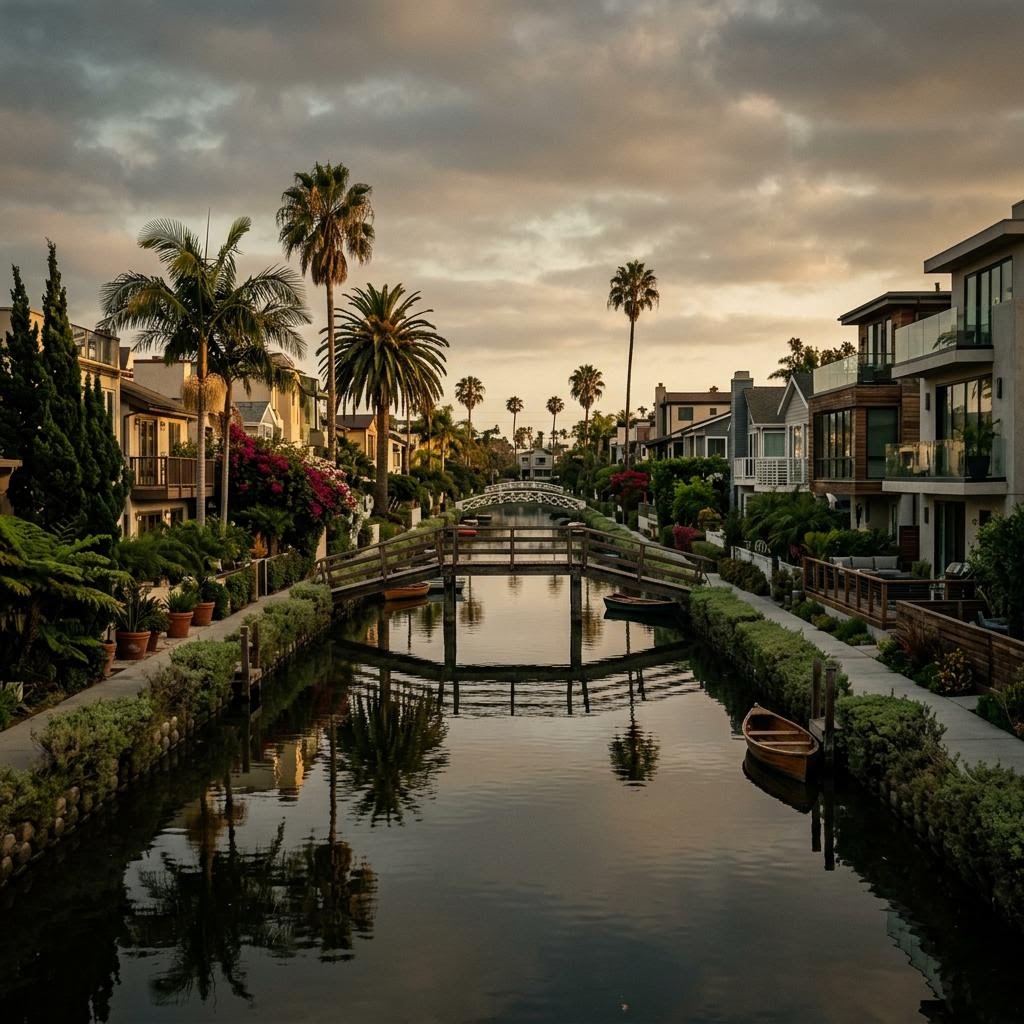
Venice
Permit Expediting
LADBS building permits and Coastal Development Permits for Venice's canals, beachfront, and narrow-lot infill — handled as one coordinated process, not two separate headaches.
Women-owned, LA-based permit expediting firm. Ocean Permits & Development brings the same multi-agency coordination we use for our fire-rebuild clients in Pacific Palisades and Altadena to Venice's LADBS + Coastal Zone permitting process. Free consultation — call 213-277-8777.
Venice is a City of Los Angeles neighborhood, not a separate municipality — but almost every parcel in it sits inside the California Coastal Zone, which means most meaningful construction needs both a standard LADBS building permit and a Coastal Development Permit before work can start.
That dual-track requirement is where most Venice projects lose time. Contractors and even architects who are used to a standard LA remodel or addition often plan around LADBS's timeline alone, then discover mid-project that a Coastal Development Permit (CDP) is also required — an entirely separate review, decided by LA City Planning under a different set of standards, that has to be resolved before the LADBS permit can be finalized. On top of the Coastal Act itself (California Public Resources Code, Division 20, §30000 et seq.), Venice has its own City-adopted Venice Coastal Zone Specific Plan, which layers neighborhood-specific height, bulk, parking, and design standards on top of the citywide Los Angeles Municipal Code (LAMC).
Ocean Permits & Development runs the LADBS and Coastal Zone tracks in parallel from day one on every Venice project — whether it's a narrow-lot remodel, an ADU, a canal-front addition, or new construction — so property owners get one coordinated timeline instead of two agencies working against each other.
LADBS and the Coastal Zone in Venice
Because Venice has been part of the City of Los Angeles since 1926, LADBS is the building department of record for every Venice construction project — the same department, the same LAMC Chapter IX building code, and the same ePlanLA portal used citywide. What sets Venice apart is the overlay: the California Coastal Act (Public Resources Code §30000 et seq.) requires a Coastal Development Permit for most development within the Coastal Zone, and the City's Venice Coastal Zone Specific Plan translates that state-level policy into Venice-specific standards that LA City Planning enforces alongside the LAMC.
LADBS (Los Angeles Department of Building and Safety)
Venice has been a neighborhood of the City of Los Angeles since 1926 — it is not a separate city. Building permits go through LADBS under the Los Angeles Municipal Code (LAMC), Chapter IX, the same department and code that serves every other LA neighborhood. There is no separate "City of Venice" building counter to submit to.
California Coastal Act (Public Resources Code §30000 et seq.)
Nearly all of Venice sits within the California Coastal Zone, so most development beyond minor interior work requires a Coastal Development Permit (CDP) under the Coastal Act. The City of Los Angeles has a certified Local Coastal Program, so most Venice CDPs are decided locally by LA City Planning rather than requiring a direct application to the Coastal Commission in Sacramento — but the CDP is still a distinct approval, separate from and in addition to the LADBS building permit.
Venice Coastal Zone Specific Plan
The Venice Coastal Zone Specific Plan is a City-adopted planning document that implements Coastal Act policy specifically for Venice — setting neighborhood-level standards for height, bulk, parking, and design review that go beyond the citywide LAMC zoning code. Any Venice project has to satisfy both the general LAMC and the additional Specific Plan requirements, and City Planning reviews projects against both.
Coastal Commission Appealable Areas
Even with the City's certified Local Coastal Program, the California Coastal Commission keeps appellate jurisdiction over CDPs issued in "appealable areas" — generally parcels closest to the shoreline, wetlands, or other coastal resources, and the area between the sea and the first public road. A locally-issued CDP in one of these areas can be appealed to the Commission within a 10-working-day window after issuance, which can add weeks to months even after local approval.
Venice Canals Area Standards
The historic Venice Canals carry their own area-specific attention within the Coastal Zone framework given their status as a public waterway and a defining neighborhood feature. Canal-front projects tend to face closer review of setbacks, height, and massing relative to the water, and foundation design that accounts for the high water table immediately adjacent to the canals.
Zoning Compliance / Design Review
Many Venice projects require a zoning compliance sign-off from LA City Planning — confirming consistency with the Venice Coastal Zone Specific Plan and any applicable overlay or design standards — before LADBS will issue the building permit. We confirm the current process for each specific parcel rather than assuming a single citywide procedure applies uniformly.
Venice Permit Types & Typical Timelines
| Permit Type | When It Applies | Reviewing Department | Typical Timeline |
|---|---|---|---|
| Standard building permit (no CDP required) | Interior remodels or minor work that doesn't change footprint, use, or intensity — confirmed as categorically excluded from CDP review | LADBS only | 4–8 weeks |
| Coastal Development Permit — local (non-appealable) | Additions, new construction, or grading outside the Coastal Commission's appealable area | LA City Planning (certified LCP) | 6–14 weeks, running concurrently with LADBS plan check |
| Coastal Development Permit — appealable to Coastal Commission | Projects near the shoreline, wetlands, canals, or other coastal resources within the Commission's appellate jurisdiction | LA City Planning, subject to a 10-working-day Coastal Commission appeal window | 3–6+ months once the appeal window and possible Commission hearing are factored in |
| ADU permit | Accessory dwelling unit — detached, attached, or garage conversion | LADBS (ministerial, Gov. Code §65852.2) + CDP or exclusion determination | 6–14 weeks for LADBS review; add CDP timeline above if a CDP is required |
| Remodel / addition | Structural additions, footprint expansions, second-story additions | LADBS + Coastal review (per applicability) | 8–16 weeks combined, depending on CDP applicability and correction cycles |
| New single-family home | Ground-up new construction, including canal-front and narrow-lot infill | LADBS Standard Plan Check + CDP | 12–20+ weeks combined |
Timelines are estimates based on typical LADBS and Coastal Zone processing patterns described in our Los Angeles permit timeline guide and Coastal Development Permit guide. Actual timelines depend on plan completeness, correction cycles, and whether Coastal Commission appeal jurisdiction applies to your specific parcel.
The LADBS + Coastal Process for a Typical Venice Project
- 01
Coastal Zone & Parcel Research
We confirm whether your Venice parcel sits within the Coastal Zone (nearly all of Venice does), whether it falls in the Coastal Commission's appealable area, and whether it's subject to any canal-specific or overlay standards under the Venice Coastal Zone Specific Plan. This shapes the entire submittal strategy before drawings are finalized.
- 02
Categorical Exclusion or CDP Determination
If the project might qualify for a categorical exclusion from CDP review — routine interior work with no footprint or use change — we document that basis and confirm it in writing with LA City Planning. If a CDP is required, we begin that application immediately rather than after LADBS submittal, since starting it late is the single biggest cause of delay on Venice projects.
- 03
Zoning Compliance / Design Review
We prepare and submit for the zoning compliance sign-off LA City Planning requires for most Venice projects, confirming consistency with the Specific Plan's height, bulk, parking, and design standards before LADBS plan check begins.
- 04
Concurrent LADBS Plan Check
We submit the building permit application through LADBS's ePlanLA portal in parallel with the CDP or zoning compliance track, rather than waiting for Coastal approval first. Running both tracks simultaneously is the difference between a project that clears in a few months and one that drags for a year.
- 05
Foundation & Water-Table Coordination (Canal-Adjacent Projects)
For lots near the Venice Canals, we coordinate with your structural engineer and geotechnical consultant on foundation design that accounts for the high water table — a factor that can require additional engineering review before LADBS will approve the structural drawings.
- 06
Correction Response
We manage the correction cycle on both the LADBS and Planning tracks, responding to plan check comments promptly so the project doesn't lose weeks sitting in a resubmittal queue.
- 07
CDP Appeal Window Monitoring
If the CDP is issued in an area within the Coastal Commission's appellate jurisdiction, we track the 10-working-day appeal window and confirm no appeal has been filed before advising the client the project is clear to proceed on that front.
- 08
Permit Issuance & Inspection Sequence
Once both the CDP (where required) and the LADBS permit are final, we coordinate the inspection sequence — foundation, framing, rough MEP, and final — with your contractor so construction moves without scheduling gaps.
The Venice Canals: Foundations, High Water Table & Narrow Lots
The Venice Canals — the residential canal system south of Venice Boulevard — present engineering and review considerations that don't come up on a typical inland LA lot. Because canal-front parcels sit immediately adjacent to a public waterway, projects there tend to receive closer scrutiny of setbacks, height, and massing relative to the water under the Venice Coastal Zone Specific Plan, in addition to the standard CDP review that applies across the Coastal Zone.
The proximity to water also means a high water table in much of the canal area, which can affect foundation design — sometimes requiring additional geotechnical input or structural engineering beyond what a comparable non-canal Venice lot would need. Combined with Venice's characteristically narrow lots — common throughout the neighborhood's original subdivision pattern — ADUs, additions, and new single-family construction often require careful coordination between the architect, structural engineer, and the permitting strategy from the earliest design stage, not after plans are complete.
Why Venice Property Owners Work With Ocean Permits
Ocean Permits & Development is a women-owned permit expediting firm based in Los Angeles. While Venice itself wasn't affected by the January 2025 wildfires the way Pacific Palisades and Altadena were, the same multi-agency coordination skills we apply to fire-rebuild permitting — running parallel review tracks, tracking appeal windows, and keeping correction responses fast — are exactly what a Venice project with a Coastal Development Permit requires. We also handle ADU permits for Venice lots, and can walk you through what our LADBS plan check process guide looks like applied to your specific project. For comparison, see how the Coastal Zone process plays out in Santa Monica and Malibu. We offer a free consultation — call 213-277-8777 or reach out through our contact page.
Frequently Asked Questions
Do I need a Coastal Development Permit to remodel my home in Venice?
It depends on the scope. Venice sits almost entirely within the California Coastal Zone, so any project that expands a structure's footprint, adds square footage, changes the use, or involves grading typically triggers a Coastal Development Permit (CDP) requirement under the California Coastal Act (Public Resources Code §30000 et seq.) and the Venice Coastal Zone Specific Plan. Purely interior remodels that don't change the footprint or intensity of use may qualify for a categorical exclusion, but that determination should be confirmed with LA City Planning before you finalize drawings — proceeding on an assumption is the most common cause of stop-work orders in Venice.
Is Venice part of the City of Los Angeles or a separate city for permitting purposes?
Venice is a neighborhood within the City of Los Angeles — it has not been a separate city since it was annexed to LA in 1926. This means building permits in Venice go through LADBS (Los Angeles Department of Building and Safety), the same department that serves every other LA neighborhood, and the Los Angeles Municipal Code (LAMC) applies. What makes Venice distinct isn't a separate building department — it's the additional layer of Coastal Zone review and the Venice Coastal Zone Specific Plan that sits on top of standard LADBS review.
What's different about building on the Venice Canals vs. elsewhere in Venice?
The Venice Canals — the historic residential canal system south of Venice Boulevard — carry their own area-specific design and development standards on top of the general Venice Coastal Zone Specific Plan requirements, given the sensitivity of building along a public waterway. Projects on canal-front lots typically face closer scrutiny of setbacks, height, and bulk relative to the water, plus foundation engineering shaped by the high water table immediately adjacent to the canals. We recommend a pre-application check with LA City Planning specifically for any canal-front project before finalizing a design.
How long does a standard remodel permit take in Venice?
A non-structural residential remodel that doesn't touch the footprint and isn't in the Coastal Commission's appealable area can move through LADBS in roughly the same 4–8 week range as similar projects elsewhere in the city, per our sitewide permit timeline data. Once a Coastal Development Permit enters the picture — even a locally-issued one — realistic total timelines extend to 3–6+ months because the CDP and LADBS building permit tracks, while they can run concurrently, both have their own review and (for CDPs) appeal windows.
Can I build an ADU in Venice, and does it need Coastal Commission approval?
Yes, ADUs are permitted in Venice, and California's ADU statute (Government Code §65852.2) still requires LADBS to process qualifying ADU applications ministerially within 60 days of a complete submittal. However, being in the Coastal Zone means most Venice ADUs also need a Coastal Development Permit unless the project qualifies for a categorical exclusion. Whether that CDP is decided entirely at the local (City Planning) level or falls into the Coastal Commission's appealable area depends on the parcel's exact location — generally its proximity to the beach, the canals, or other coastal resources.
What is the LAMC (Los Angeles Municipal Code) and how does it apply to Venice construction?
The LAMC is the Los Angeles Municipal Code — the body of city law that includes the Building Code (Chapter IX) LADBS enforces citywide, along with the Zoning Code (Chapter I) that governs use, height, density, and setbacks. In Venice, LAMC zoning provisions apply alongside the Venice Coastal Zone Specific Plan, which was adopted by the City to implement Coastal Act policy at the neighborhood level. Every Venice project has to satisfy both: the citywide LAMC building and zoning requirements enforced by LADBS, and the Venice-specific Coastal Zone Specific Plan standards enforced by City Planning.
Do I need a zoning compliance / "Venice Sign-Off" check before starting?
Many Venice projects require a zoning compliance review from LA City Planning before LADBS will issue a building permit — confirming the project satisfies the Venice Coastal Zone Specific Plan, applicable overlay standards, and any neighborhood-specific design or setback requirements before construction drawings move forward. The exact clearance process and terminology can vary by sub-area and project type, so we confirm the current requirement with City Planning as an early step on every Venice project rather than assuming a standard citywide review applies.
What triggers Coastal Commission appeal jurisdiction vs. a local Coastal Development Permit only?
The City of Los Angeles has a certified Local Coastal Program covering Venice, so most Venice CDPs are issued by LA City Planning rather than the Coastal Commission directly. But the Commission retains appellate jurisdiction over CDPs issued in "appealable areas" — generally parcels within 100 feet of the mean high tide line, wetlands, or other coastal resources, and areas between the sea and the first public road. A CDP issued by the City for a project in an appealable area can be appealed to the Coastal Commission within 10 working days of issuance, which can extend the total timeline even after local approval.
How much does permit expediting cost in Venice?
Expediting fees track with project complexity, similar to our sitewide ranges: a straightforward remodel or ADU without CDP involvement runs in the range we quote for comparable non-coastal LA projects, while a project requiring a Coastal Development Permit adds roughly $3,000–$8,000 in additional expediting fees on top of the base project fee, reflecting the extra agency track and appeal-window monitoring. We provide a firm quote after reviewing your specific Venice parcel and scope during a free consultation.
What happens if I build without required permits in the Coastal Zone?
Unpermitted development in the Coastal Zone is a violation of the California Coastal Act, not just the LAMC — enforcement can include a Coastal Commission cease-and-desist order, restoration requirements to return the property to its prior condition, and civil penalties that can run well beyond the cost of having obtained the permit in the first place. LADBS can also independently issue a stop-work order and require a retroactive permit application, which is typically slower and more expensive than a standard upfront submittal. Confirming CDP applicability before any work begins is the safest and cheapest path.
Can Ocean Permits handle both LADBS and Coastal Zone approvals together?
Yes — managing the LADBS building permit and the Coastal Development Permit as parallel, coordinated tracks (rather than sequential ones) is core to what we do on every Venice project. We confirm Coastal Zone status and CDP or exclusion determination up front, prepare both submittal packages together, and track the CDP appeal window so you know exactly when the project is clear to proceed.
Does Ocean Permits' fire-rebuild expertise from Palisades/Altadena apply to Venice projects?
Venice itself is not part of the wildfire-affected areas of Pacific Palisades or Altadena, but the underlying skill set transfers directly: coordinating a Coastal Development Permit with LADBS building permit review, applying current resiliency and building-code requirements, and managing multi-agency timelines under pressure. If a Venice client's project intersects with statewide resiliency code updates or an insurance-driven rebuild timeline, we bring the same disciplined multi-track coordination we use for our Palisades and Altadena fire-rebuild clients.
Building in Venice?
We coordinate your LADBS building permit and Coastal Development Permit as one process — not two separate agencies working against your timeline.
Schedule a Free ConsultationOr call 213-277-8777