_1781464136662-DVw5IPjt.png)
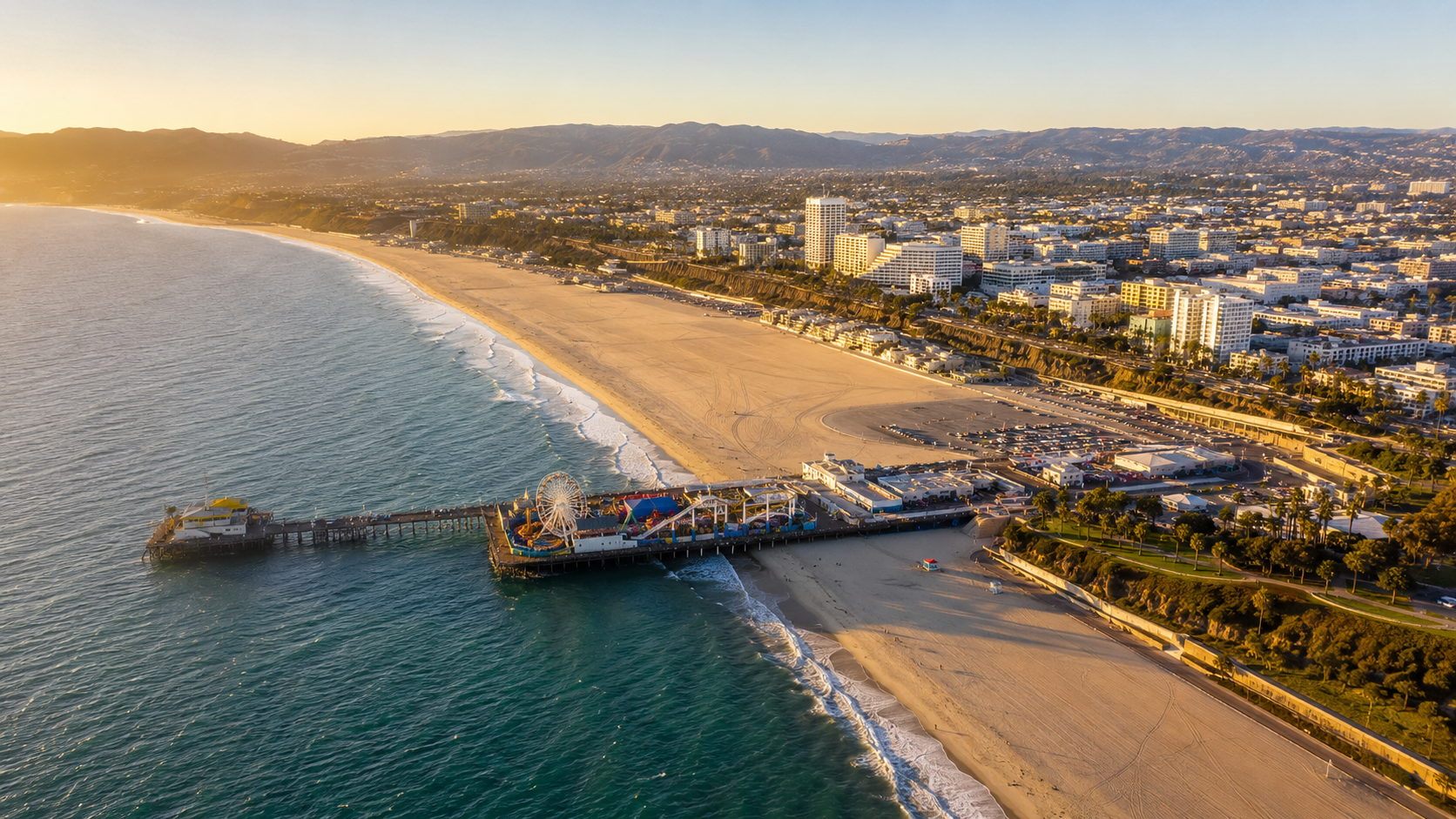
Santa Monica
Permit Expediting
Santa Monica's independent Building & Safety Division and Coastal Zone overlay create a permitting environment that demands specific local expertise. We provide both.
Unlike properties within the City of Los Angeles, Santa Monica projects are governed by the city's own municipal code and processed through a separate department. The Santa Monica Building & Safety Division operates on its own plan-check schedule, follows its own current application instructions (the City planned a new permitting portal for April 2026), and applies local amendments to the California Building Code that differ from LADBS standards.
Many parcels in Santa Monica also fall within California's Coastal Zone, adding a Coastal Development Permit (CDP) requirement that runs parallel to — and sometimes in conflict with — the standard building permit timeline. Santa Monica does not have a fully certified Local Coastal Program: its Land Use Plan was certified in 1992, but the City has no adopted Implementation Plan, so the Coastal Commission continues to issue CDPs for mapped Coastal Zone parcels. Exempt work may not need a CDP at all, and a City permit cannot override a required coastal approval.
Ocean Permits & Development maps your project's regulatory requirements before submittal, identifies Coastal Zone applicability, prepares Architectural Review Board submittals, and manages concurrent tracks with Santa Monica Planning and the California Coastal Commission when needed. We handle tenant improvement permits for the Promenade and Main Street corridors, ADU and garage conversion permits under the city's local standards, and pre-submittal consulting for owners weighing a Coastal Development Permit before they commit to design. Neighboring West Los Angeles projects follow LADBS rather than Santa Monica's own Building & Safety Division — a distinction that matters if your property sits near the city line.
The Santa Monica Permitting Environment
Santa Monica Building & Safety Division
Independent from LADBS. Applies Santa Monica Municipal Code with local building code amendments. Submittals follow the City's current application instructions. Plan check timelines and standards differ from the City of Los Angeles.
California Coastal Zone
Part of Santa Monica lies inside the mapped Coastal Zone; the boundary is parcel-mapped, not a uniform distance from the shoreline. With only the 1992 Land Use Plan certified and no adopted Implementation Plan, the Coastal Commission issues CDPs. Non-exempt development, including some residential additions, needs a CDP or exemption determination.
Architectural Review Board (ARB)
Many commercial projects, new construction and significant exterior alterations require ARB design review depending on location and scope; historic resource screening is parcel-specific, not required for every home. The ARB evaluates massing, materials, architectural compatibility, and landscaping. Submittals require specific drawing formats and design narratives.
Santa Monica City Planning
Discretionary approvals — variances, Conditional Use Permits, development agreements — go through the Planning Commission or Zoning Administrator. Projects near the ocean or in specific plan areas may face additional design standards.
Our Santa Monica Expertise
- Santa Monica Building & Safety Division plan check coordination
- Coastal Zone screening and Coastal Development Permit (CDP) sequencing with the Coastal Commission
- Coastal Commission CDP or exemption coordination for mapped Coastal Zone parcels
- Architectural Review Board (ARB) and historic resource screening for affected parcels
- Santa Monica City Planning entitlements and variance applications
- 2026 self-certification TI pilot eligibility screening
- Tenant improvement permits for Main Street, Third Street Promenade, and Wilshire Blvd corridors
- ADU and garage conversion permits under Santa Monica's local rules
- Commercial new construction and residential additions
- Fire & Life Safety clearances with Santa Monica Fire Department
- Sign permits under Santa Monica's sign ordinance
Santa Monica Permit Expediting Fees
Fees below are our expediting fees, separate from Santa Monica Building & Safety's own plan-check and permit fees. Coastal Zone and ARB projects run higher due to the added agency coordination.
Governing Code & Planning-Range Timeline
Santa Monica adopts the California Building Code with local amendments under Santa Monica Municipal Code (SMMC) Chapter 8.08, and land use is governed by the Zoning Ordinance in SMMC Article 9 (Title 9). Coastal development is reviewed by the Coastal Commission under the 1992 certified Land Use Plan and the Coastal Act until an updated LCP is fully certified. Architectural Review Board authority and submittal standards are likewise set out in the SMMC Zoning Ordinance's Architectural Review provisions. These are planning-range estimates, not city guarantees — actual timelines depend on plan completeness, coastal appeal periods, and current department workload.
| Project type | Planning-range timeline |
|---|---|
| Minor nonstructural TI (standard review) | 3–6+ weeks |
| Residential addition, no Coastal Zone or ARB review | 6–10 weeks |
| Coastal Commission CDP or exemption (mapped Coastal Zone only) | Variable; Commission schedule |
| 2026 self-certification TI pilot (eligible scope only) | 5-business-day target |
| Architectural Review Board hearing track | +6–10 weeks |
| ADU / garage conversion | 5–9 weeks |
Coastal Review in Santa Monica: Where Things Actually Stand
A Local Coastal Program has two parts: a Land Use Plan that sets coastal policy and an Implementation Plan that functions as the coastal zoning ordinance. A city can issue its own Coastal Development Permits only once both are certified. According to the City's LCP Update program page, Santa Monica adopted an updated Land Use Plan in 2018, but the Coastal Commission continues to use the Land Use Plan certified in 1992, together with the Coastal Act, as the basis for issuing CDPs until the update is certified. The City does not currently have an adopted Implementation Plan. A fully certified LCP would let applicants obtain both local permits and a CDP from the City, but that is not the present situation.
For an owner this means three questions, answered in order. First, is the parcel inside the mapped Coastal Zone? The boundary is a mapped line, not a fixed distance from the beach, so we confirm it parcel by parcel. Second, is the proposed work development that needs a CDP, or does it qualify for an exemption? Interior work, many repairs and some improvements to existing structures may be exempt, while additions, demolition and rebuilds, changes in intensity of use and work near the shoreline often are not. Third, if a CDP is needed, how will the Coastal Commission's process be sequenced with City Planning and Building review? The City permit and the coastal approval are separate; a City building permit does not override a coastal approval the project requires, and a Commission condition can change the design the City reviews.
We prepare the exemption request or CDP application with the design team, track Commission staff comments, and keep the City plan check set consistent with any coastal conditions. For nearby comparisons, see our Venice guide, where coastal review also shapes many residential projects.
The 2026 Self-Certification Pilot for Tenant Improvements
On January 12, 2026, the City announced a self-certification building permit program intended to speed business openings. The pilot targets a five-business-day permit review for eligible nonstructural tenant improvements, where a qualified professional who has been pre-certified by the City attests that the plans comply with the Building Code.
The program is conditional. Market and beverage uses, education and child care uses are excluded. Building & Safety and Fire determine eligibility for a change of use that triggers a higher occupancy hazard. Restaurants may use self-certification only for the Building Code portion; other applicable approvals, such as fire, health, coastal or planning, remain necessary. Inspections are still required. We screen each tenant improvement against these conditions and do not promise a five-day permit for every TI. We also do not assume any later phase extending self-certification to ADUs has launched unless the City confirms it.
For Promenade, Main Street, Montana Avenue and Wilshire Boulevard storefronts, our tenant improvement service sorts out pilot eligibility, landlord base-building responsibilities and fire department coordination before the lease commencement date.
Submitting Applications and Understanding Fees
Building & Safety and Planning have distinct intake requirements, so we follow the City's current application instructions rather than older portal-specific steps. The City's guide on how to submit a planning application describes the planning intake process, and its planning resources page links the current zoning ordinance and fee materials. The Zoning Ordinance is codified in SMMC Article 9; building codes and local amendments are in Article 8.
Planning fees for the 2026-27 fiscal year are published in the City's Planning Fees Worksheet FY26-27. Planning application fees depend on the type of application, and some are deposit-based. Building plan check and permit fees are separate and generally scale with project valuation and scope. Coastal Commission application fees are set by the Commission, not the City. Utility, school and other fees may apply depending on the project. We use the current worksheet for each fiscal cycle rather than reprinting figures that change annually.
Owners comparing nearby jurisdictions should note that Culver City is also independent, while Mar Vista and West Los Angeles are permitted by LADBS. Our ADU permits and consulting services cover feasibility before design begins. Ocean Permits & Development is women-owned; call 213-277-8777.
Common Questions
Does Santa Monica have its own building department?
Yes. Santa Monica operates an independent Building & Safety Division — separate from the City of Los Angeles and LADBS. Projects are submitted following the City's current application instructions and are reviewed by local plan checkers applying the Santa Monica Municipal Code, which adopts the California Building Code with local amendments. LADBS has no role in Santa Monica.
Do I need California Coastal Commission approval in Santa Monica?
Possibly. Santa Monica does not have a fully certified Local Coastal Program. The City's Land Use Plan was certified in 1992, but the City does not currently have an adopted Implementation Plan, so the Coastal Commission continues to issue CDPs using the 1992 LUP and the Coastal Act. For a parcel inside the mapped Coastal Zone, development that is not exempt needs a Commission CDP or exemption determination; not every interior project does. A City building permit cannot override the coastal approval. We confirm mapped status and exemption eligibility at the outset.
What is the Architectural Review Board (ARB) in Santa Monica?
The Santa Monica Architectural Review Board (ARB) reviews design plans for new construction, additions, and significant exterior alterations — particularly in commercial areas and designated districts. Whether ARB or historic review applies depends on the parcel, district and scope; most single-family interior work does not go to the ARB, while designated or potentially historic properties need screening. We prepare ARB submittals that meet the city's design standards, coordinate pre-application meetings when helpful, and manage the hearing schedule.
How long do permits take in Santa Monica?
Our planning allowances: minor nonstructural TIs about 3 to 6+ weeks, residential additions without coastal or ARB review about 6 to 10+ weeks, with Coastal Commission and ARB tracks adding variable time. A 2026 self-certification pilot targets five business days for eligible tenant improvements, but it is conditional and does not cover every TI. These are nonbinding estimates, not City deadlines.
Are ADUs permitted in Santa Monica?
Yes. Santa Monica allows ADUs and JADUs under California state law. The city has adopted local ADU standards that comply with state requirements. Garage conversions to ADUs are common and generally don't require replacement parking. We prepare ADU permit packages for Santa Monica and manage the plan check process through the Building & Safety Division.
What areas in Santa Monica are most common for commercial TI permits?
The most active commercial TI corridors are Third Street Promenade, Main Street, Santa Monica Place, Wilshire Boulevard, and the Montana Avenue retail district. Each has specific design and signage standards that affect TI submittals. Parcels inside the mapped Coastal Zone, including areas near the Pier, may need Coastal Commission review for qualifying exterior or use changes.
What is Santa Monica's 2026 self-certification building permit program?
Announced January 12, 2026, it is a conditional pilot targeting permit issuance within five business days for eligible nonstructural tenant improvements certified by a qualified, pre-certified professional. Market and beverage uses, education and child care are excluded. Changes of use that trigger higher occupancy hazards require Building & Safety and Fire to determine eligibility. Restaurants are eligible only for Building Code self-certification. Other applicable approvals and inspections still apply; confirm current program availability and scope with the City.
Where do I find current Santa Monica planning fees?
The City publishes a Planning Fees Worksheet for FY 2026-27. Fees depend on application type, deposits and hourly charges; building plan check and permit fees are separate. We cite the current worksheet rather than quoting numbers that change each fiscal year.
Is all of Santa Monica within the Coastal Zone?
No. The Coastal Zone boundary is mapped and does not follow a uniform distance from the shoreline. Confirm the specific parcel with the City and the Coastal Commission.
Project in Santa Monica?
We know the Santa Monica municipal code, Coastal Zone requirements, and ARB standards. Let's discuss your project.
Schedule a ConsultationOr call +1 (213) 277-8777