_1781464136662-DVw5IPjt.png)
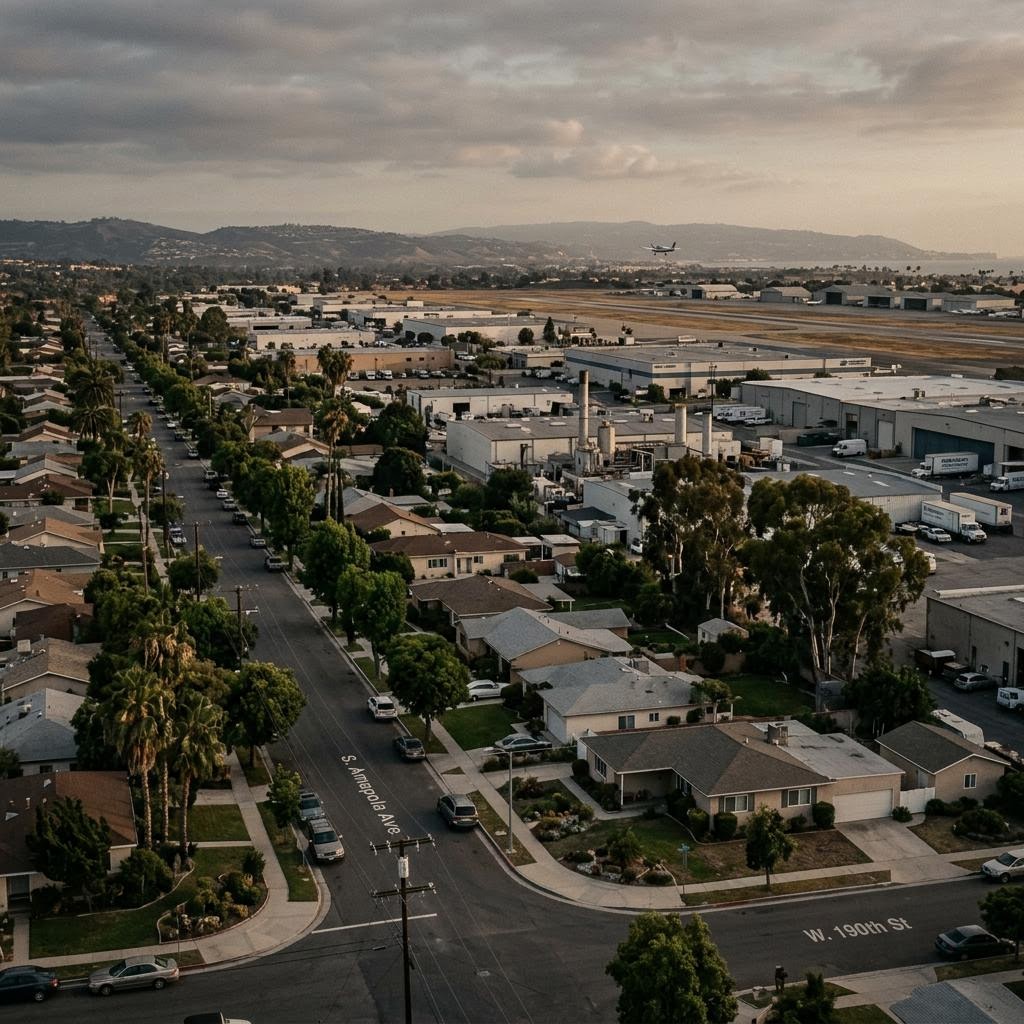
Torrance
Permit Expediting
Torrance has its own Building & Safety Division — not LADBS. We navigate the city's Neighborhood Compatibility review, Zamperini Airport height rules, and commercial/industrial permitting alongside standard residential work.
Women-owned, LA-based permit expediting firm. The same disciplined multi-agency coordination we bring to fire-rebuild clients in Pacific Palisades and Altadena carries over to Torrance's Building & Safety, Neighborhood Compatibility, and commercial permitting tracks. Free consultation — call 213-277-8777.
Torrance is an independent South Bay city with its own Building & Safety Division — not LADBS — and a permitting landscape shaped by its residential neighborhoods, its municipal airport, a small coastal strip at Torrance Beach, and a substantial commercial and industrial base.
Most Torrance projects are straightforward residential or commercial work that moves through the city's own Building & Safety Division without any special overlay. But several Torrance-specific factors can change a project's review path: a second-story addition may trigger the city's Neighborhood Compatibility design guidelines; a taller structure near Zamperini Field may require FAA notification and be subject to airport height limits; a Torrance Beach-adjacent parcel may fall within the narrow strip of the California Coastal Zone that needs a Coastal Development Permit; and a commercial or industrial tenant improvement may route through Fire and Planning review in addition to standard Building & Safety plan check.
Ocean Permits & Development scopes each of these factors at the start of a Torrance project — rather than letting a client discover a Neighborhood Compatibility review, an FAA notification requirement, or a Coastal Zone determination partway through construction planning.
Torrance Has Its Own Building Department — Not LADBS
Torrance is an independent incorporated city in the South Bay, entirely separate from the City of Los Angeles. Building permits are processed by the city's own Building & Safety Division within the Community Development Department, under the Torrance Municipal Code — with its own online permitting portal, application forms, fee schedule, and plan-check staff. None of that overlaps with LADBS's system, portal, or reviewer relationships, so a project team accustomed to LADBS procedures needs to adapt to Torrance's own process rather than assume it will be the same.
City of Torrance Building & Safety Division (Not LADBS)
Torrance is an independent South Bay city with its own Building & Safety Division inside the Community Development Department, operating under the Torrance Municipal Code — entirely separate from LADBS. All building permit applications, forms, and plan-check staff are the city's own, with no overlap with Los Angeles's system.
Neighborhood Compatibility Program
For second-story additions and larger single-family remodels, Torrance applies residential design guidelines aimed at keeping new construction in scale with the surrounding neighborhood — evaluating massing, height, and setbacks to avoid oversized additions that clash with existing homes on the block. Projects triggering this review go through an added design evaluation beyond standard plan check.
Zamperini Field (Torrance Airport) Height Limits
Structures near Zamperini Field can fall within FAA-regulated approach and imaginary surface zones, subjecting them to height restrictions and, for taller proposals, a requirement to file FAA Form 7460-1 (Notice of Proposed Construction or Alteration) before local permit issuance. This review runs on a federal timeline separate from the city's own plan check.
Torrance Beach Coastal Zone (Limited Area)
Only the narrow Torrance Beach strip along the coastline sits within the California Coastal Zone, where a Coastal Development Permit may be required under the California Coastal Act (Public Resources Code §30000 et seq.). The vast majority of Torrance — nearly all residential and commercial areas — falls outside the Coastal Zone and does not carry this additional requirement.
Commercial, Aerospace & Industrial Base
Torrance has a significant commercial and industrial economy, including a long-standing aerospace and manufacturing presence alongside its retail corridors and office parks. Commercial and industrial tenant improvements go through Building & Safety plan check with Fire Department and, where applicable, Planning Division review layered in for occupancy and use considerations.
Torrance Permit Types & Typical Timelines
| Permit Type | When It Applies | Reviewing Department | Typical Timeline |
|---|---|---|---|
| Standard residential permit (no Neighborhood Compatibility trigger) | Remodels, repairs, and additions that don't involve a second story or trigger design compatibility review | City of Torrance Building & Safety | 4–8 weeks |
| Addition / second story with Neighborhood Compatibility review | Second-story additions or larger remodels subject to residential design compatibility guidelines | City of Torrance Building & Safety + Planning (design review) | 8–16 weeks, including design evaluation |
| ADU permit | Accessory dwelling unit — detached, attached, or garage conversion | City of Torrance (ministerial, Gov. Code §65852.2) | 6–14 weeks |
| Commercial / industrial tenant improvement | Retail, office, or industrial buildouts; scope and review track vary with use and occupancy change | City of Torrance Building & Safety + Fire + Planning (as applicable) | 6–16+ weeks depending on scope and change-of-use review |
| Coastal Development Permit (Torrance Beach only) | Development within the narrow Coastal Zone strip along Torrance Beach | City of Torrance Planning (CDP), potentially subject to Coastal Commission appeal | 6–14+ weeks, running alongside the base building permit |
Timelines are estimates based on typical plan-check patterns described in our Los Angeles permit timeline guide, adapted for the City of Torrance's separate department and current workload. Actual timelines depend on plan completeness, correction cycles, and whether Neighborhood Compatibility, FAA, or Coastal Zone review applies.
Our Process for a Typical Torrance Project
- 01
Jurisdiction & Zone Confirmation
We confirm the project files with the City of Torrance's own Building & Safety Division, and check whether Neighborhood Compatibility review, Zamperini Field height limits, or Torrance Beach Coastal Zone status apply to the specific parcel.
- 02
FAA / Airport Height Check (If Applicable)
For projects near Zamperini Field with increased building height, we confirm whether FAA Form 7460-1 notification is required and initiate that federal review track early, since it runs independently of the city's plan check timeline.
- 03
Neighborhood Compatibility Design Review (If Applicable)
For second-story additions or larger remodels, we prepare the design documentation Torrance Planning needs to evaluate massing, height, and setback compatibility with the surrounding neighborhood, coordinating with your architect before formal submittal.
- 04
Application Submittal
We submit the complete building permit package through the City of Torrance's online permitting portal, coordinated with any required Fire Department or Planning referrals for commercial and industrial projects.
- 05
Plan Check & Correction Management
We track the application through plan check, respond to correction comments promptly, and coordinate directly with Torrance's plan-check staff to resolve technical questions without losing weeks to a slow correction cycle.
- 06
Permit Issuance & Inspection Coordination
Once the city issues the permit, we coordinate the scheduled inspection sequence with your contractor — including any additional inspections tied to Coastal Zone or Neighborhood Compatibility conditions — so construction proceeds without gaps.
Zamperini Field: Height Limits & FAA Notification
Torrance is home to Zamperini Field, a municipal airport whose approach and imaginary surface zones impose height limits on nearby structures. Projects proposing taller buildings within these zones can trigger a requirement to file FAA Form 7460-1 — a Notice of Proposed Construction or Alteration — with the Federal Aviation Administration before the city will finalize a building permit. This federal review runs on its own timeline, separate from the city's plan check, and needs to be initiated early rather than discovered after design is complete. We check airport-related height limits and FAA notification requirements for any project involving increased building height in proximity to Zamperini Field.
Neighborhood Compatibility & Second-Story Additions
Torrance applies a Neighborhood Compatibility program to second-story additions and larger single-family remodels, evaluating a project's massing, height, and setbacks against the scale of surrounding homes to prevent additions that feel out of place on the block. Projects that trigger this review go through an added design evaluation on top of standard Building & Safety plan check, which can shape the design itself as well as the timeline. We identify Neighborhood Compatibility applicability at the earliest planning stage, working with your architect to design toward compatibility from the outset rather than redesigning in response to a rejection.
Torrance Beach: The City's Only Coastal Zone Strip
Unlike coastal-adjacent cities where the entire jurisdiction sits in the California Coastal Zone, only the narrow Torrance Beach strip along the shoreline falls within the Coastal Zone and can require a Coastal Development Permit under the California Coastal Act (Public Resources Code §30000 et seq.). The rest of Torrance — its inland residential neighborhoods, its commercial corridors along Hawthorne Boulevard and Torrance Boulevard, and its industrial areas — sits outside the Coastal Zone and doesn't carry this requirement. We confirm Coastal Zone status specifically for any Torrance Beach-adjacent parcel, since assuming either way — that a CDP is or isn't needed — is a common and costly mistake for projects near that boundary.
Commercial & Industrial Tenant Improvements in Torrance
Torrance's economy extends well beyond single-family residential — the city has a long-standing aerospace and manufacturing presence alongside its retail centers and office parks. Commercial and industrial tenant improvements go through the same Building & Safety Division for the base building permit, typically with Fire Department review layered in for occupancy-related life-safety systems, and Planning Division review added when a project involves a change of use. We handle the full range — from a straightforward office refresh to a more complex industrial buildout or a restaurant tenant improvement — scoping the applicable review tracks before submittal so nothing gets missed mid-project. See our tenant improvement services page for more detail on how we structure commercial TI permitting.
Why Torrance Property Owners & Businesses Work With Ocean Permits
Ocean Permits & Development is a women-owned permit expediting firm based in Los Angeles. While Torrance isn't a wildfire-hazard jurisdiction the way Pacific Palisades and Altadena are, the same core skill set — coordinating multiple review tracks (Building, Fire, Planning, and in Torrance's case FAA notification) into one managed timeline — is exactly what a Torrance project with a Neighborhood Compatibility review, an airport-height consideration, or a commercial TI needs. For comparison, we bring similar multi-agency and coastal-adjacent experience to nearby South Bay markets, including Manhattan Beach, Marina del Rey, and Long Beach. We offer a free consultation — call 213-277-8777 or reach out through our contact page.
Frequently Asked Questions
Does Torrance have its own building department separate from Los Angeles?
Yes. Torrance is an independent incorporated city in the South Bay — it is not part of the City of Los Angeles, and permits do not go through LADBS (Los Angeles Department of Building and Safety). Building permits in Torrance are issued by the city's own Building & Safety Division within the Community Development Department, under the Torrance Municipal Code. That means a different online permitting portal, different intake forms, and different plan-check staff than any LADBS-served neighborhood, including nearby Los Angeles communities.
What is the Neighborhood Compatibility review and when does it apply to my project?
Torrance maintains a Neighborhood Compatibility program — residential design guidelines applied to second-story additions and large single-family remodels — intended to keep new construction in scale with surrounding homes and avoid "mansionization" that overwhelms a neighborhood's existing character. Projects that trigger this review go through an additional design evaluation beyond standard plan check, looking at massing, height, setbacks, and articulation relative to neighboring properties. We flag Neighborhood Compatibility applicability during initial project scoping, since it changes both the review timeline and, sometimes, the design itself.
Does proximity to Zamperini Airport affect my permit for a taller structure?
It can. Torrance is home to Zamperini Field (Torrance Airport), and structures within the airport's approach and imaginary surface zones are subject to height limits, and taller structures may require Federal Aviation Administration notification via FAA Form 7460-1 (Notice of Proposed Construction or Alteration) before a local permit can be finalized. Whether your project triggers this depends on the specific height and distance from the airfield. We check FAA notification and airport height-limit applicability early for any project involving increased building height near Zamperini Field, since the FAA review runs on its own timeline separate from the city's plan check.
Is any part of Torrance in the Coastal Zone requiring a Coastal Development Permit?
Only a narrow strip — the Torrance Beach area along the coastline — falls within the California Coastal Zone and can require a Coastal Development Permit (CDP) under the California Coastal Act (Public Resources Code §30000 et seq.). The overwhelming majority of Torrance, including most residential neighborhoods and commercial corridors well inland of the beach, is not in the Coastal Zone and does not require a CDP. We confirm Coastal Zone status for any Torrance Beach-adjacent parcel as an early step, since it's easy to assume incorrectly in either direction.
How long does a standard residential permit take in Torrance?
A straightforward residential remodel or addition that doesn't trigger Neighborhood Compatibility review typically moves through Torrance's Building & Safety Division in a range broadly comparable to standard residential plan-check timelines described in our Los Angeles permit timeline guide — commonly in the range of 4–10 weeks for first review, though Torrance is a separate department with its own current caseload. Projects triggering Neighborhood Compatibility design review, or a second-story addition, generally add several weeks for the additional evaluation.
What's involved in permitting a commercial tenant improvement in Torrance?
A commercial TI in Torrance goes through the city's Building & Safety Division for the building permit, often alongside Fire Department review for occupancy-related life-safety systems, and Planning review if the project involves a change of use. Given Torrance's mix of retail centers, office parks, and its aerospace and industrial business base, TI scope varies widely — from a simple office refresh to a more complex industrial tenant buildout — and the review path scales with that complexity. We scope the applicable review tracks (Building, Fire, Planning) before submittal so nothing is missed.
Do I need a separate permit for a pool or an ADU in Torrance?
Yes, both pools and ADUs require their own building permits in Torrance, processed through the city's Building & Safety Division. For ADUs specifically, California's ADU statute (Government Code §65852.2) requires Torrance to ministerially approve qualifying applications within 60 days of a complete submittal — the same statewide standard that applies everywhere in California, including cities with their own building departments like Torrance.
How much does permit expediting cost in Torrance?
Expediting fees for Torrance projects generally track with the complexity ranges we quote sitewide for comparable South Bay and Los Angeles-area projects, with modest additional cost where Neighborhood Compatibility design review, FAA airport-height coordination, or a Coastal Development Permit for a Torrance Beach parcel is involved. We provide a firm, project-specific quote after a free consultation reviewing your scope, location, and whether any of these additional review tracks apply.
Can Ocean Permits handle plan check corrections and inspections on my behalf?
Yes. We manage the full plan-check correction cycle with Torrance's Building & Safety staff — reviewing correction comments, coordinating responses with your architect or engineer, and resubmitting promptly — and we coordinate the city's scheduled inspection sequence with your contractor once the permit is issued, so the project keeps moving without scheduling gaps.
What triggers a public hearing versus an over-the-counter permit in Torrance?
Simple, low-risk projects — straightforward repairs, standard equipment replacements, and minor work that doesn't involve structural changes or special zone overlays — can often be handled at the counter with same-day or near-immediate review. Projects that require a variance, a conditional use permit, or that fall under discretionary Planning review (for example certain commercial use changes, or larger projects that don't meet standard zoning) are routed to a public hearing process, which adds scheduling and noticing time well beyond standard plan check. We identify which track a project falls into before submittal so the timeline expectation is realistic from day one.
Does Ocean Permits work with both residential homeowners and commercial/industrial clients in Torrance?
Yes. Torrance has a substantial commercial, aerospace, and industrial business base alongside its residential neighborhoods, and we handle permit expediting for both — from a single-family remodel or ADU to a commercial tenant improvement or an industrial facility buildout. The regulatory tracks differ (Building & Safety plus Fire and Planning for commercial and industrial projects, versus the residential review path for single-family work), and we scope the right one for each project type.
What should I do if my Torrance permit application was rejected or delayed?
The first step is understanding exactly why — a rejected intake usually means a formatting or completeness issue that never reached a plan checker, while a delayed application in active plan check usually means outstanding corrections or a missing referral (Fire, Planning, or FAA notification for airport-area projects). We review the city's correction list or rejection notice, identify the specific gap, and manage the resubmittal directly with Torrance Building & Safety staff to get the application back on track as quickly as possible.
Building in Torrance?
We coordinate Building & Safety, Neighborhood Compatibility, airport-height, and commercial approvals as one process — residential or industrial.
Schedule a Free ConsultationOr call 213-277-8777