_1781464136662-DVw5IPjt.png)
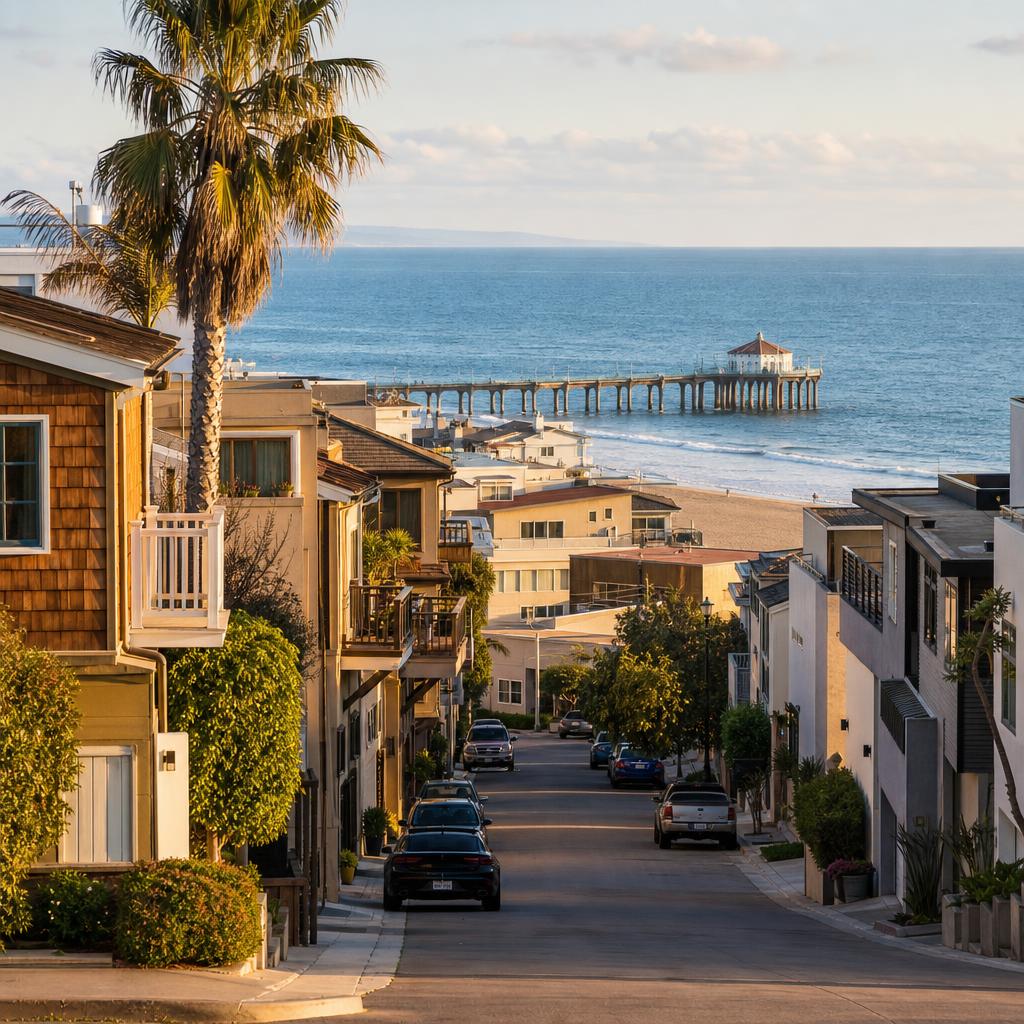
Manhattan Beach
Permit Expediting Services
Manhattan Beach is one of the few Los Angeles County cities where a routine home remodel can trigger two entirely separate permitting authorities before a single stud is nailed. The city's own Community Development Department issues building permits under Title 9 of the Manhattan Beach Municipal Code (MBMC), while nearly every parcel between PCH and the sand also sits inside the California Coastal Zone, meaning the California Coastal Commission has a say — directly or through the city's certified Local Coastal Program — on top of standard plan check. Add 2,700-square-foot Sand Section lots, 26- to 30-foot height ceilings, and a Building & Safety counter that runs on its own review calendar, and it's easy to see why homeowners, architects, and contractors hire a permit expediter before they hire a contractor.
Ocean Permits works Manhattan Beach permits from both sides of that equation — City Hall and the Coastal Commission's South Coast District office — for owners in the Sand Section, the Hill Section, the Tree Section, El Porto, and the Manhattan Village area.
Who Actually Issues Your Permit
Manhattan Beach's Community Development Department, Building and Safety Division is the agency of record for building permits. The division reviews construction documents, issues permits, and performs field inspections under the 2025 California Building Standards Code — the City Council adopted the 2025 editions of the Building, Residential, Electrical, Plumbing, Mechanical, Existing Building, Green Building (CALGreen), and Energy codes by ordinance in November 2025, carrying forward Manhattan Beach's existing local amendments for the city's coastal and seismic conditions, within the limits Assembly Bill 130 now places on new local residential amendments. Zoning and land use — height limits, setbacks, floor area ratio, and Coastal Development Permits — fall under Title 10, Planning and Zoning, administered by the same department's Planning Division.
Building & Safety staffs a walk-in Permit Center Monday through Thursday, 8:00 a.m. to 11:30 a.m. and 1:30 p.m. to 5:00 p.m., and Friday 8:00 a.m. to 11:30 a.m. and 1:30 p.m. to 4:00 p.m. Most submittals now go through the city's Citizen Self Service (CSS) portal, built on the Enterprise Permitting & Licensing (EPL) platform. Building permit applications, Residential Building Reports, and inspection scheduling all route through CSS rather than counter drop-off.
Because Manhattan Beach is a small, built-out city (roughly 3.5 square miles), its plan check queue is thin compared to the City of Los Angeles, but that cuts both ways: there's no dedicated express-review lane, and a single incomplete submittal can sit until the next reviewer cycle opens up. This is precisely the workflow gap Ocean Permits closes for clients across the region — see our broader Los Angeles permit expediting coverage and how it compares to smaller-city processes in Santa Monica, Beverly Hills, and Culver City.
The Coastal Zone Overlay: Why Manhattan Beach Isn't a Single-Agency City
The California Coastal Commission certified Manhattan Beach's Local Coastal Program (LCP) on May 12, 1994. Certification means the city — not the Commission in Long Beach — issues most Coastal Development Permits (CDPs) directly, exercising delegated authority under the California Coastal Act, Public Resources Code §30600 et seq. But delegation isn't full independence: the Commission retains permanent jurisdiction over tidelands, submerged lands, and public trust lands, and it retains appeal jurisdiction over specific categories of local CDP decisions, particularly anything within 300 feet of the mean high tide line, on beachfront lots, or on public trust lands.
Under Manhattan Beach LCP Section A.96.040, a Coastal Development Permit is required for essentially any "development" within the Coastal Zone unless the project qualifies for an exemption under Section A.96.050. Most single-family remodels and additions that don't increase height, floor area beyond a threshold, or footprint substantially can qualify for an administrative-level CDP or an exemption determination rather than a full discretionary hearing. For more, see our guide on the coastal development permit process in Los Angeles, and our Malibu coverage, where CDP jurisdiction is split even more heavily toward the Coastal Commission itself.
New single-family homes on a single legal lot commonly qualify for a CEQA Class 3 categorical exemption (CEQA Guidelines §15303), which the Manhattan Beach Planning Commission has applied repeatedly to Sand Section rebuilds — but qualifying for the CEQA exemption is a separate question from qualifying for the CDP exemption.
Manhattan Beach's Permitting Framework
Manhattan Beach Community Development Department — Building and Safety Division
The Building and Safety Division is the agency of record for building permits in Manhattan Beach. It reviews construction documents, issues permits, and performs field inspections under the 2025 California Building Standards Code — the City Council adopted the 2025 editions of the Building, Residential, Electrical, Plumbing, Mechanical, Existing Building, Green Building (CALGreen), and Energy codes by ordinance in November 2025, carrying forward the city's existing local amendments for its coastal and seismic conditions, within the limits Assembly Bill 130 now places on new local residential amendments.
Planning Division — Title 10, Zoning and Land Use
Zoning and land use — height limits, setbacks, floor area ratio, and Coastal Development Permits — fall under Title 10, Planning and Zoning, administered by the Community Development Department's Planning Division, working alongside Building and Safety on any project that touches both construction and land-use standards.
California Coastal Zone — Local Coastal Program (Certified May 12, 1994)
Nearly every parcel between PCH and the sand sits inside the California Coastal Zone. The California Coastal Commission certified Manhattan Beach's Local Coastal Program (LCP) on May 12, 1994, delegating authority to the city to issue most Coastal Development Permits (CDPs) directly under the California Coastal Act, Public Resources Code §30600 et seq. The Commission retains permanent jurisdiction over tidelands, submerged lands, and public trust lands, and it retains appeal jurisdiction over specific categories of local CDP decisions — particularly anything within 300 feet of the mean high tide line, on beachfront lots, or on public trust lands.
Coastal Development Permits — LCP Section A.96.040 / A.96.050
Under Manhattan Beach LCP Section A.96.040, a Coastal Development Permit is required for essentially any "development" within the Coastal Zone unless the project qualifies for an exemption under Section A.96.050. Most single-family remodels and additions that don't increase height, floor area beyond a threshold, or footprint substantially can qualify for an administrative-level CDP or an exemption determination rather than a full discretionary hearing.
Step-by-Step: How a Manhattan Beach Permit Actually Moves
These are planning ranges based on typical Manhattan Beach review patterns, not a guarantee for any specific project. Actual timing depends on scope, coastal-zone status, and completeness of the submittal.
- 01
Pre-Application Review
For anything beyond a like-for-like repair, confirm zoning district, height limit, FAR, and Coastal Zone status before you draft plans. A pre-submittal conversation with Planning staff — or with a permit expediting consultant who already knows the reviewer's preferences — prevents the single most common delay: plans drawn to the wrong development standard.
- 02
Application Submittal via CSS/EPL
Construction documents, structural calculations, Title 24 energy compliance forms, and (where applicable) a CDP or CDP-exemption application are uploaded through the Citizen Self Service portal. Incomplete submittals are the number-one cause of a stalled first-cycle review.
- 03
Concurrent Plan Check — Building, Planning, Public Works & Fire
Building & Safety checks structural, life-safety, and CALGreen compliance; Planning checks zoning, height, setbacks, and FAR; Public Works reviews grading, drainage, and any work in the public right-of-way (common on walk streets); the Fire Department reviews access and, on larger projects, sprinkler requirements. All four can run comments concurrently, but a rejection from any one holds the whole permit.
- 04
Coastal Development Permit Track (Coastal Zone Projects Only)
If the project needs a discretionary CDP rather than an exemption, it goes to a public hearing before the Planning Commission (or gets decided at the staff level for minor development). Once the city issues a Notice of Final Local Action, a mandatory 10-working-day appeal period opens during which any person can appeal the decision to the California Coastal Commission's South Coast District office. No building permit can be finaled, and in many cases not even issued, until that appeal window closes clean.
- 05
Corrections & Resubmittal
Real-world Manhattan Beach plan check almost always runs at least one correction cycle. Because the city is small, correction letters tend to be specific and reviewer-particular. Response speed on corrections is the single biggest lever an owner has over total timeline.
- 06
Permit Issuance & Fee Payment
Fees are calculated against the estimated construction valuation using the city's adopted fee schedule; Building & Safety provides a Building Valuation Worksheet specifically for remodel projects where valuation isn't a simple contract price.
- 07
Inspections
Rough framing, electrical, plumbing, and mechanical inspections are scheduled through the CSS portal as work progresses; a final building inspection — plus final sign-off from Planning (height/FAR as-built verification) and, where a CDP was issued, confirmation the built project matches the approved plans — precedes closeout.
- 08
Certificate of Occupancy / Final Sign-Off
New residences and any use change require final sign-off before occupancy.
Our companion article on how a Certificate of Occupancy gets issued in Los Angeles-area jurisdictions walks through what inspectors check at this final stage.
Common Project Types and Their Permit Paths
Single-Family Remodels and Rebuilds
The dominant permit type in Manhattan Beach, driven by an aging housing stock on some of the smallest legal residential lots in Los Angeles County — Sand Section parcels commonly run 30 by 90 feet (2,700 square feet), with some El Porto lots as small as roughly 30 by 45 feet. Height caps of 26 feet/two stories apply in most of the city, stepping up to 30 feet and three stories permitted in the Sand Section under MBMC Title 10 development standards (see MBMC §10.12.030). On lots this tight, a few inches of setback or an inch of height miscalculation can turn a routine remodel into a variance case.
ADUs and JADUs
Governed by MBMC Chapter 10.74, with revised local regulations effective May 1, 2025, layered on top of state ADU law. City guidance describes a roughly 800-square-foot maximum for a detached ADU on a single-family lot (150 sf minimum), a common one-story/16-foot height allowance, and a default one-parking-space requirement that in practice rarely applies because most Manhattan Beach parcels qualify for one of the state law parking exemptions. See our dedicated ADU permitting services for how we sequence ADU plan check alongside a main-house remodel.
Seismic Retrofits
Unlike the City of Los Angeles, which has mandated soft-story wood-frame retrofits since 2015, Manhattan Beach currently has no citywide mandatory soft-story retrofit ordinance. Voluntary retrofits still go through full structural plan check. Our seismic retrofit permitting guide covers the structural documentation reviewers expect.
Pools, Spas, and Hardscape
Pool permits in the coastal zone almost always need a CDP determination in addition to standard Building & Safety review, particularly on Sand Section lots.
Commercial and Tenant Improvement
Downtown Manhattan Beach and the Manhattan Village/Sepulveda corridor generate a steady flow of restaurant and retail tenant improvement permits, which layer CALGreen nonresidential mandatory measures on top of standard TI plan check. See our tenant improvement permitting services.
Permit Type, Coastal Review, and Realistic Timeline
| Project Type | CDP Required? | Typical Review Track | Realistic Timeline* |
|---|---|---|---|
| Interior remodel, no exterior change | No | Building & Safety plan check only | 2–4 weeks to first plan check comments |
| Room addition / second story, standard lot | Usually yes (CDP exemption or admin-level) | Building & Safety + Planning zoning check + CDP exemption determination | 6–12 weeks to issuance |
| Full rebuild / new SFR on existing lot | Yes | Building, Planning, Public Works, Fire + CDP + likely CEQA Class 3 exemption | 3–6 months, longer with hearing continuances |
| ADU (detached, standard) | Often exempt if within existing envelope | Building & Safety + Planning ADU checklist under MBMC Ch. 10.74 | 4–8 weeks with state-mandated ADU review clock |
| Seismic retrofit (voluntary) | Rarely, unless tied to exterior work | Structural plan check only | 3–6 weeks |
| Pool/spa, Sand Section or beachfront lot | Yes, if in Coastal Zone | Building & Safety + Planning CDP review | 6–14 weeks |
| Commercial tenant improvement | Depends on location/scope | Building & Safety + CALGreen nonresidential check + Fire | 4–10 weeks |
| Discretionary CDP with public hearing | Yes | Planning Commission hearing + 10-working-day Coastal Commission appeal window | 4–12+ months |
*Timelines are general estimates based on typical Manhattan Beach and South Bay coastal-zone review patterns; not a guarantee. See how long permits actually take in Los Angeles-area cities.
How Manhattan Beach Calculates Permit Fees
Manhattan Beach, like every California jurisdiction operating under Title 24, calculates most building permit fees using construction valuation rather than a flat rate. For remodel and addition projects, Building & Safety provides applicants a Building Valuation Worksheet. Planning-side fees (CDP applications, zoning review, variance applications) are generally billed on a flat or deposit basis rather than valuation.
| Fee Component | Basis | Who Assesses It |
|---|---|---|
| Building permit fee | Construction valuation, per adopted schedule | Community Development, Building & Safety |
| Plan check fee | Percentage of building permit fee | Building & Safety |
| Coastal Development Permit / exemption processing | Flat or deposit-based application fee | Planning Division |
| CALGreen / Title 24 energy review | Bundled into plan check for qualifying scope | Building & Safety |
| Public Works encroachment/grading review | Separate fee for right-of-way or grading work | Public Works, Engineering Division |
Because exact dollar figures change with each fee schedule update, we don't quote fixed numbers here — ask us for a current estimate against your specific scope and valuation as part of a free consultation.
Where Ocean Permits' Fire-Rebuild Expertise Applies in Manhattan Beach
Ocean Permits built its reputation processing fire-rebuild permits for homeowners in Pacific Palisades and Altadena after the 2025 LA wildfires — work that meant mastering emergency plan check pathways, expedited Coastal Commission coordination on Palisades coastal-zone parcels, and rapid resubmittal turnaround under enormous time pressure. Manhattan Beach wasn't in the fire perimeter, but the underlying skill set transfers directly: dual-agency coordination between a city building department and a coastal authority, tight-lot structural and zoning problem-solving, and getting a stalled correction cycle moving again are exactly the disciplines a rebuild demands.
That matters in Manhattan Beach specifically because so much of its housing stock sits on legal-nonconforming small lots where a "simple" remodel routinely turns into a full teardown-and-rebuild once a structural engineer opens up the walls. We also bring the same disaster-preparedness lens to insurance-driven and code-upgrade projects. Read more about our general permit consulting services or our track record in comparable coastal jurisdictions like Malibu.
Why Work With Ocean Permits in Manhattan Beach
Manhattan Beach punishes DIY permit navigation more than most LA-area cities precisely because it runs two review systems at once on lots too small to absorb a mistake. Ocean Permits is a women-owned permit expediting firm based in Los Angeles, and we run Manhattan Beach submittals through both the city's CSS/EPL portal and, where needed, direct coordination with the Coastal Commission's South Coast District office. We track correction letters, manage the 10-working-day appeal clock on discretionary CDPs, and keep Building, Planning, Public Works, and Fire comments moving in parallel instead of sequentially.
We offer a free consultation to scope any Manhattan Beach project before you commit to a design or a contractor bid — call 213-277-8777 or reach out through our contact page. If you're comparing our coverage across the Westside and South Bay, see how our approach plays out in West Hollywood, Culver City, and nearby Hermosa Beach as well, or browse our FAQ.
Frequently Asked Questions
Which department issues building permits in Manhattan Beach?
The Community Development Department's Building and Safety Division issues building permits under Title 9 of the Manhattan Beach Municipal Code. Zoning, height, FAR, and Coastal Development Permit review are handled by the same department's Planning Division under Title 10.
Do I need a Coastal Development Permit for my project?
If your property is in the Coastal Zone — which covers nearly all of Manhattan Beach's residential and commercial areas — most development requires a CDP or a CDP-exemption determination under Manhattan Beach LCP Section A.96.040, unless it falls under a specific exemption listed in Section A.96.050. Interior-only remodels with no exterior or footprint change are the most common exemption category.
How does the city's online permitting portal work?
Manhattan Beach uses a Citizen Self Service (CSS) portal built on the Enterprise Permitting & Licensing (EPL) platform, the successor to the older EnerGov system. Building permit applications, Residential Building Reports, and inspection scheduling are all handled through CSS rather than in-person drop-off.
What's the height limit on my lot?
Most of Manhattan Beach caps residential buildings at 26 feet and two stories, but the Sand Section allows up to 30 feet and three stories under MBMC Title 10 development standards (see MBMC §10.12.030). Your specific zoning district determines which limit applies.
How long does Manhattan Beach plan check take?
There's no single published turnaround time; it varies by project complexity and correction-cycle responsiveness. Straightforward interior remodels can clear first review in a few weeks, while full rebuilds with a discretionary CDP and public hearing can run three to six months or longer once the mandatory 10-working-day Coastal Commission appeal window is factored in.
Can the California Coastal Commission overturn a Manhattan Beach permit decision?
Yes, in specific circumstances. Even though Manhattan Beach has a certified Local Coastal Program and issues most CDPs itself under authority delegated per the California Coastal Act (Pub. Res. Code §30600 et seq.), certain decisions — particularly on beachfront, Strand-adjacent, or public trust land parcels — remain appealable to the Commission within a 10-working-day window.
What size ADU can I build in Manhattan Beach?
Under MBMC Chapter 10.74 (revised effective May 1, 2025), city guidance generally allows a detached ADU up to roughly 800 square feet, with a 150-square-foot minimum, typically one story and up to about 16 feet in height, subject to setback and lot-specific review.
Do I need a parking space for my ADU?
The city's default rule requires one off-street parking space per ADU, but most Manhattan Beach properties qualify for one of several state-law exemptions that waive the requirement in practice.
Is a soft-story seismic retrofit mandatory in Manhattan Beach?
Not currently. Manhattan Beach has not adopted a mandatory soft-story retrofit ordinance comparable to the City of Los Angeles's 2015 program. Retrofits here are generally voluntary or triggered by a substantial remodel.
How are building permit fees calculated?
Fees are based on construction valuation applied against the city's adopted fee schedule, consistent with the methodology used statewide under Title 24. For remodels where valuation isn't obvious, Building & Safety provides a Building Valuation Worksheet.
Do pool permits require Coastal Commission review?
Pools and spas within the Coastal Zone typically require a CDP or CDP-exemption determination in addition to standard structural and Building & Safety review, and on tight Sand Section lots a pool can also trigger FAR and setback questions.
Why hire a permit expediter for a Manhattan Beach project instead of relying on my contractor?
Because the city runs two review systems simultaneously on some of the smallest legal lots in Los Angeles County, where a misjudged setback or a missed CDP exemption filing can force a redesign. An expediter who tracks both processes in parallel typically saves more time than the fee costs. Ocean Permits offers a free consultation — call 213-277-8777.
Manhattan Beach Permit Help
Free consultation. We assess your Manhattan Beach approval sequence — Coastal Development Permit, Planning, and Building & Safety — and quote a fixed expediting fee within one business day.
Schedule a Free ConsultationOr call +1 (213) 277-8777
Manhattan Beach Quick Facts
- Building Dept.Community Development Dept. — Building and Safety Division
- Municipal CodeMBMC Title 9 (Building), Title 10 (Planning & Zoning)
- Coastal AuthorityCertified Local Coastal Program (May 12, 1994)
- Coastal StatuteCalifornia Coastal Act, Pub. Resources Code §30600 et seq.
- Permit PortalCitizen Self Service (CSS) — Enterprise Permitting & Licensing
- NeighborhoodsSand Section, Hill Section, Tree Section, El Porto, Manhattan Village