_1781464136662-DVw5IPjt.png)
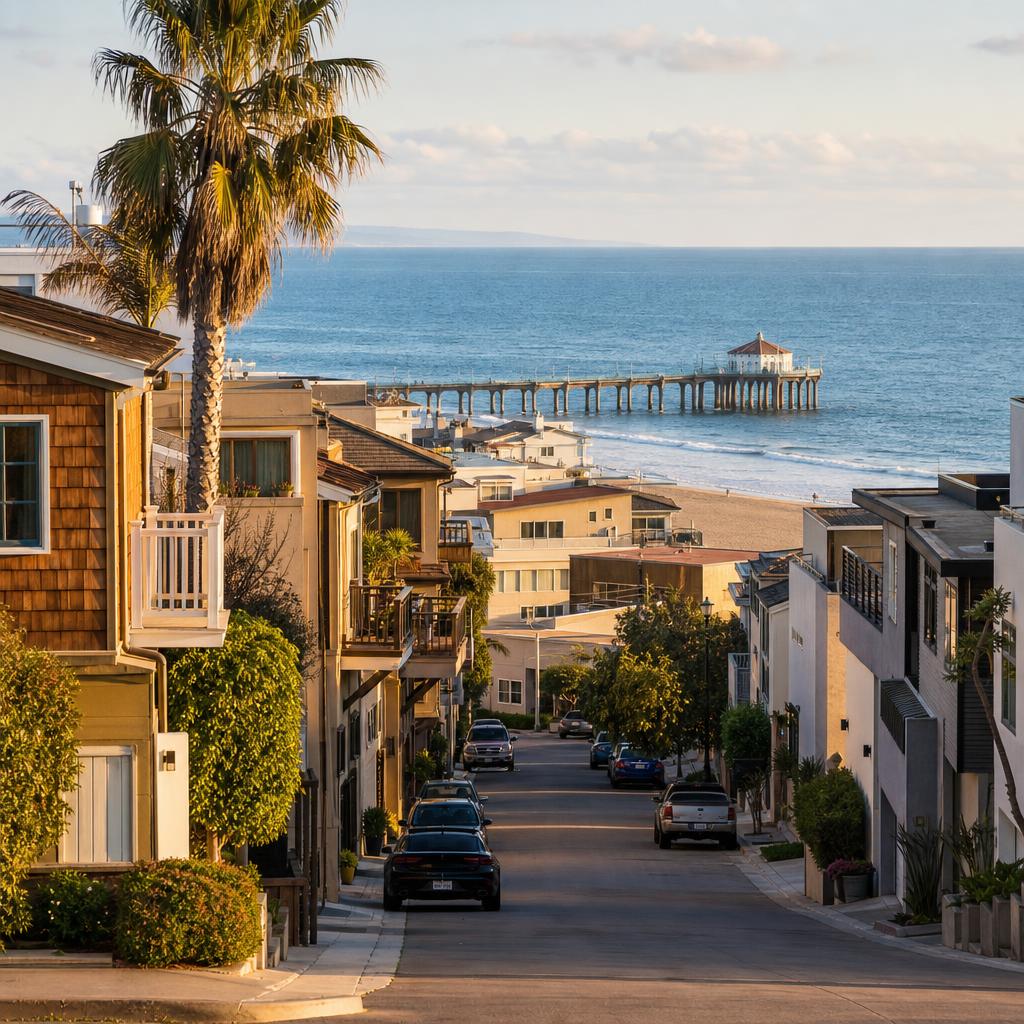
Hermosa Beach
Permit Expediting
Independent city permitting, coastal review, narrow-lot feasibility, and major remodel coordination through Hermosa Beach's own Community Development Department.
Women-owned, LA-based permit expediting firm. We coordinate Hermosa Beach's independent local process with the same care we bring to fire-rebuild clients in Pacific Palisades and Altadena. Free consultation — 213-277-8777.
Hermosa Beach is not a neighborhood of Los Angeles. It is an incorporated South Bay city with its own Community Development Department and Building & Safety division, its own zoning and coastal rules, and its own application process. That jurisdictional fact changes the first step of every permit project.
A Hermosa address can look, from a regional perspective, like another Southern California residential remodel. In reality, the permitting question is often more local and more constrained: Is the parcel inside the City's coastal jurisdiction? Is the lot a small legal nonconforming lot? Does the existing home have a lawful setback that a replacement design can preserve? Will a second story, roof deck, or addition change the coastal or neighborhood analysis? Can required parking fit without sacrificing the project?
We answer those questions before a plan set becomes expensive. Our Manhattan Beach permit work and Redondo Beach coordination are useful regional comparisons, but neither city's checklist is a substitute for Hermosa's. The goal is a Hermosa-specific approval path that respects the City's Local Coastal Program, compact lot pattern, and Building & Safety review.
Hermosa Beach Is Its Own Permit Jurisdiction
Hermosa Beach is an incorporated municipality. Its Community Development Department and Building & Safety division review the plans, issue permits, collect local fees, and coordinate inspections for properties inside the city. LADBS reviews projects in the City of Los Angeles; it does not issue Hermosa Beach permits. That distinction is more than a mailing address: it affects the code-administration staff, forms, portal, plan-check workflow, fee schedule, and interpretation of local zoning and coastal standards.
For a homeowner, the practical risk is starting with a generic “LA permit” assumption. For an architect or contractor, the risk is preparing a submittal around LADBS conventions and discovering at intake that Hermosa requires a different document, local Planning review, or coastal finding. We establish the agency map first, then coordinate the application through Hermosa's departments.
Local Coastal Program, Strand & Bluff Conditions
California's Coastal Act protects coastal resources, public access, shoreline character, and sensitive landforms. Hermosa Beach administers its certified Local Coastal Program through its local planning process, while the California Coastal Commission retains the jurisdiction and appellate role provided by state law. The Coastal Act's definitions and permit framework, including Government Code sections in Division 20 such as §§30106 and 30600, are part of the legal backdrop — but the parcel-specific answer comes from Hermosa's current local program and zoning materials.
The Strand and beach-front blocks require a different mindset from an inland remodel. Changes to height, decks, balconies, fences, landscaping, exterior lighting, parking, and access can affect public views or access even when the construction is private. Bluff-adjacent properties add slope, erosion, geotechnical, and setback questions. We identify whether a Coastal Development Permit, coastal consistency finding, or another local coastal review step is triggered instead of assuming every project is a standard over-the-counter permit.
Hermosa's coastal process should not be confused with Malibu's. Malibu has a larger, more varied coastal geography, extensive hillside and rural-interface conditions, and its own certified Local Coastal Program. Hermosa's compact urban beach environment produces a different set of recurring conflicts: narrow frontage, dense adjacent development, parking, Strand relationships, and the cumulative effect of height and bulk. We use the local Hermosa analysis, not a Malibu template.
Project Types & Common Review Issues
| Project Type | Review | Key Issue | Our Path |
|---|---|---|---|
| Interior remodel / MEP upgrade | Building & Safety; Planning if use or exterior changes | Existing legal use, code upgrades, coastal or exterior triggers | Confirm jurisdiction, submit complete plans, manage corrections and inspections |
| Teardown-rebuild / new single-family home | Building & Safety + Planning + coastal review when applicable | Narrow legal nonconforming lot, height, bulk, setbacks, parking, geotechnical conditions | Parcel feasibility, coastal/zoning strategy, coordinated building and trade permits |
| Major addition / second story | Community Development Department and Building & Safety | Height, massing, privacy, neighborhood context, parking and nonconformities | Pre-application zoning check, design review strategy, plan check and corrections |
| ADU | Building & Safety; coastal and fire review as applicable | Access, utilities, setbacks, existing structure, Government Code §65852.2 | ADU eligibility review, code-compliant plans, ministerial review where eligible |
| Restaurant / retail / hospitality TI | Building & Safety, Planning, Fire, Public Works and Health as applicable | Change of use, occupant load, parking, grease/wastewater, alcohol or coastal conditions | Multi-agency permit map, concurrent submittals, final inspection sequence |
Small Lots and Legal Nonconforming Conditions
Hermosa's lot pattern is one reason teardown-rebuilds and major remodels are so prominent in the local market. Small and narrow lots can be legal even when they do not meet today's preferred dimensions. The existing home may have a lawful footprint, side-yard condition, parking arrangement, or building height that was established under an earlier rule. That history is valuable, but it is not a blanket exemption from every current requirement.
A replacement project must distinguish between what can be maintained, what can be reconstructed, and what must be brought into compliance. A second story can change privacy and bulk. A roof deck can create height and coastal-view concerns. A larger garage or new ADU can change parking and access. We research permit history and lawful existing conditions, then give the design team a written list of constraints before the plans commit to an envelope that the City cannot approve.
California's statewide housing laws can also affect the analysis. For example, ADU provisions in Government Code §65852.2 limit local barriers for qualifying accessory dwelling units, but they do not eliminate building, fire, utility, coastal, or site-access requirements. The correct strategy is to use state protections where they apply while still designing a buildable, insurable, and approvable project.
Height, Setbacks, Parking & the Beach-City Envelope
Hermosa projects are often won or lost in the relationship between height, setbacks, lot coverage, and parking. The right dimensional standard depends on the zone, parcel, street, coastal location, and the precise work. We do not publish a universal “Hermosa setback” or “maximum height” because using one number across the city can mislead an owner and create a failed design.
Parking deserves equal attention. A dense beach city cannot treat parking as a late drawing note. A new dwelling, addition, ADU, restaurant, or change of use can create replacement, guest, accessible, bicycle, loading, or operational parking questions. On a narrow parcel, the location of a garage, driveway width, tandem arrangement, and turning geometry can determine whether the preferred floor plan works. We test parking with the massing, not after it.
The same early screen catches coastal conflicts: elevated decks, roof structures, fences, landscaping, exterior lighting, and mechanical equipment can be small in square footage but important in a coastal review. Coordinating the architectural, structural, landscape, parking, and coastal narratives as one package reduces the risk of a correction cycle that sends the project back to design.
How a Hermosa Beach Permit Moves
- 01
Confirm the jurisdiction
We verify the parcel is inside the incorporated City of Hermosa Beach and identify the correct Community Development Department / Building & Safety intake path. Hermosa is not LADBS territory, even though it borders City of Los Angeles neighborhoods.
- 02
Run the coastal and zoning screen
We map the Local Coastal Program boundary, Strand or bluff relationship, zoning designation, legal nonconforming lot history, height/setback rules, parking constraints, and any Planning or Coastal Commission issue before design is locked.
- 03
Test the proposed envelope
For a remodel or teardown-rebuild, we compare the existing lawful condition with the proposed footprint, stories, roof, decks, windows, parking, access, utilities, and drainage. For commercial work, we add occupancy, change-of-use, loading, health, and public assembly questions.
- 04
Prepare a complete application
The architect's drawings, structural and energy documents, soils or geotechnical materials, coastal narrative, parking plan, and agency forms are assembled for the City's actual checklist rather than a generic Los Angeles template.
- 05
Manage Planning and Building & Safety review
We track intake, correction comments, coastal or Planning determinations, resubmittals, fees, and consultant responses. If an outside agency is involved, we coordinate the documents so each reviewer is working from the same scope.
- 06
Coordinate permits and inspections
After approval, we help the contractor sequence building, electrical, plumbing, mechanical, fire, and any coastal or Public Works conditions. The project closes only when the City's final sign-offs match the approved plans.
Hermosa vs. Manhattan Beach vs. Redondo Beach
The South Bay is not one permitting jurisdiction. Manhattan Beach, Hermosa Beach, and Redondo Beach are incorporated cities with separate departments and local rules. Manhattan Beach's Sand Section has its own intense small-lot and coastal-development pattern. Redondo Beach brings different waterfront, commercial, and neighborhood standards. Hermosa's signature combination is its compact urban beach fabric, Strand and bluff relationships, parking pressure, and high volume of major remodel and replacement-home feasibility questions.
For owners comparing properties across the three cities, the right question is not “which one is easier?” It is “which agency, coastal program, lot condition, and use-specific standard applies to this address?” We maintain separate checklists and do not reuse a Redondo or Manhattan application without recalibrating it for Hermosa.
Why Hermosa Beach Owners Work With Ocean Permits
Ocean Permits & Development is a women-owned permit expediting firm coordinating residential, commercial, coastal, and multi-agency projects across Southern California. Our fire-rebuild expertise in Pacific Palisades and Altadena has trained us to map jurisdiction, sequence reviews, and keep a project moving when multiple agencies have different requirements. In Hermosa, that means starting with the City's own Community Development Department, then layering the Local Coastal Program, Building & Safety, Fire, Public Works, parking, and health tracks as needed.
We work with homeowners, architects, contractors, and commercial operators from feasibility through final inspection. For a parcel-specific review, schedule a free consultation at 213-277-8777 or visit our permit expediting services page.
Frequently Asked Questions
Does Hermosa Beach use LADBS for building permits?
No. Hermosa Beach is an incorporated city with its own Community Development Department and Building & Safety division. Applications for Hermosa properties are reviewed by the City of Hermosa Beach, not the City of Los Angeles Department of Building and Safety (LADBS). This is the first jurisdiction check we make before preparing a project, because an application sent to LADBS would be the wrong submission.
Is every Hermosa Beach property subject to the Coastal Zone?
A substantial portion of Hermosa Beach is within California's Coastal Zone, but the exact boundary and the applicable permit path must be confirmed for the parcel. Coastal jurisdiction can affect the Strand, beach-front and bluff-adjacent areas, public access, height, setbacks, and exterior changes. We verify the City's Local Coastal Program and whether a Coastal Development Permit or other coastal review applies before treating a project as a standard Building & Safety application.
How is Hermosa's coastal process different from Malibu's?
Both cities have coastal review, but they are separate jurisdictions with different certified Local Coastal Programs, local staff, zoning codes, and development patterns. Malibu's process is shaped by a much larger rural-hillside geography and its own post-fire and bluff constraints. Hermosa is a compact, intensely developed beach city where narrow lots, the Strand, beach access, parking, and height/setback relationships are usually the central issues. A Malibu permit history cannot simply be copied into a Hermosa application.
Why are teardown-rebuilds and major remodels common in Hermosa Beach?
Hermosa contains many small and narrow legal nonconforming lots created before current lot-size standards. Owners often evaluate a substantial remodel or teardown-rebuild because the existing home no longer fits contemporary living, accessibility, mechanical, or structural expectations. The fact that a lot is legal nonconforming does not mean every new massing, setback, height, parking, or coastal change is automatically allowed; the replacement design must be tested against current standards and the City's nonconforming-use rules.
What setback and height issues are important on a Hermosa Beach rebuild?
The answer depends on the parcel's zoning, location relative to the beach and bluff, street frontage, existing legal nonconformities, and the City's coastal standards. Strand and bluff-adjacent properties can face a more sensitive review of bulk, view corridors, geologic conditions, and public access. We start with a parcel-specific zoning and coastal overlay check rather than promising a universal setback or height number.
Does Hermosa Beach require more parking than a larger inland city?
Parking is a major feasibility issue in Hermosa because the city is dense, lots are compact, and street parking is highly constrained. Residential additions, new homes, ADUs, and changes from one dwelling configuration to another can affect required and replacement parking. Commercial uses also need an analysis of use, floor area, restaurant or assembly characteristics, and any applicable coastal or shared-parking provisions. We confirm the current City standard for the proposed use before plans are finalized.
Can I build an ADU on a narrow Hermosa lot?
Possibly. California's ADU rules, including Government Code §65852.2, limit how local standards can prevent qualifying ADUs, but the site still has to be reviewed for setbacks, fire access, utilities, coastal jurisdiction, parking treatment, and the relationship to an existing legal nonconforming structure. On a narrow lot, the practical question is often whether the proposed ADU can satisfy building, fire, light, ventilation, and access requirements without creating an unresolvable conflict with the primary dwelling.
What departments review a Hermosa Beach permit?
The City's Community Development Department and Building & Safety division are the core reviewers. Depending on scope, the project can also involve Planning, Public Works, the City's coastal program, the California Coastal Commission on an appeal or other matter within its jurisdiction, the Fire Department, utilities, and County or state agencies. A restaurant or public-facing commercial use can add health, wastewater, accessibility, and business-license coordination.
How does Hermosa permitting differ from Manhattan Beach and Redondo Beach?
All three are independent South Bay cities, but each has its own building department, zoning code, coastal program, application portal, fee schedule, and review habits. Manhattan Beach projects often turn on its Sand Section lot pattern and local coastal review; Redondo Beach has different development standards, planning districts, and waterfront or commercial conditions. Hermosa's compact lots, Strand relationship, parking pressure, and teardown-remodel market create a distinct feasibility analysis. We never transfer a neighboring city's checklist without checking Hermosa's current requirements.
How long does a Hermosa Beach permit take?
There is no honest single timeline for every Hermosa project. A straightforward interior permit may move differently from a teardown-rebuild, coastal project, bluff-adjacent remodel, ADU, or commercial change of use. Completeness of the plans, correction cycles, Planning or coastal review, public notice, and outside agency coordination all matter. We provide a project-specific sequence after reviewing the address and scope, rather than quoting a guaranteed number of days.
Can Ocean Permits help with a Hermosa Beach project even though it is not LADBS?
Yes. Our work is jurisdiction-specific permit coordination, not limited to LADBS. We manage the City's Community Development Department and Building & Safety process, map coastal and Planning requirements, coordinate corrections, and keep the architect, contractor, and outside agencies aligned. Our women-owned Los Angeles firm also coordinates fire-rebuild work in Pacific Palisades and Altadena, where agency sequencing is especially important. Start with a free consultation at 213-277-8777.
Building in Hermosa Beach?
Start with the correct city jurisdiction, coastal screen, and narrow-lot feasibility review.
Related Locations
Related Services