_1781464136662-DVw5IPjt.png)
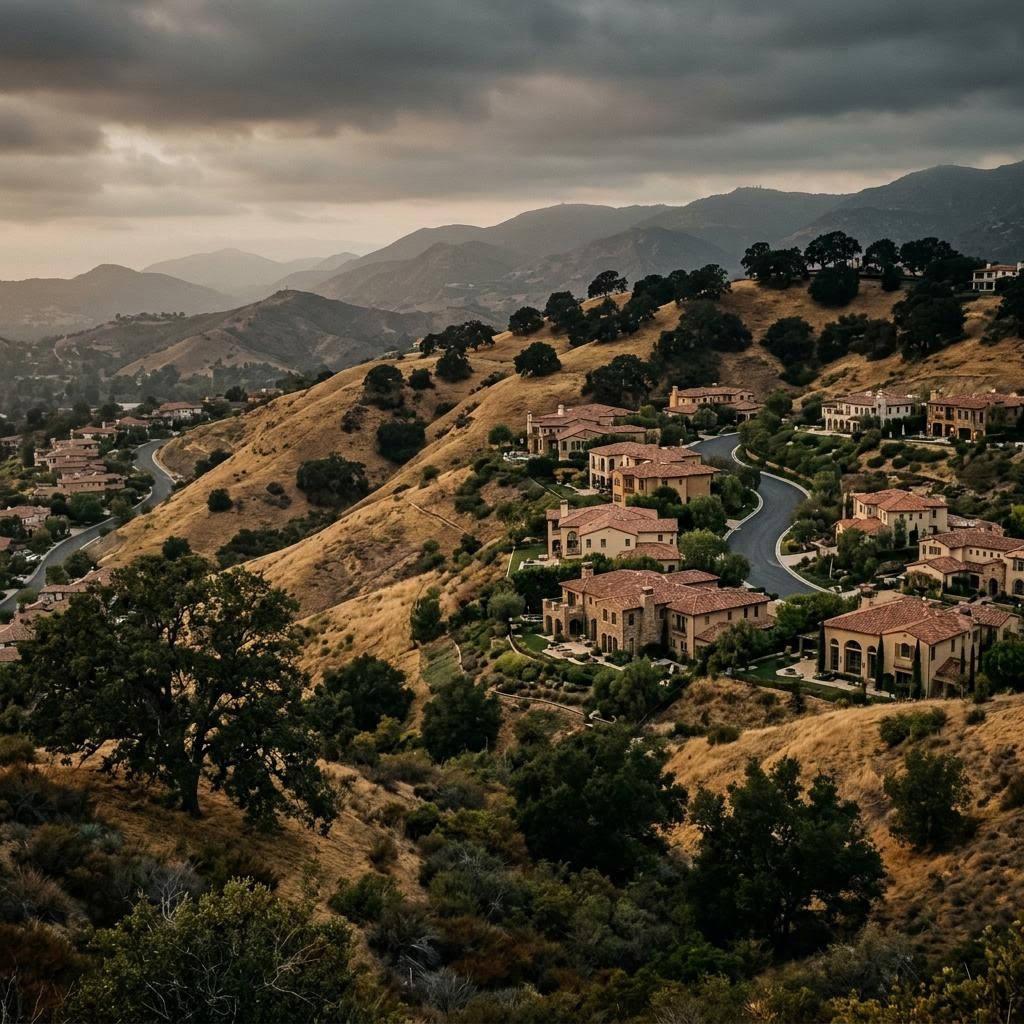
Calabasas
Permit Expediting
Calabasas has its own Building & Safety Division — not LADBS. We navigate the City's fire-hazard, oak tree, hillside, and HOA requirements as one coordinated process.
Women-owned, LA-based permit expediting firm. The same wildfire-hazard construction expertise we apply for fire-rebuild clients in Pacific Palisades and Altadena applies directly to Calabasas's Very High Fire Hazard Severity Zone requirements. Free consultation — call 213-277-8777.
Calabasas is an independent incorporated city, not a neighborhood of Los Angeles — which means building permits never touch LADBS. They go through the City of Calabasas's own Building & Safety Division, and that single fact changes almost everything about how a project should be planned and submitted.
It's a distinction that trips up more project teams than you'd expect. Contractors and even architects who work primarily in LA-proper neighborhoods sometimes assume Calabasas follows LADBS procedures, forms, or timelines — it doesn't. The City of Calabasas has its own portal, its own intake requirements, and its own plan-check staff operating under the Calabasas Municipal Code. On top of that baseline difference, Calabasas layers in requirements that many flatland LA neighborhoods never encounter at all: Very High Fire Hazard Severity Zone construction standards across most of the city, an oak tree preservation ordinance protecting the city's native tree canopy, hillside grading regulations in areas like Mulholland, Monte Nido, and Old Topanga, and — in several of the city's best-known gated communities — a second, private layer of HOA Architectural Review Committee approval running alongside the City's own process.
Ocean Permits & Development treats each of these as a coordinated, parallel track from day one, rather than letting a Calabasas project discover them one at a time as delays.
Calabasas Has Its Own Building Department — Not LADBS
Calabasas incorporated as an independent city in 1991. It has never been part of the City of Los Angeles, and its building permits are processed entirely outside LADBS's jurisdiction. In practice, that means a different online portal for submittals, different application forms, a different fee schedule, and a plan-check team with its own current caseload and priorities — none of which overlaps with LADBS's process, staff, or systems. A permit expediter whose experience is entirely LADBS-based does not automatically know how to move a project through Calabasas efficiently, because almost none of that institutional knowledge transfers directly.
City of Calabasas Building & Safety Division (Not LADBS)
Calabasas incorporated as an independent city in 1991 and has never been part of the City of Los Angeles. All building permits go through the City's own Building & Safety Division within the Community Development Department, under the Calabasas Municipal Code — a completely separate department, portal, forms, fee schedule, and plan-check staff from LADBS. Teams accustomed to LADBS's ePlanLA system and processes have to adapt to a different city's procedures entirely.
Very High Fire Hazard Severity Zone (VHFHSZ) & Chapter 7A
CAL FIRE maps most of Calabasas as a Very High Fire Hazard Severity Zone given its Santa Monica Mountains wildland-urban interface setting. New construction and substantial remodels must comply with Chapter 7A of the California Building Code — ignition-resistant standards for roofing, exterior walls, vents, eaves, decks, and windows — reviewed by Building & Safety as part of standard plan check.
Defensible Space — California Public Resources Code §4291
State law under Public Resources Code §4291 requires defensible space clearance around structures in fire hazard zones, and many Calabasas properties also carry a fuel modification zone obligation — a managed vegetation buffer — as a condition of their permit or an ongoing requirement tied to the parcel. We confirm the applicable defensible space and fuel modification requirements for each site early in design.
Oak Tree Preservation Ordinance
Calabasas maintains an oak tree preservation ordinance requiring a permit before removing, significantly pruning, or grading near a protected oak tree — reflecting the City's emphasis on preserving its native oak canopy. This review can apply even when a tree isn't directly in a project's footprint, if grading or construction could affect its root zone, and it runs as its own approval track alongside the building permit.
Hillside Development & Grading Standards
Large portions of Calabasas — including the Mulholland corridor, Monte Nido, and Old Topanga areas — sit on hillside terrain governed by the City's hillside development and grading standards, requiring a geotechnical report and engineered grading plans for earth movement, slope stability, drainage, and retaining structures beyond what a flat-lot project requires.
HOA & Architectural Review Committee (ARC) Approval
Calabasas has a number of prominent gated communities — including The Oaks, The Estates at Calabasas, and Mountain View Estates — each with its own HOA and Architectural Review Committee that must approve design plans separately from the City's building permit. ARC approval and City approval are two distinct, parallel requirements; neither substitutes for the other.
Calabasas Permit Types & Typical Timelines
| Permit Type | When It Applies | Reviewing Department | Typical Timeline |
|---|---|---|---|
| Standard remodel permit (non-structural, no VHFHSZ trigger) | Interior remodels or minor work not affecting exterior fire-hazard elements | City of Calabasas Building & Safety | 4–8 weeks |
| Addition | Structural additions, footprint expansions, second-story additions — subject to Chapter 7A if in VHFHSZ | City of Calabasas Building & Safety (+ hillside grading review if applicable) | 8–16 weeks, depending on grading and corrections |
| New single-family home | Ground-up new construction, including hillside lots | City of Calabasas Building & Safety, Planning, and Public Works (grading) | 12–20+ weeks combined |
| ADU permit | Accessory dwelling unit — detached, attached, or garage conversion | City of Calabasas (ministerial, Gov. Code §65852.2) + Chapter 7A if VHFHSZ | 6–14 weeks |
| Oak tree removal / significant pruning permit | Removing, heavily pruning, or grading near a protected oak tree | City of Calabasas Community Development (arborist review) | 2–6 weeks; can run concurrently with the building permit |
| Defensible space / Chapter 7A compliance review | New construction or major remodel in a Very High Fire Hazard Severity Zone parcel | City of Calabasas Building & Safety (plan check) + LA County Fire (fuel modification, where applicable) | Reviewed concurrently with the base building permit; adds documentation, not typically a separate standalone timeline |
Timelines are estimates based on typical residential plan-check patterns described in our Los Angeles permit timeline guide, adapted for the City of Calabasas's separate department and current workload. Actual timelines depend on plan completeness, correction cycles, and whether hillside grading, oak tree review, or HOA coordination is involved.
Our Process for a Typical Calabasas Project
- 01
Jurisdiction & Zone Confirmation
We confirm the project is filed with the City of Calabasas's own Building & Safety Division — not LADBS — and identify the parcel's Very High Fire Hazard Severity Zone status, hillside designation, oak tree presence, and HOA membership before drawings are finalized.
- 02
Chapter 7A & Defensible Space Planning
For VHFHSZ parcels, we confirm the Chapter 7A ignition-resistant material and design requirements apply to the project scope, and check whether an existing fuel modification zone plan is on file with the City or LA County Fire that the project needs to account for.
- 03
Oak Tree & Hillside Review (If Applicable)
If protected oak trees or hillside grading are involved, we initiate those review tracks — arborist review for oak permits, geotechnical and civil engineering coordination for hillside grading — in parallel with the building permit application rather than sequentially.
- 04
HOA / Architectural Review Committee Submittal
For projects inside a gated community, we prepare and track the HOA or ARC submittal alongside the City submittal, so design approval from both the community and the City happen on a coordinated timeline instead of one waiting on the other.
- 05
City of Calabasas Plan Check Submittal
We submit the complete building permit package to City of Calabasas Building & Safety, coordinated with Planning review for any zoning or hillside considerations.
- 06
Correction Response
We manage the correction cycle with Calabasas plan check staff, responding quickly to keep the project from sitting in a resubmittal queue — particularly important given Chapter 7A and hillside review add technical detail that plan checkers scrutinize closely.
- 07
Permit Issuance & Inspection Coordination
Once the City issues the permit, we coordinate the inspection sequence — including any fire-hazard-specific inspections tied to Chapter 7A elements — with your contractor so construction proceeds without scheduling gaps.
Very High Fire Hazard Severity Zone: Chapter 7A & Defensible Space
CAL FIRE designates most of Calabasas as a Very High Fire Hazard Severity Zone, a consequence of its setting within the Santa Monica Mountains wildland-urban interface. That designation isn't a formality — it directly determines the construction standards your project has to meet. New construction and substantial remodels are required to comply with Chapter 7A of the California Building Code, which sets ignition-resistant standards for roofing materials, exterior wall assemblies, vent screening, eaves, decking, and exterior window and door glazing. The City of Calabasas's Building & Safety Division reviews Chapter 7A compliance as part of standard plan check, not as a separate optional add-on.
Alongside construction standards, California Public Resources Code §4291 establishes defensible space clearance obligations around structures in fire hazard zones, and many Calabasas parcels carry an additional fuel modification zone requirement — a managed vegetation buffer intended to slow fire spread before it reaches a home. We confirm whether a fuel modification plan already exists for your parcel with the City or LA County Fire, and factor any required updates into the project's design and permitting sequence from the start rather than as a late-stage surprise.
Oak Tree Preservation & Hillside Grading
Calabasas maintains an oak tree preservation ordinance that requires a permit before removing, significantly pruning, or grading near a protected oak tree on a property — a reflection of how central the city's native oak canopy is to its identity and hillside ecology. This review can apply even to trees that aren't directly inside a project's building footprint, if grading, trenching, or equipment access could disturb the tree's root zone. Identifying protected oaks on the site plan during early design, rather than after construction has started, avoids a costly mid-project stop for arborist review.
Much of Calabasas — including the Mulholland corridor, Monte Nido, and Old Topanga — sits on hillside terrain subject to the City's hillside development and grading standards. Projects on these parcels typically need a geotechnical (soils) report and grading plans stamped by a licensed civil engineer addressing slope stability, drainage, and retaining wall design, in addition to the standard building permit review. We coordinate the grading review track alongside the building permit application so both move together rather than one waiting on the other.
Gated Communities: HOA Architectural Review Plus a City Permit
Calabasas is home to several prominent gated communities — including The Oaks, The Estates at Calabasas, and Mountain View Estates — each governed by an HOA with its own Architectural Review Committee (ARC) that must approve design plans before construction. This is a private, contractual requirement, entirely separate from the City of Calabasas's building permit process — passing ARC review confirms your design meets the community's aesthetic guidelines, but it carries no authority over code compliance, structural review, or Chapter 7A requirements, which only the City can approve. We typically recommend submitting to the HOA/ARC and the City in parallel rather than sequentially, since waiting for one approval before starting the other is one of the most common sources of delay we see on gated-community projects.
Why Calabasas Property Owners Work With Ocean Permits
Ocean Permits & Development is a women-owned permit expediting firm based in Los Angeles, with hands-on experience navigating the Very High Fire Hazard Severity Zone requirements that define construction in Pacific Palisades and Altadena — the same Chapter 7A ignition-resistant construction standards and Public Resources Code §4291 defensible space obligations that apply across most of Calabasas. We also draw on comparable municipal-versus-LADBS distinctions we manage for clients in Malibu, another independent city with its own Building & Safety department. For ADU projects, see our ADU permits page, and if your project touches seismic retrofit requirements alongside fire-hazard compliance, our seismic retrofit guide covers that process in detail. We offer a free consultation — call 213-277-8777 or reach out through our contact page.
Frequently Asked Questions
Does Calabasas use LADBS, or does it have its own building department?
Calabasas is an independent incorporated city — it is not part of the City of Los Angeles, and it does not use LADBS (Los Angeles Department of Building and Safety). Building permits in Calabasas go through the City of Calabasas's own Building & Safety Division within its Community Development Department, under the Calabasas Municipal Code. That means a different portal, different intake forms, different plan-check staff, and different fee schedule than any LADBS-served neighborhood — including nearby Pacific Palisades or Woodland Hills. Submitting a Calabasas project to LADBS by mistake, or assuming LADBS procedures apply, is a common and costly error we see from teams unfamiliar with the area.
Why is fire-hazard construction (Chapter 7A) required for my remodel in Calabasas?
Most of Calabasas is mapped by CAL FIRE as a Very High Fire Hazard Severity Zone (VHFHSZ), given its location within the Santa Monica Mountains wildland-urban interface. New construction and substantial remodels in a VHFHSZ must comply with Chapter 7A of the California Building Code, which sets ignition-resistant construction standards for roofing, exterior walls, vents, eaves, decks, and exterior windows. The City of Calabasas enforces these requirements as part of standard plan check — they are not optional upgrades, and retrofitting a design after plan check has started is far more expensive than designing to Chapter 7A from the outset.
Do I need a permit to remove or trim an oak tree on my property?
In most cases, yes. Calabasas maintains an oak tree preservation ordinance that requires a permit before removing, significantly pruning, or grading near a protected oak tree, given the ecological and aesthetic value the city places on its native oak canopy. This applies even on private property and even when the tree is not directly in the footprint of proposed construction, if grading or construction activity could affect its root zone. We identify protected trees on the site plan early in design so the project isn't delayed by a tree permit discovered mid-construction.
My HOA already approved my plans — do I still need a city building permit?
Yes. HOA or Architectural Review Committee (ARC) approval in a gated Calabasas community — such as The Oaks, The Estates at Calabasas, or Mountain View Estates — is a private, contractual requirement separate from the City's building permit process. It confirms your plans meet the community's design guidelines; it does not substitute for the City of Calabasas's plan check, structural review, or Chapter 7A compliance review. Every project in an HOA community needs both approvals, and we typically recommend running the HOA/ARC submittal and City submittal in parallel rather than waiting for one to finish before starting the other.
What is a fuel modification zone and does my property need one?
A fuel modification zone is a managed buffer area around a structure — typically involving vegetation thinning, spacing, and fire-resistant landscaping — designed to slow the spread of wildfire before it reaches a building. Many hillside Calabasas properties in the Very High Fire Hazard Severity Zone are required to maintain a fuel modification zone as a condition of their building permit or as an ongoing defensible space obligation under California Public Resources Code §4291. We confirm whether your specific parcel has an existing fuel modification plan on file with the City or the Los Angeles County Fire Department, and coordinate any updates needed for your project.
How long does a typical addition or remodel permit take in Calabasas?
A straightforward residential remodel or addition that doesn't trigger hillside grading, oak tree review, or HOA delays typically moves through City of Calabasas plan check in a range broadly comparable to standard residential plan check timelines elsewhere in the region — commonly in the range of our sitewide estimate of 4–10 weeks for first review, per our Los Angeles permit timeline guide, though Calabasas is a separate department with its own queue and current workload. Adding hillside grading, oak tree permitting, or HOA/ARC coordination extends the realistic total timeline, since those are additional review tracks running alongside the base building permit.
Is hillside grading regulated differently than flat-lot construction in Calabasas?
Yes. Much of Calabasas — including areas like Mulholland, Monte Nido, and Old Topanga — sits on hillside terrain subject to the City's hillside development and grading standards, which govern earth movement, slope stability, drainage, and retaining wall design in addition to standard building code requirements. Hillside projects typically require a geotechnical (soils) report and grading plans stamped by a licensed civil engineer, and grading review runs as its own track alongside the building permit review. Flat-lot properties in lower Calabasas generally don't carry this additional layer.
Can I get a permit for an ADU in a gated Calabasas community?
Yes. California's ADU statute (Government Code §65852.2) requires cities — including Calabasas — to ministerially approve qualifying ADU applications within 60 days of a complete submittal, and that requirement applies regardless of whether the property sits in a gated HOA community. That said, an ADU inside a gated community still needs separate HOA/ARC design approval on top of the City's ministerial ADU review, and if the property is in a Very High Fire Hazard Severity Zone (most of Calabasas is), the ADU still has to meet Chapter 7A ignition-resistant construction standards.
What happens if I build without a permit and my insurer or a future buyer finds out?
Unpermitted work in Calabasas creates real financial exposure beyond the risk of a City stop-work order and forced retroactive permitting. Insurers can deny wildfire-related claims tied to unpermitted construction that didn't meet Chapter 7A ignition-resistant standards, and unpermitted square footage or additions routinely surface during the disclosure and appraisal process when a home sells — sometimes killing a deal or forcing a price reduction. In a Very High Fire Hazard Severity Zone city like Calabasas, permit compliance is directly tied to insurability, which makes it a bigger risk than in a standard non-fire-zone jurisdiction.
Does Ocean Permits work directly with Calabasas Building & Safety staff?
Yes. We work directly with the City of Calabasas's Building & Safety Division and Community Development Department staff — submitting through the City's own portal and forms rather than treating Calabasas like an LADBS-served neighborhood. That distinction matters: an expediter who only knows LADBS's process, forms, and reviewer relationships isn't equipped to move a Calabasas project efficiently, because none of that institutional knowledge transfers directly to a different city's department.
How much does permit expediting cost for a Calabasas project?
Expediting fees for Calabasas projects generally track with the complexity ranges we quote sitewide for comparable Los Angeles-area projects, with additional cost where a project requires oak tree permitting, hillside grading review, or coordination with an HOA Architectural Review Committee — each of those adds its own review track and documentation requirement. We provide a firm, project-specific quote after a free consultation reviewing your parcel, its fire hazard zone status, HOA status, and scope of work.
Does Ocean Permits' fire-rebuild expertise from Palisades/Altadena apply to Calabasas wildfire zones?
Directly. Most of Calabasas sits in the same Very High Fire Hazard Severity Zone designation that drives Chapter 7A ignition-resistant construction requirements in Pacific Palisades and parts of Altadena. The defensible space obligations under California Public Resources Code §4291, the Chapter 7A material and design standards, and the discipline of coordinating fire-hazard compliance documentation alongside standard plan check are the same skill set we apply daily for our Palisades and Altadena fire-rebuild clients — it transfers directly to any Calabasas project in a VHFHSZ.
Building in Calabasas?
We coordinate City Building & Safety, fire-hazard compliance, oak tree, hillside, and HOA approvals as one process — not four separate headaches.
Schedule a Free ConsultationOr call 213-277-8777