_1781464136662-DVw5IPjt.png)
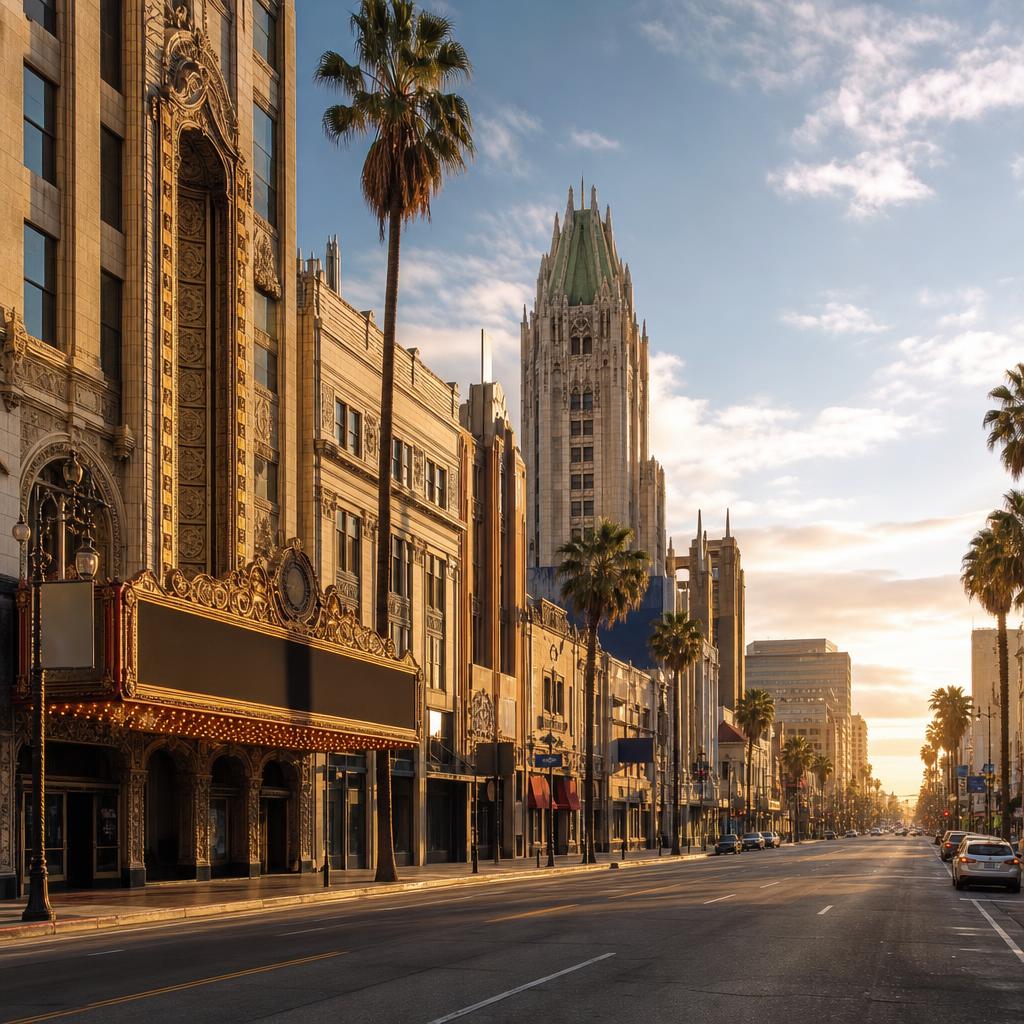
Hollywood
Building Permits
Hollywood is a City of Los Angeles neighborhood served by LADBS, centered on the historic entertainment-district commercial corridors of Hollywood Boulevard and Sunset Boulevard.
Women-owned, Los Angeles-based permit expediting firm. We bring the same disciplined LADBS coordination we use for clients in the Hollywood Hills and Los Feliz to Hollywood's historic entertainment-district corridors. Free initial consultation — call 213-277-8777.
Hollywood — the flatland neighborhood centered on Hollywood Boulevard and Sunset Boulevard, distinct from the hillside canyons above it — is a City of Los Angeles community served by LADBS, defined by historic theaters and commercial buildings, a dense restaurant and nightlife base, and ongoing multifamily and mixed-use housing construction near two Metro Red Line stations.
The entertainment and tourism-driven tenant mix along the boulevards drives a steady stream of restaurant permits and retail store permits — bars, live music venues, and tourist-facing storefronts opening inside buildings with decades of prior occupancy history, each triggering its own mix of change-of-occupancy, LAFD, and liquor license review.
Many of Hollywood's landmark theaters and commercial buildings carry historic status, so confirming HPOZ or historic designation is a necessary first step before any exterior or signage work is scoped. Large-format advertising on the boulevards also falls under its own review path — see our billboard and outdoor advertising structure permits service, which is separate from the smaller business signage we cover in our sign permits guide.
Ocean Permits & Development coordinates the building permit, historic preservation review, entertainment and alcohol licensing, and zoning questions as one process for Hollywood projects.
A Historic Entertainment-District LADBS Corridor
Every permit in Hollywood is reviewed by LADBS under the Los Angeles Municipal Code, applying the California Building Code, California Fire Code, and Title 24 energy standards with the City's local amendments — the same baseline used citywide. What distinguishes Hollywood is its historic theater and commercial building stock, the Hollywood Signage Supplemental Use District layered on top of the Hollywood Community Plan, and two Metro Red Line stations driving Transit Oriented Communities development.
City of Los Angeles — LADBS Jurisdiction
Hollywood is a City of Los Angeles neighborhood served by LADBS under the Los Angeles Municipal Code, with no separate local building department.
Hollywood Community Plan & Signage Supplemental Use District
Zoning, height, and density follow the Hollywood Community Plan, with an added Signage Supplemental Use District that restricts off-site and supergraphic advertising more tightly than most LA commercial corridors.
Hollywood Historic District & Individually Designated Landmarks
Historic theaters, contributing structures in the Hollywood Historic District, and individually designated Historic-Cultural Monuments trigger Certificate of Appropriateness or Cultural Heritage Commission review for exterior work.
Transit Oriented Communities (TOC) Overlap
Parcels near the Hollywood/Highland and Hollywood/Vine Metro Red Line stations can qualify for TOC density, height, and parking incentives depending on walking distance to the stop.
Entertainment, Nightlife & Tourism Commercial Base
A dense concentration of restaurants, bars, live entertainment venues, hotels, and tourist-facing retail along Hollywood and Sunset Boulevards drives frequent change-of-occupancy, ABC, and LAFD assembly-occupancy review.
Mixed-Use & Multifamily Infill
Side streets and portions of the boulevards themselves see ongoing multifamily and mixed-use residential-over-retail construction, reviewed under standard LADBS structural, fire, and accessibility plan check.
Restaurants, Bars & Entertainment Venues
Opening a restaurant, bar, or live entertainment venue on Hollywood or Sunset Boulevard is rarely a simple tenant improvement. Most storefronts carry decades of prior occupancy history, so a buildout typically needs LADBS change-of-occupancy review, LAFD plan check for assembly occupant load and exiting, and — for venues serving alcohol or hosting live entertainment — ABC licensing and LAPD entertainment-permit coordination layered on top of the standard building permit. We sequence these agency reviews together so a venue doesn't discover a missing approval the week before opening.
Retail and office tenant improvements that aren't changing occupancy move through standard LADBS plan check, the same as anywhere else in the city.
Historic Theaters, Multifamily Housing & ADUs
Hollywood's historic theaters, Hollywood Historic District contributing buildings, and individually designated Historic-Cultural Monuments need a Certificate of Appropriateness or Cultural Heritage Commission review for any exterior alteration, marquee change, or signage update — in addition to the standard LADBS building permit. We confirm a building's historic status before exterior plans are drawn.
On the housing side, Hollywood continues to see active multifamily and mixed-use construction, much of it within walking distance of the Hollywood/Highland or Hollywood/Vine Metro stations and eligible for Transit Oriented Communities density, height, and parking incentives. We run that eligibility analysis before a multifamily project is designed. On residential side streets, ADUs move through the same ministerial, by-right LADBS process used citywide.
Hollywood sits directly between several neighborhoods we also serve — Hollywood Hills to the north, West Hollywood to the west, Los Feliz to the east, and North Hollywood across the hills in the Valley — and we coordinate projects that span these jurisdictional boundaries, including the switch from LADBS to West Hollywood's own Community Development Department at the city line.
Hollywood Project Types, Review Paths & Our Approach
| Project Type | When It Applies | Typical Review Path | Our Approach |
|---|---|---|---|
| Restaurant, bar, or nightclub tenant improvement | New or converted food-and-beverage or entertainment venue on Hollywood or Sunset Boulevard | LADBS change-of-occupancy and plan check, LAFD assembly-occupancy review, ABC licensing, LAPD entertainment permit where live entertainment is offered | We sequence the building permit alongside ABC and LAPD entertainment review so opening day isn't held up by a separate agency. |
| Retail or office tenant improvement | Storefront buildout or interior remodel with no change of occupancy | LADBS plan check for structural, electrical, plumbing, and Title 24 energy compliance | We confirm the occupancy classification isn't changing before filing, keeping the project on the standard TI track. |
| Exterior alteration on a historic theater or designated building | Facade work, signage change, or marquee alteration on a Hollywood Historic District or individually designated structure | Certificate of Appropriateness or Cultural Heritage Commission review plus standard LADBS building permit | We confirm historic status and required design review before exterior plans are drawn. |
| Off-site or large-format signage | New or modified billboard, supergraphic, or off-site advertising structure | City Planning sign-district review under the Hollywood Signage Supplemental Use District plus LADBS structural permit | See our dedicated billboard and outdoor advertising structure permits service for this scope. |
| Multifamily or mixed-use residential construction | New apartment building, mixed-use residential-over-retail project, or major addition | LADBS structural, fire, and accessibility plan check; TOC incentive analysis where the parcel qualifies | We run the TOC tier analysis up front so the project's density and parking strategy reflects what the parcel actually qualifies for. |
| ADU on a residential side-street lot | New accessory dwelling unit on an existing single-family or multifamily parcel | LADBS ministerial ADU review under Government Code §65852.2 | We handle the standard ADU submittal and utility coordination from application through final inspection. |
These are planning-level descriptions, not fee quotes or guaranteed timelines. We confirm current fees, forms, and timelines for your specific address and scope during a free consultation.
Our Process for a Hollywood Project
- 01
Confirm zoning, historic status, and TOC eligibility
We pull the parcel's Hollywood Community Plan zoning, check for Historic-Cultural Monument or HPOZ-adjacent status, and run the TOC tier analysis for multifamily sites.
- 02
Identify ABC, LAFD, or entertainment-permit layers
For restaurants, bars, and entertainment venues, we map the state and city agency requirements that run alongside the LADBS building permit.
- 03
Determine required review paths
We confirm whether the project needs change-of-occupancy review, Cultural Heritage Commission sign-off, or standard LADBS plan check alone, and sequence them correctly.
- 04
Coordinate the design and engineering package
We work with the architect, MEP engineer, and venue operator to produce drawings that satisfy every applicable reviewer the first time.
- 05
File with LADBS and coordinate parallel agency reviews
We submit the LADBS application while managing ABC, LAFD, and historic-review tracks in parallel rather than sequentially.
- 06
Manage corrections and inspections through final sign-off
We track plan-check corrections across every discipline and coordinate inspections through final approval and occupancy.
Why Ocean Permits & Development for Hollywood
We coordinate LADBS plan-check submittal, historic preservation review, ABC and entertainment licensing, and TOC analysis for Hollywood projects ranging from a single storefront buildout to a full mixed-use development. Every engagement starts with a free consultation — call 213-277-8777 or reach out through our contact page. See also our multifamily apartment permits service and ADU permits service for housing-specific scope.
Frequently Asked Questions
What agency handles building permits in Hollywood?
The core Hollywood neighborhood is a City of Los Angeles community served by LADBS under the Los Angeles Municipal Code — the same citywide codes and plan-check process used everywhere else in the city, with a Hollywood-specific mix of historic commercial buildings, entertainment-industry tenants, and a Community Plan that shapes what gets built along the boulevards.
Is this page the same as your Hollywood Hills or West Hollywood pages?
No. This page covers the flatland Hollywood neighborhood centered on Hollywood Boulevard and Sunset Boulevard — a dense, LADBS-permitted commercial and mixed-use district. Our Hollywood Hills page covers the hillside residential canyons above Hollywood, and our West Hollywood page covers the separately incorporated city of West Hollywood with its own Community Development Department. All three sit next to each other but are permitted through entirely different processes.
What's involved in opening a restaurant, bar, or entertainment venue on Hollywood Boulevard?
Most Hollywood Boulevard and Sunset Boulevard storefronts are inside buildings with decades of prior occupancy history, so a tenant improvement for a restaurant, bar, or live entertainment venue typically needs LADBS plan check for the buildout, a change-of-occupancy review if the prior use differs from Group A assembly, LAFD review for occupant load and exiting, and — for venues serving alcohol or hosting live entertainment — ABC licensing and LAPD entertainment-permit coordination. We scope all of these together rather than letting a venue discover a missing approval after the buildout is finished.
Do Hollywood's historic theaters and commercial buildings carry preservation restrictions?
Many of Hollywood's landmark buildings along the Boulevard — historic theaters, the Hollywood Historic District's contributing structures, and individually designated Historic-Cultural Monuments — fall under preservation review. Any exterior alteration, signage change, or facade work on a designated or HPOZ-adjacent building needs a Certificate of Appropriateness or Cultural Heritage Commission review in addition to the standard LADBS permit. We confirm a building's historic status before exterior plans are drawn, since that status can add a review step that isn't obvious from the address alone.
Can I build an ADU on a residential lot in Hollywood?
Yes. Hollywood's residential side streets off the boulevards are zoned for ADUs under the same ministerial, by-right process that applies citywide under Government Code §65852.2. We handle the LADBS submittal, utility connections, and any Transit Oriented Communities interplay for lots near the Hollywood/Highland or Hollywood/Vine Metro stations.
What triggers Transit Oriented Communities (TOC) review for a Hollywood multifamily project?
Hollywood sits over two Metro Red Line stations — Hollywood/Highland and Hollywood/Vine — so many parcels within the TOC program's transit-proximity tiers qualify for density, height, and parking-reduction incentives in exchange for affordable units. The exact tier depends on a parcel's walking distance to the nearest qualifying transit stop, so we run that analysis before a multifamily or mixed-use project is designed rather than assuming a flat citywide bonus.
How does the Hollywood Community Plan affect new construction here?
The Hollywood Community Plan sets the zoning, height, and density framework for the neighborhood, with a Hollywood Signage Supplemental Use District layered on top that restricts off-site and supergraphic signage more tightly than most City of Los Angeles commercial corridors. New construction, significant additions, and large-format signage all need to clear the Community Plan's specific overlay provisions, not just citywide commercial zoning.
How long does a typical Hollywood tenant improvement take to permit?
A straightforward retail or office tenant improvement with no change of occupancy can often clear LADBS plan check in a matter of weeks once a complete application is submitted. A restaurant, bar, or entertainment venue build-out — or any project touching a historic or HPOZ-adjacent building — typically takes longer once ABC, LAFD, and Cultural Heritage Commission review are factored in. We provide a project-specific timeline after reviewing the address and scope.
Why use Ocean Permits & Development for a Hollywood project?
Ocean Permits & Development is a women-owned, Los Angeles-based permit expediting firm that manages LADBS plan check, historic preservation review, ABC and entertainment-permit coordination, and TOC analysis as one process for Hollywood Boulevard and Sunset Boulevard projects. We offer a free initial consultation — call 213-277-8777 or reach out through our contact page.
Building in Hollywood?
We coordinate LADBS plan check, historic preservation review, and entertainment licensing as one process.
Nearby Locations