_1781464136662-DVw5IPjt.png)
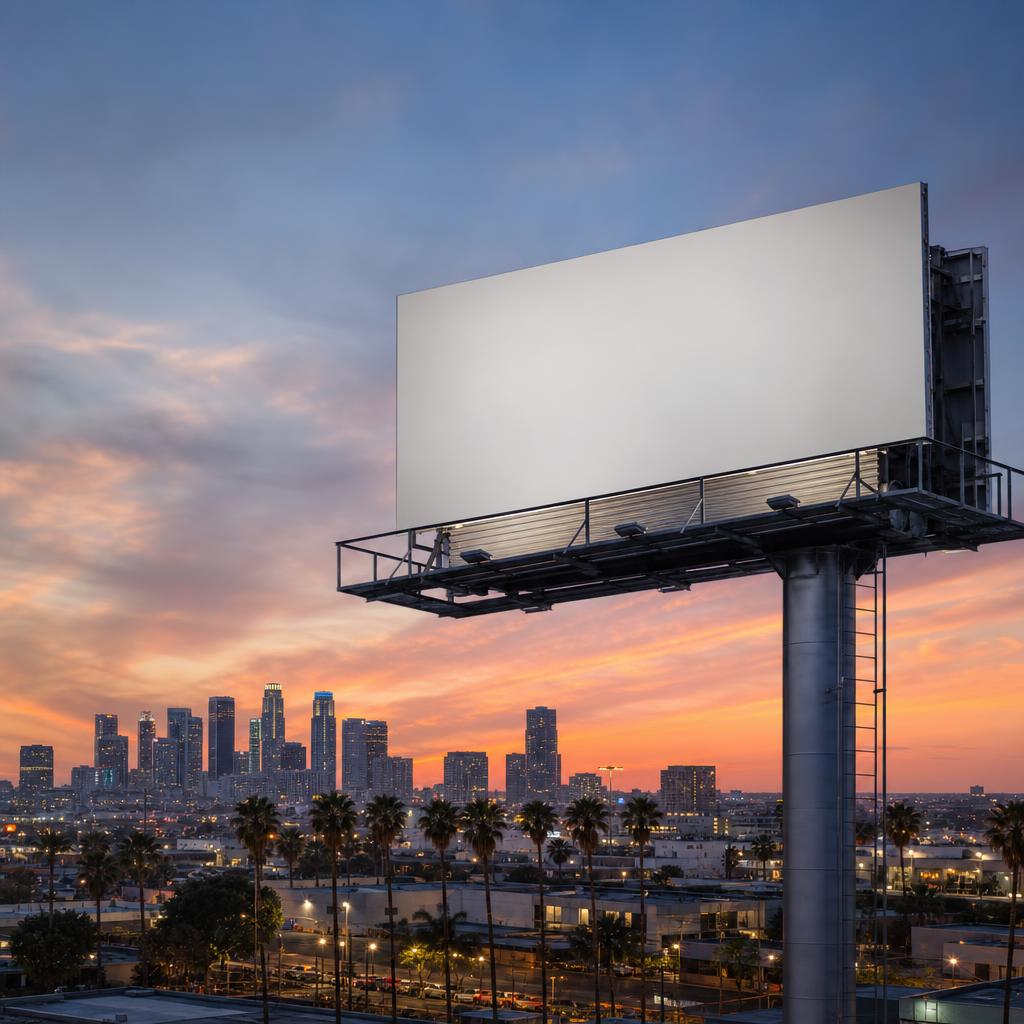
Billboard & Outdoor
Advertising Structure Permits
Large-format, off-site advertising structures — billboards, pole signs, and advertising murals — move through City Planning sign-district review and LADBS structural plan check, separate from everyday business signage.
Women-owned, Los Angeles-based permit expediting firm. If you're looking for a standard storefront sign instead of a large-format advertising structure, see our sign permits guide — this page covers billboards, pole signs, and off-site advertising only. Free initial consultation — call 213-277-8777.
Billboards, pole signs, large-format wall murals used as advertising, and other off-site outdoor advertising structures are regulated far more tightly than everyday business signage — through City Planning's sign-district rules and an interim control ordinance that has restricted new construction citywide for years, layered on top of standard LADBS structural plan check for the supporting structure itself.
This is a distinct scope from the consumer-facing storefront and business signage covered in our general sign permits guide — if you're opening a restaurant or retail store and need a wall sign, monument sign, or awning sign, that guide is the right starting point. This page is for billboards, pole signs, and large-format advertising structures that sell ad space independent of the property they sit on.
We also distinguish this work from the on-site monument and pylon signage we coordinate under master sign programs for shopping centers and strip malls — those identify the tenants of a single property and face a simpler review than off-site advertising.
Ocean Permits & Development runs the sign-district feasibility check, coordinates City Planning entitlement review with LADBS structural engineering, and manages digital-conversion or relocation-agreement strategy as one process for billboard and outdoor advertising clients.
A Restricted, Two-Agency Review Process
Unlike most permit types, a new billboard or off-site advertising structure in the City of Los Angeles isn't simply a matter of submitting complete plans — the first question is whether the structure is even allowed at the proposed location. City Planning's sign-district rules and an interim control ordinance have restricted new off-site billboard construction citywide for years, with new structures generally limited to approved sign districts, specific relocation agreements, or settlement-driven exceptions. Once location feasibility is confirmed, LADBS structural plan check for wind-load and seismic compliance runs alongside the planning entitlement.
City Planning Sign-District & Off-Site Advertising Review
Billboards and other off-site advertising structures are regulated under the Los Angeles Municipal Code's sign provisions and reviewed by City Planning, separate from on-site business signage.
Interim Control Ordinance & Sign-District Restrictions
The City of Los Angeles has long restricted new off-site billboard construction citywide, with new structures generally limited to approved sign districts or specific relocation and settlement agreements.
LADBS Structural Plan Check
Every billboard, pole sign, or freestanding advertising structure needs LADBS structural and foundation engineering review for wind-load and seismic compliance, independent of the planning entitlement.
Digital Display Conversion Rules
Converting a static billboard to a digital face typically requires a specific entitlement tied to a sign district or development agreement, plus electrical plan check and driver-visibility standards.
Large-Format Murals as Off-Site Advertising
A wall mural or supergraphic functioning as paid advertising is regulated as an off-site sign, not public art, and needs the same sign-district review as a billboard.
Distinct from On-Site Business Signage
Storefront wall signs, monument signs, and other on-site business identification signage follow a separate, generally simpler LADBS and Planning process — covered in our sign permits guide.
Murals, Digital Conversions & Pole Signs
A large wall mural or supergraphic that functions as paid advertising is treated as an off-site sign under the Municipal Code, not public art — a distinction that changes which review path applies and is worth confirming before a client commissions artwork. Converting an existing static billboard to a digital display typically needs its own entitlement tied to a sign district or development agreement, plus electrical plan check and driver-visibility review. Pole signs and other freestanding structures add LADBS foundation and structural engineering on top of the same planning review that applies to wall-mounted billboards.
We classify which category a project falls into at the outset, since a mural, a digital conversion, and a new pole sign each follow a meaningfully different process even though they're all "outdoor advertising" in a general sense. Properties near Hollywood Boulevard and Sunset Boulevard face additional restrictions under the Hollywood Signage Supplemental Use District — see our Hollywood location page for how that overlay affects signage in that corridor specifically.
Billboard & Outdoor Advertising Project Types, Review Paths & Our Approach
| Project Type | When It Applies | Typical Review Path | Our Approach |
|---|---|---|---|
| New billboard or off-site advertising structure | Proposed new billboard, pole sign, or freestanding advertising structure on a parcel | City Planning sign-district feasibility review, LADBS structural and foundation plan check | We run a site-specific feasibility check against current sign-district and interim control restrictions before any design work begins. |
| Large-format wall mural or supergraphic advertising | Wall-mounted mural, vinyl wrap, or supergraphic functioning as paid advertising | City Planning off-site sign review, LADBS permit for mounting structure or wrap system | We confirm whether the project qualifies as advertising versus non-commercial public art before filing, since the two follow different paths. |
| Static-to-digital billboard conversion | Existing billboard converting its display face to a digital screen | Sign-district or development-agreement entitlement, LADBS electrical and structural review, DOT glare and visibility standards where applicable | We scope the entitlement strategy first, since a digital conversion is rarely a simple over-the-counter permit. |
| Pole sign or freestanding structure replacement | Replacing or significantly altering an existing freestanding advertising structure | LADBS structural re-engineering for the new structure, City Planning review if the sign-district entitlement itself is changing | We coordinate the structural engineer and the planning entitlement as one sequenced project. |
| Billboard relocation under a settlement or relocation agreement | Moving an existing billboard under a prior legal settlement or city relocation agreement | City Planning review against the specific agreement's terms, LADBS structural permit for the new location | We confirm the relocation agreement's terms and required findings before a new site is proposed. |
| On-site business signage (referred out) | Storefront wall sign, monument sign, or other on-site business identification signage | Standard LADBS and City Planning sign review — see our sign permits guide | We point clients to our dedicated sign permits guide for this simpler, more common scope. |
These are planning-level descriptions, not fee quotes or guaranteed timelines. We confirm current fees, forms, and feasibility for your specific address and scope during a free consultation.
Our Process for a Billboard or Outdoor Advertising Project
- 01
Run a sign-district feasibility check
We confirm whether the proposed location sits within an approved sign district, faces interim control restrictions, or has any existing relocation or settlement agreement attached.
- 02
Classify the structure and advertising type
We determine whether the project is a new billboard, a mural functioning as advertising, a digital conversion, or a pole-sign replacement, since each follows a different review path.
- 03
Scope the required entitlement
For projects needing a specific entitlement — sign district approval, development agreement amendment, or relocation agreement review — we outline the findings the application needs to make.
- 04
Coordinate structural engineering
We work with the structural engineer on wind-load and seismic design for the supporting structure, independent of the planning entitlement track.
- 05
File with City Planning and LADBS
We submit the planning entitlement and the LADBS structural permit in parallel where the review paths allow it, rather than waiting on one before starting the other.
- 06
Manage corrections and inspections through final sign-off
We track plan-check corrections and coordinate structural inspections through final approval.
Why Ocean Permits & Development for Billboard & Outdoor Advertising Permits
We coordinate the sign-district feasibility check, City Planning entitlement, and LADBS structural plan check for billboard and outdoor advertising projects so a client knows whether they're looking at a permitting timeline or an entitlement-strategy conversation before committing to design costs. Every engagement starts with a free consultation — call 213-277-8777 or reach out through our contact page. For standard business signage, see our sign permits guide instead.
Frequently Asked Questions
Is this the same as a standard storefront sign permit?
No. This page covers large-format, off-site outdoor advertising structures — billboards, pole signs, and large wall murals used as paid advertising — which are reviewed under City Planning's sign-district and off-site advertising regulations. Day-to-day business identification signage, like a storefront's wall sign or monument sign, goes through a different and generally simpler process, which we cover in our sign permits guide. If you're opening a business and just need a storefront sign, start there instead.
What agency approves a new billboard in Los Angeles?
Billboards and other off-site advertising structures in the City of Los Angeles go through City Planning review under the Los Angeles Municipal Code's sign regulations, plus LADBS structural plan check for the supporting structure itself. Many areas of the city are also subject to sign districts, specific plans, or interim control ordinances that restrict or prohibit new off-site advertising entirely, so confirming what's allowed at a given location is the necessary first step.
Can I put up a new billboard anywhere in Los Angeles?
Not generally. The City of Los Angeles has operated under an interim control ordinance and a series of sign-district rules that significantly restrict new off-site billboard construction citywide, with limited exceptions tied to approved sign districts, specific relocation agreements, or digital-conversion programs. We run a site-specific feasibility check before any client invests in design work for a new billboard structure.
What about a large wall mural or supergraphic used as advertising?
A large-format wall mural or supergraphic that functions as paid advertising is treated as an off-site sign under the Municipal Code, not as public art, and needs the same City Planning sign review as a billboard — plus LADBS permitting for the mounting structure or vinyl wrap system. Murals that are genuinely non-commercial public art follow a separate, generally more permissive process, so we confirm which category a project falls into before filing.
What's involved in converting an existing static billboard to digital?
Digital billboard conversions typically require a specific entitlement — often tied to a sign district or an existing development agreement — plus LADBS electrical and structural plan check for the digital display hardware, and in some cases Department of Transportation review for driver-visibility and glare standards near roadways. These conversions are rarely a simple permit and usually need a dedicated entitlement strategy before any hardware is ordered.
Do pole signs and freestanding advertising structures need a different review than wall-mounted billboards?
Pole signs and other freestanding advertising structures add LADBS structural and foundation engineering review on top of the same City Planning sign-district approval that applies to wall-mounted billboards, since the structure itself — not just the display face — has to meet wind-load and seismic requirements. We coordinate the structural engineer and the planning entitlement as one sequenced project rather than two disconnected applications.
How is this different from the service you provide for shopping center monument signs?
A shopping center's monument or pylon sign under a master sign program is on-site signage identifying the tenants of that property, reviewed as part of our shopping center and strip mall permits work. A billboard or off-site advertising structure sells ad space unrelated to the property it sits on, which is why it's regulated separately and far more restrictively under the city's sign-district and off-site advertising rules.
How long does billboard or outdoor advertising structure permitting typically take?
Timelines vary widely depending on whether a location sits within an approved sign district, requires a new entitlement, or faces an outright restriction under the city's interim control ordinance. A feasibility review at the outset tells us whether a project is a permitting timeline or an entitlement-strategy conversation, and we provide a project-specific estimate once we know which path applies.
Why use Ocean Permits & Development for a billboard or outdoor advertising project?
Ocean Permits & Development is a women-owned, Los Angeles-based permit expediting firm that runs the sign-district feasibility check, coordinates City Planning entitlement review with LADBS structural plan check, and manages digital-conversion or relocation-agreement questions as one process. We offer a free initial consultation — call 213-277-8777 or reach out through our contact page.
Planning an Outdoor Advertising Structure?
We run the sign-district feasibility check before any design work begins.
Related Services
Related Guides