_1781464136662-DVw5IPjt.png)
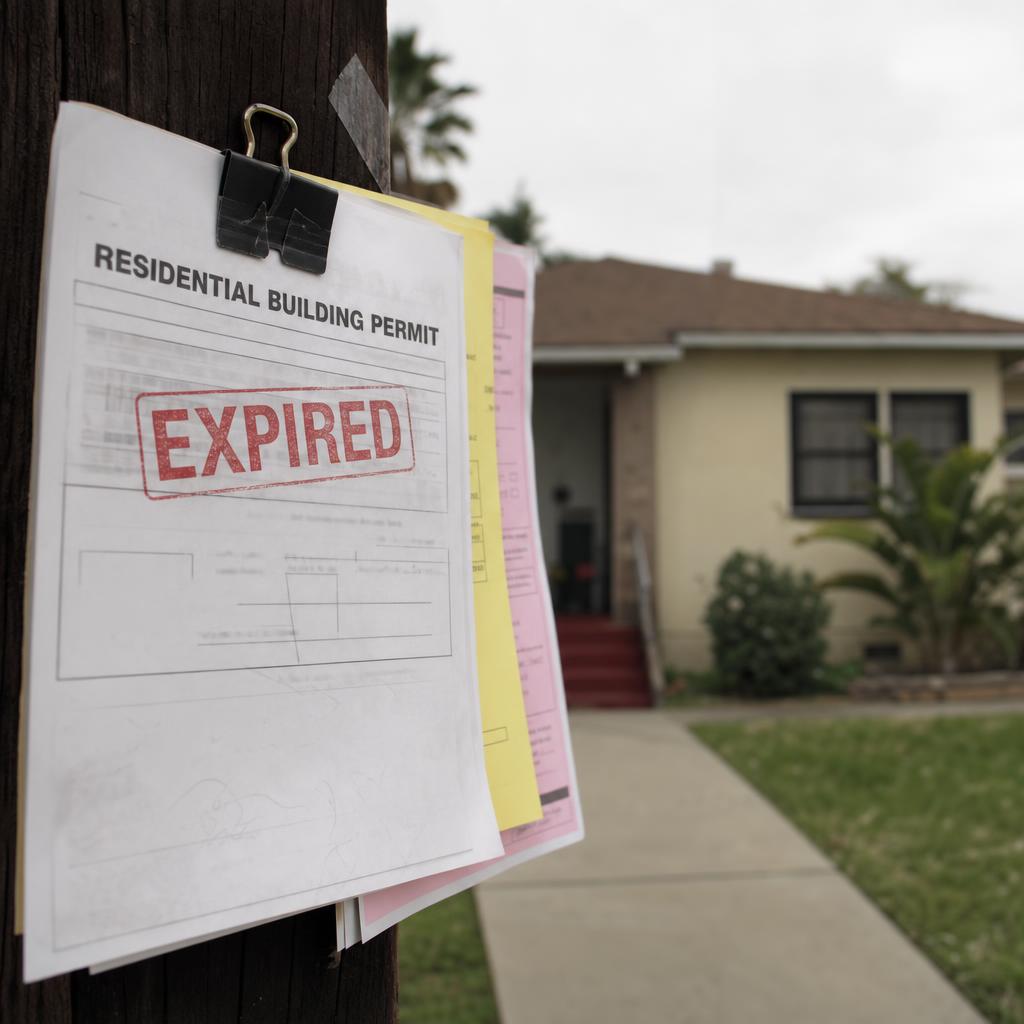
Under LAMC Section 98.0602, a Los Angeles building permit expires if work never starts within the allowed window, or if it starts and then sits inactive too long. This guide explains why permits expire, how LADBS renewal and extension actually work, what a lapsed permit means for a sale or an inherited property, and how to check a permit's status before you act.
Ocean Permits Is a Women-Owned LA Permit Expediting Firm
We handle expired and at-risk permits from investigation through active status, including fire-rebuild permits in Pacific Palisades and Altadena where a permit deadline can compound an already difficult rebuild timeline. All initial consultations are free — call 213-277-8777.
A building permit isn't a one-time approval you file away once it's issued — it's an active status that has to be maintained until the project is finished and, where applicable, finalized with a Certificate of Occupancy. Property owners, architects, and contractors run into expired permits in a few recurring ways: a project that never got past groundbreaking, a project that started and then genuinely stalled, or — increasingly common with older LA housing stock — a permit pulled by a previous owner that nobody has looked at since. This guide covers how expiration actually works under the Los Angeles Municipal Code, what renewal and extension involve, and what a lapsed permit means in practice for a sale, an inspection, or a fire rebuild.
The Core Rule: LAMC Section 98.0602, Expiration of Permits
Los Angeles Municipal Code Section 98.0602 governs when a building permit expires. Broadly, expiration happens in two distinct situations. First, if the work authorized by the permit is never commenced within a set period from the date of issuance — commonly discussed as 12 months — the permit lapses before construction ever begins. Second, once work has started, if it is subsequently suspended or abandoned for a set period — commonly discussed as 180 days — the permit can lapse mid-project, even though real construction already occurred.
That second scenario catches more owners off guard than the first. Once work is underway, LADBS generally expects inspections to be requested and the permit kept demonstrably active at intervals commonly cited as roughly every 180 days. A project that's technically still "in progress" on paper, but hasn't had an inspection requested in that window, can trip the same abandonment clock as a project that was deliberately shelved. We treat inspection-interval tracking as a standing part of managing any active permit, precisely because this rule is easy to lose track of on a long project.
Extension vs. Renewal: Act Before It Lapses, Not After
There's a meaningful difference between requesting an extension and pursuing a renewal, and the difference is timing. An extension is a proactive request filed before the permit actually expires — commonly discussed in increments of around 180 days — typically for a fee described as a percentage of the original permit fee. This keeps the existing permit continuously active and generally avoids re-review against a newer code edition, since the permit never technically lapsed.
Renewal, by contrast, applies after a permit has already expired. LADBS commonly allows renewal of a recently expired permit — often discussed as within roughly 12 months of the expiration date — by paying a renewal fee, rather than requiring a brand-new plan check from zero, provided the scope of work hasn't materially changed. We treat this as a general mechanism rather than a guaranteed number: the applicable fee, the exact renewal window, and whether the original plan check remains usable all depend on the specific permit, and we confirm each of those directly with LADBS before advising a course of action. The practical takeaway is straightforward — an extension requested a few weeks before a deadline is almost always simpler than a renewal filed after the fact, and both are simpler than starting over with a new application.
Why a Lapsed Permit Is More Than a Paperwork Problem
Selling the property. Title and escrow companies routinely check LADBS permit history, and an open or expired permit is a frequent source of late-stage delay, buyer negotiation, or a lender requirement to resolve it before closing.
Re-review under a newer code. California adopts a new building code edition roughly every three years. A permit renewed or reapplied for well after original issuance can be evaluated against whichever edition is current at that point, which sometimes forces design changes the original approved plans didn't anticipate.
Enforcement exposure. An expired permit with incomplete work can be treated as noncompliant, unpermitted-status construction if the property is inspected, reported, or flagged during a sale or refinance — turning a paperwork lapse into an active code enforcement matter.
Certificate of Occupancy. A project generally can't reach final sign-off or a Certificate of Occupancy while its permit is expired — restoring active status is a prerequisite, not a parallel task. See our Certificate of Occupancy guide for what that final step involves once the permit itself is current.
How to Check a Permit's Status Before You Act
Before contacting LADBS about an old or uncertain permit, look it up through LADBS's online permit and inspection record search using the property address or permit number. That record shows the permit's issuance date, described scope of work, inspection history, current status, and any recorded code violations tied to the property — the information that determines which path (extension, renewal, or a new application) actually applies.
Before approaching LADBS directly, it helps to have on hand: the permit number, the original issuance date, the scope of work as described on the permit, the date and result of the last inspection, and any photos or contractor documentation showing what was actually built versus what remains. If the permit predates your ownership, your grant deed or escrow closing documents establishing when you acquired the property round out the picture. Gathering this first — rather than starting the conversation with LADBS from scratch — consistently shortens how long resolution takes.
Five Real Scenarios & How We Handle Them
| Scenario | Typical Path | Key Issue | Our Approach |
|---|---|---|---|
| Permit issued, but work never started within the initial window | New permit application generally required; prior plan check may or may not be reusable | The clock ran out before ground was ever broken, often because financing, design changes, or contractor scheduling delayed the start | We confirm whether the original approved plans can be resubmitted or need updates for a current code edition before refiling, so you're not paying for a redundant plan check. |
| Work started, then stalled for more than the abandonment window | Renewal review of the expired permit, or a new application if too much time has passed | Construction visibly began — foundation, framing, rough plumbing — then paused for contractor, funding, or permitting reasons on a related scope | We document what was actually completed against the approved plans and pursue renewal rather than a fresh application wherever LADBS allows it, to preserve prior plan-check approval. |
| Permit nearing its inspection deadline, project still active | Scheduling the next required inspection, or filing an extension request before the deadline passes | The project is genuinely still moving, but the next inspection hasn't been requested and the clock on the current interval is close to running out | We schedule the needed inspection immediately or file the extension request proactively, so an active project never technically lapses over a scheduling gap. |
| Buyer or new owner discovers a prior owner's open permit | Permit history review, then renewal, finalization, or a new application depending on completed scope | The current owner didn't pull the permit and often doesn't know what was or wasn't actually built under it | We reconstruct the permit and inspection history for the address, compare it to the property's current physical condition, and identify the cleanest path to resolve it under the current owner's name. |
| Fire-rebuild permit in Pacific Palisades or Altadena approaching an inspection or extension deadline | Extension request or inspection scheduling coordinated with the broader rebuild and insurance timeline | Insurance disbursement schedules and temporary housing costs are tied to construction staying active, raising the stakes of a permit lapse | We track inspection and extension deadlines as part of ongoing rebuild permit management, so a paperwork deadline doesn't compound an already difficult rebuild timeline. |
General guidance based on common LADBS practice; current fees, deadlines, and code applicability are confirmed case-by-case directly with LADBS. Not legal advice.
How Ocean Permits Resolves an Expired or At-Risk Permit
From the first record search to an active, inspection-current permit, here's how we manage the process.
- 01
Pull the full permit and inspection history
We search LADBS's online permit and inspection records for the address and permit number to establish the exact issuance date, scope of work, inspection history, and current status.
- 02
Confirm why the permit lapsed, or is at risk of lapsing
We determine whether the issue is a never-started permit, an abandoned mid-project permit, a missed inspection interval, or a deadline that hasn't been reached yet but needs attention.
- 03
Compare completed work to the approved plans
For any project where construction has already begun, we document what physically exists against what the original plans authorized, since that comparison drives whether renewal or a new application applies.
- 04
Determine the applicable code edition
We confirm which building code edition applies to the renewal or new application, and flag any provisions that changed since original issuance that could affect the approved design.
- 05
File the renewal, extension, or new application
We prepare and submit the correct LADBS filing — a renewal, a proactive extension request, or a new permit application — with the documentation LADBS needs to process it without unnecessary back-and-forth.
- 06
Schedule inspections through to active, current status
Once the permit is active, we schedule and track the inspections needed to keep it that way, and to move the project toward finalization or a Certificate of Occupancy where applicable.
How This Connects to Other Permit Questions
An expired permit rarely shows up in isolation. If the delay was driven by unclear timelines to begin with, our permit timeline guide and LADBS permit process guide cover what typically extends a project's plan-check and inspection schedule. If renewal triggers a new fee estimate, our LADBS fee schedule guide explains how those charges are calculated. And if the original permit was pulled by the property owner without a licensed contractor, our owner-builder permit guide covers the additional responsibilities and liability considerations that come with that permit type — which matters if you're the one now trying to renew or transfer it.
Talk to Us Before You Talk to LADBS
Ocean Permits & Development is a women-owned permit expediting firm based in Los Angeles. We handle expired and at-risk permits — never-started, abandoned mid-project, inherited from a previous owner, or nearing an inspection deadline on an active fire rebuild — from record investigation through active, inspection-current status. Call 213-277-8777 or visit our permit expediting services page to get started with a free consultation.
Frequently Asked Questions
What actually causes a Los Angeles building permit to expire?
Under LAMC Section 98.0602, a permit generally expires in one of two ways: the authorized work is never commenced within a set period from the date of issuance (commonly discussed as 12 months), or the work is commenced and then suspended or abandoned for a set period at any point afterward (commonly discussed as 180 days). Once construction has started, LADBS also expects inspections to be requested and the permit kept active at intervals — commonly cited as every 180 days — or the same abandonment clock can start running even mid-project.
How do I request an extension before my permit expires?
The proactive route is to request an extension from LADBS before the permit actually lapses, rather than letting it expire and dealing with renewal afterward. Extensions are commonly discussed in increments of around 180 days and typically carry a fee described as a percentage of the original permit fee, though we confirm the exact current fee and process for a specific permit directly with LADBS rather than quoting a fixed number. The request is generally handled through the same LADBS office or online system that issued the original permit, and should reference the permit number and current construction status.
What does it cost to renew an already-expired permit?
It depends on how long the permit has been expired and what code edition applies to the project. LADBS commonly allows renewal of a recently expired permit — often discussed as within about 12 months of expiration — through a renewal fee rather than a full new plan check, provided the original scope of work hasn't materially changed and no significantly newer code cycle has taken effect in the meantime. Beyond that window, or where the code has moved on substantially, LADBS may require a new permit application and a fresh plan check against the current code. We verify current fees and the applicable code edition with LADBS before advising a specific path.
Does an expired or open permit affect selling my house?
Yes, often significantly. Escrow and title companies routinely pull LADBS permit history during a sale, and an open, expired, or unfinalized permit is a common source of last-minute delay — buyers' lenders may require it resolved, title companies may require it disclosed or cleared, and some buyers will negotiate price or walk away over unresolved permit status. Resolving an expired permit before listing, rather than during escrow, generally gives you far more control over timeline and outcome.
Will I have to redesign my project if the code changed since my permit was issued?
Possibly, depending on how much time has passed and what changed. California adopts a new building code edition roughly every three years, and LADBS renewal review can require an expired project to be brought into compliance with whichever code edition applies at the time of renewal rather than the one in effect when the original permit was issued. Whether that forces redesign depends on the specific scope and which code provisions changed — sometimes it's a minor plan note, sometimes it's a genuine redesign. We flag this risk early, before you assume the original approved plans still apply as-is.
How do I check whether my permit is open, expired, or has violations?
LADBS maintains an online permit and inspection record search where you can look up a property by address or permit number to see issued permits, their status, inspection history, and any recorded code violations. This is the right first step before contacting LADBS about an old permit — you want to know the permit number, issuance date, last inspection date, and current status before you call or visit a public counter, since that record determines which renewal or resolution path applies.
I bought a property and just found an old open permit from a previous owner. What do I do?
This is more common than most buyers expect, especially with older properties or after unpermitted work is discovered during a remodel. The permit itself typically stays tied to the property rather than the individual who pulled it, so as the current owner you generally have standing to address it — but the specific path (renewal, a new application, or a request to finalize based on completed work) depends on what was actually built, whether it matches the original approved plans, and how long ago the permit lapsed. We pull the full permit history for the address and figure out the cleanest path before you're stuck explaining someone else's paperwork to LADBS on your own.
Does an expired permit affect a Certificate of Occupancy?
Yes — a project generally cannot receive a Certificate of Occupancy under an expired permit, since finalizing a permit and obtaining a Certificate of Occupancy both depend on the permit being active and the required inspections being completed and signed off. If a project stalled before final inspection and the permit has since expired, restoring an active permit is a prerequisite step before a Certificate of Occupancy can be pursued. See our Certificate of Occupancy guide for how that process works once the permit itself is in good standing.
Can an expired permit turn into a stop-work order or code enforcement case?
It can, particularly if the property is inspected for another reason, reported by a neighbor, or flagged during a sale, refinance, or insurance review. An expired permit with incomplete work is a common trigger for a compliance case, since LADBS may treat unfinished, unpermitted-status work as noncompliant construction rather than an in-progress permitted project. Addressing an expired permit proactively — before an inspector or a title company surfaces it — is almost always a faster and less disruptive process than responding to an active enforcement case.
My fire-rebuild permit is nearing its inspection deadline — does that put my rebuild timeline at risk?
It can, and it's worth addressing early given how much else is riding on a fire-rebuild timeline — insurance disbursement schedules, temporary housing costs, and contractor availability all depend on construction staying active. The same LAMC 98.0602 mechanics apply to fire-rebuild permits as any other: inspections need to stay current, and an extension request before a deadline is far simpler than a renewal after a lapse. We track inspection and extension deadlines for rebuild clients in Pacific Palisades and Altadena as part of our ongoing permit management, specifically so a paperwork deadline doesn't become a rebuild delay.
What should I gather before contacting LADBS about an old permit?
At minimum: the permit number (or the property address to look it up), the original issuance date, the scope of work described on the permit, the last inspection date and result, and any photos or contractor records showing what was actually completed versus what remains. If the permit belonged to a previous owner, your grant deed or escrow paperwork showing when you acquired the property is also useful context. Having this assembled before you approach LADBS — or before we approach LADBS on your behalf — meaningfully shortens the conversation.
How does Ocean Permits help with an expired or at-risk permit?
We pull the full LADBS permit and inspection history for the property, confirm exactly why a permit lapsed or is at risk of lapsing, and determine whether an extension, a renewal, or a new application is the right path — then manage that process, including any required re-review against a current code edition, through to active status and final inspection. All initial consultations are free. Call 213-277-8777 or submit a project inquiry through our contact page.