Pop-Up Retail & Temporary Use
Permits in Los Angeles
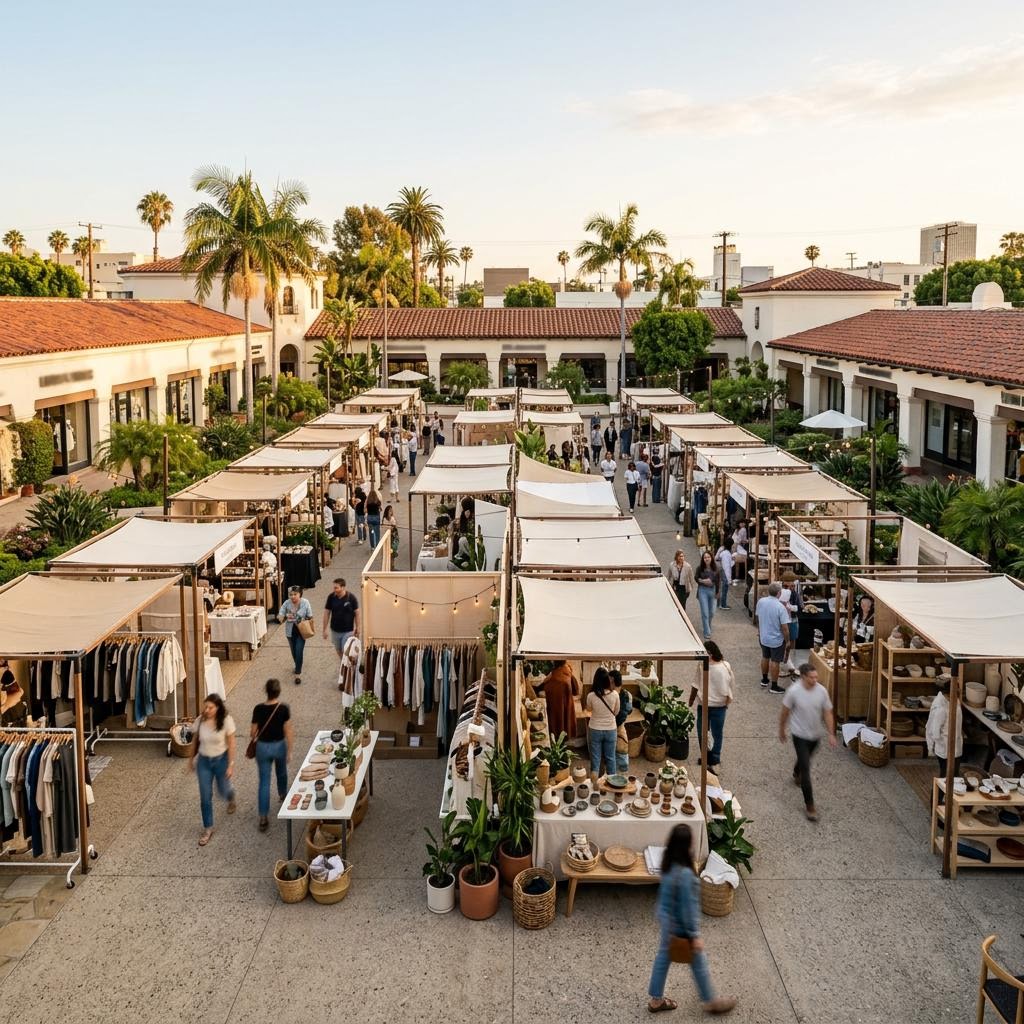
A weekend market, a holiday storefront, and a three-month seasonal shop look similar from the sidewalk. In Los Angeles they follow different permit paths, and choosing the wrong one is the most common reason a pop-up opens late or not at all.
Ocean Permits is a women-owned Los Angeles permit expediting firm. We help brands, landlords, market organizers, and event producers sort out which agency actually has a say in a temporary retail project, in what order those agencies need to be approached, and what the drawings and safety documents need to show. The goal is simple: open on the date you announced, with the structures, power, and occupancy you planned, and without a stop-work notice on day one.
This guide explains how the City of Los Angeles treats short-duration activity. The Los Angeles Department of Building and Safety (LADBS) issues Temporary Special Event (TSE) permits for events lasting not more than seven days. Longer activity normally needs a regular building permit or approval from the Superintendent of Building. Zoning, fire, street, and public health review sit on top of that, depending on what you are building and selling. We cite official sources throughout, and we flag the places where the answer depends on your specific address and scope.
Three Kinds of Pop-Up, Three Different Paths
Before any form is filled out, we classify the project. The classification drives everything else.
Indoor short tenancy in a lawful retail space. A brand that leases an existing, legally permitted store for a few weeks and sells merchandise similar to what the space was approved for is often the simplest case. The question is not usually a special event permit; it is whether the existing certificate of occupancy and use fit what you are doing, whether new partitions, lighting, signs, or electrical work need their own permits, and whether the fixture plan keeps exits, aisles, and accessible routes clear. If you are building out walls, ceilings, or new restrooms, the work is really a tenant improvement, and our retail store permits service is the better starting point.
Outdoor market or one-time event. A courtyard market, a parking-lot sale, a sidewalk-adjacent activation, or a branded installation with canopies, a stage, or temporary power is the classic Temporary Special Event case. LADBS describes TSE permits for events that last not more than seven days. These events frequently also involve the Los Angeles Fire Department (LAFD), and, where food is involved, the Los Angeles County Department of Public Health.
Longer seasonal or recurring use. A holiday lot open for six weeks, a market every weekend for a season, or a container shop left in place for months is not a seven-day event. Per LADBS, activity beyond seven days normally requires a building permit or Superintendent approval. Breaking a long run into back-to-back seven-day permits is not a recognized path, and we do not recommend trying it. A longer use may also raise zoning questions that a short event does not.
What Each Agency Actually Reviews
Zoning comes first where it applies. The Los Angeles zoning provisions of the Municipal Code, together with the parcel information in ZIMAS, determine whether retail or assembly activity is allowed on the lot and whether any temporary-use provision or Planning clearance applies. Where LADBS or Los Angeles City Planning requires a questionnaire or clearance before the TSE application, that clearance should be secured first. Building provisions live in LAMC Chapter IX, Article 1. We do not quote a numeric temporary zoning exception unless we have verified it for your parcel, because these provisions vary by zone, specific plan, and overlay.
LADBS reviews structures. According to the official LADBS Temporary Special Event page, commercial canopies larger than 12 feet in length or width, residential canopies larger than 450 square feet, stages over 30 inches high, and structures over 12 feet such as bleachers or towers can trigger permit review, and stages above that height may need engineering. Small, freestanding retail display tables do not raise the same questions as a raised stage with lighting truss.
LAFD reviews fire and life safety. LAFD has its own tent and membrane-structure thresholds, including tents of 450 square feet or more, separate from the LADBS canopy rule. Expect LAFD to look at a site and safety plan: exit paths and widths, fire lane and hydrant access, extinguishers, temporary power and generators, cooking equipment, and occupant load. Accessibility (ADA) routes to and through the event belong in the same plan.
Other agencies join when the activity triggers them. Anything placed in the public right-of-way, such as sidewalk, street, or parking lane use, needs a separate StreetsLA (Bureau of Street Services) permit. LAPD involvement is limited to events whose size, street closures, or security needs call for it; a clothing stall in a private courtyard typically does not. Every permit set should name an on-site contact who can meet the inspector.
Food Stalls vs. Merchandise-Only Stalls
Food changes the permit picture. The Los Angeles County Department of Public Health requires individual Temporary Food Facility (TFF) permits for food booths at community events, and an organizer permit when an event has two or more TFFs. Each food vendor answers to the County for food handling, handwashing, and equipment, separate from the City's building and fire reviews.
A stall that only sells clothing, ceramics, jewelry, or other packaged non-food goods does not need a County health permit. Mixing the two categories on a vendor list without sorting them is one of the fastest ways to miss a deadline, so we separate food and non-food vendors at the start. For trucks and carts, see our food truck and mobile vendor permits page; for a permanent kitchen, see restaurant permits.
Our Numbered Process
Every temporary use project follows the same sequence, scaled to its size.
- 1. Classify the use. We confirm address, dates, total duration, indoor or outdoor setting, and whether food, stages, tents, or right-of-way are involved.
- 2. Check zoning and existing approvals. We review ZIMAS data, the certificate of occupancy, and any Planning clearance or questionnaire that must come before building review.
- 3. Build the site and safety plan. We coordinate a scaled layout showing structures, canopy dimensions, exits, fire access, ADA routes, temporary power, and the named on-site contact.
- 4. Collect engineering where triggered. Stages, tall structures, and larger tents may need manufacturer certifications or engineer-stamped details.
- 5. File with LADBS and LAFD. We submit the TSE application or, for longer use, the building permit path, and route the fire safety materials in parallel.
- 6. Add right-of-way and health permits. StreetsLA applications and County Health TFF and organizer permits are filed on their own schedules.
- 7. Prepare for inspection. We confirm inspection appointments, walk the setup checklist with your production team, and keep approved plans on site.
- 8. Close out. We confirm sign-offs and, for recurring programs, document what worked so the next filing is faster.
Common Pitfalls
Most temporary retail problems are timing problems disguised as paperwork problems. These are the ones we see most often.
- Assuming a TSE permit covers a multi-week run. It covers events of not more than seven days; longer activity normally needs a building permit or Superintendent approval.
- Measuring canopies wrong. A 10x20 commercial canopy exceeds the 12-foot dimension even though it looks small.
- Forgetting the LAFD tent threshold, which is separate from the LADBS canopy rule.
- Placing tables, signs, or queues on the sidewalk without a StreetsLA permit.
- Listing food vendors late, leaving no time for individual County TFF permits and the organizer permit.
- Using generators or extension cords without showing temporary power on the safety plan.
- Blocking exits or accessible routes with display fixtures inside a short-tenancy store.
- No named on-site contact, so the inspector cannot find anyone authorized to make corrections.
Official Sources
The LADBS Temporary Special Event permit rules and the Los Angeles County Public Health community event requirements quoted on this page are linked in the source list at the end of this guide.
Requirements change and are applied to specific sites. Treat this page as orientation and confirm the current rules with each agency for your address and dates.
Scope, Timeline, and Fee Basis
Timelines below are planning estimates for complete submittals, not agency guarantees. Fees are set by each agency based on scope; we do not publish fixed prices.
| Scope | Typical permits | Planning timeline | Fee basis |
|---|---|---|---|
| Indoor short tenancy, lawful retail space, no construction | Confirm existing occupancy; electrical or sign permits if added | Days to a few weeks | Per permit type and valuation of any work |
| Outdoor market, 7 days or less, canopies only | LADBS TSE where thresholds met; LAFD review | 2–6 weeks | LADBS and LAFD fee schedules by structure and event scope |
| Event with stage over 30 in., tents, temporary power | LADBS TSE with engineering; LAFD tent and safety plan | 4–8 weeks | Structure count, engineering review, inspection |
| Food stalls at a market | County Health TFF per vendor; organizer permit for 2+ TFFs | Varies by County deadline | County Public Health fee schedule |
| Sidewalk or street use | StreetsLA permit | Varies by scope and closure | StreetsLA fee schedule |
| Seasonal or recurring use beyond 7 days | Building permit or Superintendent approval; zoning clearance | 6–16+ weeks | Valuation and plan-check based |
Estimates only. Corrections, zoning findings, inspection availability, and incomplete vendor information can extend any schedule.
Frequently Asked Questions
Do I need a permit for a pop-up shop in Los Angeles?
It depends on the setting. An indoor pop-up in a lawfully permitted retail space may need no new permit unless you add construction, electrical work, or signs. Outdoor events with canopies, stages, tents, or temporary power often require a LADBS Temporary Special Event permit and LAFD review.
How long can a Temporary Special Event permit last?
LADBS describes TSE permits for events of not more than seven days. Activity beyond seven days normally needs a building permit or Superintendent of Building approval.
Can I renew a seven-day permit repeatedly for a longer run?
That is not a recognized path. A longer or recurring use should be evaluated as a building permit or Superintendent approval matter, and may also need zoning review.
What canopy size triggers LADBS review?
Per LADBS, commercial canopies larger than 12 feet in length or width, and residential canopies larger than 450 square feet. LAFD has a separate threshold for tents of 450 square feet or more.
Does a clothing-only booth need a health permit?
No. Los Angeles County health permits apply to food. Food booths need individual Temporary Food Facility permits, and organizers with two or more food facilities need an organizer permit.
Do I need a separate permit to use the sidewalk?
Yes. Placing anything in the public right-of-way requires a separate StreetsLA (Bureau of Street Services) permit in addition to any building or fire approvals.
Is zoning clearance required before the event permit?
Where a zoning questionnaire or Planning clearance applies to the parcel, it should be obtained first. We check ZIMAS and the parcel's zoning before filing building and fire applications.
How much do pop-up permits cost?
Each agency sets fees by scope: number and size of structures, engineering review, inspections, and food facilities. We provide a scope-based estimate after reviewing your plan rather than quoting a fixed price.
Relevant Ocean Permits Resources
Opening a Pop-Up on a Fixed Date?
Send us the address, dates, layout, and vendor list. We will map the zoning, building, fire, street, and health steps in the right order.
Free Initial ConsultationCall 213-277-8777