_1781464136662-DVw5IPjt.png)
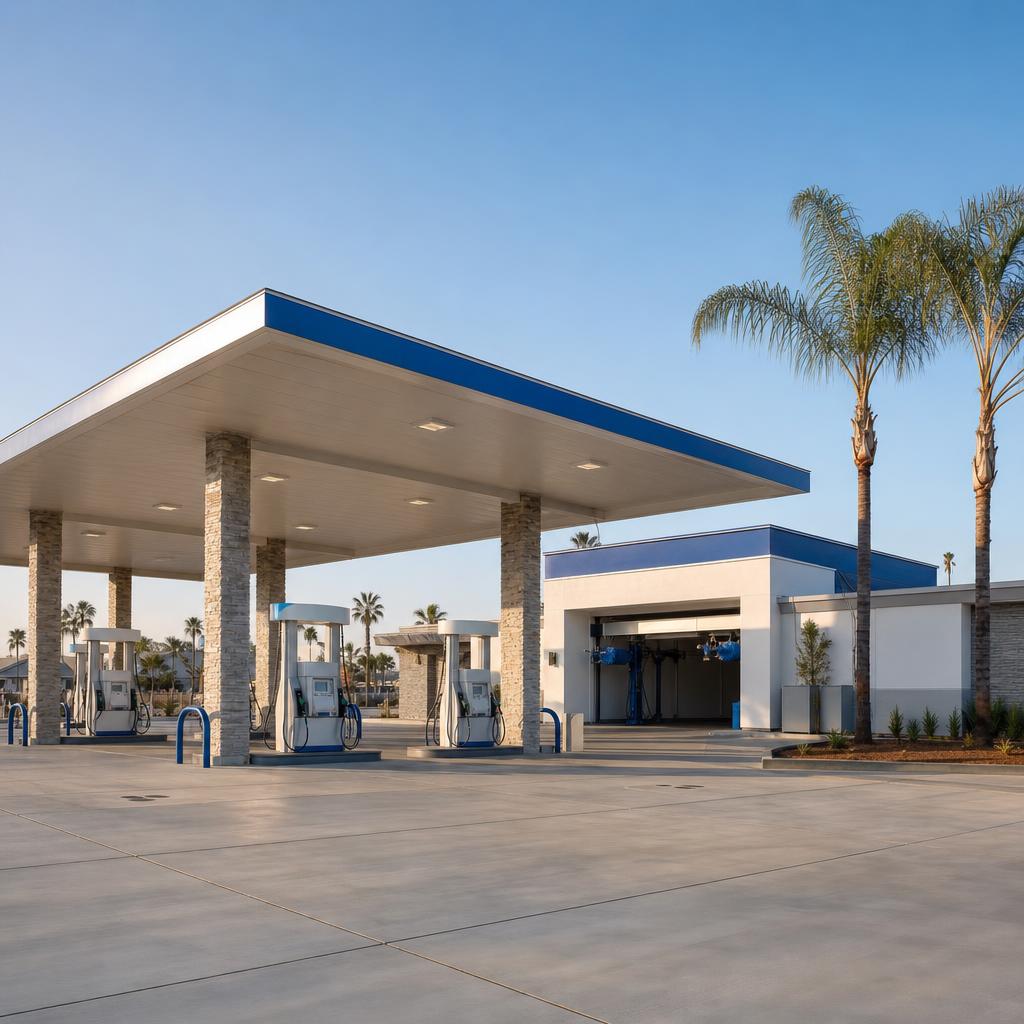
Car Wash & Gas Station Permits
UST permitting, LAFD hazmat and H-occupancy review, water reclamation and wastewater pretreatment, canopy and signage, and CUP where required.
Car washes and gas stations sit at the intersection of building permitting, hazardous materials regulation, and wastewater management, in a way most commercial projects don't. A single fueling and car wash site can involve LADBS, a Certified Unified Program Agency, LAFD, LA Sanitation & Environment, and the Planning Department, each with its own review criteria and timeline.
Fuel storage brings underground storage tank (UST) regulation into the picture, with its own permitting agency, design standards for secondary containment and leak detection, and — for older sites — the real possibility of legacy soil contamination surfacing during tank removal. Car wash operations bring water reclamation and wastewater pretreatment requirements, since wash water carries oil, grease, and suspended solids that can't go directly into the sewer system. Both uses typically involve LAFD review for hazardous materials storage, and depending on the zoning designation, either use may require a Conditional Use Permit rather than being permitted outright.
Ocean Permits & Development coordinates these review tracks as one managed project rather than leaving an owner or operator to sequence multiple agencies independently. See our auto repair shop permits page for a related automotive-use permitting profile, or our full services overview.
Underground Storage Tanks: Installation, Removal & Contamination Risk
Fuel storage tanks below grade are regulated as underground storage tanks (USTs), typically permitted through the local Certified Unified Program Agency (CUPA) — in Los Angeles this generally runs through the LA County Department of Public Health or LA Fire Department depending on jurisdiction. UST permitting reviews tank design, double-wall construction, secondary containment, leak detection monitoring systems, and spill and overfill prevention equipment before installation, and requires ongoing compliance testing and recordkeeping for as long as the tank remains in service.
Removing or replacing an older tank is where projects most often encounter unexpected cost and schedule risk: decades of minor leaks or spills from an aging tank can leave soil or groundwater contamination that wasn't apparent until the tank is pulled and the surrounding soil is sampled. When contamination is found, the site typically enters a remediation process overseen by the CUPA or, for more significant findings, the Los Angeles Regional Water Quality Control Board, which can meaningfully extend the project timeline before a new tank installation or site redevelopment can proceed.
Water Reclamation & Wastewater Pretreatment for Car Washes
Car wash wastewater carries oil, grease, soap, and suspended solids from vehicle exteriors, which LA Sanitation & Environment's industrial wastewater discharge program requires to be pretreated — typically through an oil/water separator — before reaching the sewer system. Most car wash facilities are also expected to incorporate a water reclamation system that captures and reuses a portion of wash water, reducing both water consumption and the pollutant load discharged. This wastewater review generally runs on its own permit track separate from the building permit and needs its own plan submittal and periodic compliance sampling once operational.
LAFD Hazmat Review & H-Occupancy Considerations
LAFD reviews the storage of fuel, compressed gases used by some car wash equipment, and cleaning chemicals under the California Fire Code, and depending on the specific quantities and materials involved, a facility may need to file a Hazardous Materials Business Plan or meet specific occupancy requirements under a Group H (High-Hazard) classification in the California Building Code. LAFD also reviews fire access, canopy fire suppression requirements, and emergency fuel shutoff systems. Confirming whether a proposed design triggers H-occupancy status early avoids redesigning a tank or canopy layout mid-project.
Canopy, Signage & Site Improvements
A fuel canopy is reviewed by LADBS as a freestanding structure for wind and seismic load adequacy, with a separate electrical permit typically needed for canopy lighting. Signage — including illuminated pricing signs and monument signs common at fueling stations — is reviewed against local zoning sign standards that can limit size, brightness, and placement independent of the canopy's structural permit, and should be confirmed early since sign programs are a common source of after-the-fact correction notices.
Conditional Use Permits & Zoning
Many commercial zoning designations treat fueling stations and car washes as conditionally permitted uses rather than uses permitted by right, requiring a Conditional Use Permit with a Planning Commission public hearing and conditions addressing hours of operation, lighting, noise, and traffic circulation. This status varies by parcel and zoning designation, so we recommend confirming CUP exposure for the specific address before signing a lease or purchase agreement, since a discretionary hearing process adds meaningful time to a project timeline that a by-right use would not need.
Project Types, Review Paths & Our Approach
| Project | Scope | Typical Review Path | Note |
|---|---|---|---|
| New underground storage tank (UST) installation | Installing new fuel storage tanks for a gas station or fuel-dispensing facility | LA County Department of Public Health / Certified Unified Program Agency (CUPA) UST permit; LAFD or local fire authority review; LADBS building permit for site work | UST permitting includes tank design, secondary containment, leak detection systems, and spill/overfill prevention equipment documentation before installation begins. |
| Existing UST removal, replacement, or upgrade | Removing an aging tank, replacing it with a new double-walled tank, or upgrading monitoring systems | CUPA/Public Health closure and installation permits; soil sampling and remediation review if contamination is found | Tank removal often surfaces legacy soil contamination that requires its own remediation permit path before a new tank can be installed on the same site. |
| Car wash water reclamation / wastewater pretreatment system | Installing or upgrading a water reclamation system and oil/water separator for wash-water discharge | LA Sanitation & Environment industrial wastewater discharge permit; LADBS plumbing permit | Most car washes are required to reclaim and recycle a portion of wash water and to pretreat wastewater before it enters the sewer system, not discharge it directly. |
| Canopy, signage, and lighting for a fuel station | New or replacement fuel canopy structure, illuminated signage, and site lighting | LADBS structural and electrical plan check; Planning sign permit; height and illumination standards under local zoning | Canopy structures need wind-load and seismic review as freestanding structures, and signage often has its own separate permit and size/illumination limits. |
| Hazmat storage and H-occupancy considerations | On-site storage of flammable liquids, compressed gases, or other hazardous materials associated with fueling or car wash chemicals | LAFD hazardous materials review; occupancy classification review under the California Fire Code and Building Code | Depending on quantities and materials stored, a site may need an H-occupancy classification or a Hazardous Materials Business Plan on file with LAFD. |
| Conditional Use Permit (CUP) for fueling or car wash use | New fueling station, expanded hours, or a car wash use in a zone where it is conditionally rather than outright permitted | Planning Department CUP review and public hearing; conditions of approval addressing hours, noise, lighting, and traffic | Not every commercial zone permits fueling or car wash use outright — confirming this before signing a lease or purchase agreement avoids a costly surprise. |
These are planning-level descriptions, not fee quotes or guaranteed timelines. We confirm current agency requirements, fees, and timelines for your specific site during a free consultation.
Why Ocean Permits & Development
We manage UST permitting, wastewater pretreatment review, LAFD hazmat coordination, structural and electrical permits for canopies and signage, and any required CUP process as one project, tracking every agency's requirements so an owner or operator has a single point of contact rather than five. See also our auto repair shop permits and warehouse & industrial permits pages for related commercial permit types. Every engagement starts with a free consultation — call 213-277-8777 or reach out through our contact page.
Frequently Asked Questions
What permits does a new car wash or gas station need in Los Angeles?
A new facility typically needs a combination of permits depending on scope: LADBS building permits for site work, structures, and canopies; underground storage tank (UST) permits through the local Certified Unified Program Agency (CUPA) if fuel storage is involved; LA Sanitation & Environment wastewater discharge permits for car wash water reclamation and pretreatment; LAFD review for hazardous materials storage; and a Conditional Use Permit if the zoning designation requires discretionary approval for the use. Which of these apply depends on the specific site, zoning, and whether fueling, car washing, or both are proposed.
What is a UST permit and who issues it?
An underground storage tank (UST) permit governs the installation, operation, and eventual removal of tanks storing fuel or other regulated substances below grade. In Los Angeles, UST permitting is generally administered by the local Certified Unified Program Agency (CUPA) — often the LA County Department of Public Health or LA Fire Department depending on jurisdiction — which reviews tank design, secondary containment, leak detection systems, and spill/overfill prevention equipment before installation, and requires ongoing compliance monitoring and periodic testing after the tank is in service.
What happens if soil contamination is found when removing an old fuel tank?
Underground tank removal frequently surfaces legacy soil or groundwater contamination from decades of minor leaks or spills, even from a tank that was operated in compliance with older standards. When contamination is identified, the site typically moves into a remediation process overseen by the CUPA or, for more significant contamination, the Los Angeles Regional Water Quality Control Board, which can add substantial time and cost to a project before a new tank can be installed or the site can be redeveloped for another use.
Why does a car wash need a water reclamation and wastewater pretreatment permit?
Car washes generate wastewater containing oil, grease, soap, and suspended solids from vehicle exteriors, which cannot be discharged directly into the sewer system without pretreatment. LA Sanitation & Environment's industrial wastewater discharge program typically requires an oil/water separator and, in many cases, a water reclamation system that captures and reuses a portion of wash water, reducing both water consumption and the pollutant load reaching the sewer. This is usually a separate permit track from the building permit itself and needs its own plan review.
Does LAFD need to review a gas station or car wash project?
Yes, in most cases. LAFD reviews hazardous materials storage — fuel, compressed gases used in some car wash equipment, and cleaning chemicals — under the California Fire Code, and depending on the type and quantity of materials stored, a facility may need to file a Hazardous Materials Business Plan or meet specific occupancy classification requirements. LAFD also reviews fire access, fire suppression system requirements for canopy structures, and emergency shutoff systems for fuel dispensing equipment.
What is an H-occupancy classification and does my facility need one?
The California Building Code assigns occupancy classifications based on the hazard a building's contents or use present, and a Group H (High-Hazard) classification applies to occupancies storing or handling specified quantities of hazardous materials, which can include certain fuel storage and dispensing configurations. Whether a specific gas station or car wash triggers an H-occupancy classification depends on the exact quantities and types of materials on site, which is worth confirming with a code consultant or LAFD early in design rather than after a canopy and tank layout are finalized.
Do I need a Conditional Use Permit to open a gas station or car wash?
It depends on the zoning designation and the specific commercial corridor. Many commercial zones treat fueling stations and car washes as conditionally permitted rather than permitted-by-right uses, meaning a Conditional Use Permit (CUP) with a public hearing before the Planning Commission is required, often with conditions addressing hours of operation, lighting, noise, and traffic circulation. Confirming this status for the specific parcel before signing a lease or purchase agreement avoids discovering a lengthy discretionary process after the deal is already committed.
What's involved in permitting a fuel canopy structure?
A fuel canopy is a freestanding structure and is reviewed by LADBS for structural adequacy under wind and seismic loads, in addition to any electrical permit needed for canopy lighting and signage. Canopy height, illumination levels, and any attached signage are also typically reviewed against local zoning sign standards, which can limit size, brightness, and placement independent of the structural permit.
How long does it take to permit a new gas station or car wash in Los Angeles?
Timelines vary considerably based on scope. A straightforward tenant improvement to an existing, already-permitted fueling or car wash facility can move relatively quickly through plan check, while a new UST installation, a CUP hearing, or a site with soil remediation needs can extend the timeline to many months when all agency reviews are accounted for. We provide a project-specific range once we understand the site's current permit history and proposed scope.
Can an existing gas station be converted to add a car wash, or vice versa?
Often yes, though adding a car wash to an existing fueling site (or fuel dispensing to an existing car wash) typically requires its own permit review for the added use — including CUP review if the added use isn't already covered by the site's existing approvals, wastewater pretreatment review for a new car wash component, and site plan review for how the added structure or equipment fits within existing setbacks and circulation patterns.
What ongoing compliance is required after permits are issued?
UST systems require periodic testing, leak detection monitoring, and recordkeeping under CUPA oversight for as long as the tank remains in service. Wastewater pretreatment systems typically require periodic sampling and reporting to LA Sanitation & Environment. These ongoing obligations continue well after construction is complete and are worth understanding at the outset, since they affect long-term operating cost, not just the initial permit process.
Why use Ocean Permits & Development for a car wash or gas station project?
Ocean Permits & Development coordinates UST permitting, wastewater pretreatment review, LAFD hazmat review, structural and electrical permits for canopies and signage, and any required CUP process as one managed project, so an owner or operator isn't tracking multiple agencies with different forms, fee schedules, and review timelines independently. We offer a free initial consultation — call 213-277-8777 or reach out through our contact page.
Planning a Car Wash or Gas Station?
We coordinate UST, wastewater, LAFD, and CUP review as one process.