_1781464136662-DVw5IPjt.png)
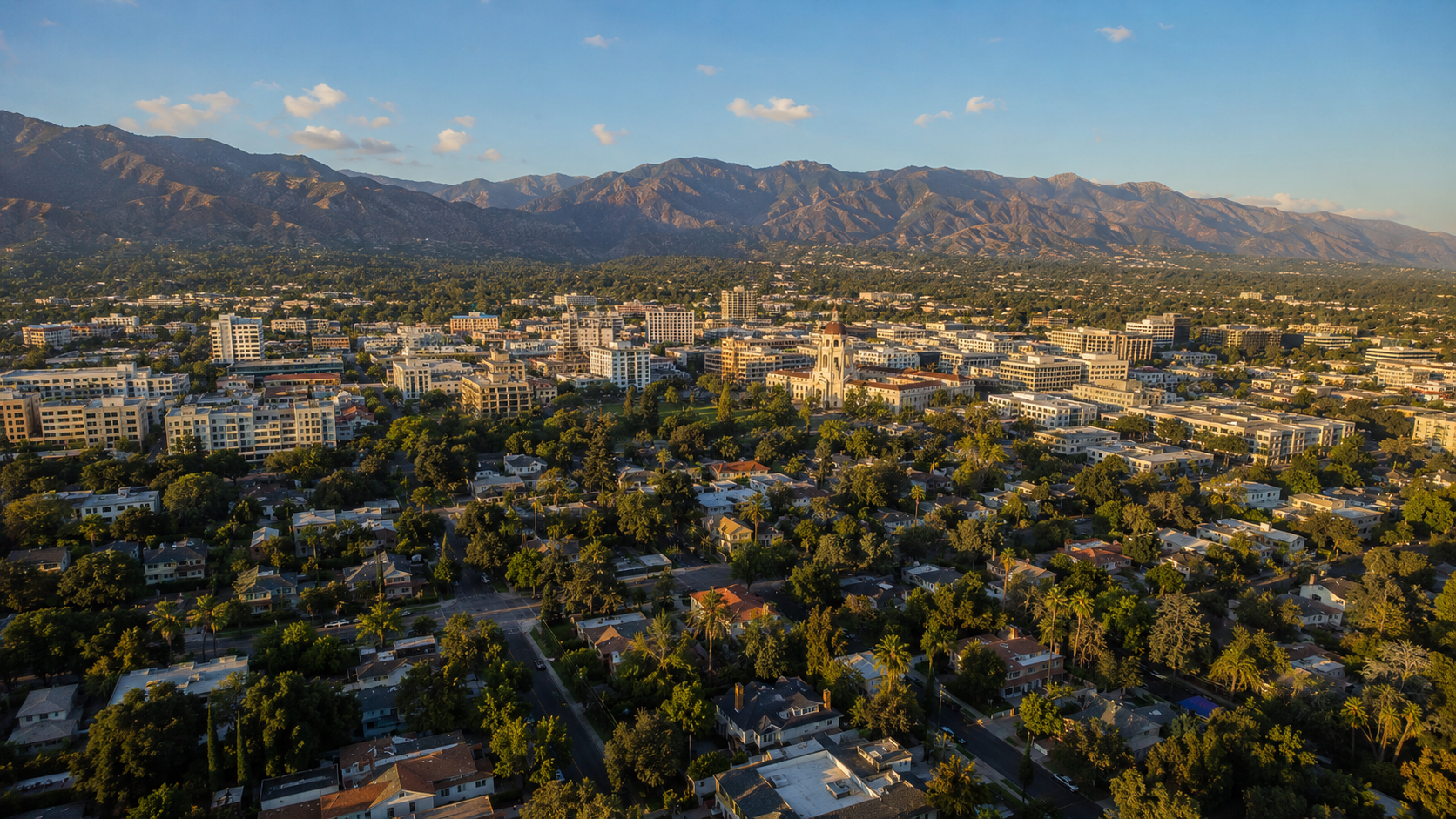
South Pasadena
Permit Expediting
South Pasadena has its own Planning & Building Division — not LADBS, and not the City of Pasadena. We navigate the City's historic preservation and Mills Act requirements alongside standard permitting.
Women-owned, LA-based permit expediting firm. The same historic preservation coordination we manage for Pasadena's 20-plus historic districts applies directly to South Pasadena's Mills Act and Cultural Heritage Commission review. Free consultation — call 213-277-8777.
South Pasadena shares a name with its much larger neighbor, but not a building department. It's an entirely separate city, and that single fact — plus a genuinely deep commitment to historic preservation — shapes almost every permit filed here.
We've seen more confusion over this jurisdictional distinction in South Pasadena than in almost any other city we serve. Out-of-area contractors and even some architects assume that because South Pasadena sits immediately south of the much larger City of Pasadena, the two share a permitting process. They don't. South Pasadena is its own incorporated city, with its own Planning & Building Division inside Public Works, its own municipal code, and its own historic preservation apparatus — a distinct department from both LADBS and the City of Pasadena's building department.
That preservation apparatus isn't incidental. South Pasadena is a compact, 3.4-square-mile city with a nationally recognized civic history of resisting large-scale change — most famously its decades-long fight against the 710 Freeway extension — and a housing stock rich in Craftsman, Victorian, and Spanish Colonial Revival architecture dating largely from the late 1800s through the 1930s. Multiple historic districts and individually designated landmark properties, along with an active Mills Act program, mean historic compatibility review is a routine part of permitting here, not a rare exception. Ocean Permits & Development manages the City's building process and its historic preservation review as one coordinated track.
South Pasadena Has Its Own Building Department — Not the City of Pasadena, Not LADBS
South Pasadena incorporated in 1888, decades before the region's current municipal boundaries took shape, and has always operated as an independent city. Permits are processed through the City's Planning & Building Division, a genuinely separate operation from the neighboring City of Pasadena's building department and from LADBS. A permit application, form, or fee schedule from either of those agencies has no standing with South Pasadena, and we confirm this distinction with every client before any submittal is prepared — the name similarity to Pasadena causes real, avoidable delays when it's assumed away.
City of South Pasadena Planning & Building Division (Not LADBS, Not the City of Pasadena)
South Pasadena incorporated as an independent city in 1888 and has always been a separate municipal government from both Los Angeles and the larger neighboring City of Pasadena. Building permits go through South Pasadena's own Planning & Building Division within Public Works — a different portal, forms, fee schedule, and plan-check staff from both LADBS and Pasadena's building department.
Historic Districts & Landmark Designations
South Pasadena maintains multiple designated historic districts and individually listed landmark properties reflecting its stock of Craftsman, Victorian, and Spanish Colonial Revival architecture dating largely from the late 1800s through the 1930s. Exterior work on a designated or contributing property typically requires historic compatibility review in addition to the standard building permit.
Mills Act Contracts — Government Code §50280
South Pasadena administers Mills Act historic preservation contracts, offering property tax reductions to owners of qualified historic properties in exchange for maintenance and rehabilitation commitments evaluated against the Secretary of the Interior's Standards. Work on a Mills Act property must comply with the contract terms, reviewed alongside the standard permit.
Cultural Heritage Commission Review
Exterior alterations, additions, and demolitions affecting designated historic properties or contributing structures within a historic district typically go through South Pasadena's Cultural Heritage Commission (or equivalent review body) for a Certificate of Appropriateness or similar approval — a separate discretionary review from the ministerial building permit process.
Standard Zoning & Building Code Review
For non-designated properties, South Pasadena applies standard California Building Code and local zoning review through its Planning and Building Divisions, without the additional historic preservation layer — though older homes still frequently surface code-upgrade questions tied to original, non-conforming construction.
South Pasadena Permit Types & Typical Timelines
| Permit Type | When It Applies | Reviewing Department | Typical Timeline |
|---|---|---|---|
| Standard remodel permit (non-designated property) | Interior or exterior remodel on a property without historic designation | City of South Pasadena Planning & Building Division | 4–8 weeks |
| Addition (non-designated property) | Structural additions or footprint expansion, non-historic property | City of South Pasadena Planning & Building Division | 8–14 weeks |
| Exterior work on a designated historic property or contributing structure | Window/siding replacement, additions visible from the street, demolition | Cultural Heritage Commission (Certificate of Appropriateness) + Building Division | 10–20 weeks, depending on hearing schedule |
| Mills Act compliance review | Any exterior work on a property under an active Mills Act contract | Planning Division (historic preservation staff) + Building Division | Reviewed concurrently with the historic/building permit review |
| ADU permit | Accessory dwelling unit — detached, attached, or garage conversion | City of South Pasadena (ministerial, Gov. Code §65852.2); historic compatibility review if on a designated property | 6–14 weeks |
| New single-family home | Ground-up new construction | City of South Pasadena Planning & Building Divisions | 12–20+ weeks |
Timelines are estimates based on typical small-city plan-check patterns described in our Los Angeles permit timeline guide, adapted for South Pasadena's own department and current caseload. Historic district review and Mills Act coordination materially extend timelines beyond the base building permit.
Our Process for a Typical South Pasadena Project
- 01
Jurisdiction & Historic Status Confirmation
We confirm the project is filed with South Pasadena's own Planning & Building Division — not LADBS and not the City of Pasadena — and determine whether the property is individually designated, a contributing structure within a historic district, or under a Mills Act contract.
- 02
Historic Compatibility Assessment
For designated or contributing properties, we evaluate the proposed design against the Secretary of the Interior's Standards for Rehabilitation before drawings are finalized, to reduce the risk of a Cultural Heritage Commission revision request late in the process.
- 03
Mills Act Coordination (If Applicable)
If the property carries an active Mills Act contract, we confirm the proposed work complies with the contract's maintenance and rehabilitation terms, coordinating with the City's historic preservation staff to avoid jeopardizing the contract's tax benefit.
- 04
Cultural Heritage Commission or Staff-Level Review
We prepare and submit the Certificate of Appropriateness or equivalent historic review application where required, and represent the project through any required hearing or staff-level review.
- 05
City of South Pasadena Plan Check Submittal
We submit the complete building permit package to the Planning & Building Division, coordinated with historic review findings so both tracks move in alignment rather than one blocking the other.
- 06
Correction Response & Permit Issuance
We manage the correction cycle with South Pasadena plan-check staff and coordinate inspection scheduling with your contractor once the permit issues.
Historic Preservation: Districts, Landmarks & the Mills Act
South Pasadena's historic districts and individually designated landmark properties are concentrated in neighborhoods with well-preserved early-20th-century architecture, and the city takes their protection seriously. Exterior work on a designated or contributing property — window and siding replacement, street-visible additions, or demolition — typically requires review by the City's historic preservation process, evaluated against the Secretary of the Interior's Standards for Rehabilitation, in addition to the standard building permit that any project needs.
For properties enrolled in a Mills Act contract under California Government Code §50280, the stakes are higher still: work that doesn't comply with the contract's maintenance and rehabilitation standards can jeopardize the property tax reduction the contract provides. We review proposed scope against the specific Mills Act contract terms and the City's historic preservation standards before finalizing design, so a project doesn't inadvertently put its owner's tax benefit at risk.
Why South Pasadena Property Owners Work With Ocean Permits
Ocean Permits & Development is a women-owned permit expediting firm based in Los Angeles, with direct experience managing Historic Preservation Design Review for Pasadena's more than 20 historic districts — expertise that transfers directly to South Pasadena's own historic district and Mills Act review process, even though the two cities are separate jurisdictions. We also draw on comparable independent-city experience from Sierra Madre, another small San Gabriel Valley city with its own building department. For ADU projects, see our ADU permits page, and for owner-managed projects, our owner-builder permit guide covers what the exemption actually means. We offer a free consultation — call 213-277-8777 or reach out through our contact page.
Frequently Asked Questions
Does South Pasadena use LADBS, or does it have its own building department?
South Pasadena is an independent incorporated city — despite the name similarity, it is entirely separate from both the City of Los Angeles and the City of Pasadena. Building permits go through South Pasadena's own Planning & Building Division (within Public Works), operating under the South Pasadena Municipal Code. It does not use LADBS, and it does not share a portal, plan-check staff, or fee schedule with the neighboring, larger City of Pasadena. This distinction surprises out-of-area contractors more often than almost any other city we serve, simply because the names are so similar.
What is the Mills Act and how does it apply to South Pasadena properties?
The Mills Act is a California state law (Government Code §50280 et seq.) that authorizes local governments to enter into contracts with owners of qualified historic properties, providing significant property tax reductions in exchange for the owner's commitment to maintain, restore, and rehabilitate the property according to specific historic preservation standards. South Pasadena actively administers Mills Act contracts for its designated historic properties, and any exterior work on a Mills Act property must comply with the contract's maintenance and rehabilitation standards, typically evaluated against the Secretary of the Interior's Standards for Rehabilitation. A standard building permit alone doesn't satisfy this — Mills Act compliance review runs as its own track through the City's historic preservation process.
Do I need historic preservation approval for exterior work on my South Pasadena home?
It depends on whether your property is individually designated as a local landmark, is a contributing structure within one of South Pasadena's historic districts, or carries a Mills Act contract. South Pasadena has several such districts and individually listed landmark properties reflecting its rich stock of early-20th-century Craftsman, Victorian, and Spanish Colonial Revival architecture. Exterior changes — window replacement, siding, additions visible from the street, or demolition — on a designated or contributing property typically require review by the City's historic preservation process (often a Certificate of Appropriateness or similar approval) in addition to the standard building permit. Interior work and additions not visible from the public right-of-way generally face less scrutiny, but we confirm a property's designation status before any design work begins.
How long does a typical remodel or addition permit take in South Pasadena?
A straightforward remodel or addition on a non-designated South Pasadena property typically moves through the City's Planning & Building Division in a range comparable to other small independent Southern California cities — commonly 4 to 10 weeks for first plan check. Projects involving a historic district, a landmark designation, or a Mills Act contract add a historic preservation review track that can extend the total timeline meaningfully, particularly if the proposed design requires revisions to meet the Secretary of the Interior's Standards.
Why is South Pasadena known for its opposition to freeway construction, and does that affect permitting?
South Pasadena is nationally known for its decades-long, ultimately successful fight against the extension of the 710 Freeway through the city — a campaign closely tied to preserving the city's historic neighborhoods, including areas along the Arroyo Seco. That civic history is part of why the city places such a high institutional priority on historic preservation review today. It doesn't create a separate permit requirement on its own, but it reflects the same underlying planning philosophy that shapes how the City's Planning & Building Division reviews projects near designated historic areas.
Can I get a permit for an ADU on a historic property in South Pasadena?
Yes, though with an added layer of review. California's ADU statute (Government Code §65852.2) requires ministerial approval of qualifying ADU applications within 60 days for all California cities, including South Pasadena. However, if the ADU is proposed on a designated historic property or within a historic district, the design still needs to be reviewed for compatibility with the property's historic character — the ministerial ADU approval timeline applies to the base entitlement, but historic compatibility review for exterior design elements is a genuinely separate consideration we manage alongside it.
Does South Pasadena have wildfire hazard zones like Altadena or Sierra Madre?
South Pasadena's terrain is largely flat to gently sloped and sits farther from the San Gabriel Mountains foothills than Altadena or Sierra Madre, so it carries substantially less Very High Fire Hazard Severity Zone exposure. Some areas along the Arroyo Seco corridor have limited fire-hazard designation, but South Pasadena as a whole was not affected by the January 2025 Eaton Fire beyond regional smoke and, for some residents, precautionary evacuation warnings. Most South Pasadena permit projects are governed primarily by standard building code and the city's historic preservation framework rather than Chapter 7A fire-hazard construction standards.
What agencies handle zoning and land-use approvals in South Pasadena?
Zoning entitlements, variances, and conditional use permits in South Pasadena are handled by the City's Planning Division, working alongside the Building Division within Public Works. For historic properties, the Cultural Heritage Commission (or its equivalent local review body) evaluates design compatibility for exterior changes. Coordinating between these bodies — rather than treating zoning, building, and historic review as separate silos — is central to moving a South Pasadena project efficiently.
What construction era and architectural styles are most common in South Pasadena, and does that affect permit review?
South Pasadena's housing stock spans early Craftsman bungalows, Victorian-era homes, and Spanish Colonial Revival residences, largely dating from the late 1800s through the 1930s — a period reflected in several of the city's historic districts. Renovating or adding onto a home from this era often surfaces older, non-conforming construction (original electrical, plumbing, or structural systems) that the current building code doesn't recognize as compliant. Plan check for these properties frequently addresses both historic-compatibility questions and code-upgrade requirements simultaneously, which is different from a straightforward remodel on a newer property.
How much does permit expediting cost for a South Pasadena project?
Costs for South Pasadena projects generally track with the ranges we quote for comparable small independent Southern California cities, with added scope where a project involves Mills Act compliance, historic district review, or Cultural Heritage Commission approval — each is its own review track with its own documentation requirements. We provide a firm, project-specific quote after a free consultation reviewing your property's historic designation status and project scope.
Is South Pasadena the same jurisdiction as the City of Pasadena?
No — this is the single most common point of confusion for our South Pasadena clients. South Pasadena is a separate incorporated city with its own government, its own Planning & Building Division, and its own municipal code. It borders the much larger City of Pasadena to the north, but the two cities do not share building departments, portals, staff, or procedures. A permit application submitted to the City of Pasadena for a South Pasadena property will not be processed — the two intake systems are entirely separate.
Does Ocean Permits work directly with South Pasadena's Planning & Building Division?
Yes. We submit directly through South Pasadena's own intake process and coordinate with its Planning & Building Division and, where applicable, its historic preservation review body — rather than assuming the larger City of Pasadena's procedures apply. Our experience managing Historic Preservation Design Review for the City of Pasadena's own 20-plus historic districts transfers directly to South Pasadena's historic compatibility and Mills Act review process, even though the two cities are separate jurisdictions.
Building in South Pasadena?
We coordinate the City's Planning & Building Division, historic preservation review, and Mills Act compliance as one process.
Schedule a Free ConsultationOr call 213-277-8777