_1781464136662-DVw5IPjt.png)
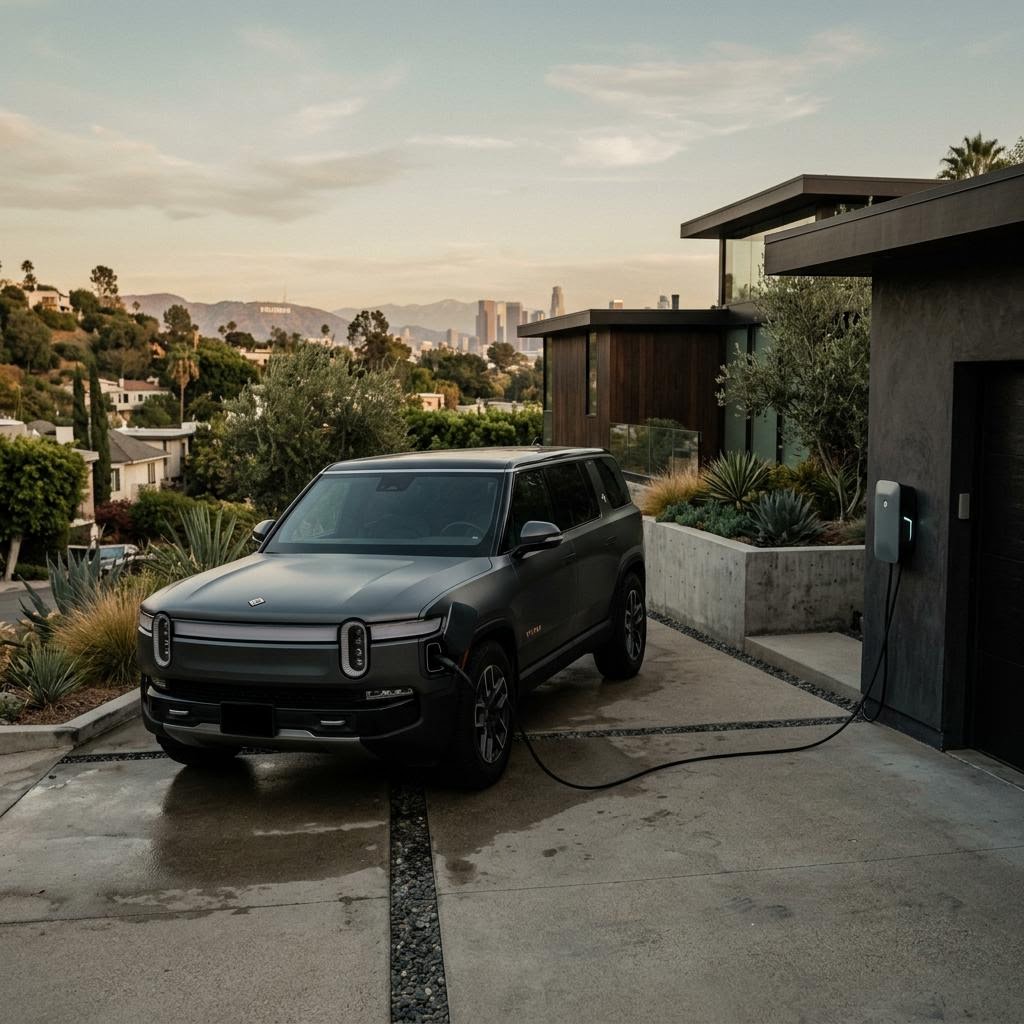
Women-owned, LA-based permit expediting firm. Many of our fire-rebuild clients in Pacific Palisades and Altadena are adding an EV charger circuit as part of their new build — we fold that permit into the same rebuild coordination rather than treating it as a separate errand. Free consultation — call 213-277-8777.
Installing an EV charger sounds like a simple electrical upgrade — and for most homes, it is. But "simple" doesn't mean "no permit." Every EV charger installation in Los Angeles, from a single Level 2 unit in a garage to a bank of commercial charging stations in a parking structure, requires an electrical permit, and the right process depends heavily on the scale of the installation and whether your existing electrical system has the capacity to support it.
What surprises a lot of homeowners is how quickly the straightforward case moves. California has specifically legislated for fast EV charger permitting, and Los Angeles has built a dedicated fast-track around that mandate — so a standard residential installation doesn't have to feel like a full construction permit. The complexity only shows up once the project deviates from that standard case: an older panel without spare capacity, a shared parking structure governed by an HOA, or a commercial site adding multiple stations at once.
This guide covers what permit you need, how LADBS's Express Permit program makes standard residential installations fast, what CALGreen requires of new construction, how HOA rights work for condo owners, when a panel upgrade is triggered, what changes for multifamily and commercial installations, and where LADWP rebate programs fit in. If you're pairing an EV charger with a broader solar or battery project, see our companion solar panel permit guide — the two often go together but are permitted somewhat differently.
Do You Need a Permit for an EV Charger in LA?
Yes. Any EV charger installation involves adding a new dedicated electrical circuit, which requires an electrical permit under the Los Angeles Municipal Code, the same way any other new circuit or panel work does. What makes EV chargers different from a typical electrical permit is that California has specifically mandated cities streamline this exact process: California Assembly Bill 1236, enacted in 2015, requires every city and county in the state to adopt an ordinance establishing a streamlined, expedited permitting process for EV charging stations, including — where feasible — an over-the-counter or online permitting path with clear submittal checklists.
The intent behind AB 1236 was straightforward: state lawmakers wanted to remove a bureaucratic bottleneck that was slowing EV adoption, since a homeowner facing a multi-week permit wait for a simple charger circuit is a homeowner less likely to bother installing one at all. The law didn't leave compliance optional or vague — it specifically directs jurisdictions to publish a checklist so applicants know exactly what documentation is needed before they submit, cutting down on the back-and-forth that causes delay in ordinary electrical permitting.
LADBS implements this mandate through its Express Permit program. A standard Level 2 EV charger installation at a single-family home or small property, where the existing panel already has enough spare capacity, typically qualifies for an Express Permit — meaning it can be permitted the same day, often entirely through LADBS's online portal, without needing to sit in a full plan-check queue.
That's a meaningfully faster path than a typical electrical permit for less common scopes, and it's exactly the kind of process AB 1236 was designed to require. The moment a project steps outside that standard case — most commonly because the panel needs an upgrade, or because it's part of a multifamily or commercial installation — it moves off the Express track and picks up the additional review described below.
EV Charger Installation Types & Typical Timelines
| Installation Type | When It Applies | Permit Process | Typical Timeline |
|---|---|---|---|
| Standard residential Level 2 charger (existing panel has capacity) | Single-family home or small property, no panel upgrade needed | LADBS Express Permit — electrical permit, often same-day via the online portal | Same day to a few days |
| Residential installation with electrical panel upgrade | Existing panel lacks capacity for the new circuit | Electrical permit for the charger plus a separate electrical permit for the panel upgrade | 1–3 weeks, depending on inspection scheduling |
| Multifamily / HOA property installation | Condo, apartment building, or HOA-governed community installing one or more chargers | Electrical permit through LADBS, plus HOA approval process under Civil Code §4745 where applicable | 2–6 weeks, depending on HOA process and any shared-panel capacity questions |
| Commercial installation with multiple charging stations | Retail, office, or multifamily property installing a bank of chargers | Full electrical plan check, potential LADWP service/transformer coordination | 6–14+ weeks depending on scope and utility coordination |
Timelines are estimates consistent with our broader guide on how long LA permits take, adapted for electrical scopes. Actual timelines depend on inspection scheduling and, for larger installations, LADWP coordination.
CALGreen: "EV-Ready" and "EV-Capable" Requirements for New Construction
If you're building new construction rather than retrofitting an existing property, EV infrastructure isn't optional at the design stage. The California Green Building Standards Code (CALGreen, Title 24 Part 11) requires new residential and commercial buildings to provide a specified percentage of parking spaces built as "EV-capable" or "EV-ready" — meaning the raceway, conduit, or panel capacity needed for a future charger is already roughed in, even if the charger itself isn't installed on day one.
The exact percentage of spaces required scales with the occupancy type and total parking count, and it's checked as part of standard plan check, not as an optional add-on. Getting this wrong at the drawing stage is far more expensive to fix than getting it right the first time — retrofitting conduit into a finished parking structure or garage slab means cutting into completed work, while roughing it in during initial construction is a comparatively minor line item.
For fire-rebuild projects in Pacific Palisades and Altadena that qualify as new construction rather than like-for-like, this CALGreen requirement applies and is worth planning for during design rather than after framing is complete. A like-for-like rebuild that stays within the pre-fire footprint may not trigger the same new-construction thresholds — another reason to confirm which track your specific rebuild falls into before finalizing electrical plans.
Condos and HOAs: Your Rights Under Civil Code §4745
Condo owners sometimes assume their HOA can simply say no to an EV charger request. In California, that's generally not the case. Civil Code §4745, part of the Davis-Stirling Common Interest Development Act, gives an owner the right to install an EV charger in their designated parking space, and prohibits the association from unreasonably restricting that installation.
The HOA can still impose reasonable conditions — installation standards, licensed-contractor requirements, insurance provisions, and a defined approval process — but it cannot flatly deny a compliant request outright. What counts as "reasonable" is where disputes tend to arise: an association asking for proof of a licensed contractor and standard liability insurance is on solid ground, while one that simply refuses to respond to a request, or imposes conditions clearly designed to make installation impractical, is not.
In practice, owners still need to go through both tracks: the City's electrical permit for the installation itself, and the HOA's approval process for the shared-property aspects of the request. We help coordinate both so neither one stalls the other — starting the HOA request early, in parallel with electrical planning, rather than waiting for one approval before beginning the other.
Do You Need a Panel Upgrade First?
Whether your home can support a new EV charging circuit without further work depends on how much spare capacity your existing electrical panel has. Many older homes — especially those still running 100-amp electrical service — don't have room for a dedicated 40-to-60-amp EV charging circuit on top of everything else already on the panel, and need an upgrade, commonly to 200-amp service, before the charger circuit can be added safely and to code.
A panel upgrade is its own separate electrical permit and inspection, distinct from the permit for the charger circuit itself — the two are related but not the same application, and the panel upgrade typically needs to be inspected and finalized before (or alongside) the charger installation. Some households can also avoid a full panel upgrade with a load-management device that shares available capacity between the charger and existing circuits, though whether that's a viable option depends on the specific panel and household electrical load.
We check your panel's rated capacity and existing load early, so a homeowner isn't surprised by an unplanned panel upgrade mid-installation — discovering a capacity shortfall after a charger has already been purchased and scheduled for installation is a common and avoidable source of delay.
Multifamily & Commercial Installations: A Different Scale of Project
A single-family Level 2 charger is, in most cases, a fast Express Permit. Installing a bank of chargers at an apartment building, office park, or retail center is a fundamentally different scale of project. These installations typically require a full electrical plan check rather than the express track, since the aggregate electrical load, panel design, and circuit distribution across multiple stations need engineered review.
Larger installations can also require coordination with LADWP on available service capacity — and in some cases, a transformer or service upgrade — before the stations can be energized. That utility-side review runs on its own timeline, separate from the City's plan check, and is one of the biggest reasons a multi-station project takes meaningfully longer than a handful of single-family permits added together.
HOA-governed multifamily properties add the Civil Code §4745 approval layer on top of the City's electrical permit process, similar to a condo owner's individual installation but scaled to a shared-infrastructure project. We scope the full review path — Building, LADWP, and HOA where applicable — before a commercial or multifamily EV charging project is submitted, so the client has a realistic timeline from day one rather than discovering each additional review track partway through.
LADWP Rebate Programs
The Los Angeles Department of Water and Power offers incentive programs — including its Charge Up LA! program — that provide rebates toward the cost of installing residential and commercial EV chargers. Program eligibility, application steps, and rebate amounts change periodically as funding and utility priorities shift.
Rather than quoting a specific dollar figure here that could be out of date by the time you read this, we recommend confirming current program details directly with LADWP, or asking us during a consultation — we track which incentive programs are currently active for clients pairing a rebuild or remodel with new EV infrastructure, since rebate eligibility sometimes depends on the timing of the electrical permit itself.
Why Work With Ocean Permits on an EV Charger Permit
Ocean Permits & Development is a women-owned permit expediting firm based in Los Angeles. Because a growing share of our Pacific Palisades and Altadena fire-rebuild clients are adding EV charging infrastructure as part of their new build, we fold the EV charger permit into the same coordinated rebuild timeline rather than treating it as a separate, disconnected task — which matters most for new construction that also has to satisfy CALGreen's EV-ready requirements.
For homeowners planning an ADU alongside an EV charger, or anyone who wants a pre-design zoning and electrical capacity check before finalizing plans, our consulting service is a good starting point. We offer a free consultation — call 213-277-8777 or reach out through our contact page.
Frequently Asked Questions
Do I need a permit to install an EV charger at my home in Los Angeles?
Yes. Installing a Level 2 EV charger requires an electrical permit in the City of Los Angeles, since it involves adding a new dedicated circuit to your home's electrical system. The good news is that LADBS has streamlined this specific type of installation through its Express Permit program, so for a straightforward residential installation the permit process itself is fast — but skipping it entirely is not compliant and can create problems with inspections, insurance, or a future home sale.
What is LADBS's Express Permit program, and does my EV charger installation qualify?
LADBS's Express Permit program covers simple, code-defined electrical scopes — including standard Level 2 EV charger installations at single-family homes and small properties — that don't require a licensed plan checker's independent review. A qualifying installation can often be permitted the same day through LADBS's online portal. An installation that also requires a panel upgrade, or that's part of a larger multifamily or commercial project, generally falls outside the simplest Express track and needs additional review.
How long does it take to get an EV charger permit in Los Angeles?
A standard residential installation that qualifies for LADBS's Express Permit can often be permitted the same day. If a panel upgrade is also needed, expect roughly one to three weeks including inspection scheduling. Multifamily or HOA-governed installations typically take two to six weeks depending on the association's approval process, and commercial installations with multiple charging stations can take six to fourteen-plus weeks if they require a full electrical plan check and LADWP service coordination.
Do I need a licensed electrician, or can I install the charger myself?
California law allows a homeowner to perform electrical work on their own primary residence in some cases, but a licensed electrician is strongly recommended for EV charger installations given the dedicated circuit, breaker sizing, and code compliance involved — and many charger manufacturers require licensed installation to maintain the equipment warranty. Regardless of who performs the work, the electrical permit and required inspection still apply.
What does California's AB 1236 require cities to do for EV charger permits?
California Assembly Bill 1236, enacted in 2015, requires every city and county in California to adopt an ordinance creating a streamlined, expedited permitting process specifically for electric vehicle charging stations — including, where feasible, an over-the-counter or online permitting option, and clear checklists so applicants know what's required upfront. LADBS's Express Permit track for standard EV charger installations is the City of Los Angeles's implementation of this state mandate.
I live in a condo or HOA — can my association block me from installing a charger?
Generally, no — not outright. California Civil Code §4745, part of the Davis-Stirling Common Interest Development Act, gives a condo owner the right to install an EV charger in their designated parking space, and prohibits an HOA from unreasonably restricting that right. The association can impose reasonable requirements around installation standards, insurance, and the approval process itself, but it cannot flatly deny a compliant request. We help owners navigate this process alongside the City's electrical permit requirement.
Does a new home or commercial building need to be "EV-ready" under CALGreen?
Yes, for qualifying new construction. The California Green Building Standards Code (CALGreen, Title 24 Part 11) requires new residential and commercial buildings to include a specified percentage of parking spaces built as "EV-capable" or "EV-ready" — meaning the electrical infrastructure (conduit, panel capacity, or in some cases a fully wired outlet) is already in place even if a charger isn't installed on day one. The exact percentage required depends on the occupancy type and total number of parking spaces, and it's reviewed as part of standard plan check for new construction.
Will installing an EV charger require a panel upgrade, and does that need its own permit?
It depends on your existing electrical panel's available capacity. Many older homes, especially those with 100-amp service, don't have enough spare capacity for a dedicated 40-to-60-amp EV charging circuit without an upgrade — commonly to 200-amp service. A panel upgrade requires its own separate electrical permit in addition to the permit for the charger circuit itself, and typically needs its own inspection before the charger installation can be finalized.
Are there rebates available for EV charger installation in LA through LADWP?
Yes — the Los Angeles Department of Water and Power runs incentive programs, including its Charge Up LA! program, offering rebates toward the cost of residential and commercial EV charger installations. Program rules and rebate amounts change periodically, so we recommend confirming current eligibility and incentive levels directly with LADWP rather than relying on older figures, and we can point clients to the current program details during a consultation.
What's different about permitting a multi-unit or commercial EV charging installation versus a single-family home?
A single-family Level 2 charger is usually a simple Express Permit. A multifamily or commercial installation with multiple charging stations is a different scale of project entirely — it typically requires a full electrical plan check rather than an express track, and installations with substantial power demand may need coordination with LADWP on service capacity or a transformer upgrade before the stations can be energized. HOA-governed properties also layer in the association approval process under Civil Code §4745 alongside the City's permit.
What inspections are required after the EV charger is installed?
An electrical inspection is required to verify the new circuit, breaker, wiring, and charger connection meet code before the installation is considered complete and legal. For installations that included a panel upgrade, that work typically requires its own separate inspection as well. LADBS schedules these inspections through the same portal used for the permit itself.
How much does Ocean Permits charge to handle an EV charger permit?
Fees for a straightforward residential EV charger permit are modest, reflecting the simplicity of the Express Permit track; a project that also involves a panel upgrade, HOA coordination, or a multi-station commercial installation costs more given the additional review and coordination involved. We provide a project-specific quote after a free consultation reviewing your property, existing electrical capacity, and installation scope.