_1781464136662-DVw5IPjt.png)
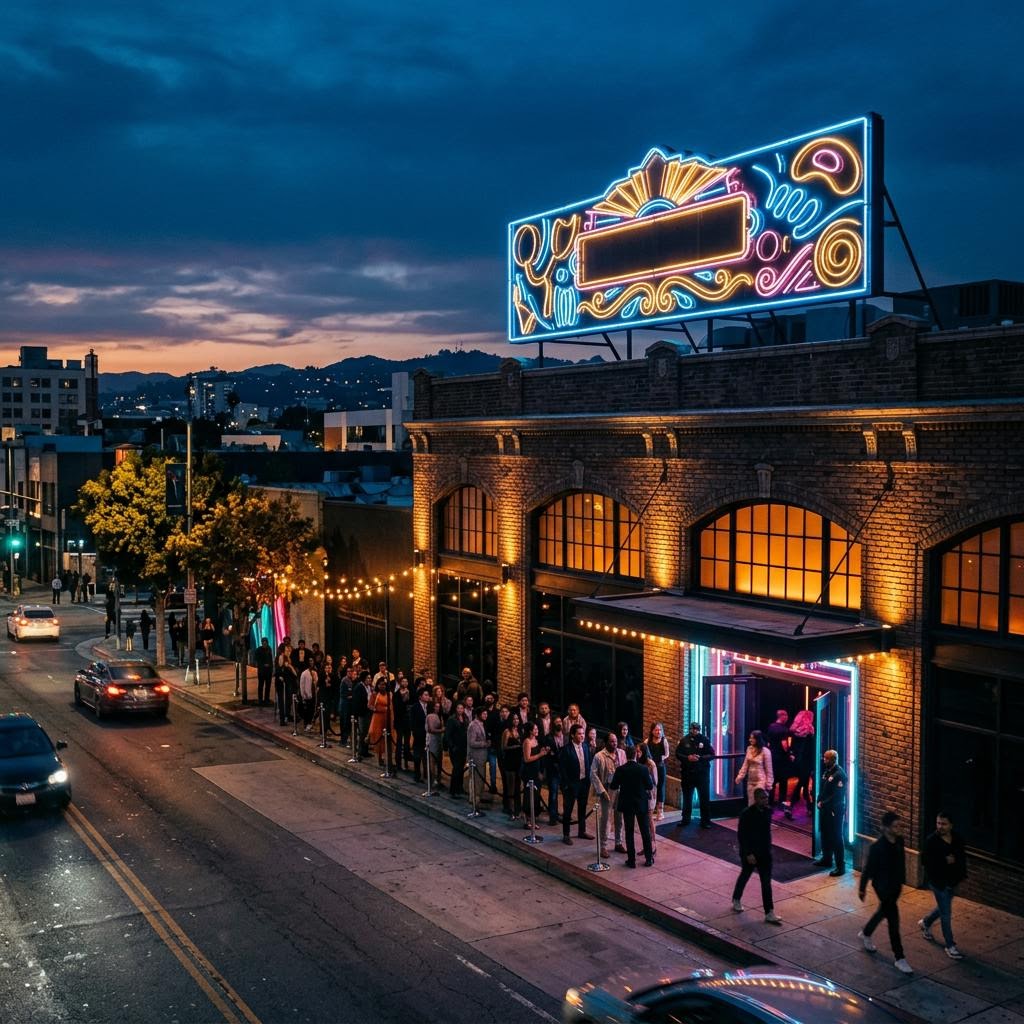
Nightclub & Live Music
Venue Permits
Permit expediting for nightlife and live entertainment venues across Los Angeles — Group A-2 occupancy plan check, Conditional Use Beverage permits, ABC licensing, and noise-ordinance compliance.
Women-owned, Los Angeles-based permit expediting firm. We bring the same multi-agency coordination we use for banquet halls and event venues and restaurant projects to the occupancy, entitlement, and licensing requirements of a nightclub or live music venue. Free initial consultation — call 213-277-8777.
A nightclub or live music venue permit is really three parallel processes — a building permit, a City Conditional Use Beverage entitlement, and a State ABC license — that each run on their own timeline but have to land together before opening night.
The building permit side starts with Group A-2 (Assembly) occupancy classification under the California Building Code, which drives occupant-load calculations, exit width and arrangement, and panic-hardware requirements that a standard tenant improvement into Group B office or retail space never faces. LAFD reviews fire sprinkler and alarm coverage, exit signage, and any stage, rigging, or special-effects equipment separately from LADBS's structural and MEP review.
Separately, most venues serving alcohol need a Conditional Use Beverage (CUB) permit from City Planning — a discretionary approval with a public hearing, posted notice, and conditions typically covering operating hours, security staffing, and noise mitigation — plus a State ABC license, most commonly a Type 47 or Type 48 depending on whether food service is required. These entitlement and licensing processes run on longer, independent timelines than the building permit and are frequently the actual schedule driver for opening a venue.
Ocean Permits & Development coordinates architects, acoustic engineers, security consultants, LADBS, LAFD, City Planning, and the ABC so the building permit and the entitlement/licensing track move together instead of one holding up the other.
What a Nightclub or Live Music Venue Permit Covers
Group A-2 Occupancy & Egress Plan Check
Occupant-load calculations, exit width and arrangement, and panic-hardware requirements are reviewed against the California Building Code's assembly-occupancy standards.
Conditional Use Beverage (CUB) Permit
A discretionary City Planning approval required for most venues serving alcohol, reviewed by the local Area Planning Commission with conditions on hours, security, and noise.
ABC License Coordination
State Department of Alcoholic Beverage Control licensing — typically Type 47 or 48 — runs alongside the CUP and has its own posting and protest-period timeline.
LAFD Fire & Life-Safety Review
Fire sprinkler and alarm coverage, exit signage, and stage or special-effects equipment are reviewed as part of plan check for assembly occupancy.
Noise Ordinance & Acoustic Compliance
LAMC noise limits and CUP conditions on amplified sound often require acoustic engineering input on wall assemblies, door seals, and sound-lock vestibules.
Entertainment & Dance Permit Coordination
A City police-permitted entertainment or dance permit may be required depending on the venue's live music, DJ, or dancing format, separate from the ABC license.
Conditional Use Beverage Permits & ABC Licensing
A Conditional Use Beverage permit is reviewed by the local Area Planning Commission at a public hearing, with conditions of approval that commonly address closing hours, security staffing levels, a submitted operations and security plan, exterior lighting, and queuing-area management for patrons waiting outside. These conditions are negotiated case by case based on the specific venue, location, and any community input at the hearing — not set by a fixed citywide formula — so we review comparable approved venues in the area before the application is filed.
The ABC license itself is a separate State process with its own public-notice posting and protest period, typically a Type 48 on-sale general license for a venue without a food-service requirement or a Type 47 where food service is part of the concept. We track the ABC timeline alongside the CUP hearing date so neither process becomes the unexpected bottleneck closer to a planned opening.
Noise Ordinance, Acoustic Build-Out & Entertainment Permits
Los Angeles Municipal Code noise ordinance limits apply to amplified sound audible beyond the property line, and CUP conditions for a nightclub or live music venue frequently include specific sound-attenuation requirements, especially for outdoor patios or rooftop areas. We bring in acoustic engineering input during design — wall assembly ratings, door seals, sound-lock vestibules — so the build-out is sized to the venue's actual music format rather than retrofitted after a neighbor complaint triggers enforcement.
Depending on the entertainment format — live bands, DJs, or a public dance floor — a City police-permitted entertainment or dance permit may also be required, which is separate from both the ABC license and the CUP and has its own application process through LAPD.
Nightclub & Live Music Venue Project Types, Review Paths & Our Approach
| Project Type | When It Applies | Typical Review Path | Our Approach |
|---|---|---|---|
| New nightclub in a prior restaurant or retail shell | Change of occupancy from a prior Group A-2 restaurant or Group B/M retail use to a nightclub format | LADBS plan check for Group A-2 egress and fire-life-safety; City Planning CUP; ABC licensing | We confirm zoning allows the entertainment use before design work begins and file the CUP application early given its longer hearing timeline. |
| Live music venue with a stage or elevated platform | Venue including a performance stage, elevated platform, or rigging for lighting and sound equipment | LADBS structural plan check for the stage/platform; LAFD review of rigging, pyrotechnics, or special-effects equipment where applicable | We coordinate the stage structural submittal with the architect and any specialty rigging or effects vendor before plan check. |
| Outdoor patio or rooftop entertainment area | Venue adding an outdoor patio, rooftop deck, or open-air area for guests or amplified sound | LADBS building permit for the outdoor structure; CUP conditions on outdoor hours and noise; Planning review of the site plan | We flag outdoor-area noise conditions early since these are frequently the most restrictive part of a CUP approval. |
| Existing licensed venue changing format or operator | Change of ownership, operating hours, or entertainment format at an already-licensed nightclub | ABC license transfer or modification; potential CUP amendment if conditions of approval change | We review the existing CUP conditions and ABC license terms first to confirm what can carry over versus what needs fresh approval. |
| Security, crowd-control, and queuing area design | Venue requiring licensed security staffing, exterior queuing, or crowd-control measures under CUP conditions | City Planning CUP conditions; LAPD coordination for security and entertainment permitting | We prepare the security and operations plan submitted with the CUP application based on comparable approved venues in the area. |
| Acoustic and sound-attenuation build-out | Interior build-out scoped to meet LAMC noise ordinance limits and CUP sound conditions | LADBS building permit for wall assemblies and sound-lock vestibules; acoustic engineering review | We bring in acoustic engineering input during design so the build-out matches the venue's actual music format rather than retrofitting after a complaint. |
These are planning-level descriptions, not fee quotes or guaranteed timelines. We confirm current fees, forms, and timelines for your specific address and scope during a free consultation.
Our Process for a Nightclub or Live Music Venue Project
- 01
Confirm zoning and entertainment-use eligibility
We pull the parcel's zoning and confirm whether nightclub or live entertainment use is permitted by right or requires a discretionary CUP at the address.
- 02
Scope occupant load, egress, and entertainment format
We work with the architect to finalize occupant-load calculations, exit plan, and whether a stage, dance floor, or outdoor area is part of the concept.
- 03
File the Conditional Use Beverage permit and ABC application
We prepare and file the CUP application with City Planning and the ABC license application in parallel, given their independent public-notice timelines.
- 04
Submit the building permit for Group A-2 plan check
We file the LADBS tenant improvement package for egress, fire-life-safety, and any stage or acoustic build-out scope alongside the entitlement process.
- 05
Manage plan-check corrections and CUP hearing conditions
We track LADBS, LAFD, and Planning corrections and conditions as one coordinated package and respond directly with the design and operations team.
- 06
Coordinate inspections and final licensing through opening
We sequence LADBS and LAFD inspections, ABC license issuance, and any CUP-required pre-opening conditions so the venue can open on schedule.
Why Ocean Permits & Development for a Nightclub or Live Music Venue Project
We coordinate Group A-2 plan check, Conditional Use Beverage entitlement, ABC licensing, and acoustic compliance for venues ranging from a single-room live music bar to a multi-level nightclub. See also our banquet hall and event venue service for assembly-occupancy projects without an entertainment-license component, and our restaurant permits service for venues built around food service. Every engagement starts with a free consultation — call 213-277-8777 or reach out through our contact page. We also serve nightlife projects in West Hollywood, Downtown Los Angeles, and Echo Park.
Frequently Asked Questions
What occupancy classification applies to a nightclub or live music venue?
A nightclub or live music venue is classified as Group A-2 (Assembly, licensed for food and drink) under the California Building Code when alcohol is served, or Group A-1/A-2 depending on the specific entertainment format. This occupancy classification brings stricter egress width, occupant-load calculation, and fire-life-safety requirements than a standard Group B retail or office tenant improvement — the exits, aisle widths, and panic-hardware requirements are all sized to the calculated occupant load.
Do I need a Conditional Use Permit to open a nightclub in Los Angeles?
In most cases, yes. A nightclub or live entertainment venue serving alcohol typically needs a Conditional Use Beverage (CUB) permit from the City Planning Department, reviewed by the local Area Planning Commission, in addition to the ABC license. Venues operating past midnight or with a public dance floor often face additional conditions on hours, security staffing, and noise mitigation attached to the CUP approval.
What's the difference between an ABC license and a City entertainment permit?
The Department of Alcoholic Beverage Control (ABC) license is a state license governing alcohol sales and is separate from the City's land-use approval. A nightclub typically needs an ABC on-sale license (Type 48 for a full bar without a food requirement, or Type 47 where food service is required), a City Conditional Use Beverage permit for the land use itself, and — depending on the venue's entertainment format — a City police-permitted entertainment or dance permit for live music, DJs, or dancing.
What fire and occupant-load requirements apply to a live music venue?
LAFD reviews occupant-load calculations, exit width and arrangement, panic hardware on assembly doors, and fire sprinkler and alarm coverage as part of plan check for Group A-2 occupancy. A venue with a stage, elevated platform, or pyrotechnics/special-effects element needs that equipment reviewed separately, and the posted occupant-load capacity is enforced at the door — exceeding it is a code violation independent of any permit status.
How does noise and sound ordinance compliance work for a nightclub?
Los Angeles Municipal Code noise ordinance limits apply to amplified sound audible beyond the property line, and a CUP for a nightclub or live music venue frequently includes specific conditions on sound attenuation, closing hours for outdoor areas, and a requirement to resolve neighbor noise complaints. We coordinate acoustic engineering input during design so the build-out — wall assemblies, door seals, sound-lock vestibules — is sized to the venue's actual music format rather than added after a complaint.
Can an existing restaurant or retail space be converted into a nightclub?
Converting a restaurant or retail space into a nightclub or live music venue is a change of occupancy that triggers full plan check against current Group A-2 egress and fire-life-safety standards, even when the shell's prior use was already a restaurant. The ABC license, CUP, and any entertainment permit also need to be filed fresh for the new use rather than inherited from the prior tenant, and zoning needs to be confirmed to allow the entertainment use by right or through a discretionary approval at the address.
What security and crowd-control requirements come up in review?
A CUP for a nightclub or live music venue commonly includes conditions requiring licensed security staff above a certain occupant load, a security and operations plan submitted with the application, and exterior lighting and queuing-area standards for patrons waiting to enter. These conditions are negotiated as part of the discretionary CUP hearing, not set by a fixed citywide formula, so we review comparable approvals in the area before the application is filed.
How long does a nightclub or live music venue permit take in Los Angeles?
The building permit and plan check portion for a straightforward tenant improvement into an existing Group A-2 shell can move in a matter of weeks once occupant-load and fire-life-safety review clears. The ABC license and Conditional Use Beverage permit run on longer, separate timelines — the CUP requires a public hearing and posted notice period, and ABC licensing includes its own posting and protest period — so the realistic timeline for opening is driven by the entitlement process, not the building permit alone.
What should I send Ocean Permits to start a nightclub or live music venue review?
Send the address, current and proposed floor plan including occupant-load calculations, whether the venue includes a stage, dance floor, or outdoor patio, planned operating hours, and whether alcohol service is part of the concept. We use this to map the LADBS, LAFD, City Planning CUP, and ABC licensing paths together before construction documents or an entitlement application are filed.
Opening a Nightclub or Live Music Venue?
We coordinate LADBS, LAFD, Conditional Use Beverage entitlement, and ABC licensing as one process.
Related Services
Featured Locations