_1781464136662-DVw5IPjt.png)
Hancock Park Building Permits
& Permit Expediting
Hancock Park is an affluent, historic City of Los Angeles neighborhood served by LADBS, with a concentration of HPOZ-protected and Mills Act-eligible homes.
Women-owned, Los Angeles-based permit expediting firm. We bring the same disciplined LADBS and HPOZ coordination we use for clients in Los Feliz and Silver Lake to Hancock Park's historic remodels, additions, and Mills Act properties. Free initial consultation — call 213-277-8777.
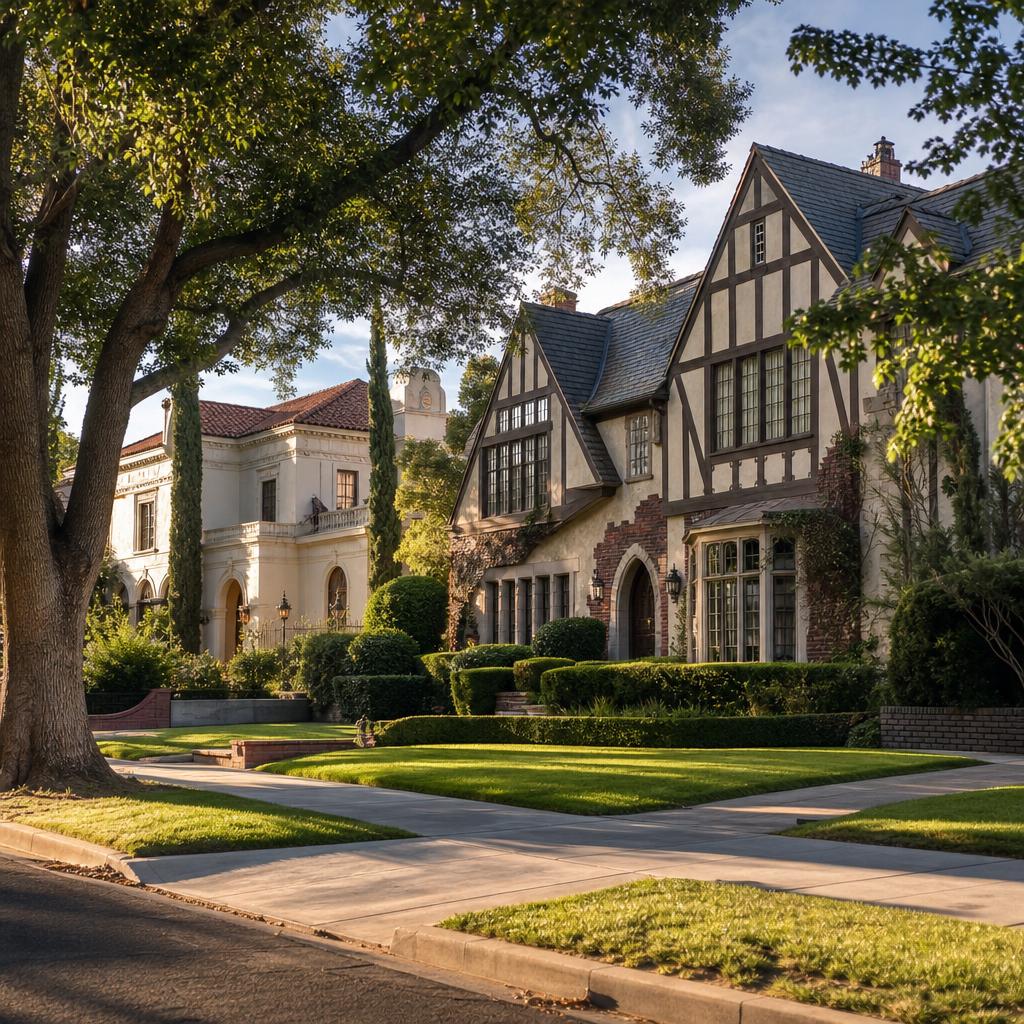
Hancock Park is a City of Los Angeles neighborhood served by LADBS, distinguished by its concentration of 1920s-era Tudor, Mediterranean, and Colonial Revival homes — a disproportionate share of which sit within a Historic Preservation Overlay Zone or qualify for individual historic designation.
That historic layer shapes nearly every exterior project in the neighborhood. A new addition, a visible window replacement, or a front-facing remodel on a contributing property generally needs an HPOZ Certificate of Appropriateness in addition to a standard LADBS building permit — a step that doesn't exist for most other Los Angeles neighborhoods. Interior work, by contrast, is typically reviewed through standard LADBS plan check alone, since HPOZ review focuses on what's visible from the street.
Many Hancock Park homeowners also hold or are considering a Mills Act historic property tax contract, which trades meaningful property-tax savings for a binding commitment to maintain the home's historic character. A Mills Act contract can directly affect what materials and alterations are allowed in a future remodel, so it's worth confirming before — not after — a project's design is finalized.
Interior-focused projects like a kitchen or bathroom remodel are common here and generally move through standard plan check, while a project needing a zoning variance for setback or lot-coverage relief on one of the neighborhood's oversized, often irregular historic lots follows a separate hearing process we scope out early.
A Historic LADBS Neighborhood With HPOZ Review
Every permit in Hancock Park is reviewed by LADBS under the Los Angeles Municipal Code, applying the California Building Code, California Residential Code, California Fire Code, and Title 24 energy standards with the City's local amendments — the same baseline used citywide. What's added on top is the City's HPOZ ordinance, which requires contributing properties to secure design review before most exterior changes proceed.
City of Los Angeles — LADBS Jurisdiction
Hancock Park is a City of Los Angeles neighborhood served by LADBS under the Los Angeles Municipal Code, with no separate local building department.
Historic Preservation Overlay Zone (HPOZ)
A large share of Hancock Park's historic core sits within an HPOZ, requiring a Certificate of Appropriateness for exterior alterations, additions, or demolition on contributing properties.
Mills Act Historic Property Contracts
Many qualifying historic homes carry or are eligible for a Mills Act contract, which offers property-tax savings tied to maintaining the property's historic character.
Large, Low-Density Residential Lots
Hancock Park's oversized, often irregular historic lots bring their own setback, lot-coverage, and variance considerations distinct from standard-size city lots.
Early-20th-Century Architectural Stock
Tudor Revival, Mediterranean Revival, and Colonial Revival homes built mainly in the 1920s commonly surface older electrical, plumbing, and structural systems during remodel projects.
Established Single-Family Zoning
Predominantly R1 single-family zoning with HPOZ design overlay governs most additions, ADUs, and new construction in the neighborhood's historic core.
HPOZ Review, Mills Act & Historic Remodels
Confirming a property's HPOZ contributor status is the first step on nearly any Hancock Park project involving exterior work, since a Certificate of Appropriateness application and its design guidelines differ meaningfully from a standard LADBS submittal. We prepare HPOZ applications alongside the LADBS building permit so both tracks move together rather than one holding up the other.
For homeowners with or pursuing a Mills Act contract, we confirm how the contract's terms interact with a planned remodel's materials and scope before design work is finalized, since a conflict discovered mid-project is far more costly to resolve than one caught during initial scoping.
ADUs & Zoning Variances on Large Historic Lots
Hancock Park's predominantly single-family zoning supports ADU development under California's statewide ADU law, though an HPOZ-contributing property generally still needs HPOZ Board design review for the ADU's placement and materials, in addition to LADBS's standard ADU plan check. The neighborhood's larger, sometimes irregularly shaped historic lots also raise variance questions more often than a typical city block, particularly around setback encroachments tied to preserving an original architectural feature.
We assess early whether a project's scope genuinely requires a variance under LAMC Section 12.27 or whether a design adjustment avoids the added public-hearing timeline altogether.
Hancock Park Project Types, Review Paths & Our Approach
| Project Type | When It Applies | Typical Review Path | Our Approach |
|---|---|---|---|
| Interior kitchen or bathroom remodel | Remodel limited to interior scope with no exterior visible change | LADBS plan check for structural, electrical, plumbing, and Title 24 energy compliance | We confirm HPOZ exemption for interior-only scope before filing, so the project avoids an unnecessary board review step. |
| Exterior alteration or addition on a contributing property | Any exterior change visible from the public right-of-way on an HPOZ-contributing home | HPOZ Certificate of Appropriateness plus standard LADBS building permit | We prepare the HPOZ application and design materials to align with the district's specific guidelines before LADBS submittal. |
| ADU / JADU construction | New accessory dwelling unit or junior ADU on a single-family lot | LADBS ADU review, plus HPOZ Board design compatibility review on contributing properties | We sequence HPOZ and LADBS review together so the ADU's design satisfies both without a late-stage redesign. |
| Zoning variance for setback, coverage, or height | A project's scope conflicts with standard R1 zoning requirements on an oversized or irregular historic lot | LA City Planning Zoning Administrator hearing under LAMC Section 12.27 | We assess whether the variance is genuinely needed or whether a redesign avoids the added hearing timeline. |
| Mills Act contract coordination | Homeowner is applying for or already holds a Mills Act historic property tax contract | City of Los Angeles Office of Historic Resources | We confirm how an active or pending Mills Act contract affects the allowed scope and materials for a planned remodel. |
| Electrical, plumbing, or structural system upgrade | Panel upgrade, rewire, or structural reinforcement surfaced by a remodel on a 1920s-era home | LADBS structural and MEP plan check | We fold necessary system upgrades into the primary remodel permit where possible to avoid a separate parallel submittal. |
These are planning-level descriptions, not fee quotes or guaranteed timelines. We confirm current fees, forms, and timelines for your specific address and scope during a free consultation.
Our Process for a Hancock Park Project
- 01
Confirm HPOZ and historic status
We pull the parcel's HPOZ and historic-designation status, including whether the property is a contributor, non-contributor, or individually designated landmark.
- 02
Evaluate Mills Act implications
For qualifying properties, we confirm whether an existing or planned Mills Act contract affects the scope, materials, or design review path for the project.
- 03
Determine required review paths
We identify whether the project needs HPOZ Certificate of Appropriateness review, a zoning variance, or standard LADBS plan check alone, and sequence them correctly.
- 04
Coordinate the design and engineering package
We work with the architect, structural engineer, and MEP consultant to produce drawings that satisfy both HPOZ design guidelines and LADBS code requirements.
- 05
File with LADBS and the HPOZ Board where applicable
We submit the LADBS building permit application while managing the separate HPOZ Certificate of Appropriateness track in parallel.
- 06
Manage corrections and inspections through final sign-off
We track plan-check corrections across every discipline, respond directly with the design team, and coordinate inspections through final approval.
Why Ocean Permits & Development for Hancock Park
We coordinate HPOZ Certificate of Appropriateness applications, Mills Act contract review, zoning confirmation, LADBS plan-check submittal, and inspections for Hancock Park projects ranging from an interior remodel to a full historic restoration. Every engagement starts with a free consultation — call 213-277-8777 or reach out through our contact page. See also our ADU permits service and permit and development consulting for entitlement strategy on a variance or historic-property question.
Frequently Asked Questions
Is Hancock Park part of the City of Los Angeles, or does it have its own building department?
Hancock Park is a City of Los Angeles neighborhood served by LADBS under the Los Angeles Municipal Code — there is no separate local building department. What sets it apart is the concentration of properties that fall under a Historic Preservation Overlay Zone or are individually eligible for historic designation, which layers additional design review on top of standard LADBS plan check.
What is an HPOZ and does it affect my Hancock Park property?
A Historic Preservation Overlay Zone (HPOZ) is a City of Los Angeles zoning designation that requires a Certificate of Appropriateness from the local HPOZ Board before exterior alterations, additions, or demolition on a contributing property. Much of Hancock Park's historic core falls within or adjacent to an HPOZ, so confirming a property's contributing status is one of the first steps on almost any exterior project here — before design work, not after.
What is the Mills Act and is it relevant to Hancock Park homeowners?
The Mills Act is a California property-tax incentive program that offers significant tax savings to owners of qualifying historic properties in exchange for a contract committing to maintain and restore the property's historic character. Many Hancock Park homes qualify given the neighborhood's concentration of designated and HPOZ-eligible residences, and a Mills Act contract can directly affect the scope and materials allowed in a future remodel, so it's worth evaluating alongside any permit planning.
Can I remodel my kitchen or bathroom in a historic Hancock Park home?
Yes, interior kitchen and bathroom remodels are generally permitted through standard LADBS plan check even on HPOZ-contributing properties, since HPOZ review is primarily focused on exterior changes visible from the public right-of-way. That said, if the remodel affects exterior windows, additions, or visible elements, HPOZ Certificate of Appropriateness review applies in addition to the standard building permit.
Can I add an ADU on a Hancock Park property?
In most cases, yes, though HPOZ-contributing properties face additional design review that non-historic lots don't. California's statewide ADU law generally limits how much an HPOZ can restrict ADU development, but the ADU's design, placement, and materials on a contributing property still typically go through HPOZ Board review for compatibility with the historic district, in addition to LADBS's standard ADU plan check.
What triggers a zoning variance in Hancock Park?
Hancock Park's large, often irregular historic lots and strict single-family zoning mean a variance can come up for setback encroachments, lot coverage on an oversized parcel, or height exceptions tied to preserving a historic roofline or architectural feature. A variance requires a public hearing before a Zoning Administrator and specific legal findings under LAMC Section 12.27, and we evaluate early whether a project genuinely needs one or can be redesigned to avoid the added timeline.
What building code does LADBS apply to a Hancock Park project?
LADBS applies the California Building Code, California Residential Code, California Fire Code, and Title 24 energy standards with Los Angeles Municipal Code amendments — the same code family used citywide — applied in Hancock Park alongside the City's HPOZ ordinance and any applicable Mills Act contract terms specific to the property.
How does Hancock Park compare to nearby Larchmont and Windsor Square for permitting purposes?
Hancock Park, Windsor Square, and Larchmont Village are all City of Los Angeles neighborhoods served by LADBS, and several overlap with HPOZ designations covering similar early-20th-century architectural styles. The specific HPOZ boundary and design guidelines can differ block by block even within this cluster of neighborhoods, so confirming the exact overlay and board for a given address — rather than assuming it matches a nearby street — matters before design work starts.
How long does a typical Hancock Park permit take?
A straightforward interior remodel with a complete LADBS application can often move through plan check in a matter of weeks. A project requiring HPOZ Certificate of Appropriateness review adds a separate board or staff-level review step, which can extend the timeline by several weeks depending on the HPOZ board's meeting schedule and the scope of exterior change proposed. We provide a project-specific timeline after reviewing the address and scope rather than a single generic figure.
Why use Ocean Permits & Development for a Hancock Park project instead of filing directly with LADBS?
Ocean Permits & Development is a women-owned, Los Angeles-based permit expediting firm that manages HPOZ Certificate of Appropriateness applications, Mills Act coordination, zoning confirmation, LADBS plan-check submittal, and inspection scheduling as one process, so a homeowner isn't navigating historic-district review on top of standard permitting alone. We offer a free initial consultation — call 213-277-8777 or reach out through our contact page.
Building in Hancock Park?
We coordinate LADBS plan check, HPOZ Certificate of Appropriateness review, and Mills Act questions as one process.
Nearby Locations