_1781464136662-DVw5IPjt.png)
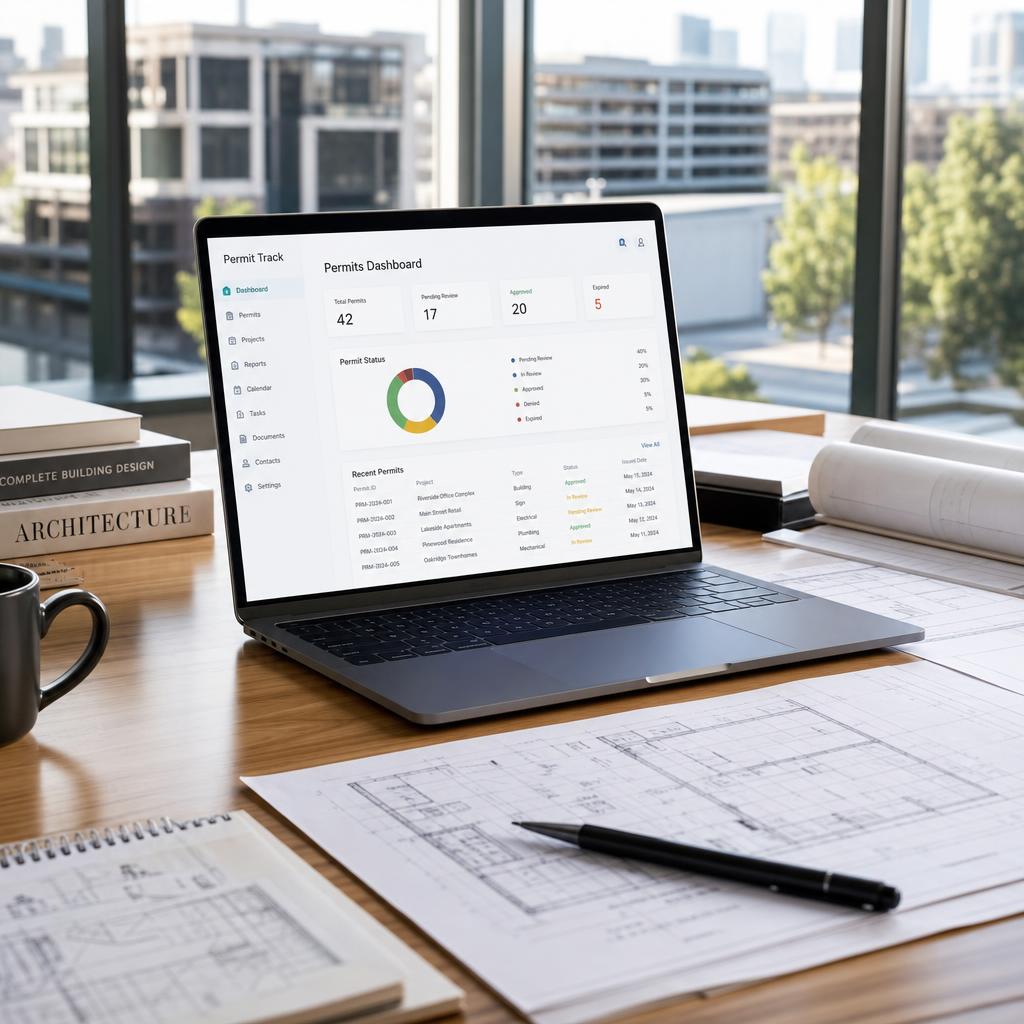
If you've been researching how to get a building permit faster — especially for a project in Los Angeles — you've probably run into two names that keep coming up: PermitFlow and Pulley. Both are venture-backed technology companies built around the same basic promise: permitting is slow and confusing, and software (sometimes paired with a human review layer) can make it less painful.
They are not the same company, they are not the same product, and they are not interchangeable. This guide breaks down what each platform is, how they're structured, where they genuinely help, and — importantly for anyone rebuilding after the Palisades or Eaton fires, or navigating Los Angeles permitting more broadly — where a national software platform runs into the limits of what software alone can do. If you're comparing either platform specifically against a local, human permit expediter, we've also written dedicated comparisons: Ocean Permits vs. PermitFlow and Ocean Permits vs. Pulley. This article is different — it's a direct, neutral PermitFlow-vs-Pulley comparison, without Ocean Permits in the mix.
What Is PermitFlow?
PermitFlow is a construction permitting software platform, graduated from Y Combinator's Winter 2022 batch and headquartered in San Francisco. PermitFlow has raised in the range of $90 million across multiple rounds, including a $54 million Series B led by Accel (with Kleiner Perkins, Felicis, Initialized Capital, and Y Combinator among the investors), announced in December 2025. PermitFlow's core pitch centers on a proprietary database of permit requirements spanning jurisdictions across the United States, designed to help general contractors, developers, and trades businesses identify which permits a project needs, auto-generate application forms, assemble permit packages, and track application status across a dashboard. It's frequently described — including by PermitFlow itself — as bringing a "TurboTax for construction permitting" model to the industry. PermitFlow does not publish a fixed price list; pricing appears to be quote-based, varying by permit type, jurisdiction, and project volume.
Who PermitFlow is generally built for: contractors, developers, and trades businesses running permits across multiple markets who want a centralized system to manage paperwork and tracking, rather than a hands-on advocate walking their specific project through their specific jurisdiction's plan-check counter.
What Is Pulley?
This is worth clarifying up front, because "Pulley" is a name shared by two unrelated companies. The startup relevant to this comparison is withpulley.com, a construction permitting company founded in 2021 and based in San Francisco (with a presence in New York). It is not to be confused with the much better-known Pulley that provides cap-table and equity management software for startups — a completely different business. Withpulley.com describes itself as a technology-powered permitting service, combining purpose-built software with what it calls "embedded expertise." Its model appears more hybrid than pure self-serve software — pairing a digital workflow with human staff who work applications rather than leaving submission and follow-up entirely to the client. Its typical workflow involves an intake form, jurisdiction identification and requirements research, a forecasted "permit plan," and ongoing tracking after submission. Pulley has raised meaningfully less capital than PermitFlow — reported figures put its funding around $4.4 million from investors including Susa Ventures and Fifth Wall. Like PermitFlow, Pulley does not publish standard pricing publicly.
Who Pulley is generally built for: project teams — developers, contractors, architects — who want a managed, tech-assisted permitting process with more human involvement than a pure dashboard tool, but still delivered as a remote, nationally-scaled service rather than a local, in-person relationship with plan-check staff.
PermitFlow vs. Pulley: Side by Side
| Dimension | PermitFlow | Pulley (withpulley.com) |
|---|---|---|
| Core model | Self-serve software platform for permit research, application prep, and tracking; some managed support reported | Hybrid tech + human service — software workflow paired with permitting project managers |
| Jurisdiction coverage claim | Markets a nationwide requirements database covering U.S. municipalities | Markets jurisdiction identification and localized requirements research; specific coverage list not publicly detailed |
| Funding / scale | ~$90M+ raised across rounds (incl. $54M Series B, Accel-led, Dec. 2025); YC W22 | ~$4.4M raised (Susa Ventures, Fifth Wall, others); smaller, earlier-stage team |
| Human relationship with plan-check staff | Not a stated feature; software-centric, remote workflow | More human involvement via project managers, but still a remote service |
| In-person plan check / hearings / inspections | Not offered | Not offered |
| Pricing model | Not publicly published; appears quote-based | Not publicly published; appears to require direct contact |
| Best for | Multi-market contractors/developers wanting a centralized dashboard | Teams wanting more hands-on, tech-assisted help without going fully self-serve |
| LA / fire-rebuild specialization | No public claim of specific Pacific Palisades or Altadena expertise | No public claim of specific Pacific Palisades or Altadena expertise |
| Physical presence in LA jurisdictions | None indicated | None indicated |
The Structural Difference Between Software Platforms and Local Human Expediters
Setting PermitFlow and Pulley side by side reveals more about what they have in common than what separates them. Both are venture-backed, remote-first, multi-state technology companies solving the same underlying problem with a broadly similar toolkit: requirements research, application prep, and status tracking, delivered through software with varying degrees of human support layered on top. What neither is built to do is function as a local, in-person expediter inside a specific jurisdiction:
No plan-check relationships.
Experienced local expediters build ongoing, in-person relationships with plan checkers and permit techs at counters like the Los Angeles Department of Building and Safety (LADBS) or LA County Public Works — knowing which reviewer to call and how to resolve an ambiguous comment with a phone call rather than a support ticket. A national software company, by design, is not present in any single building department's hallway.
No physical submission or pickup.
Some permits and corrections in LA-area jurisdictions still benefit from — or require — someone physically present: walking a set of plans through review, picking up a corrected set, resolving a discrepancy in person. Software platforms operate entirely remotely by design.
Generic multi-state coverage vs. deep single-market expertise.
A platform serving every county in the country can't encode the same depth of institutional knowledge about, say, LA County's post-fire rebuild ordinances or a specific plan-check counter's current backlog that a full-time local expediter tracks daily.
Inability to attend hearings or inspections.
Zoning variances, coastal development permits, and other discretionary approvals sometimes require someone to attend a hearing or be on-site for an inspection — that's not a software feature, it's a person showing up.
What a Local Expediter Actually Does That a Dashboard Doesn't
Every LADBS project runs on the same statutory backbone regardless of which software platform tracks it. Under LAMC 91.106, a permit is required before nearly any construction, alteration, repair, or occupancy change; under LAMC 91.107, plan-check and permit fees are calculated from the project's valuation and paid before the department accepts the plans for review; and ministerial ADU applications move on the 60-day statutory review clock set out in LAMC 12.22 A.33. Neither PermitFlow nor Pulley changes any of that timeline — what a local expediter changes is how cleanly a package moves through it: pre-submittal scope review to catch a missing clearance before it becomes a correction, a submittal package built to the specific plan-check discipline's current comment patterns, and a same-day phone call to the assigned reviewer instead of a support ticket sitting in a queue.
| Project Type | Software Platform Role | Local Expediter Timeline | Typical Local Expediting Fee |
|---|---|---|---|
| ADU / garage conversion | Requirements research + form prep only; plan-check turnaround and correction cycles still run on the jurisdiction's own clock | 2–4 weeks to submittal-ready package; LADBS's ministerial ADU track carries a 60-day statutory review clock under LAMC 12.22 A.33 once accepted | $2,500–$6,000 flat fee, typical |
| Single-family remodel / addition | Dashboard tracking of plan-check status; no in-person correction resolution | 4–8 weeks pre-submittal + plan check; local expediter attends corrections in person at the LADBS Metro or district office | $3,500–$9,000 flat fee, typical |
| Commercial tenant improvement | Multi-jurisdiction database lookup; fee and valuation calculations left to the client | 6–12 weeks depending on occupancy change; fees calculated per LAMC 91.107 valuation tables and paid before plan check begins | $5,000–$15,000+ flat fee or hourly, typical |
| Fire rebuild (Palisades / Altadena) | Not specialized; nationwide database doesn't track fast-changing local rebuild ordinances | Expedited County/City rebuild tracks can move in weeks when packages are submittal-ready on day one | Often reduced or waived fees under emergency rebuild programs; expediting fee varies by scope |
Figures above reflect typical Ocean Permits engagement ranges for Los Angeles-area projects and vary by scope, jurisdiction, and site complexity — see our full permit expediter cost guide and the ADU permits service page for detail. Neither PermitFlow nor Pulley publishes comparable fee tables.
Where Software Platforms Fall Short for Complex LA and Fire-Rebuild Projects
Los Angeles County's fire-rebuild environment, specifically in Pacific Palisades and Altadena, is a useful stress test. Since the January 2025 fires, LA County and the City of LA have stood up expedited rebuild pathways, One-Stop Permit Centers, and streamlined review tracks that have already changed multiple times. A few reasons a national software platform tends to struggle here: fast-changing local rules that a nationwide database can't track in real time; coastal and hillside overlays requiring Coastal Development Permits on top of standard building permits; historic and community-specific review layers; insurance and rebuild-timeline pressure where a phone call beats a support queue; and multi-agency coordination across LADBS or LA County Building and Safety, LA County Fire, Public Works, and Coastal Commission staff simultaneously. It's worth reading how long permits actually take in Los Angeles and what permit expediting costs in LA, and our breakdown of permit expediting vs. doing it yourself.
Why LA Property Owners Choose a Dedicated Local Expediter
Ocean Permits is a women-owned permit expediting firm based in Los Angeles, with specialized experience in fire-rebuild permitting in Pacific Palisades and Altadena, maintaining in-person relationships with LADBS and LA County plan-check staff. For head-to-head breakdowns, see Ocean Permits vs. PermitFlow and Ocean Permits vs. Pulley. See our permit expediting services page and consulting services. We offer a free consultation — call 213-277-8777, or reach out through our contact page. Learn more about our team or check our FAQ.
Frequently Asked Questions
Is PermitFlow available in Los Angeles?
PermitFlow markets itself as covering permit requirements nationwide, which would generally include LA-area jurisdictions, but doesn't detail depth of coverage for specific LA departments and doesn't maintain in-person staff there.
Does Pulley handle Los Angeles permits?
Pulley (withpulley.com) describes jurisdiction-identification research that could apply to LA-area projects, but doesn't publicly list specific jurisdiction coverage and has no in-person presence at LA-area building departments.
What's the real difference between PermitFlow and Pulley?
PermitFlow leans toward a self-serve software platform with a large national database and significant venture funding (~$90M+), while Pulley pairs software with more direct human project-management involvement and has raised considerably less (~$4.4M).
What's the difference between permit software and a human permit expediter?
Software platforms digitize research, form-prep, and tracking remotely across many jurisdictions. A human expediter, particularly a local one, physically visits building departments, builds relationships with plan-check staff, and can attend hearings or inspections.
Can PermitFlow or Pulley handle fire-rebuild permits in Pacific Palisades or Altadena?
Neither company publicly claims specialized expertise in the Palisades or Altadena fire-rebuild process, which involves fast-changing local ordinances and multi-agency coordination.
Do PermitFlow or Pulley offer a free consultation?
Neither publishes standard pricing; both appear to require a direct inquiry. Ocean Permits offers a free consultation — call 213-277-8777.
Is PermitFlow or Pulley cheaper than a local expediter?
Because neither publishes fixed pricing, a direct comparison isn't possible from public information alone. Our guide to permit expediter costs in Los Angeles breaks down typical local pricing structures.
Can I use PermitFlow or Pulley together with a local expediter like Ocean Permits?
In principle yes, though most clients find it simpler to work with one team that handles the full process end to end.
Which platform has more funding, PermitFlow or Pulley?
PermitFlow has raised significantly more — roughly $90 million or more, compared to Pulley's reported ~$4.4 million.
Do PermitFlow or Pulley submit permits in person at LADBS or LA County offices?
There's no public indication either company maintains staff who submit applications or pick up corrections in person at LA-area building departments.
How do I know if I need software or a full-service local expediter?
It depends on project complexity and jurisdiction — discretionary approvals, coastal or hillside overlays, and fire-rebuild work tend to benefit from a local expediter who can adapt to fast-changing rules.
Where can I read a direct comparison between Ocean Permits and each platform?
See our dedicated breakdowns: Ocean Permits vs. PermitFlow and Ocean Permits vs. Pulley.